
Opinion
In Nigeria, corruption still a big deal


By Emmanuel Nnadozie Onwubiko
Right across the length and breath of the country, there are echoes and wailing of children who can’t find foods to eat and the children are roaming the major highways and traffic stops to beg for foods to eat and survive. Millions of children who attend public schools both in the States and in the federal capital territory, are educated under derelict and devastated housing infrastructures even as their teachers are paid peanuts and aren’t motivated.
In Abuja, primary schools were shut down because for months the Area councils failed to meet the funding obligations to these schools that are critical to the early formation of our children.
The mindless corruption in the 6 Area councils of the FCT is responsible for the near collapse of the educational sector in the 6 area councils including Abuja municipal whereby we still find pupils learning under trees because their classrooms are dilapidated. Children trek to and from their schools under the rains and hot weather of Abuja. There are poor transportation arrangements for these students in public school system.
This is shameful. It is shameful because the political office holders educate their own children in Europe and America and media publications often carry photographs depicting the graduation ceremonies of these children of rich and corrupt political office holders in contemporary Nigeria.
There are millions of women and their babies who have no money to visit the general hospitals or nearby health centres when commonly treatable diseases like Malaria fever and even headache afflicts them. The truth is that for hundreds of thousands of communities all across the country, there are no functional primary healthcare centres. Where you find primary healthcare centres, you can’t find qualified medical workers to attend to the rural populations and the lack of these trained medical manpower has resulted in many avoidable deaths. The statistics are expanding.
But all these developmental challenges are connected by one factor which is inevitably the fundamental cause of them: Public office holders Corruption in government offices.
The truth is that a significant portions of the persons engaged by government to manage and govern these agencies of government are mismanaging and ruining these government agencies through corruption and diversion of public assets to their private uses. To tell you the fact: corruption is still a big deal and indeed corruption and economic crimes are the biggest drawbacks to societal development and these social crimes are the reason that the majority of the country’s population face excruciating economic hardships daily. I met a big man in the All Progressives Congress who confessed to me that he is in office to loot huge money because he has sworn never to leave government broke. He dismissed any fear of EFCC or ICPC arresting or prosecuting him. These top official of APC are amongst the National ifficers of the ruling party who got big, juicy appointments to manage Federal Government agencies and even the federal universities. For these persons, especially the one I discussed with, appointments into public offices are opportunities to escape the poverty trap. Majority of the political elite come from very poor backgrounds but climbed to big money lifestyle through corruption in government.
The poverty rate has escalated in the country to such an abysmal levels that we now find kids as young as 6 roam the streets during school hours in search of what to eat and the system of governmental interventions through institutionalised welfare system to give succour and reliefs to these indigent citizens have long collapsed. Nigeria’s welfare system is down. Children who are left to roam the streets remain highly vulnerable and the government has abdicated her duty of care for these millions of poverty stricken citizens. Rape cases are high but the judiciary and the investigative mechanisms are too weak or compromised by corruption.
A look at the profiles of those convicted of corruption in just three years, demonstrates the deadly consequences of corruption and shows how deeply rooted corruption has become. This writer has made a ompilation of 12 Corruption Convictions by Nigerian Courts (May 2023 – May 2026) and these are shocking. They are as follows:
1.Chukwunyere Nwabuoku – Ex-Acting Accountant-General
Court: Federal High Court, Abuja Convicted: 2025:
Chukwunyere Anamekwe Nwabuoku served as Acting Accountant-General of the Federation in 2022 after Ahmed Idris was suspended. He was later arraigned on Jan 15, 2025 on 9 amended counts of money laundering.
The EFCC accused him of diverting N868.46 million meant for security and defence while he was Director of Finance and Accounts in the Ministry of Defence between 2019-2021.
Justice James Omotosho held that EFCC proved the 9-count charge beyond reasonable doubt. The judge described diverting defence funds as “appalling”.
He was convicted on all 9 counts and sentenced to 8 years per count, totalling 72 years. The judge ordered the terms to run concurrently.
Evidence showed Nwabuoku voluntarily refunded over N200 million during investigation. He was admitted to N500 million bail with two sureties after arraignment.
Sources: Daily Trust; BusinessDay
2.Saleh Mamman – Former Minister of Power
Court: Federal High Court, Abuja Convicted: May 2026
Saleh Mamman, power minister from 2015-2021 under Buhari, was found guilty on 12 counts related to diversion of funds for Mambilla and Zungeru hydropower projects.
The EFCC proved he and associates diverted at least N22 billion of N33.8 billion meant for electricity projects. Proxy companies were used to siphon money.
He was sentenced in absentia to 75 years after failing to appear in court. Terms run consecutively across the 12 charges
EFCC arrested him in Kaduna a week after conviction following weeks of surveillance. He had gone into hiding after the Abuja court verdict.
EFCC Chairman Ola Olukoyede said serving the jail term was “extremely important” to show seriousness against corruption.
Sources: MyJoyOnline; Punch
3.Hassan Abdullahi – NSCDC Superintendent
Court: FCT High Court, Gudu, Abuja | Convicted: ∼2024
Abdullahi, a Superintendent in Nigeria Security and Civil Defence Corps, was convicted by ICPC for certificate forgery and corrupt advantage.
He presented a forged NCE certificate from Adamu Augie College of Education, Argungu, to NSCDC in Dec 2010 for career advancement.
Justice E. Okpe sentenced him to 2 years or N2 million fine for forgery under Penal Code.
On the second count, he was jailed 5 years without option of fine for using the forged certificate to receive salaries/benefits of Senior Inspector rank from Dec 2011-Oct 2022.
The court ordered refund of all salaries and allowances received fraudulently under Section 321 ACJA 2015.
Sources: Sahara Reporters; Tribune Online
4.Garuba Mohammed Duku – Retired FCTA Director
Court: Federal High Court, Abuja | Convicted: ∼2024
Duku, retired Director of Finance and Admin at Abuja Metropolitan Management Council, FCTA, was convicted for corruption and money laundering involving N318.25 million.
ICPC investigations showed he diverted AMMC funds between 2012-2013 into his personal Fidelity Bank account through multiple payments: N56.25m, N71m, N53m, N54m, N46m, N36.3m.
He transferred the money to Bureau de Change operators and spent it on unauthorized purposes. His claim that funds went to superiors had no evidence.
Justice James Omotosho found him guilty on 6 counts in suit FHC/ABJ/CR/608/2022 and sentenced him to 24 years imprisonment.
The judgment was based on evidence and witness testimonies proving guilt beyond reasonable doubt.
Sources: ICPC Official; BusinessDay
5.Robert Orya – Ex-NEXIM Bank MD
Court: FCT High Court, Abuja | Convicted: Feb 5, 2025
Robert Orya, former Managing Director of Nigerian Export-Import Bank, was convicted for N2.4 billion fraud.
EFCC prosecuted him on 49 counts bordering on fraud and abuse of office.
Justice F.E. Messiri sentenced him to 10 years on each of the 49 counts.
The cumulative sentence totals 490 years imprisonment.
The conviction sparked wide discussion on X, with Nigerians reacting to the landmark judgment.
Sources: Vanguard; EFCC via Tribune
6.Yusuf Temilade + 2 Others – NASU Union Officials
Court: Supreme Court of Nigeria | Convicted: 2025/2026
Yusuf Temilade, Adeyemi Alaba Samuel, and Amuludun Tosin were NASU executives at Tai Solarin College of Education, Ogun State. They managed union funds as Chairman, Secretary, and Acting Treasurer.
In 2011, NASU got a N68 million bank loan for staff disbursement requiring Provost/Registrar authentication.
ICPC found they diverted funds, drew excess amounts, and paid non-staff. They were charged with conspiracy and abuse of office under Corrupt Practices Act.
After over a decade of litigation, the Supreme Court affirmed their conviction and dismissed the appeal for lacking merit.
This ended a protracted case that passed through Ogun High Court and Court of Appeal, Ibadan.
Sources: ICPC Press Release 2025/2026; Supreme Court judgment SC.123/2026
7.Mohammad Suleiman Kumo – Magistrate
Court: Gombe State High Court | Convicted: May 5, 2026
Kumo, a Chief Magistrate at Pantami, Gombe, was convicted by EFCC for N1 million bribery.
He received N1m through a Zenith Bank account of a court registrar on Nov 6, 2024 while acting as magistrate.
He changed his plea from “not guilty” to “guilty” during resumed hearing May 5, 2026.
Justice H.H. Kereng sentenced him to 2 years 6 months imprisonment. The act contravened Section 10(a)(i)(ii) of Corrupt Practices Act.
His preliminary objection claiming only Judicial Service Commission could try him was rejected on Feb 17, 2026.
Sources: BusinessDay; EFCC Gombe Zonal Directorate statement May 5, 2026
8. 23 Chinese Nationals – Cyberterrorism/Internet Fraud
Court: Federal High Court, Lagos | Convicted: Dec 2024
23 Chinese nationals were convicted for cyberterrorism and internet fraud after EFCC arrest on Dec 10, 2024.
Each was arraigned on one count of accessing computer systems to destabilize Nigeria’s economy and social structure.
They initially pleaded not guilty but changed to guilty during trial after plea bargain agreements.
Judges Osiagor, Faji and Dipeolu sentenced each to 1 year from date of arrest + N1 million fine.
The court ordered Nigerian Immigration Service to repatriate them within 7 days of completing sentence and forfeited phones, laptops, routers to government.
Sources: EFCC Newsroom Dec 2024; Federal High Court Lagos judgment
9. Three Men – Internet Fraud at Obasanjo Library
Court: Federal High Court, Ikoyi, Lagos | Convicted: Aug 2025
Oyatokun Damilola Qudus, Adenekan Adewole Ayinde, and Adisa Okikiade were convicted for internet fraud.
They were among 93 arrested Aug 10, 2025 in a sting at Olusegun Obasanjo Presidential Library hotel, Abeokuta.
Qudus posed as “Eric Melissa” on Instagram; Ayinde used fake email to defraud $180; Okikiade posed as Anthony Krenn 2024-2025.
All pleaded guilty to one-count charges under Cybercrimes Act 2015.
EFCC presented extra-judicial statements, forensic device analysis, and N200,000 restitution draft by Ayinde.
Sources: EFCC Ibadan Zonal Command Aug 10, 2025 press release; Premium Times Aug 2025
10.Jolly Nyame – Ex-Taraba Governor
Court: Federal High Court, Abuja | Convicted: 2023/2024
Jolly Nyame, governor of Taraba State 1999-2007, was sentenced to 14 years for looting millions of dollars.
The judge condemned crimes including inflated contracts for office equipment and stationery as “outright theft”.
Nyame, a church pastor, was one of over a dozen governors questioned by EFCC after leaving office in 2007.
EFCC spokesman said the conviction would boost anti-corruption efforts and speed up pending cases of other ex-governors.
President Buhari had vowed to recover “mind-boggling” sums looted by officials over decades.
Sources: Premium Times 2023/2024; EFCC case file
11.Joseph Nanchang – Stealing N300,000
Court: Evbouriaria Magistrates’ Court, Benin | Convicted: 2026
20-year-old Joseph Nanchang was sentenced to 3 years for stealing N300,000 belonging to Mrs Victoria Owie.
The crime occurred Feb 23 at No. 18 off Muritala Mohammed Way, Benin.
He faced 2 counts of conspiracy and stealing under Criminal Code Cap 48.
Nanchang pleaded not guilty to conspiracy but guilty to stealing.
Magistrate C.E. Oghuma sentenced him to 3 years without option of fine.
Sources: Edo State Judiciary records 2026; Benin City magistrate court register
12.NASU Loan Fraud – Supreme Court Affirmation
Court: Supreme Court | Convicted: 2026
The Supreme Court delivered final victory for ICPC by affirming conviction in a N68 million union fraud case.
The apex court upheld High Court of Ogun State and Court of Appeal, Ibadan decisions, dismissing appeal for lacking merit.
Defendants abused union positions by diverting 2011 loan meant for 120 staff members.
ICPC charged them under Section 19 Corrupt Practices Act for conferring corrupt advantage on themselves and others.
The judgment closed a legal battle spanning over a decade since the 2011 offence.
Sources: Supreme Court of Nigeria judgment SC.123/2026; ICPC Press Release 2026.
Whilst we may commend the EFCC for their expertise in getting these convictions, the truth is that, for every one conviction, there are dozens of high profile cases that have lingered for long. I will give you two instance of allegations made by EFCC to two important politically exposed persons but one of these two went on to become the current Senate President and the second being the former governor of Delta state is warming up to become a senator for the second time.
Briefing: Two High-Profile Cases – Ifeanyi Okowa & Senate President Godswill Akpabio
Status as of May 2026 | No convictions yet – both under investigation/probe.
Ifeanyi Okowa – Former Governor, Delta State 2015-2023
Status: Under EFCC investigation. Not convicted.
Allegation: EFCC arrested Okowa on Nov 4, 2024 at Port Harcourt office over alleged diversion of N1.3 trillion 13% oil derivation fund received by Delta State between 2015-2023. He is also been accused of failing to account for N40bn allegedly used to buy 8% equity in UTM Floating LNG and for purchasing estates in Abuja/Asaba.
EFCC Position: EFCC Director of Legal & Prosecution, Sylvanus Tahir SAN, confirmed Oct 23, 2025 that investigation is “still ongoing” despite Okowa’s April 2025 defection to APC. “No suspect is immune from investigation or prosecution because of political alignment… in due course, justice will be served”.
Okowa’s Response: Through former CPS Olisa Ifeajika, Okowa denied the N1.3tn allegation May 5, 2026, saying Delta received N2.65tn total in 8 years and “gave account of how that money was spent”. He said he reported to EFCC voluntarily and was never detained.
Court Status: No charges filed yet. EFCC says it prefers to complete comprehensive investigation before going to court, especially in high-profile cases.
Sources: TheCable Oct 23, 2025; Daily Trust; Pulse Nigeria Nov 2024; BusinessDay May 2026.
Godswill Akpabio – Current Senate President, ex-Governor Akwa Ibom 2007-2015
Status: Under EFCC probe + civil suits. No criminal conviction.
EFCC Probe – Akwa Ibom contracts: Akpabio has been under EFCC investigation since 2015 over accusations of diverting over N100bn from Akwa Ibom State during his tenure as governor 2007-2015. NACAT stated in 2023 that he’s “currently being investigated by EFCC over multi-million contracts he awarded”. No charges filed to date.
These are just a few of the cases of corruption that aren’t yet resolved by the EFCC or the courts of law. Indeed, in Nigeria, corruption is a big deal for persons holding public offices in the federation and most especially in the States and the Federal Capital Territory. The challenge is therefore for the EFCC to up their game and convince Nigerians that it is not under the direct Interferences of the president or those surrounding Mr. President. Whatever must be done to cut off the hydraheaded monsters of corruption in Nigeria, should be done faster before more millions of children are driven to the streets to beg for their survival or before the health sector, the education sector, roads, and other key infrastructures collapse under the heavyweight of corruption by government officials and their cronies. Citizens should also not accept bribes for votes and cast their votes for persons of integrity. These good politicians are amongst us. We must shine our eyes in January 2027.
*EMMANUEL NNADOZIE ONWUBIKO is the founder of the HUMAN RIGHTS WRITERS ASSOCIATION OF NIGERIA (HURIWA) and was NATIONAL COMMISSIONER OF THE NATIONAL HUMAN RIGHTS COMMISSION OF NIGERIA.
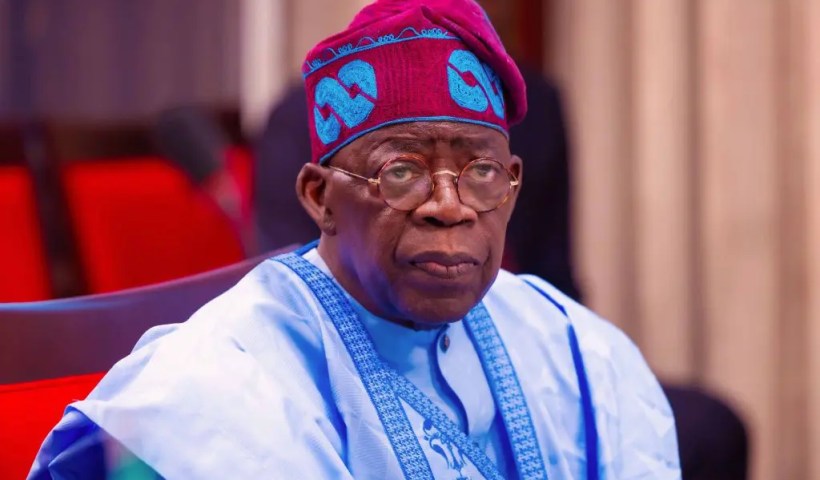
By Abdullateef Bamgbose
As the 2027 presidential campaign gathers momentum, political discourse appears to be drifting towards personality attacks, name-calling and political propaganda rather than a serious examination of the country’s economic performance and the welfare of its citizens.
The renewed attacks on opposition figures, particularly Peter Obi, the presidential candidate of the Nigerian Democratic Congress (NDC), raise questions about the issues the ruling All Progressives Congress (APC) intends to place before Nigerians as it seeks another four years in office.
While political leaders are entitled to challenge the credibility, competence and policies of their opponents, Nigerians deserve something more substantial than allegations about the personal lifestyle of opposition candidates.
For an administration that has spent almost four years in office, the most important campaign question should be what it has achieved with the enormous resources available to it since President Bola Tinubu assumed office on May 29, 2023.
More importantly, what has happened to the additional revenue generated following the removal of petrol subsidy, the unification of the foreign exchange market and the substantial increase in allocations from the Federation Account?
These questions become even more compelling when examined against the administration’s growing appetite for foreign and domestic borrowing.
More revenue, more borrowing
One of the major arguments advanced by the Tinubu administration in defence of its economic reforms is that the removal of petrol subsidy has significantly improved government revenue and created more resources for development across the three tiers of government.
Indeed, the figures show a remarkable increase in allocations from the Federation Account.
According to an analysis of Federation Account Allocation Committee (FAAC) figures, the Federal Government, the 36 states and the 774 local government councils shared approximately N26.5 trillion in 2025, compared with N14.11 trillion in 2024.
This represents an increase of about 84.2 per cent.
The Federal Government’s allocation increased from N5.02 trillion in 2024 to approximately N14 trillion in 2025, representing an increase of 178.8 per cent.
Similarly, state governments received N7.52 trillion in 2025, compared with N5.24 trillion in 2024, while local governments received N4.98 trillion against N3.85 trillion in the preceding year.
These figures are significant because they demonstrate that the removal of subsidy and other fiscal adjustments have substantially increased the resources available to governments.
The trend continued in 2026. Between January and September, the aggregate allocations to state governments amounted to approximately N6.92 trillion, while local governments received about N4.86 trillion.
In September alone, FAAC distributed N2.428 trillion among the three tiers of government. The Federal Government received N832.24 billion, states received N799.87 billion, while local governments received N560.66 billion. Oil-producing states also received N236.05 billion as derivation revenue.
The question, therefore, is not whether government revenue has increased. The figures establish that it has.
The more important question is what Nigerians can point to as the tangible benefits of this unprecedented increase in public resources.
If states and local governments are receiving substantially higher allocations, why do many communities continue to grapple with poor roads, inadequate healthcare facilities, unemployment, insecurity and deteriorating public infrastructure?
Why should communities continue to experience severe deprivation when the resources available to their governments have increased considerably?
This is not to suggest that every state or local government has failed. Some have undertaken significant projects. However, the overall national development impact must be measured against the resources received and the needs of the population.
The subsidy savings question
The Federal Government’s own reform scorecard provides another important dimension to this debate.
According to the Federal Ministry of Finance, estimated subsidy savings distributed across the federation amounted to approximately N15.8 trillion. Of this amount, the Federal Government received about N5.43 trillion, states received N6.52 trillion, while local governments received N3.88 trillion.
The figures raise legitimate questions about the management and utilisation of these resources.
The government has also identified additional expenditure pressures, including wage adjustments, foreign debt servicing, strategic infrastructure, electricity support and other public obligations.
However, the existence of competing expenditure obligations does not remove the responsibility of government to demonstrate measurable improvements in citizens’ living conditions.
The removal of subsidy was justified partly on the grounds that the resources previously spent on subsidising petrol would be redirected towards infrastructure, healthcare, education and other essential services.
Nigerians are entitled to ask whether the promised benefits have been delivered in proportion to the economic sacrifices they have been made to endure.
Perhaps the most troubling aspect of the administration’s economic management is the continued accumulation of public debt despite the substantial increase in government revenue.
The Debt Management Office’s figures show that Nigeria’s total public debt rose from N87.38 trillion in June 2023 to N166.79 trillion as of June 30, 2026.
This represents an increase of approximately N79.41 trillion, or 90.9 per cent.
The debt stock comprises N91.59 trillion in domestic obligations and N75.20 trillion in external debt.
It is important to acknowledge that the increase in the naira value of external debt has also been influenced by exchange-rate depreciation. Therefore, the entire increase cannot be presented as fresh cash borrowing by the Tinubu administration.
Nevertheless, the increase in the country’s debt obligations is substantial and demands greater scrutiny.
The administration has continued to approach the National Assembly for approval of different borrowing facilities.
In July 2025, the Senate approved the 2025–2026 external borrowing plan, which included requests for $21.8 billion, €2.1 billion and ¥15 billion, alongside a €65 million grant.
In December 2024, Nigeria issued a $2.2 billion Eurobond, followed by another $2.35 billion Eurobond issuance in November 2025.
In March 2026, the National Assembly approved external financing facilities of approximately $6 billion. The package included a structured financing arrangement of up to $5 billion with First Abu Dhabi Bank and approximately $1 billion in export financing arranged through Citibank for the rehabilitation of Tin Can Island Port and the Lagos Port Complex.
The National Assembly also approved a $516.3 million facility from Deutsche Bank for the Sokoto-Badagry Superhighway.
Beyond these facilities, Nigeria has received substantial development financing from multilateral institutions, including the World Bank.
Among the major facilities approved during the period were $2.25 billion for economic reforms in June 2024, $1.57 billion for the HOPE and SPIN programmes in September 2024, and $1.08 billion for education and resilience programmes in March 2025.
These facilities should not all be added together as if they were fresh cash already disbursed. Some are approvals, some are bond issuances, and others are development financing commitments.
Nevertheless, they illustrate the scale and variety of financing commitments undertaken by the administration.
The latest development is even more revealing.
On October 27, 2026, President Tinubu sought National Assembly approval for a proposed $20.52 billion and €1.045 billion external borrowing plan under a supplementary borrowing arrangement.
However, the President subsequently withdrew that request and submitted a revised request for $7.707 billion.
On November 11, the House of Representatives received the request, which the President said was intended to implement the external borrowing component of the 2026 Appropriation Act.
The N7.7 billion-dollar equivalent, valued at N10.79 trillion using the budget exchange rate of N1,400 to the dollar, forms part of the N29.218 trillion borrowing provision in the 2026 budget.
The distinction is important: the $7.7 billion request is not necessarily an additional borrowing provision on top of the N29.218 trillion already budgeted. It is a request for statutory authorisation to implement the external component of that borrowing provision.
Nevertheless, the country’s dependence on borrowing to finance government expenditure remains a legitimate subject for national debate.
The National Assembly’s responsibility
The growing debt profile also raises questions about the effectiveness of the National Assembly’s oversight responsibilities.
Under the leadership of Senate President Godswill Akpabio, the Senate must demonstrate that it is not merely an institution for approving executive borrowing requests.
The legislature has a constitutional responsibility to scrutinise the terms, conditions, purposes and repayment implications of every loan before granting approval.
The March 2026 approval of approximately $6 billion in external financing on the same day the requests were presented raises legitimate questions about the depth of legislative examination.
Similarly, the latest borrowing requests should be subjected to detailed scrutiny by the relevant committees on local and foreign debts and appropriations.
The committees must establish the actual projects to be financed, the cost of each project, the interest rates, repayment schedules, grace periods and the economic benefits expected from the facilities.
Nigerians should not be left with the impression that the National Assembly is merely providing legislative cover for the borrowing ambitions of the executive.
With debt servicing consuming approximately 65 per cent of government revenue in the first half of 2026, according to figures cited in recent reports, the country cannot afford to treat borrowing as an ordinary budgetary exercise.
The implication is that an increasingly large proportion of public revenue is committed to servicing existing obligations, leaving fewer resources for other government responsibilities.
The Senate must therefore demonstrate that its approval of loans is based on independent assessment rather than political convenience.
GDP growth versus the economic reality
The administration can point to
improvements in some macroeconomic indicators, and these should not be ignored.
According to the National Bureau of Statistics, Nigeria’s economy grew by 4.43 per cent in real terms in the second quarter of 2026, compared with 4.23 per cent in the corresponding period of 2025.
The nominal value of the country’s GDP stood at approximately N119.29 trillion during the quarter, while real GDP was estimated at N53.47 trillion.
The services sector remained the largest contributor to real GDP, accounting for 56.62 per cent, while agriculture contributed 26.15 per cent.
These figures indicate that the economy is expanding.
However, economic growth must ultimately translate into improved living conditions for ordinary Nigerians.
An increase in nominal GDP does not automatically mean that citizens are becoming wealthier. Nominal GDP is affected by price changes, while real GDP measures output after adjusting for inflation.
Similarly, the September 2026 inflation figures offer a mixed picture.
Nigeria’s headline inflation declined to 14.63 per cent in September from 15.39 per cent in August, while food inflation stood at 19.59 per cent.
Although the reduction represents progress in the fight against inflation, it does not mean that food and other essential commodities have returned to their previous prices.
A reduction in the inflation rate means that prices are increasing at a slower rate; it does not necessarily mean that prices are falling.
For millions of Nigerian households, the cost of food, transportation, electricity, education and healthcare remains a major economic burden.
This is why the government cannot rely exclusively on GDP growth and declining inflation rates to convince Nigerians that the economy is recovering.
The ultimate test is whether workers can afford basic necessities, whether businesses can operate profitably, whether young people can find employment and whether families can meet their daily needs without falling deeper into poverty.
What should dominate the 2027 campaign?
The 2027 presidential campaign should provide an opportunity for a serious national conversation about the country’s economic direction.
President Tinubu and the APC should explain what has been achieved with the additional revenue generated since the removal of petrol subsidy.
They should explain why the country continues to accumulate debt despite the increased revenue accruing to the federation, and provide a comprehensive account of the projects financed with previous loans.
The opposition should equally present credible alternatives, including how it intends to manage public finances, reduce the cost of living, address insecurity, improve electricity supply and create employment.
The responsibility of the opposition is not simply to criticise the government but to demonstrate that it has workable alternatives.
However, the ruling party has a greater responsibility to defend its record because it controls the machinery of government and has had the opportunity to implement its policies.
It is therefore diversionary for the APC to reduce the 2027 campaign to allegations about Peter Obi’s personal lifestyle, business dealings or other controversies while avoiding questions about the country’s economic performance.
Senator Adams Oshiomhole and other ruling party figures should understand that Nigerians are more interested in the cost of food, the availability of electricity, the condition of their roads, the security of their communities and the sustainability of the country’s debt than in political exchanges over cheap wine or other personal allegations.
Ultimately, the 2027 election should not be a contest over who can insult an opponent most effectively.
It should be a referendum on performance, accountability and the future of Nigeria.
The question is simple: after almost four years of increased government revenue, extensive borrowing and painful economic reforms, what has materially changed in the lives of ordinary Nigerians?
Until the government provides convincing answers, the politics of personality attacks will remain an inadequate substitute for an honest account of its stewardship.
Nigerians deserve to know where the trillions have gone, what the loans have achieved and why, despite increased government revenue, the burden of economic adjustment remains so heavy on ordinary citizens.
Abdullateef Bamgbose
Associate editor
Aljazira Newspaper
lateefbamgbose@gmail.com
Opinion
HURIWA To Nigerians: Raise Your Voices! Make APC, Other Parties Answer For Ticketing Politicians Facing Unresolved Corruption Cases

By George Mgbeleke
Corruption is Nigeria’s enemy number one. Citizens’ righteous pressure on the EFCC must grow louder until justice is done.
The Human Rights Writers Association of Nigeria (HURIWA) is sounding a national alarm: Nigerians must stop treating corruption and impunity as ordinary features of politics. They are a direct assault on the people, a drain on public resources and a grave obstacle to good governance.
We call on Nigerians to demand answers—forcefully, peacefully and persistently—from political parties that give tickets to former governors and other public office holders facing unresolved corruption allegations or ongoing prosecutions.
The APC, in particular, must explain its choices to the Nigerian people. Any other party that fields candidates in similar circumstances must answer too.
Who decided these candidates were fit to seek public office? What standards did the parties apply? What message do they send when they ask citizens to entrust public power to people whose cases remain unresolved? Nigerians deserve clear answers before they are asked for their votes.
Let there be no distortion of HURIWA’s position: an allegation is not a conviction, and every accused person is entitled to the presumption of innocence and a fair hearing. But that principle cannot be twisted into a shield against public questions. Parties that choose such candidates have a duty to explain their decisions. Citizens have every right to scrutinise them.
EFCC: Nigerians will keep asking about Yahaya Bello
The EFCC says it cannot act as judge in cases it brings to court. HURIWA understands that the Commission does not control the judiciary or decide when a court delivers judgment. But Nigerians are entitled to ask what is happening in high-profile cases—and to expect clear, factual updates from the institutions handling them.
The Commission itself says the cases involving former Kogi State Governor Yahaya Bello are before two courts. The public has watched this case and others with mounting frustration. The answer to that frustration cannot be to tell Nigerians to lower their voices. The EFCC must keep the public informed, pursue its cases diligently and explain any delays within its own responsibility.
The judiciary must ensure fair hearings and timely proceedings.
If the EFCC calls these demands “harassment,” then HURIWA calls them righteous harassment: the unrelenting, peaceful pressure of citizens who refuse to let powerful people and public institutions bury questions of accountability. Nigerians must keep asking. Keep demanding. Keep watching. The louder the public demand for justice, the harder it becomes for impunity to hide.
This pressure must remain lawful and peaceful. It must not threaten anyone or interfere with court proceedings. But it must not stop.
Corruption steals from every Nigerian
Corruption is not an abstract political argument. It is stolen opportunity: the unsafe classroom, the neglected hospital, the insecure community, the unemployed young person, the failing power supply and the public project that never serves the people. Every naira diverted from public service deepens hardship and weakens trust in government.
Nigerians have been urged to speak against bad governance, insecurity, poverty and corruption. HURIWA fully supports that call. Citizens must reject indifference and make accountability a national demand—not a campaign slogan wheeled out at election time and abandoned once politicians gain power.
HURIWA therefore calls on:
• The APC and every other party concerned to publicly defend its decision to field candidates facing unresolved corruption allegations or ongoing cases.
• The EFCC to pursue its cases without fear or favour and provide timely, factual public updates where the law allows.
• The judiciary to safeguard fair hearings and ensure that cases are not left to drift without reason.
• Nigerians to keep demanding answers from political parties and public institutions, peacefully and without fear.
Corruption is Nigeria’s enemy number one. Nigerians must reject corruption—loudly, collectively and without exception. No party should be allowed to hide behind political slogans. No public institution should be beyond scrutiny. No one is above the law.
Opinion
HURIWA to 375 election judges: Don’t turn courts into victory markets for politicians, 2027 won’t be business as usual
By George Mgbeleke
The Human Rights Writers Association of Nigeria (HURIWA) has issued a strong warning to the Independent National Electoral Commission (INEC) and the 375 judges inaugurated to handle election petitions ahead of the 2027 general elections, insisting that Nigerians will no longer accept a democracy in which politicians lose elections at the ballot box but allegedly purchase victories through questionable court judgments.
HURIWA in a statement by its National Coordinator,Comrade Emmanuel Nnadozie Onwubiko said the 2027 elections must produce winners determined by the votes of citizens, not by the financial war chests of desperate politicians, judicial manipulation or alleged backroom arrangements between litigants and compromised judicial officers.
The association declared that Nigeria cannot continue to operate an electoral system in which the courts are perceived as the final destination for politicians seeking to overturn the choices of voters.
It warned that the 2027 post-election season would be a defining moment for the Nigerian judiciary, adding that judges who compromise their oath of office for financial inducements should expect unprecedented public scrutiny and accountability.
Reacting to the inauguration of 375 judges for election petition tribunals, HURIWA said the judicial officers must understand that they are being entrusted with the future of Nigeria’s democracy and not the political survival of powerful individuals.
The association warned that any judge who converts the courtroom into a marketplace for electoral victories would be betraying the Constitution and undermining the sovereignty of the Nigerian people.
No judge should sell the mandate of Nigerians
HURIWA said it had received disturbing concerns about alleged attempts by some politicians to influence election-related judicial proceedings through financial inducements.
It warned that the days when judicial corruption could be concealed behind complicated legal arguments and controversial judgments must come to an end.
The association said Nigerians and political stakeholders would be far more vigilant in monitoring the conduct of election tribunal judges in 2027.
It stressed that judicial officers must not mistake the constitutional protection of their offices for immunity from public accountability.
HURIWA called on the Economic and Financial Crimes Commission (EFCC) and the Independent Corrupt Practices and Other Related Offences Commission (ICPC) to intensify vigilance around credible allegations of financial inducement, suspicious transactions and attempts to compromise election petition proceedings.
It also urged the Code of Conduct Bureau to strengthen scrutiny of the asset declarations of judges handling election disputes and ensure that relevant information is accessible in accordance with the law.
According to HURIWA, unexplained wealth and suspicious financial dealings involving judicial officers must not be ignored, particularly during a politically sensitive election cycle.
INEC must not export its failures to the courts
HURIWA challenged INEC to ensure that the 2027 elections are so credible that the commission does not leave behind a trail of avoidable controversies, disputed results and endless litigation.
It said the commission must resist political pressure, eliminate operational weaknesses and ensure that results accurately reflect the choices made by voters at polling units.
The association argued that election tribunals should exist to resolve genuine disputes, not routinely determine who governs Nigeria after electoral institutions have failed to protect the people’s mandate.
HURIWA specifically challenged INEC Chairman, Professor Joash Amupitan, to demonstrate institutional independence and ensure that the 2027 elections are not remembered as another exercise in which political influence and litigation overshadowed the ballot.
375 judges face a test of public confidence
The warning followed the inauguration of 375 judges on Monday at the Body of Benchers Complex in Abuja to serve on election petition tribunals ahead of the 2027 general elections.
The President of the Court of Appeal, Justice Monica Dongban-Mensem, disclosed that 138 of the judges were returning members with previous tribunal experience, while 237 were newly nominated.
She said the credibility of democracy depended not only on the conduct of elections but also on impartial, effective and timely mechanisms for resolving electoral disputes.
HURIWA recalled that Section 285(1) and (2) of the 1999 Constitution, as amended, empowers the President of the Court of Appeal to constitute election petition tribunals for disputes arising from National and State Houses of Assembly and governorship elections.
The association also noted that Section 134(3)(a) and (b) of the Electoral Act 2026 provides timelines for constituting the tribunals and opening their registries.
HURIWA said the 375 judges must appreciate that the credibility of their decisions would have consequences far beyond the immediate political fortunes of election contestants.
It warned that Nigeria is approaching a critical democratic test and that no amount of legal sophistication should be used to disguise injustice or legitimise electoral fraud.
The association said the ultimate responsibility of every tribunal judge is to defend the Constitution, uphold the evidence and protect the mandate freely given by the Nigerian people.
HURIWA’s position is clear: Let the people’s votes count. No politician must buy what the people have refused to give, and no judge must sell what the people have decided.

Lifu Judgement : ADC Guber Candidates Forum Seeks Int. Community’s Intervention
By Grorge Abuja As the awaits the outcome of Justice Peter Lifu’s judgment invalidating Sen. David Mark led leadership of...

UNN Confirms Death of Four Graduates at An Off-Campus Party
By John Nwafor The management of the University of Nigeria, Nsukka (UNN), has declared a three-day mourning period following the...

Niger Police Assures FUT Minna of Enhanced Security
BY UTHMAN BABA-NASEER,MINNA The Niger State Police Command has assured the management of the Federal University of Technology (FUT), Minna,...

Fubaa: Rivers Caoable of deliverying znassive Votes fir Tinubu,Chinda, Others Charges APC, Rainbow Coalition to embrace team work
By George Mgbeleke Governor of Rivers State, Sir Siminalayi Fubara, has declared that the State is capable of delivering massive...

Suspected cultists kill rival member in Bayelsa, hid his mutilated corpse in a sack
By David Owei,Bayelsa There was a sense of horror in Yenagoa, the Bayelsà following the suspected cultists killing of a...

HURIWA Condemns Detention of FIJ Journalist, Calls on Tinubu to Protect Press Freedom
By George Mgbeleke Association seeks Daniel Ojukwu’s release on bail, urges police to focus on insecurity and calls for safeguards...

2027: Where Are the Trillions? Tinubu’s Loans,FAAC Windfall and Nigeria’s Economic Reality
By Abdullateef Bamgbose As the 2027 presidential campaign gathers momentum, political discourse appears to be drifting towards personality attacks, name-calling...


HURIWA Demands Probe on Alleged N4m Medical Admission Racket in UNN,UNIZIK – Wants NUC, JAMB, Education Ministers to explain silence; -Urges ICPC to Investigate Allegation
By George Mgbeleke The Human Rights Writers Association of Nigeria (HURIWA) has raised the alarm over disturbing allegations of an...
APC Repackages 2023 Promises in New 2027 Manifestor-ADC — Says manifesto reads like that of a new party.
By Our Correspondent The African Democratic Congress (ADC) has described the newly released 2027 manifesto of President Bola Ahmed Tinubu...


ABER Congratulates Safari Gateway Ltd On Winning Best Safari Tour Operator World Tours Operator At World Tourism Awarld 2026
By David Owei,Bzylse Just as the World Tourism Forum Institute (WTFI) concluded it’s World Tourism Awards 2026 in Brussels under...
-
 Politics2 years ago
Gov Okpebholo moves to end Cultism *Threatens action against leading cult groups *Vows to demolish more cult houses in Edo State
-
 Politics1 year ago
ASUU-NDU protest against FG loans, unpaid salaries,Non-Implementation of agreements …..says loans is generational slavery
-
 Business & Economy1 year ago
PC-NCG Issues Disclaimer on Purported Nigerian Coast Guard National Orientation Exercise In Anambra State
-
 Entertainment2 years ago
Jubilation galore as Parishioners of CKC Kurudu celebrate their cultural heritage ….FG should exploit our Cultural heritage to unite Nigerians-Rev Fr Dim
-

 Sports9 months ago
Bayelsa-born ex-football star’s son, Opuama donates spike shoes to Athletics Association
-

 General News2 years ago
Reps hold public hearing on FMC Ugwuaji Awkunanaw
-
 Law & Crime1 year ago
Legal practitioner raises alarm over threat to his life by CSP Muhammed Abdulkareem
-
 General News2 years ago
Celebration galore as UDA Successfully Elected New Exco ……I will digitalize processes that will raise UDA to greater height -Comr. Okejiri