
Uncategorized
An In-Depth Analysis of Nigeria’s Legislature, Democratic Governance New Book,Emerges


By Correspondent
A new book “The Nigerian Legislature: Understanding its impact on democratic governance and national development” has been described as a landmark scholarly contribution that provides a comprehensive examination of the country’s parliamentary evolution, constitutional responsibilities, and the role of the National Assembly in strengthening democratic governance.
The publication by Dr. Ezrel Tabiowo offers an extensive analysis of legislative practice in Nigeria, with particular emphasis on the budget process, the consideration of executive requests for domestic and external borrowing, and the exercise of legislative oversight over the executive arm of government.
The book reviewer, Nigerian Ambassador to Germany, Senator Ita Enang said “the book chronicles how these constitutional responsibilities were discharged during the leadership of former Senate Presidents Evans Enwerem, Dr. Chuba Okadigbo and Anyim Pius Anyim, as well as former Speakers of the House of Representatives, including Salisu Buhari, Ghali Umar Na’Abba, Aminu Bello Masari, Patricia Etteh and Dimeji Bankole, spanning the Fourth, Fifth and Sixth National Assemblies.
He said the book also examines the legislature’s scrutiny of executive nominations for ministerial, ambassadorial, constitutional and other strategic appointments, stressing that Senate confirmation is a constitutional duty requiring diligence, objectivity and independent judgment rather than a ceremonial exercise.
The book further explores the relationship between the legislature and the media, explaining how public perception of parliamentary activities has often been shaped by media reports. It provides context for several legislative decisions that attracted public criticism and seeks to deepen understanding of parliamentary procedures, strengthen citizens’ confidence in the legislature and promote informed engagement by civil society organisations, advocacy groups and the electorate.
The publication pays tribute to former Senate President Ahmed Lawan for his mentorship and long-standing commitment to strengthening Nigeria’s democratic institutions during his 27 years of uninterrupted service in the National Assembly. It also acknowledges the National Assembly for providing the institutional environment that enabled the author to document key legislative developments over many years.
Enang described the book as the product of extensive research, which combines constitutional and statutory analysis, comparative legislative studies and the author’s years of experience as a parliamentary correspondent and media adviser within the National Assembly.
Structured to provide both historical and contemporary perspectives, the book traces the evolution of legislative institutions from pre-colonial governance traditions through the colonial era, the Westminster parliamentary system of the First Republic, periods of military rule and the emergence of the current presidential system. It argues that these historical developments continue to shape the character, political culture and operational challenges of Nigeria’s legislature.
Dedicated chapters examine legislative oversight and accountability mechanisms, assessing the effectiveness of oversight powers, identifying institutional weaknesses and presenting case studies of major legislative investigations.
Another section focuses on economic governance, offering a detailed analysis of the appropriation process, constituency projects, fiscal federalism and the legislature’s contributions to policy development in key sectors such as education and infrastructure.
The book also discusses challenges confronting the National Assembly, including institutional capacity gaps, high legislative turnover, ethical concerns, executive-legislative relations, judicial interventions and the broader socio-economic environment. It further assesses the impact of globalisation, digital technology and social media on legislative practice and public engagement.
Overall, the publication presents a balanced assessment of the achievements and shortcomings of Nigeria’s legislature while proposing reforms aimed at strengthening democratic institutions, enhancing accountability and improving legislative effectiveness in the years ahead, Ambassador Ita Enang concluded.
The Director General of National Institute for Legislative and Democratic Studies, Prof. Abubakar Sulaiman said he was not in doubt that this publication will add to the body of knowledge especially as it affects the workings of the legislature in Nigeria, especially given the background of the author and his years of experience working in the legislative space.
“I believe that this book will not only be a very valuable contribution to the literature on the Nigerian legislature, it will also be great resource for not only those who work in the legislative space, but those who desire an indepth knowledge on democracy and governance as well”.
He recommended the book for all students of NILDS and al the departments of the institute.
Clerk to the National Assembly (CNA), Barrister Kamorudeen Ogunlana expressed gratitude to the author, Dr. Ezrel Tabiowo, Media Adviser to the President of the 9th Senate, adding that the book will go a long way to correct some of the misconceptions of the public about the workings of the National Assembly.
By George Mgbeleke
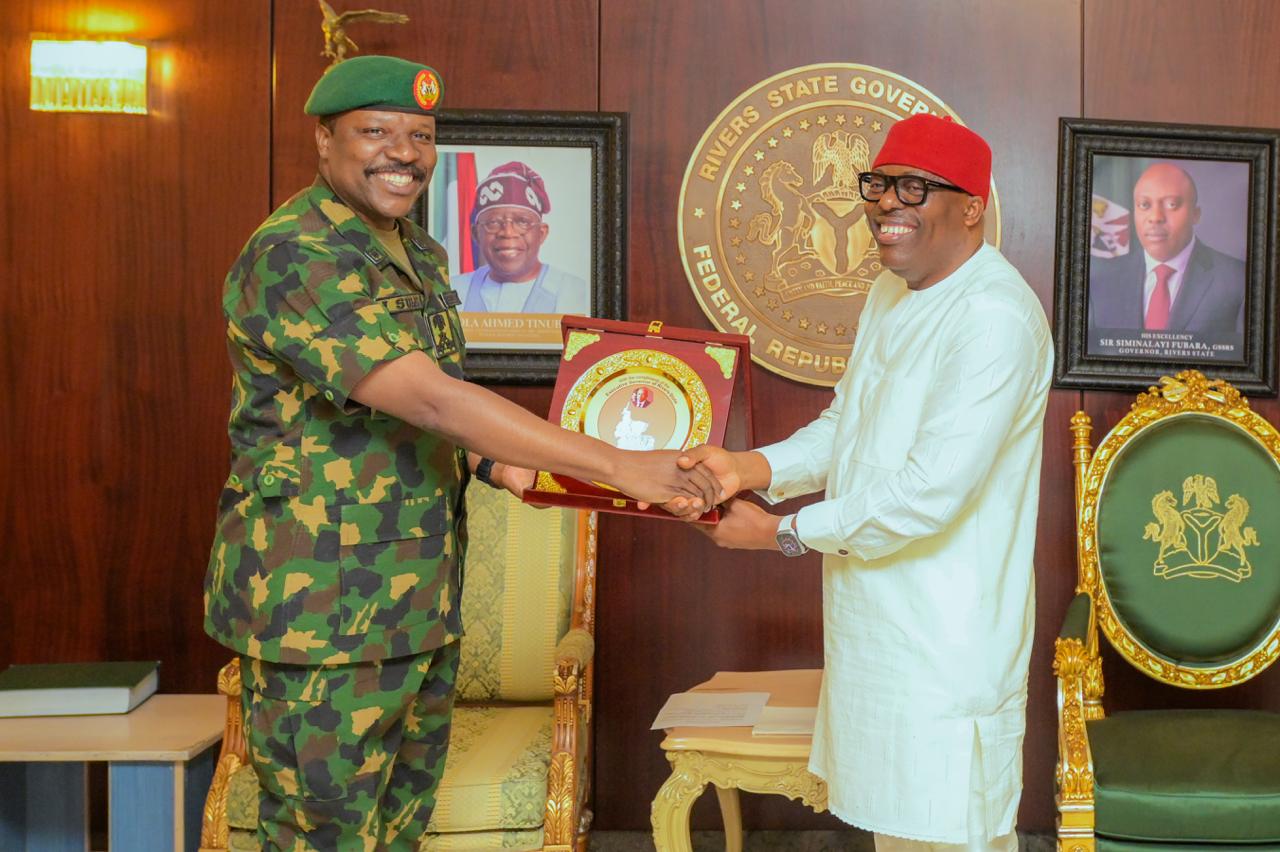
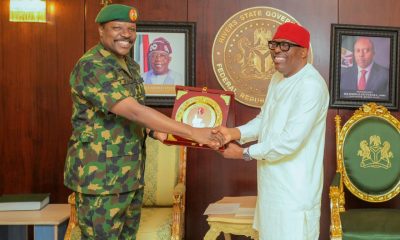
Governor of Rivers State, His Excellency, Sir Siminalayi Fubara, has assured the Nigerian Army of his administration’s continued support in the task of providing adequate security for oil and gas facilities as well as other critical national assets located in the state
In a statement by Chief Press Secretary to the governor,Onwuka Nzeshi, Fubara gave the assurance on Friday while receiving the new Commander, 6 Division Garrison and Sector 3, Joint Task Force (South-South), Operation Delta Safe, Brigadier General Ismaila Sule, at Government House, Port Harcourt.
The Governor congratulated the senior officer on his posting to Rivers State and noted that the State has, across different administrations, maintained a wonderful and mutually beneficial relationship with the Nigerian Army.
He described the partnership as a win-win relationship, stressing that government’s support to security agencies is not an extraordinary gesture, but a normal responsibility, given the importance of security to the social and economic development of the country.
Governor Fubara expressed appreciation for the new military formation being created and sited in Ahoada, describing it as a strategic decision that will help reduce agitation, tension and security challenges prevalent in that part of the state. He thanked President Bola Ahmed Tinubu, Commander-in-Chief of the Armed Forces, and the Chief of Army Staff, Lt. General Waidi Shaibu for the favour done to Rivers State.
The Governor emphasized that his government will never ask the military to do anything that will undermine its professional and statutory responsibilities or oppress any citizen, adding that his only interest is peace, progress and the development of Rivers State.
He said Sector 3, which is responsible for protecting critical national assets including oil pipelines, has always enjoyed massive support from the Rivers State Government, and assured that the support will not only be sustained but improved in the current dispensation.
In his remarks, Brig. Gen. Sule thanked Governor Fubara for the warm reception and for the consistent support of the State Government to the Army, pledging to strengthen synergy during his tour of duty in Rivers State.
Brig. Gen. Sule disclosed that he had been briefed by his predecessors on the consistent support the Army had received from the Rivers State Government, and conveyed the appreciation of the military high command to the state.
The Commander said his visit was to officially introduce himself to the Governor as the Chief Security Officer of the State, and to inform him of his plans to tour all 23 Local Government Areas in the State as well as nearby military formations.
Brig. Gen. Sule further disclosed that following the directive of President Bola Ahmed Tinubu to expand the Nigerian Army from eight to twelve Divisions, Rivers State will benefit from the expansion with a new Brigade to be stationed in Ahoada along with its affiliate battalions.
He said the new formation will help tackle security challenges in that axis and assured that under his command, the Army will do its best to ensure lasting peace and security across Rivers State.
Uncategorized
NSPWB Executive Sec.stresses Board’s readiness to support Christains, Muslim Pilgrims in Niger state
BY UTHMAN BABA-NASEER,MINNA
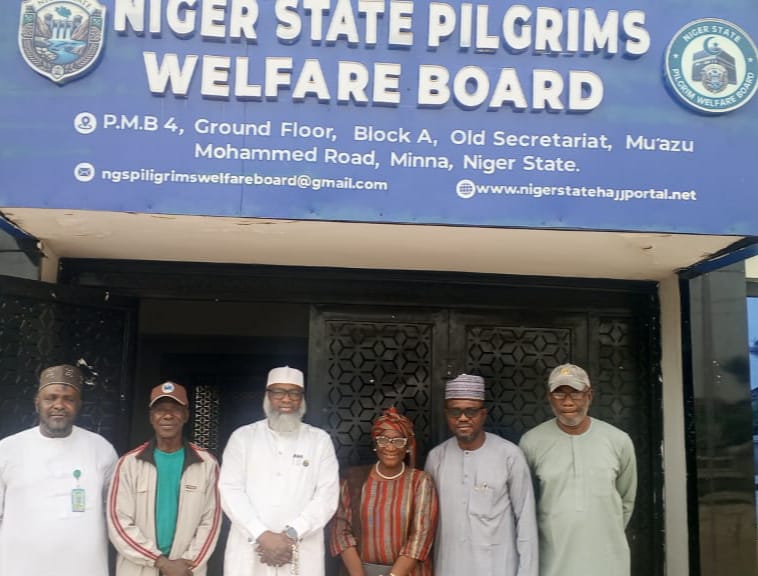
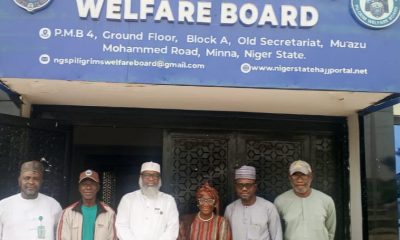
The Executive Secretary of the Niger State Pilgrims’Welfare Board,(NSPWB) Muhammed Awwal Aliyu,has reiterated the Board’s preparedness to provide equal support and welfare services to Christian and Muslim Pilgrims from the state.
The assurance was contained in a press statement issued by the head of Media and Communication of the Board Hajiya Lubabatu Muhammed Kusheriki and made available to Journalists in Minna Friday,the 9th of October,2026.
He gave the assurance in Minna while receiving newly appointed members of the Board’s Christian Department, led by Mrs. Deborah Salawu, during a courtesy and solidarity visit to formally introduce the team following their appointments.
Congratulating the new Board Members, the Executive Secretary described their appointments as timely and important to the effective administration of pilgrimage affairs in Niger State. He urged them to demonstrate commitment, integrity and professionalism in the discharge of their responsibilities.
The Executive Secretary stressed that the Christian Department remains an integral part of the Board, with the responsibility of coordinating and addressing the needs of Christian Pilgrims’ undertaking pilgrimage to approved Holy sites.
He assured the delegation that the Board would continue to provide the necessary institutional support and resources to ensure that Christian Pilgrims’ enjoy a smooth, well-coordinated and spiritually fulfilling pilgrimage experience.
“We are one family in the Niger State Pilgrims’ Welfare Board. We will continue to serve both Muslim and Christian Pilgrims’ without discrimination,” he said.
He further charged the Board Members to regard their appointments as a call to service, urging them to uphold transparency, accountability and the fear of God while working collaboratively with other departments to strengthen the Board’s operations.
He then assured the delegation of his full support and cooperation, while commending the Farmer Governor of Niger State, Farmer Mohammed Umaru Bago, for promoting inclusiveness and fairness in the governance of the State.
Earlier, the leader of the delegation, Mrs. Deborah Salawu, expressed appreciation to the Niger State Government for the opportunity to serve. She pledged the team’s commitment to supporting the Board’s mandate and promoting religious harmony through effective service delivery.
Also speaking, the Director of Administration of the Christian Department, Mr. Lawrence Paul, welcomed the newly appointed members and briefed them on the Board’s administrative structure and operational procedures.
He assured them of the department’s readiness to provide the necessary guidance and administrative support to enable them to settle into their responsibilities and contribute effectively to the success of pilgrimage operations in the state.
By Our Correspondent
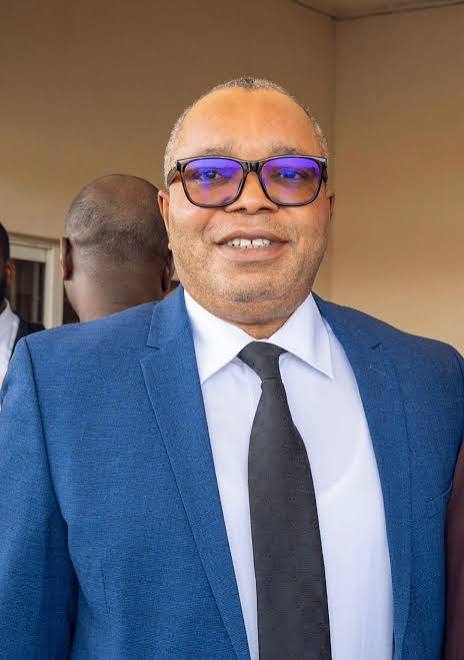
The Chairman of the All Progressives Congress, APC in Edo State, Emperor Jarret Tenebe, says his AK-47 remark was a metaphor for electoral strength and firmness, not a call to arms.
Tenebe said the expression was meant to communicate the importance of standing firmly by one’s democratic choice and protecting votes.
He explained that just as AK-47 is associated with strength, firmness and reliability, voters must show same qualities in defending their mandate.
The APC chairman stressed the reference was never intended to introduce violence into the electoral conversation.
He said the strength invoked was strength of conviction, not strength of arms.
According to him, defending the vote is a civic responsibility that requires vigilance, transparency and accountability throughout the process.
He said the analogy falls within political symbolism where familiar objects are used to convey resilience and determination.
Tenebe maintained such firmness must remain anchored in law, through peaceful participation, lawful observation and legitimate democratic mechanisms.
He said the message was about being steadfast in political choice and unwavering in democratic participation, not about wielding weapons.
“The essence was resilience without violence and firmness without lawlessness,” he said.
He urged electorate to understand the statement as call to value their votes and stand responsibly behind lawful choices.

Police parades 23 persons over alleged involvement in cult clashes in Bayelsà ….recovers Eight firearms, cutlasses, bottles of codine,two battle axes,20 cartridges
By David Owei The Bayelsà State Police Command led by Commissioner of Police, Mr. Ajao Saka Adewale has paraded twenty...

Wike orders ‘no work, no pay’ as FCT strike deepens, accuses NLC of politics … says teachers’ demands already resolved, directs area councils to enforce policy against striking
By Our Correspondent In an affort to force FCT workers on strike end the ongoing strike ,Minister of the Federal...

Milton Dick Elected President of the IPU Assembly
By Our Correspondent Mr Milton Dick, Speaker of Australia’s House of Representatives, has been elected as the President of the...

Fubara Reaffirms Partnership with Army -Lauds Establishment of New Brigade in Ahoada
By George Mgbeleke Governor of Rivers State, His Excellency, Sir Siminalayi Fubara, has assured the Nigerian Army of his administration’s...

NSPWB Executive Sec.stresses Board’s readiness to support Christains, Muslim Pilgrims in Niger state
BY UTHMAN BABA-NASEER,MINNA The Executive Secretary of the Niger State Pilgrims’Welfare Board,(NSPWB) Muhammed Awwal Aliyu,has reiterated the Board’s preparedness to...

Niger CJ Seeks mutual understanding between the Bar and Bench to enhance speedy dispensation of criminal, Civil Justice
By Uthman Baba-Naseer,Minna The Chief Judge of Niger State,Justice Halima Ibrahim Abdulmalik, has stressed the need for continued cordial and...

$1trn economy: NBTI showcases 298 Nigerian innovators to global investors
By Our Correspondent The National Board for Technology Incubation (NBTI) has showcased 298 Nigerian innovators from the 36 states and...


HURIWA Demands Answers Over Corps Members’ Release, Says Authorities Must Clarify Ransom Claims
By George Mbgeleke The Human Rights Writers Association of Nigeria (HURIWA) demands an urgent explanation from the Federal Government, the...

Tinubu’s Petrol Discount is a Loan To Nigerians-ADC
By George Mgbeleke The African Democratic Congress (ADC) has described the Tinubu administration’s proposed petrol price intervention as a loan...
HURIWA Demands EFCC Prosecution of Okowa, Bello …. Condemns Parties’ Choice of Politicians Facing Corruption Allegations*
By George Mgbeleke The Human Rights Writers Association of Nigeria (HURIWA) has called on the Economic and Financial Crimes Commission...
-
 Politics1 year ago
Gov Okpebholo moves to end Cultism *Threatens action against leading cult groups *Vows to demolish more cult houses in Edo State
-
 Politics1 year ago
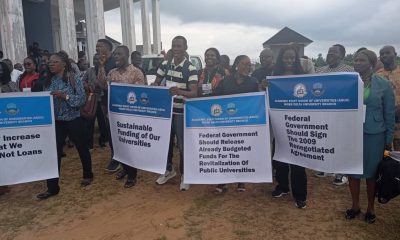
ASUU-NDU protest against FG loans, unpaid salaries,Non-Implementation of agreements …..says loans is generational slavery
-

 Business & Economy1 year ago
PC-NCG Issues Disclaimer on Purported Nigerian Coast Guard National Orientation Exercise In Anambra State
-
 Entertainment2 years ago
Jubilation galore as Parishioners of CKC Kurudu celebrate their cultural heritage ….FG should exploit our Cultural heritage to unite Nigerians-Rev Fr Dim
-

 Sports8 months ago
Bayelsa-born ex-football star’s son, Opuama donates spike shoes to Athletics Association
-

 General News2 years ago
Reps hold public hearing on FMC Ugwuaji Awkunanaw
-

 Law & Crime1 year ago
Legal practitioner raises alarm over threat to his life by CSP Muhammed Abdulkareem
-
 General News2 years ago
Celebration galore as UDA Successfully Elected New Exco ……I will digitalize processes that will raise UDA to greater height -Comr. Okejiri