
General News
At maiden conference, ARUVIN links ruminant health to food security, national economy

By Our Correspondent
President of the Association of Ruminant Veterinarians in Nigeria, ARUVIN, Dr. Adah Ogwuche, has linked ruminant health directly to food security, rural incomes and the national economy.
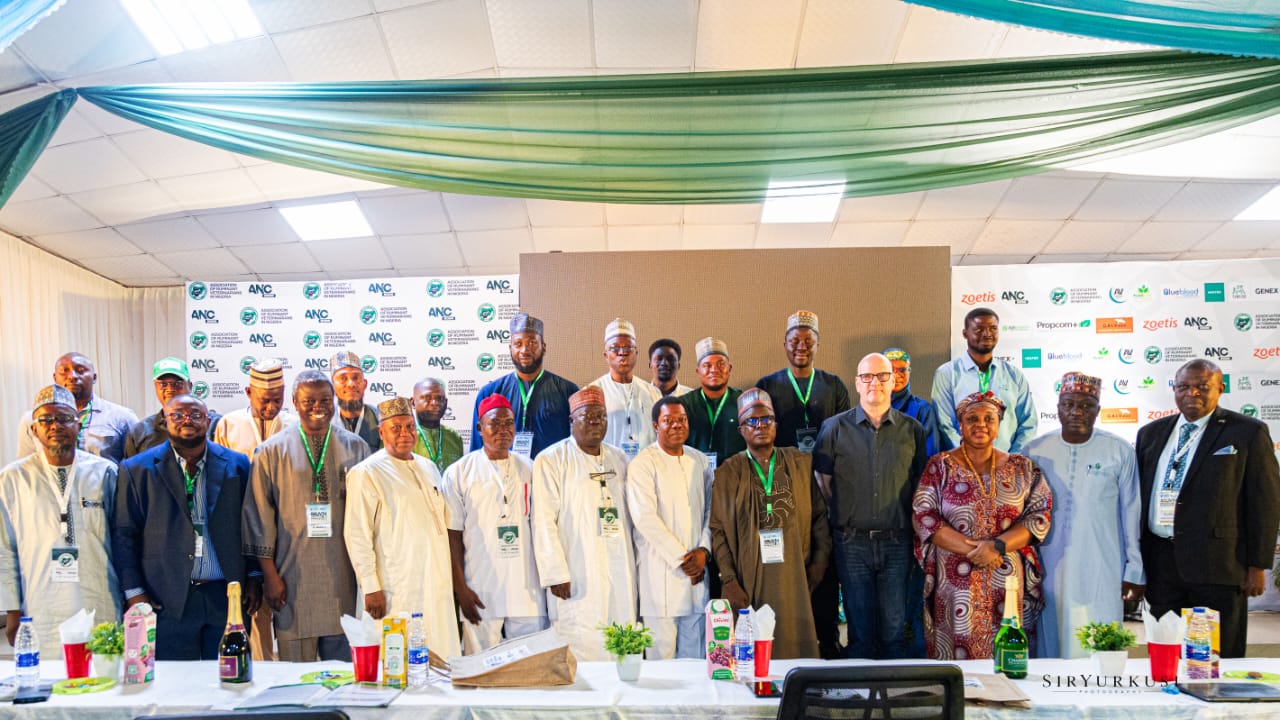
He spoke in Abuja at the opening of ARUVIN’s Maiden National Conference, held at the Agricultural and Rural Management Training Institute, ARMTI, from September 14 to 17, 2026, with the theme “Enhancing Ruminant Productivity: Health, Market Systems and Climate Resilience.”
The event attracted the Chief Veterinary Officer of Nigeria, Dr. Samuel Anzaku, Veterinary Council of Nigeria, VCN President, Prof. Mathew Adamu, Nigerian Veterinary Medical Association, NVMA President, Dr. Moses Arokoyo, keynote speaker, Mr. Snorri Sigurdsson of Arla Foods, patrons, sponsors and delegates from across Nigeria.
Ogwuche described the conference as a genuine milestone, recalling that ARUVIN started as an idea in 2019 when he was a young veterinarian, and grew through persistence, mentorship and congresses in Lagos, Jos and Taraba.
He paid tribute to early believers in the vision, including the late Dr. Faruku Bande, noting that their encouragement sustained the association through moments of doubt.
“Our cattle, sheep and goats are not only animals in our care; they are food on family tables, income in rural households, and a pillar of our national economy,” he said.
He said the theme was deliberate because disease burden such as PPR, calf mortality and mastitis, climate pressure on grazing and water, and poor market access are interconnected and must be tackled together.
According to him, ARUVIN was created to bridge academia, industry, field practice and government, aligning Nigerian ruminant practice with global standards through affiliation with the World Association for Buiatrics and representation at the 2024 World Buiatrics Congress in Cancun, Mexico.
He said the programme was carefully built to address contemporary field realities, from disease control and herd health economics to value chains and climate resilience, urging delegates to engage fully.
Also speaking, the Chief Veterinary Officer of Nigeria, Dr. Samuel Anzaku described the maiden conference of the association as a historic initiative, saying the theme was timely because sustainable increases in livestock production cannot be achieved without placing animal health at the centre.
He noted that cattle, sheep and goats remain central to Nigeria’s livestock economy and to the livelihoods of millions, supporting food and nutrition security, household income, employment, trade and rural resilience.
He, however, listed major constraints holding back the sector to include animal diseases, weak preventive services, poor production practices, limited access to veterinary care, feed and water shortages, weak market linkages and increasing climate variability, stressing that the challenges are interconnected.
According to him, poor nutrition increases disease susceptibility, while climate stress raises disease risk and reduces access to pasture and water, hence health, nutrition, markets, environment and climate resilience must be addressed together.
Anzaku said the Federal Ministry of Livestock Development under Hon. Idi Mukhtar Maiha is committed to strengthening animal health systems as part of its broader agenda to build a productive, resilient and commercially viable livestock sector.
He identified control of Peste des Petits Ruminants, PPR as a top priority, noting that the disease causes huge losses in sheep and goat production, especially among smallholders, making its control a matter of livelihoods, food security and economic development.
He disclosed that government is strengthening PPR surveillance and control through serosurveillance and sero-monitoring across states, and is investing in the automation of the National Animal Disease Information System, NADIS to improve timely, data-driven decision making and rapid response.
Anzaku, however, said technology alone cannot fix surveillance, as field veterinarians remain the critical link between livestock owners and the animal health system because they understand production systems and can detect and report unusual events promptly.
Delivering his goodwill message at the Congress, the President of the Nigerian Veterinary Medical Association, NVMA, Dr. Moses Arokoyo, described Nigeria’s livestock industry as a national asset waiting to be unlocked, not a problem to be fixed.
He noted that while AU-IBAR estimates Africa has about 268 million pastoralists serving a 1.4 billion market under AfCFTA, FAO data shows 306 million Africans remain undernourished, a contradiction that highlights untapped opportunity.
With its vast cattle, sheep and goat population, Nigeria’s challenge, he said, is not shortage of animals but low productivity, poor animal health, weak market access and low value capture.
According to him, strategic investment across the livestock value chain remains one of the fastest ways to change the narrative for the 133 million Nigerians living in multidimensional poverty.
He charged ruminant veterinarians to lead efforts in reducing disease burden through surveillance, vaccination, digital technology, genetics, biosecurity and improved service delivery.
Arokoyo called for sustained advocacy for food security, poverty reduction and economic diversification, urging Nigerian veterinarians to understudy Kenya and Botswana’s models.
“We must innovate, we must change, we must harness our livestock potential. The cost of inaction places our future in constant dependency mode and this is not acceptable,” he said, adding that animal health must become a cornerstone of Nigeria’s economic transformation.
General News
Edo Healthcare Transformation: Okpebholo provides 61 PHCs in less than two years in office

Hy Our Correspondent
Edo State Governor, Senator Monday Okpebholo, has built and renovated 61 Primary Healthcare Centres across the state’s 18 local government areas in less than two years in office, driving accessible and quality healthcare closer to underserved residents.
The initiative introduces free malaria testing and free delivery services at these facilities, easing financial burdens for families and eliminating long travel to urban centres for basic care.

Benefiting communities include Idogbo Health Centre in Ikpoba Okha, Usih in Egor, and New Era in Oredo, Urhonigbe Heath Center in Orhionmwon, Iguoriakhi Health in Ovia South West, among others within the Edo South Senatorial District, marking a major improvement in the quality of life for local communities.
For many beneficiaries, the renewed health centres represent not merely newly Constructed buildings, but a significant improvement in their quality of life.3
Residents who spoke to newsmen expressed appreciation for the intervention, saying the availability of functional healthcare facilities within their communities has reduced the stress, cost and risks associated with seeking treatment far from home.
A resident whose wife delivered earlier in the day confirmed that she received the free delivery service, describing the initiative as a welcome relief for families.
Another beneficiary said she was particularly impressed by the quality of service and professionalism of the healthcare workers. “I am happy that we have something like this in our community. I love it and love the professionalism of the staff there, the way they attend to me and treated me. I am really happy,” she said.
Mr. Victor Okonta, a resident in one of the communities, noted that the transformation has become especially valuable during emergencies. “Having a health centre in our community is a good one for us. We don’t have to go through the stress of going to the city centre anymore, especially during emergencies at night. Before, this place was not okay, but since the renovation, everything is back to normal and the community people are using it,” he said.
Beyond healthcare, the renewed facilities are also stimulating economic activity in surrounding communities. Mrs. Helen Ebhogiaye, a trader at Iwogban Community, said the transformation of their formerly dilapidated health centre had increased patronage for local businesses.3
“Before, this health centre was in a very bad state and people hardly come here for treatment or delivery. But today, since the government intervention, here is booming and it is a plus for us traders. I sell food, and because the place is always busy, I now have many customers patronising me,” she said.
A staff nurse at one of the facilities, Mrs. Omorodion Victory, said the centre operates round the clock, providing immunisation, maternity services, treatment and family planning.
“We render 24-hour services. Delivery is 100% free here. The benefit of this place is that it provides healthcare for community people at an affordable cost and is accessible 24 hours,” she said.
Across the facilities, patients, nursing mothers and other beneficiaries have continued to recount their experiences, commending the government for restoring healthcare services closer to their doorsteps and praising ther dedication and professionalism of the health workers.
For communities that once endured long journeys, high medical bills and poorly functioning facilities, the renewed centres are increasingly being seen as a tangible return of essential public healthcare to the people.
By our correspondent
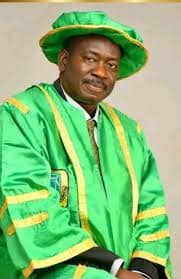
Governor Agbu Kefas has approved the appointment of Prof. Demo Joab Usman Kalla as Vice-Chancellor of the Taraba State University of Tropical Agriculture, Science, Technology and Climate Action, Gembu.
The appointment was announced in a statement signed by the Secretary to the Government of the State, Chief Gebon Timothy Kataps, Esq., on Monday in Jalingo, the state capital.
Until his appointment, Prof. Kalla served as Director of the TETFund Centre of Excellence on Dairy Research and Development at the Abubakar Tafawa Balewa University, ATBU, Bauchi, and as a member of the Presidential Livestock Reforms Implementation Committee.
The statement describes Prof. Kalla as a prolific scholar with an impressive record of high-quality research publications in reputable local and international journals.
“His contributions to the field of Animal Science have earned him wide recognition within academic and professional circles,” it stated.
Governor Kefas expressed confidence that Prof. Kalla would bring his wealth of experience in academia, research, leadership and administration to bear in providing visionary leadership for the new institution.
According to the governor, the university is expected to be positioned as a centre of excellence in tropical agriculture, science, technology and climate action.
He wished the new Vice-Chancellor a successful and impactful tenure, and urged him to work diligently with relevant stakeholders to realise the university’s mandate.
Governor Kefas also charged Prof. Kalla to drive advancement in education, research, innovation and sustainable development in Taraba State and beyond.
The university, located in Gembu, Sardauna Local Government Area, is one of the flagship higher education projects of the Kefas administration aimed at expanding access to specialised education.
By Our Correspondent
In a bid to foster effective and tech-driven workforce, the Federal Government has introduced an interactive e-training platform designed to expand knowledge access for National Youth Service Corps (NYSC) personnel.,
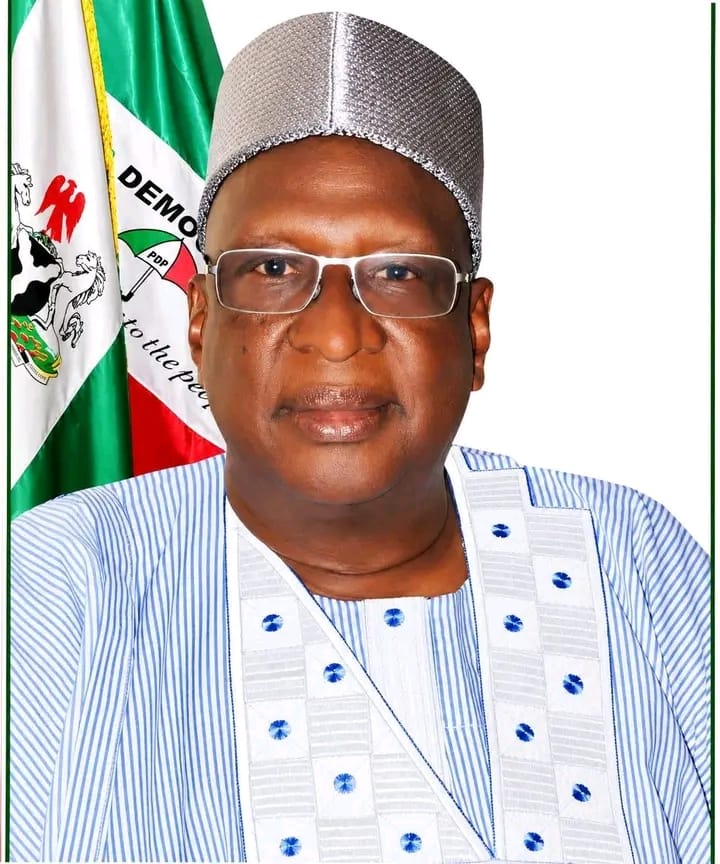
The Minister of Youth Development, Comrade Ayodele Olawande launched the new portal in Abuja on Monday during the 2026 Batch ‘C’ Pre-Orientation Workshop, reaffirming the government’s commitment to supporting the NYSC, according to a statement by Information Director Caroline Embu.
Praising the NYSC leadership, Olawande expressed delight at how technology is currently transforming the agency’s operations and driving higher institutional efficiency.
He noted that increased access to information has enhanced the professionalism of the NYSC workforce
I
In the words of the Minister,, “this platform would also help to build more efficient, knowledgeable and responsive workforce. We are committed towards making the Scheme get better, let us work together and embrace technology”, Olawande said.
He also said that with the growing trend across the globe, academic qualifications alone cannot solve the problems of unemployment.
“Our Corps Members must learn practical skills in leadership, entrepreneurship, critical thinking, problems-solving.”
“They must also understand the importance of discipline, integrity, and tfr responsibility. Every Corps Member must be encouraged to make meaningful impact”, Olawande stated.
He also reiterated that the service year should be an opportunity for graduates to serve, lead, and contribute to national development
The Minister disclosed that Skills Acuisition and Entrepreneurship Development (SAED) remains the most important content in the NYSC as at date.
Also speaking, the Director General of NYSC, Brigadier General Olakunle Nafiu said societal changes has made it imperative for the Scheme to constantly review its Orientation Course contents for more relevance.
He added that the Workshop theme; “Reimagining the NYSC Orientation Course: Building Resilient, Responsible and Service-Oriented Corps Members for a Changing World”, was chosen to shape the the Corps Members’ character, mindset, skills and civic awareness.
He added that the success of the Orientation Course depends largely on the effective collaboration of all stakeholders.
In his words; “I encourage everyone to keep building the partnership and trust needed for the security and welfare of Corps Members wherever they are posted across the country”.
“Management remains committed to working with security agencies to access risk, take preemptive steps and make Corps Members safe throughout service year”.
The Director, Planning, Research and Statistics, Mr Nura Umar, in his address, appreciated Comrade Olawande for his passion for youth development.
He stated further that the Orientation Camp is the first contact of every Corps Member to kick-start the service year, adding that there was the need to shape their character, values and understanding of National responsibility.
Umar also said it is necessary to “rebuild and modernise the contents, methodology and delivery of the Orientation Exercise to ensure that it remains focused and align with contemporary realities.”
He challenged participants to use the workshop to build stronger stakeholder relationships by prioritizing corps members’ welfare, camp discipline, leadership growth, and skills development


Fuel price: FG inflicting damages on Nigerians.. NLC …..threatens Tinubu’s re-election …..Insists on immediate wage awards for workers
By Our Correspondent As workers go trough excruciating pains occasioned by the current hike in fuel price,The Nigeria Labour Congress...


Minna Fed.High Court trikes out ADC Candidate’s defence against eligibility of Hon. Baba Shehu Baba Shehu Agaie
By Uthman Baba-Naseer,Minna The Federal High Court, sitting in Minna has struck out the defence of the 1st Defendant Statement...


At maiden conference, ARUVIN links ruminant health to food security, national economy
By Our Correspondent President of the Association of Ruminant Veterinarians in Nigeria, ARUVIN, Dr. Adah Ogwuche, has linked ruminant health...


HURIWA: Stop Turning Traditional Palaces, Religious and Academic Institutions Into APC Campaign Platforms
By George Mgbeleke The Human Rights Writers Association of Nigeria (HURIWA) has raised the alarm over what it describes as...

2027: Wike’s Rainbow Coalition crucial to Tinubu’s victory, says Eradiri
By David Owei Former President of the Ijaw Youths Council (IYC) Worldwide, Engr. Udengs Eradiri, has described the Minister of...

N1,470/LITRE: Dnn’t Push Nigerians To Their Limits” ADC Warns Tinubu
By George Mgbeleke The African Democratic Congress, ADC, has warned President Bola Ahmed Tinubu that his government’s economic policy is...


Specil Appleal To All Freedom Fighters and Biafran Agitators
By Chief(Dr) Chekwas Okorie I wish to state unequivocally that all our people who are pushed by our painful and...
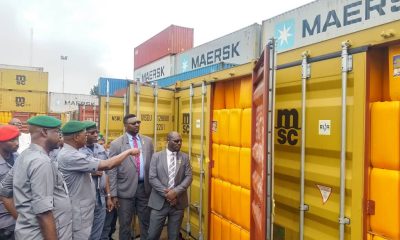

Customs Intercepts 56 Containers With Goods Worth Over N5.53bn, Inaugurates Healthcare Centre In Rivers
By Our Correspondent In its effort to stamp out smuggling and improve the revenue target of the country, the Nigeria...
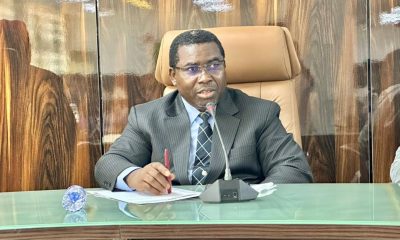

2027 Election: Every Action of INEC will Reflect Will of Nigerians-Prof Gumus
By George Mgbeleke The Independent National Electoral Commission (INEC) has reaffirmed its commitment to conducting a transparent, credible, inclusive and...


Barau Inaugurates Kano North Campaign Council, Tasks Members to Deliver APC Candidates from Top to Bottom * Says: “APC SAK”
By George Mgbeleke The Deputy President of the Senate, Senator Barau I. Jibrin, on Tuesday inaugurated the Kano North Senatorial...
-

 Politics1 year ago
Gov Okpebholo moves to end Cultism *Threatens action against leading cult groups *Vows to demolish more cult houses in Edo State
-
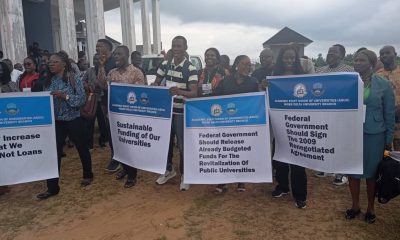
 Politics1 year ago
ASUU-NDU protest against FG loans, unpaid salaries,Non-Implementation of agreements …..says loans is generational slavery
-
 Business & Economy1 year ago
PC-NCG Issues Disclaimer on Purported Nigerian Coast Guard National Orientation Exercise In Anambra State
-
 Entertainment2 years ago
Jubilation galore as Parishioners of CKC Kurudu celebrate their cultural heritage ….FG should exploit our Cultural heritage to unite Nigerians-Rev Fr Dim
-

 Sports7 months ago
Bayelsa-born ex-football star’s son, Opuama donates spike shoes to Athletics Association
-

 General News2 years ago
Reps hold public hearing on FMC Ugwuaji Awkunanaw
-

 Law & Crime1 year ago
Legal practitioner raises alarm over threat to his life by CSP Muhammed Abdulkareem
-

 General News2 years ago
Celebration galore as UDA Successfully Elected New Exco ……I will digitalize processes that will raise UDA to greater height -Comr. Okejiri