
Uncategorized
Deepfakes: INEC Chairman Charges Editors on Rigorous Fact-Checking Ahead 2027 ….Cautions media against declaring unofficial results ….Says journalists’ welfare critical to democracy

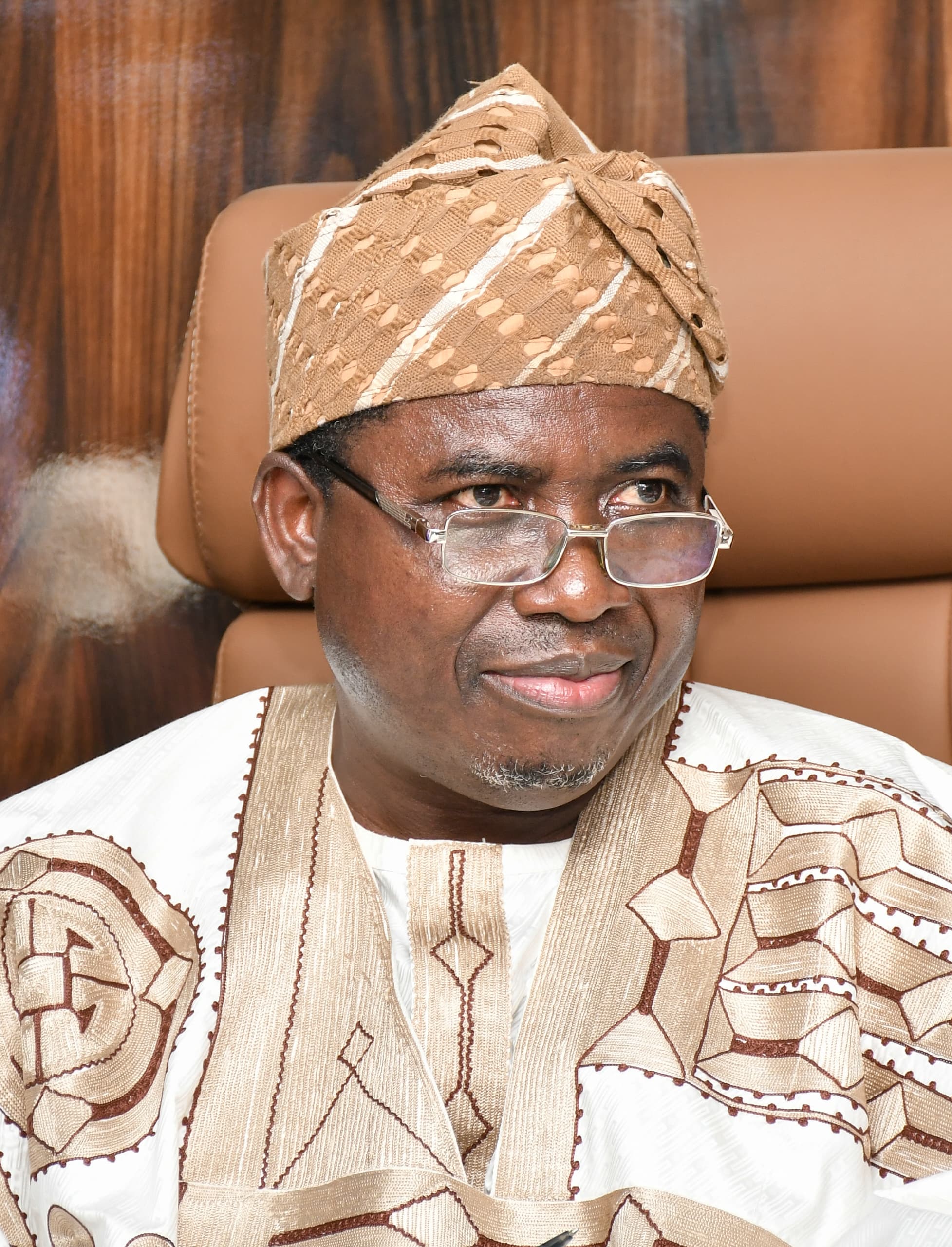
By Our Correspondent
The Independent National Electoral Commission (INEC) has charged newsroom leaders across the country to erect an unyielding firewall of rigorous fact-checking and digital verification against artificial intelligence-driven deepfakes.
In a statement signed by Chief Press Secretary / Media Adviser to the INEC Chairman, Adedayo Oketola, the commission warned that synthetic disinformation poses an existential threat to public trust and democratic stability ahead of the 2027 General Elections.
Chairman of INEC, Prof. Joash Amupitan, who was represented by the Resident Electoral Commissioner for Enugu State, Dr. Chukwuemeka Chukwu, gave the charge on Thursday, September 24, 2026, at the 22nd All Nigeria Editors Conference (ANEC) 2026 holding in Enugu.
Delivering his address titled, “The Ballot, the Media and the Task of Keeping Democracy Alive,” Prof. Amupitan cautioned that generative AI, voice cloning, and deepfake video synthesis had democratised mass deception, enabling political saboteurs to produce photorealistic videos of election officials, cloned audio files, and doctored result sheets designed to incite public outrage and delegitimise democratic outcomes.
The INEC chairman urged the leadership of the media to institutionalise specialised fact-checking desks, deploy forensic image analysis software, and strictly adhere to statutory protocols requiring that official election results be verified exclusively through INEC before publication.
Amupitan said: “We have moved far beyond simple political bias, hyperbole, or unverified rumours into an era of synthetically manufactured reality. Generative artificial intelligence, voice cloning, deepfake video synthesis, and automated bot networks have democratised mass deception.
“Malicious operatives no longer need a printing press or broadcast license to deceive millions. With modest computing power, they can produce a photorealistic video of an electoral official purportedly declaring false results in a dark room; a cloned audio file of an INEC Resident Electoral Commissioner instructing staff to manipulate voting devices on election eve;
“Manipulated result sheets engineered to mimic official security features, flooded onto social media minutes after polling closes to create an illusion of fraud before collation even begins.
“The primary danger of synthetic disinformation is not merely that it tricks citizens into believing a specific falsehood, but it causes the systemic destruction of public trust. When everything can be faked, citizens begin to doubt genuine, verified facts provided by constitutional authorities.
“When deepfakes render lies believable, real truth is greeted with skepticism. Cynicism replaces civic engagement, leading voters to ask: Why stand in line for hours if the outcome is already manipulated on a screen? That mental retreat is where democracy begins to decay.
“Disinformation attacks the electorate’s cognitive sovereignty, turning elections from a peaceful contest of ideas into a volatile battleground of manipulated emotions, ethnic tension, and pre-packaged outrage.
“For an election management body, administrative success on the ground can be instantly erased on a smartphone screen by a well-timed, algorithmically boosted deepfake.”
Responding to the threat environment, Amupitan disclosed that INEC had transitioned from defensive anxiety to a proactive technological offensive.
He said the Commission had established a dedicated Artificial Intelligence Division within its ICT Department and commenced deploying automated AI auditing tools within the Results Management process to detect discrepancies before final verification.
He emphasized that all automated checks remained strictly governed by a five-pillar AI Governance Framework and subject to mandatory human auditing.
Amupitan also cautioned media organisations against publishing or amplifying privately collated election results ahead of the 2027 General Elections.
He warned that such reports could create conflicting narratives and undermine confidence in officially declared results.
Amupitan urged editors to ensure that their platforms did not become channels for unverified election figures.
He said: “Let’s resist premature result declarations. Under the Electoral Act, statutory authority to declare election results rests exclusively with INEC.
“Amplifying unverified, privately collated figures published by political actors on social media creates conflicting public narratives that undermine official outcomes. We should use our platforms to educate citizens on spotting synthetic content, fake letterheads, and algorithmically generated rage-bait.”
The INEC chairman warned that amplifying unverified, privately collated figures published by political actors on social media could create conflicting public narratives capable of undermining official election outcomes.
He said the media had a critical responsibility to protect the integrity of the electoral process, particularly as artificial intelligence and social media were making it increasingly difficult to distinguish authentic information from manipulated content.
According to him, the pressure on newsrooms to be the first to publish should not override the obligation to verify information during elections.
He added: “The pressure on modern newsrooms to be first is immense. But in national elections, it is vastly more important to be right than to be first.
“Rushing to publish unverified, sensational claims whether a fake result sheet on social media, a doctored video, or an unconfirmed statement grants institutional legitimacy to deliberate deception, causing damage to public peace that is almost impossible to reverse.
“I appeal to the Nigerian Guild of Editors to view media gatekeeping as a critical component of national security and democratic defense. To effectively combat AI-driven disinformation before, during, and after elections, we must build a collaborative firewall.
The INEC chairman also used the occasion to draw attention to the economic conditions of Nigerian journalists, arguing that media welfare was directly connected to the integrity of journalism and, by extension, democratic governance.
He told media owners and managers that it would be difficult to expect journalists facing severe financial insecurity, unpaid salaries and inadequate welfare to consistently withstand political inducement and other pressures.
“A poorly compensated journalist is vulnerable; a financially neglected newsroom is fertile ground for compromise,” he said.
According to him, journalists who receive decent remuneration and structured welfare are better positioned to resist financial inducement, interrogate false narratives and report elections objectively.
Amupitan said INEC had applied a similar principle to its own workforce by introducing measures aimed at improving the welfare of election officials.
He disclosed that the Commission established the Consolidated Election Management Body Salary Structure (CEMBSS), separating its workforce from the regular Civil Service salary structure with effect from January 1, 2026.
Reinforcing the imperative for media vigilance during his opening address, the President of the Nigerian Guild of Editors, Mr. Eze Anaba, emphasized:
“We have a responsibility to ensure that our democracy survives. The media must hold power accountable and provide the space for diverse voices to be heard. The political actors alone are not in charge of our democracy, the judiciary and the media have a role to play to strengthen our democracy.”
On preparations for the 2027 elections, the INEC chairman said the Commission commenced a six-zone Interactive Meetings and Readiness Assessment tour in Lagos on September 7, aimed at assessing preparations across the country.
He said the media had a critical role to play in the process because elections were no longer contested only at polling units but also in the information space.
The Obi of Onitsha, Igwe Nnaemeka Alfred Achebe, urged INEC to form a joint Rapid Response Desk of all newsrooms to dispel election misinformation.”
The traditional leader also challenged newsroom editors to take an active role in combating growing voter apathy by educating the public on the importance of participating in the upcoming general election cycle.
Archbishop Emeritus of Abuja, John Cardinal Onaiyekan, John Cardinal Onaiyekan noted that a free press is necessary for a genuine democracy
According to him, the situation in Nigeria is not so bad.
“We see this in the diversity of printed newspapers every day, the wide range of radio and television stations, and then most recently the social media that has made an irruption onto the media space in a way that we are still to see how far it is going.
“The latest arrival, of course, is artificial intelligence, AI. It is already working wonders in the communication space, though not without its dangers if it is allowed to spin out of human control”, he added.
By David Owei
Recent criticisms in some sections of the media over the pace and direction of development in Bayelsa State demand a serious response—not because government should be shielded from scrutiny, but because public discourse about the state must be anchored on facts, evidence and professional journalism.
The press has every right, and indeed a responsibility, to question government policies, interrogate public expenditure and demand accountability. But the responsibility of the press does not end with criticism. Journalism must also tell the complete story.
It is therefore necessary to ask: Are we reporting Bayelsa as it is, or are some commentators deliberately reporting Bayelsa only from the angle that suits their political narrative?
There is a growing tendency to reduce the development conversation in Bayelsa to what government has allegedly failed to do, while conveniently ignoring major projects either completed, ongoing or already commissioned.
For instance, the state government has reported major investments in roads and bridges, urban renewal, a 60MW gas-fired independent power project, the Angiama-Oporoma bridge and other infrastructure projects.
The 2026 budget also allocated 64.6 per cent of its expenditure to capital projects, with substantial allocations to works, education, health, sports and other development sectors.
These facts do not mean that the government should be declared beyond criticism. Far from it. They mean that criticism should be based on the whole picture.
If there are concerns about the cost of a project, journalists should investigate the contract value, procurement process, funding source, level of completion and expected public benefit.
If there are concerns about poverty and unemployment, the press should obtain and present the relevant data. If government promises have not been fulfilled, the media should ask when the promises were made, what has been delivered and what remains outstanding.
That is journalism.
What Bayelsa does not need is a situation where every development project is automatically interpreted through a political lens and every government intervention is dismissed before its impact can be objectively assessed. The same standard must apply to government.
Government must be prepared to provide figures, documents, timelines and evidence to justify its claims. It must answer legitimate questions from journalists and citizens. It must accept criticism where projects fail, promises are abandoned or public resources are not properly utilised.
But the media must equally accept its own responsibility. A journalist is not an opposition politician. A newspaper is not a political party. And criticism is not synonymous with journalism.
The credibility of the press is measured by its commitment to facts, balance, verification and the public interest.
Bayelsa is a developing state with enormous challenges arising from its difficult terrain, limited connectivity and years of infrastructure deficits.
The state therefore requires sustained development, not perpetual political warfare disguised as journalism.
There is nothing wrong with asking whether a road is worth its cost. There is nothing wrong with questioning a stadium project.
There is nothing wrong with demanding jobs, food security, better healthcare and improved education. Indeed, those questions should be asked.
But the questions must be accompanied by facts—not insinuations, selective reporting or political talking points.
Recent opposition criticisms of the Diri administration have focused on poverty, hunger, unemployment and spending priorities, including criticism of the proposed stadium project.
Those positions are legitimate subjects for reporting, but they remain political claims and should be presented as such rather than automatically treated as established facts.
Equally, claims by government about development achievements should be subjected to independent verification rather than simply reproduced as official propaganda.
That is the balance Bayelsa needs.
Our people deserve to know what government is doing, what government is not doing, what has worked, what has failed, what has been promised and what has actually been delivered.
The press must therefore rise above political camps and become the bridge between government and the governed.
We should not be afraid to criticise government. But neither should we be afraid to acknowledge development when the evidence shows it.
Bayelsa belongs to all of us. Its development should therefore be bigger than partisan politics, bigger than personalities and bigger than the interests of any political camp.
The duty of the press is to speak truth to power—but truth must remain the standard.
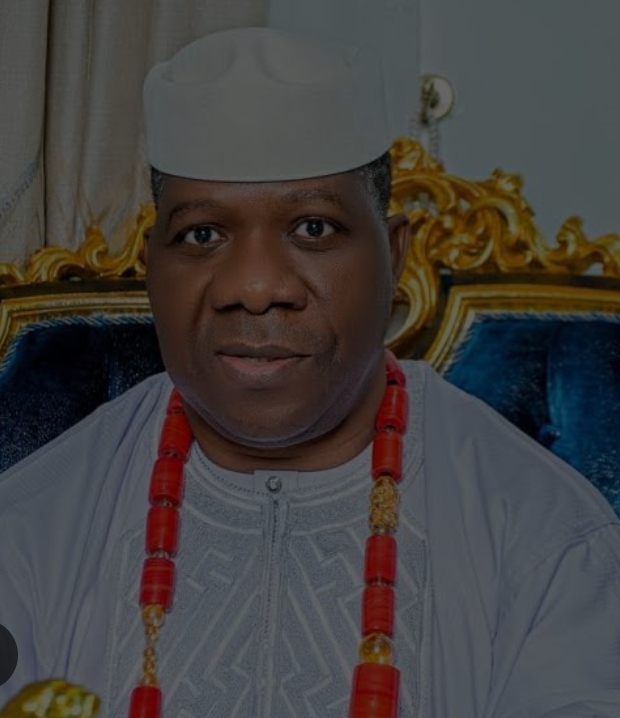
By George Mgbeleke
Leader of the Senate, Senator Opeyemi Bamidele Thursday observed that no nation could meaningfully realise its full potential when a significant proportion of its population “is unable to contribute fully to governance, diplomacy, economic development and public leadership.”
Bamidele, therefore, said inclusion of women in public governance and leadership “is never an act of favour, but indeed a strategic investment in Nigeria’s human capital and institutional strength” while emphasising the centrality of gender inclusion to the future of Nigeria and the world in the 21st century.
He made these remarks at the presentation of the book, “The Female Diplomat: Navigating Power, Ambition and Identity,” held at Nigeria House, New York, United States, on Thursday, reflecting on the significance of gender inclusion in the country’s national life.
The book presentation, among others, brought together prominent dignitaries and diplomats namely the Deputy Secretary-General of the United Nations, Ms. Amina Mohammed; Minister of Foreign Affairs, Amb. Bianca Odumegwu-Ojukwu; Nigeria’s Permanent Representative to the United Nations, Amb. Jimoh Ibrahim; Nigeria’s Ambassador to the United States, Amb. Kayode Are and President/CEO, Montefiore Einstein.
Apart from the book presentation, Bamidele also participated in the Nigeria Investment Forum 2026 designed to bring together government representatives, international investors, development finance institutions, multinational corporations, business leaders and strategic partners to explore viable investment opportunities across Nigeria.
Bamidele, who chaired the book presentation at the Nigeria House in the United States, noted that Nigeria’s democracy could only be strengthened when all citizens “are adequately represented in the institutions established to serve them.”
Bamidele disclosed that President Bola Ahmed Tinubu, evident in the Renewed Hope Agenda, recognised that Nigeria’s development must draw on the abilities and contributions of all its citizens,
He added that President Tinubu had consistently affirmed that women and young people must not be relegated to the background in the political, economic and national life of the country.
He said this commitment “is important because meaningful inclusion goes beyond the presence of women in institutions. It requires genuine opportunities to participate in decision-making, exercise responsibility and contribute to the formulation and implementation of public policy.“
“Gender inclusion is not an act of favour. It is a strategic investment in Nigeria’s human capital and institutional strength. No nation can realise its full potential if a significant proportion of its population is unable to contribute fully to governance, diplomacy, economic development and public leadership.
“Our democracy is strengthened when citizens see themselves represented in the institutions established to serve them. Our foreign relations are also enriched when Nigeria is represented by capable professionals whose knowledge, judgement and experience reflect the breadth of our national talent.”
Bamidele explained the vital role of the National Assembly in deepening gender inclusion, noting that the parliament “will continue to promote institutions that are fair, accessible and responsive through legislation, representation and oversight.”
The senate leader further emphasised that the National Assembly should help establish an environment in which competence is recognised, opportunity is broadened, and leadership is strengthened through the participation of qualified women.
“This is not a responsibility for the government alone. Political institutions, the diplomatic service, the private sector, academic institutions and civil society all have roles to play. Progress will require deliberate policies, supportive institutions and a collective willingness to recognise talent wherever it is found.
“Today’s occasion contributes to that broader national conversation. It offers leaders, diplomats, scholars and members of the public an opportunity to engage with ideas relevant to Nigeria’s ongoing development and its engagement with the international community,” Bamidele observed at the book presentation.
Uncategorized
Igbo socio-cultural group lauds Abia first lady over social interventions on vulnerable Abians
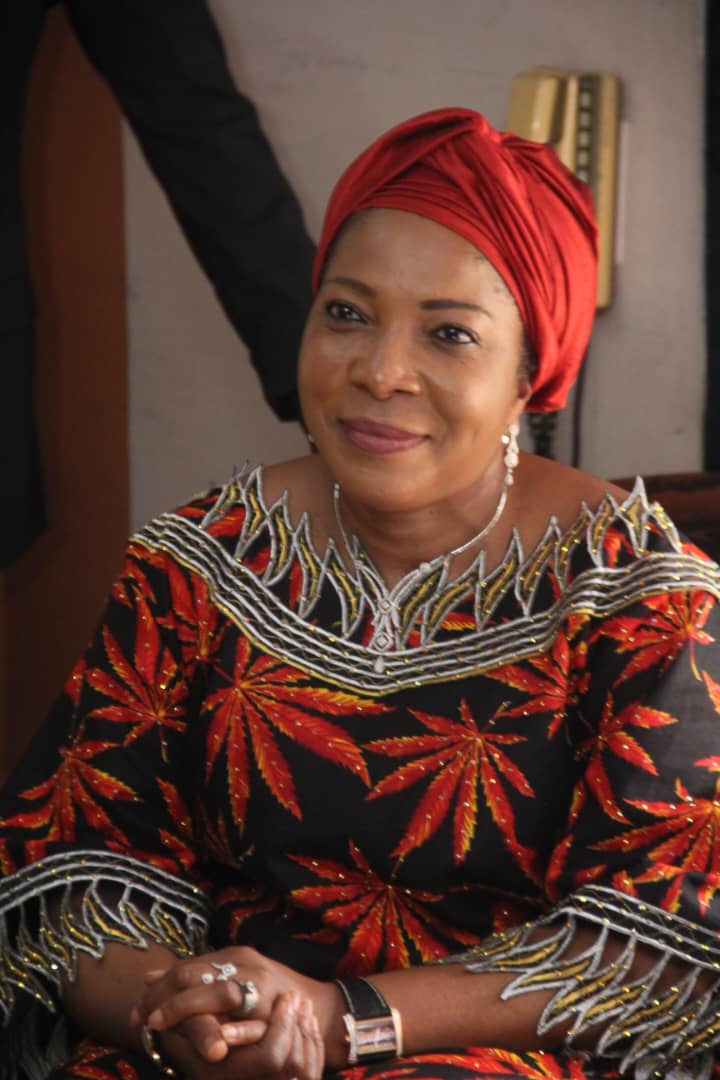
By Our Correspondent
An Igbo socio-cultural group, Igbo Union (Nzuko Ndi Igbo),has lauded the wife of Abia State Governor, Mrs Priscilla Otti, for what it described as many significant and laudable intervention projects in the state through her foundation Safe Tent Care Initiative also called Safe Haven Care Foundation.
In a press statement signed by Prince Elias Odoemena, the Convener of Igbo Union and made available to journalists in Abuja yesterday, the group said the Abia first lady has used her good office to touch lives of the vulnerable persons in the state, by different social intervention processes which had gone a long way to give the recipients of such interventions another lease of life, and hopes for a better tomorrow.
The group which quoted Mrs Otti to had said that her Safe Tent Care Foundation is anchored on the philosophy of three words: Community, Consistency, Collaboration, said the Abia first lady living out the basic obligations by the massive services she renders to the people of the state .
Some of these services, the group continued include but not limited to the following: Women Economic Empowerment. ‘ Mrs Otti has achieved a lot through her Ahiaoma Market Women Empowerment Programme, where she gives business support, entrepreneurial skills, financial literacy and capital to market women and petty traders.
” Again, through her Thrive Business Challenge, Mrs Otti supports women to build sustainable businesses, helps with business registration and access to affordable finance. Finalists get business assets and grants, others get N50,000.”
The Igbo Union also mentioned the Skill-Up Abia Women Programme of the first lady of Abia State, where she has trained young women between the ages 15 to 35 years, for 3 months in catering, pastry, decoration. Not less than 54 beneficiaries got oven, gas burner, utensils and N200,000 grant each, the statement added.
In the area of housing and giving shelter to the poor, the group disclosed the Mrs Otti, through her Housing / Dignity Homes Project:, has built and also furnished ” 3-bedroom bungalows for indigent women and widows. Initially 25 women across 17 LGAs, now increased to 35 vulnerable women. She also built a home for the mother of a gender-based violence survivor.”
Her bonavelence also extended to fight against gender-based violence and trafficking, where her foundation is working with NAPTIP and Ministry of Women Affairs to rescue, rehabilitate, train and resettle victims of human trafficking and baby factories.
The Abia first lady also supports vulnerable groups:, especially the
widows: in the state.
” It is on record that Mrs Otti on 2026 International Widows Day, empowered 600 indigent widows with N50,000 business grant each, plus food and inclusion in skill acquisition, while in this month of September 2026, she empowered over 500 women with disabilities with N20million cheque, bags of rice and food items. She also signed MoU with NDE to train 200 women with starter packs.”
The group equally noted that the first lady also extended her reach to members of sickle cell and albinism communities in the state through her Care and Fair Outreach Day, where she gave N50,000 cash support and health insurance enrolment to members.
” Mrs Otti has also intervened in the areas of education and health: through her Flow with Confidence Sanitary Pad Initiative (with First Lady of Nigeria Remi Tinubu) – to improve menstrual hygiene for school girls.
“She has also donated educational materials and commissioned educational/healthcare projects in Abia State. During the annual August Women Meeting in the state, Mrs Otti provided skills acquisition, health sensitization, support for farmers and traders across the 17 local government areas in the state, thereby complementing her husband Alex in moving and meeting the democratic yearnings of the people of the state ”
The group called on other first ladies to emulate the great work Mrs Otti is doing in Abia state, as such emulation will translate to good governance and bring dividends of democracy in their various states.

The Day the Church ‘Blessed’ the Media
By Emmanuel Nnadozie Onwubiko For a media practitioner and a Catholic, Thursday, September 24, 2026, will remain a remarkable day....
As ‘Ọsọ Marwa’ Sweeps Across Nigeria’s Forests
By Emmanuel Nnadozie Onwubiko Today’s reflection is on a new and increasingly significant battlefront opened by the National Drug Law...

Diri Laments Oil Production Effects, Inaugurates 18-Member C’ttee For Cancer Treatment Centre
By David Wei,Bayelsa Governor of Bayelsa State, Senator Douye Diri, has described as unfair and unacceptable the situation whereby communities...

Minimum Wage: FG begins fresh negotiations with NLC on Workers’ Welfare
By Our Correspondent In a bid to improve the welfare of Nigerian workers, the federal government declared on Friday that...
BAYELSA DEVELOPMENT: Press Criticisms Must Not Become Political Propaganda – Dufugha
By David Owei Recent criticisms in some sections of the media over the pace and direction of development in Bayelsa...

SDP Felicitates OBA OLU FALAE @ 88*
By Our Correspondent The National Chairman of the Social Democratic Party (SDP), Professor Sadiq Umar Abubakar Gombe, on behalf of...


NCDMB launches In-house Academy for Knowledge-sharing among Staff, Stakeholders
By David Owei, Yenagoa As part of efforts to enhance the capacity of its staff to effectively lead and regulate...

22nd ANEC Confrence: Media, Govt Must Meet at Point of Truth-Mbah …..bags plaque for good governance
By our correspondent Enugu State Governor, Peter Mbah, has challenged the government and the media to meet at the point...

Deepfakes: INEC Chairman Charges Editors on Rigorous Fact-Checking Ahead 2027 ….Cautions media against declaring unofficial results ….Says journalists’ welfare critical to democracy
By Our Correspondent The Independent National Electoral Commission (INEC) has charged newsroom leaders across the country to erect an...

SPC Annual Workshop: Journalists deliberate on Legislative Oversight, Budget Integrity,Others
By Our Correspondent The 2026 Capacity-Building Workshop of the Senate Press Corps will focus on strengthening legislative oversight and media...
-
 Politics1 year ago
Gov Okpebholo moves to end Cultism *Threatens action against leading cult groups *Vows to demolish more cult houses in Edo State
-
 Politics1 year ago
ASUU-NDU protest against FG loans, unpaid salaries,Non-Implementation of agreements …..says loans is generational slavery
-

 Business & Economy1 year ago
PC-NCG Issues Disclaimer on Purported Nigerian Coast Guard National Orientation Exercise In Anambra State
-
 Entertainment2 years ago
Jubilation galore as Parishioners of CKC Kurudu celebrate their cultural heritage ….FG should exploit our Cultural heritage to unite Nigerians-Rev Fr Dim
-

 Sports7 months ago
Bayelsa-born ex-football star’s son, Opuama donates spike shoes to Athletics Association
-

 General News2 years ago
Reps hold public hearing on FMC Ugwuaji Awkunanaw
-

 Law & Crime1 year ago
Legal practitioner raises alarm over threat to his life by CSP Muhammed Abdulkareem
-
 General News2 years ago
Celebration galore as UDA Successfully Elected New Exco ……I will digitalize processes that will raise UDA to greater height -Comr. Okejiri