
Uncategorized
N1.3bn Non-Existent Agency In 2026 Budget Sparks Alarm At Senate Press Corps Workshop

By George Mgbeleke
The controversial allocation of N1.3 billion to a non-existent Presidential Foreign Intervention Promotion Council (PFIPC) in the 2026 budget dominated discussions on Monday at the Senate Press Corps (SPC) Capacity-Building Workshop in Abuja, as stakeholders called for stronger legislative oversight and media collaboration to safeguard the national budget.
The workshop, held at Hearing Room 231, National Assembly Complex, with the theme *“Leveraging Legislative Oversight and Media Collaboration to Safeguard the National Budget from Unlawful Insertions,”* brought together the Executive, civil society, budget experts and journalists.
In his welcome address, Chairman of the Senate Press Corps, Chief Taiye Odewale alias Baba T., said the alleged N1.3bn allocation to the non-existent PFIPC exposed the urgent need for stronger checks against unlawful insertions.
Odewale said SPC findings showed that the allocation was not part of the N9.853 trillion added by the National Assembly to the N58.47 trillion Executive proposal that produced the N68.32 trillion 2026 budget.
He said the controversy prompted the workshop to strengthen collaboration between legislative oversight and the media in detecting questionable budget entries and to equip journalists with better knowledge of budget scrutiny and AI tools for professional reporting.
The first paper titled: *“Critical Scrutiny of Budget Line Items: Preventing Garbage In, Garbage Out and Strengthening the Roles of Legislators and the Media”* was presented by Mr. Ebu Emmanuel who represented the Executive Director of CISLAC, Auwal Musa Rafsanjani.
Key takeaways from his paper include that budget provisions must be justified, transparent, properly costed and measurable, warning that vague, duplicated or inflated items fuel waste.
He cited ICPC findings which claimed that about 4,508 inserted/padded projects worth N434.5bn and 66 duplicated projects worth N6.43bn were included in the 2022 budget.
He urged lawmakers to scrutinise provisions before appropriation, verify their purpose, MDA, location, beneficiaries, cost and expected results, and maintain a clear audit trail from proposal to final budget.
CISLAC urged the media to scrutinise budget changes, verify projects and track implementation, while institutions collaborate to strengthen transparency.
He suggested that the media should ask key questions: “What changed, why, who justified it, what will it cost, where will it be implemented, who benefits and how will delivery be verified?”
He recommended that accountability should cover proposal, justification, verification, approval, disclosure, implementation, monitoring, audit and accountability.
The second paper titled: *“From Insertion to Interrogation, the National Assembly’s Role in Evaluating the Executive’s Budget Proposal: A Guide and Roadmap for Evidence-Based, Citizen-Centred and Technology-Enabled Budget Scrutiny”* was delivered by the Director of BudgIT, Oluseun Onigbinde, represented by the Country Director of BudgIT Foundation, Vahyala Kwaga.
Onigbinde argued that budget scrutiny by the National Assembly is too often focused on appropriations rather than on public policy performance, which should be a critical component of the legislative budget process.
He identified persistent challenges affecting Nigeria’s budgeting process from the perspectives of different arms of government.
On the part of the Executive, he identified late submission of the Medium-Term Expenditure Framework and Fiscal Strategy Paper (MTEF-FSP) to the National Assembly as a recurring challenge, which often results in expenditure projections exceeding credible available resources.
On the role of the National Assembly, he noted that limited engagement with Ministries, Departments and Agencies (MDAs) contributes to weakened legislative oversight of budget implementation and performance.
BudgIT therefore recommended early submission of the budget proposal to the National Assembly at least 90 days before the end of the financial year, to allow sufficient time for review.
It also recommended that the National Assembly assess the performance of an agency’s previous budget before approving a new allocation, and called for stakeholder participation in the budget proposal and review process.
The MD/Publisher of The Eagle Times Newspaper, Mr. Ikechukwu Chukwunyere, represented by the Chief Operating Officer, Mr. Tabuko Kennedy, in his presentation titled: *“Making the Eagle Eye of the Media Sharper at Yearly Budget Scrutinies,”* identified weak budget scrutiny by the media, including overreliance on headline figures and official statements, poor understanding of budget data, limited follow-up, failure to compare allocations across years, detect duplication, verify projects on the ground and track spending from allocation to impact.
In his recommendations, he urged journalists to follow the money by comparing budgets, releases, expenditure, outputs and impact; scrutinise projects through data and field verification; check previous budgets, audit reports and procurement records; investigate red flags and distinguish verified facts from official claims.
He also proposed a Senate Press Corps Budget Accountability Reporting Desk, a joint budget scrutiny report within 72 hours of budget presentation, a public database of major projects and tracking at least 10 projects from budget document to project site.
Ms. Adeola Ademokaya, Nigeria Representative of Mass Media LLC Texas, who was Consultant and Moderator, in her presentation focused on how Artificial Intelligence can strengthen legislative budget oversight and parliamentary journalism.
She stressed that the national budget is a public trust, covering critical areas such as roads, schools, healthcare, security, jobs and infrastructure.
She said AI can help journalists analyse lengthy budget documents, compare different versions, identify vague project descriptions, unusual figures and possible duplication, and generate relevant questions for budget defence sessions. It can also simplify complex budget issues for radio, television, newspapers and social media.
However, she emphasised that AI is an assistant, not the final authority. Journalists must verify information with official documents, seek responses and exercise editorial judgment before publication.
The core message was simple: Read, question, verify, seek clarification and report responsibly. AI can make journalists faster and more effective, but human judgment remains central to credible journalism.
The workshop drew participation from lawmakers, budget experts, civil society advocates and members of the Senate Press Corps.
Uncategorized
Insecurity ,displacement alters distribution of Christian communities in Niger state to 3,417,636
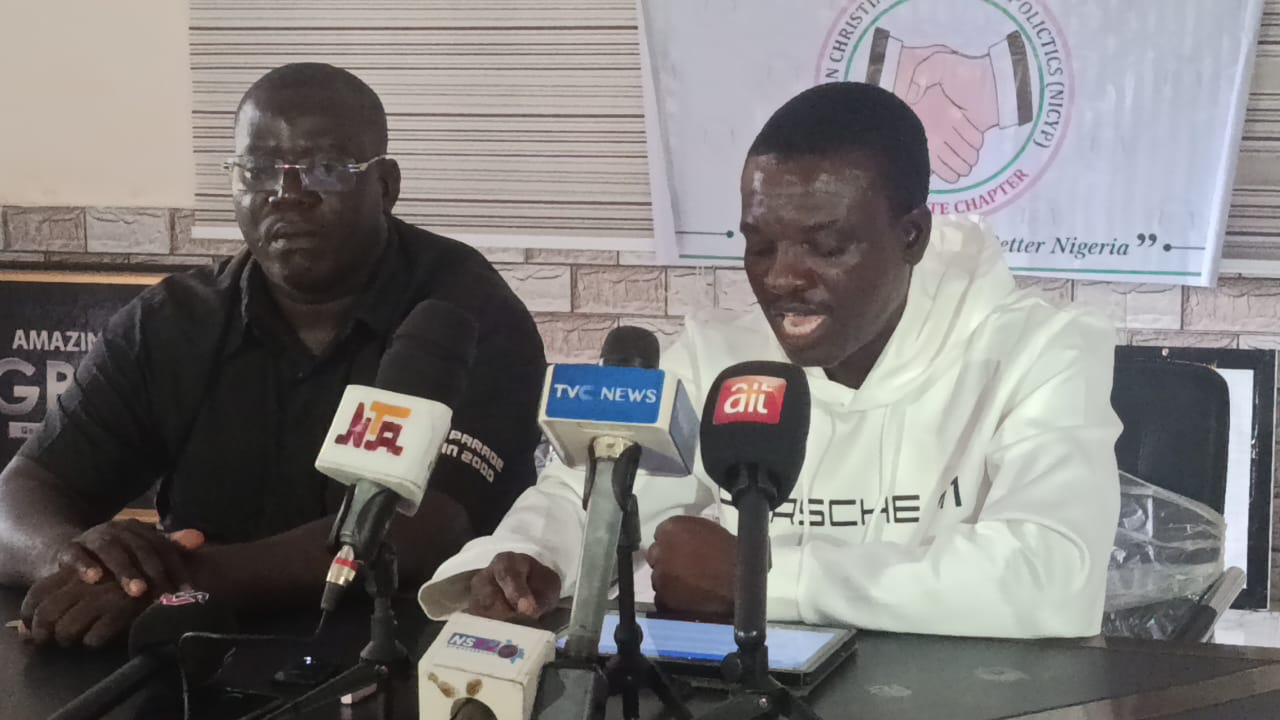
By Uthman Baba -Naseer,Minna
Niger state Christian leaders have disclosed that out of the Seven million, four hundred and seventy eight thousand, four hundred and seventeen (7,478,417) population projected, Christians are three million, four hundred and seventeen thousand, six hundred and thirty six (3,417,636) representing 45.7 per cent.
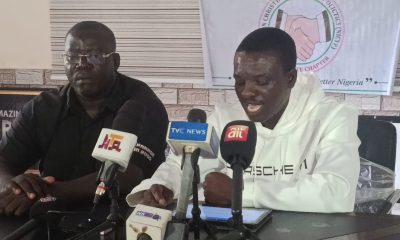
While citing insecurity and displacement as factors that have altered the distribution of Christian communities, Chairman of the Christian Statistics Committee set up by the Christian Association of Nigeria (CAN) Niger State chapter, Evang. Marcus Salka said the essence of the data was to correct what it described as inaccurate projections of the Christian population, particularly those circulating on social media.
Speaking during a press conference on Sunday in Minna, Salka who is also Chairman of Nigeria Christian Youths in Politics, Niger state Chapter alongside his Secretary Barde Jesse said after gathering all data, Christians are 45.7 per cent, compared with approximately 46.1 per cent and 8.2 per cent for the other two religious categories in the State.
It should be recalled that the 2006 census population of 3,950,249 for Niger State, comprised 2,032,725 males and 1,917,524 females.
Salka noted that Nigeria’s last official population census however did not include religious affiliation, making the 45.7 per cent figure an estimate based on available demographic projections, surveys and research carried out since 2025.
Accordingly, he said “the estimation was derived from the 2025 projected population of 7,478,417 for Niger State by the Niger state Bureau of Statistics, thereby putting the Christian population at approximately 3,417,636.
“The size of the Christian population should not be judged by the level of participation in active politics.
“That some Christians do not participate in active politics does not mean we do not have the number. Christians make up a significant population in Niger State.
“We cannot, and we will never keep quiet and then allow those who do not know our population to project or assume figures for us for selfish interests”.
Salka also linked changes in the distribution of Christian communities to prolonged insecurity in parts of the state.
The group chairman specifically mentioned Shiroro, Munya, Paikoro, Rafi, Wushishi and Magama, alleging that attacks had led to deaths and displacement of residents from communities with significant Christian populations.
He alleged that some Christians had been forced to relocate while others were killed, describing the development as a factor that had affected the demographic distribution of Christians.
“Following the incessant insecurity in Christian-dominated local government areas, especially Shiroro, Munya, Paikoro, Rafi, Wushishi, Magama and others, majority of our people were killed, others relocated,” he said.
He further alleged that the displacement was part of a deliberate attempt to reduce the Christian population in affected communities.
The group said, despite the displacement, Christians remained present across both rural and urban communities in the state.
He said the population had increased substantially, citing the 2025 state projection of 7,478,417, comprising 3,790,197 males and 3,688,220 females.
The chairman stated that Christians were spread across the state’s 25 local government areas and represented by Catholic, Anglican, Methodist, Baptist, Pentecostal, Evangelical and African Instituted churches, among others.
The Christian blocs identified by the group included the Catholic Secretariat of Nigeria, Christian Council of Nigeria, Pentecostal Fellowship of Nigeria, Organisation of African Instituted Churches, TEKAN and ECWA-related fellowships.
He then vowed that the Committee would continue to challenge what it considers inaccurate representations of the Christian population in Niger State.
Uncategorized
Death of 37 suspected illegal Miners:11 member of Judicial commission of inquiry set for inauguration on Tuesday by govrrnor Bago

BY UTHMAN BABA-NASEER,MINNA
Sequel to the constitution of the Judicial commission of inquiry by the governor Mohammed Umar Bago, to investigate the death of the 37 alleged illegal miners in the custody of the Nigeria Security and Civil Defence Corps (NSCDC),the eleven member of the commission will commence their inaugural sitting Tuesday,29th, September 2026.
This was contained in a statement issued to Journalists in Minna by the Secretary of the Commission Mohammed Aliyu Kutigi Esq.
According to the statement,the inaugural sitting is expected to commence by 10 o’clock in the morning at the hall of the Teachers Professional Institute,along F.flayout by Tayi Junction in Minna Niger State
The Judicial Commission of Inquiry which is headed by a Minna High Court Judge,Justice Mohammed Adishetu Mohammed of the Minna High Court ,number four,the statement requested member of the public to attend urging member of the public to submit their memo to the commission.
Governor Umar Bago,while inaugurating the Judiciary Commission of Inquiry charged members of the Commission to discharge their duty with all sincerity and the fear of God.
He reminded them that the task ahead of them is enomouse and herculious urging them to put the fear of God in the discharge of their duty.
Governor Bago stated that the Commission which is saddled with the responsibility of getting to the root course of the incident has four weeks to operate and conclude it’s findings.
He informed members of the Commission that is not vested with the powers relating to look into the administrative conduct and possible punishment of the officers but rather to look into the act that was committed within the purview and powers of government of Niger State.
The Commission’s terms of reference,according to governor Bago,include to look into the arrest and essential legality of the of the custody and treatment of the victims while in custody and the circumstance of their deaths.
It is also to look at the responsibility and accountability of officers,medical foresenic investigation and evidence,and make it’s findings and recommendations.
By Dabid Owei
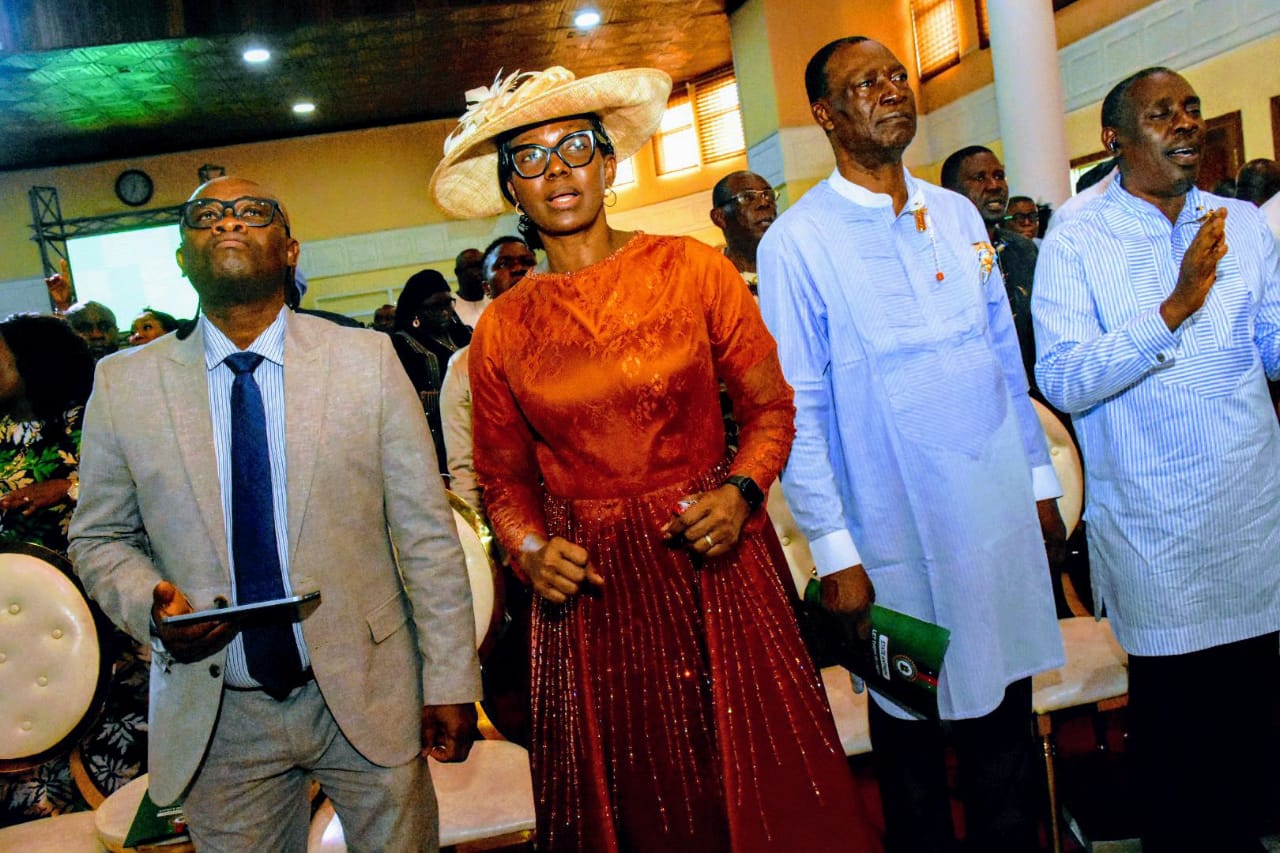
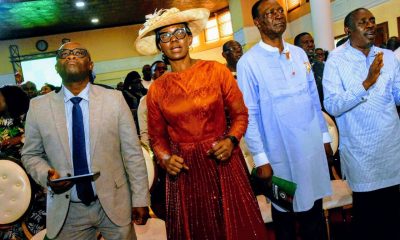
Bayelsa State Government on Sunday held an inter-denominational thanksgiving service to kick-start activities marking the 30th anniversary of the creation of the state.
The service, held at the King of Glory Chapel, Government House, Yenagoa, attracted top government officials, religious leaders and stakeholders.
The service was used to reflect on the state’s journey since its creation on October 1, 1996, by the late General Sani Abacha administration.
Governor Douye Diri, who was represented by his deputy, Peter Akpe, said the anniversary calls for deep thanksgiving to God for how far the state has come.
He said while the state celebrates its legacies at 30, there is a need for collective introspection to reposition it for greater purpose and development.
According to him, “If you were around 30 years ago, I believe you will say in all things we should give thanks, and specifically for where we are, we should appreciate God.
“The founding fathers, or those who were there, who played one role or the other, who came to Bayelsa or knew how Bayelsa was at the time we were created, they tell you the story. Some of us who are around can also tell you that we are not where we used to be, though we have a trajectory of where we are going to. The speed of getting there needs to be accelerated.”
Speaking on his administration’s scorecard, Diri highlighted infrastructure development as a major achievement of the Prosperity Administration.
He said from 2020 till date, over 85 per cent of communities in the state had been touched by one project or the other, aside from legacy projects.
He listed the construction of internal roads, the opening up of road networks and the deliberate policy of completing abandoned projects as proof of growth.
“Bayelsa is no longer a one entrance, one exit city anymore. You can now enter from all locations and all angles. We have ensured that there is no project abandoned as much as possible,” he said.
He explained that the government’s philosophy is that public funds must be judiciously used for economic sustainability, adding that projects are executed with Bayelsa money and should not be wasted on political sentiments.
“Any project that we execute, we are only guided as leaders to ensure those projects are executed. It is our money, the money of Bayelsans. There is no need to waste it with political thoughts. Check that alone – we have completed almost all the abandoned projects,” the governor stated.
In a sermon titled “Help From God,” Guest Preacher, Pastor Kontei Krinya, said every human being, irrespective of status, needs help at one point or the other.
Krinya said the teacher needs help from the government for promotion, the government officer needs help from the electorate to be voted into office, the electorate needs help from the government for social welfare, while the doctor needs the patient’s prayer and the patient needs the doctor for healing.
Referencing Isaiah chapter 6 where God asked “Whom shall I send, who will go for us?” and Judges chapter 5, he said a crime was committed because the people did not consider the help of the Lord, noting that man’s help is limited compared to God’s help.
He said as Bayelsa celebrates 30 years, the state must learn to look up to God for help, as only help from above guarantees lasting solutions and peace.
The service featured prayers for peace, economic sustainability and accelerated development as the state prepares for the grand celebration on October 1.
The service had in attendance wife of the governor, Gloria Diri; wife of the deputy governor, Favour Akpe; Senators representing Bayelsa East and Central, Benson Agadaga and Friday Kombowei-Benson; House of Representatives members, Oforgi Oboku, Rodney Ambaiowei and Marie Ebikake; Leader of the State House of Assembly, Monday Obolo-Bubou; Secretary to the State Government, Prof.Nimibofa Ayawei; commissioners, local government chairmen and other top government functionaries.
N1.3bn Non-Existent Agency In 2026 Budget Sparks Alarm At Senate Press Corps Workshop
By George Mgbeleke The controversial allocation of N1.3 billion to a non-existent Presidential Foreign Intervention Promotion Council (PFIPC) in the...

Tinubu-Shettima Movement Calls for 3 Days of National Prayers
By Our Correspondent The National Movement for Tinubu-Shettima 2027 – Forward Nigeria has called for three days of national prayers...

THE UNBORN CHILD HAS HUMAN RIGHTS
By Emmanuel Nnadozie Onwubiko This piece was first written and circulated for publication in 2012. I have revisited and substantially...
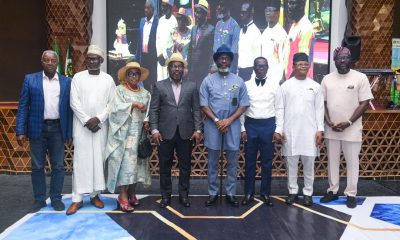

NCDMB Honours Retirees, Reflects on Local Content Growth
By David Owei The Nigerian Oil and Gas Industry Content Development (NOGICD) Act, 2010 and the exponential growth of local...
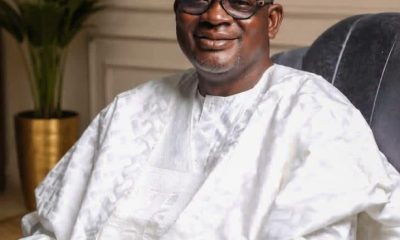

2027 : PDP Candidate re-connects Zanchita community with National grid after two years of darkness
By Uthman Baba-Naseer,Minna It was a celebration galore in Zanchita community in gbako local government area of Niger State,as former...

Insecurity ,displacement alters distribution of Christian communities in Niger state to 3,417,636
By Uthman Baba -Naseer,Minna Niger state Christian leaders have disclosed that out of the Seven million, four hundred and seventy...


Death of 37 suspected illegal Miners:11 member of Judicial commission of inquiry set for inauguration on Tuesday by govrrnor Bago
BY UTHMAN BABA-NASEER,MINNA Sequel to the constitution of the Judicial commission of inquiry by the governor Mohammed Umar Bago, to...

Thanksgiving Service Heralds Bayelsa 30th Anniversary Celebration
By Dabid Owei Bayelsa State Government on Sunday held an inter-denominational thanksgiving service to kick-start activities marking the 30th anniversary...

Former Speaker challenges substition of his name with Suleiman as winner of APC primary election at Minna Fed.High Court
By Uthman Baba-Naseer,Minna The Former Speaker of the Niger State House of Assembly,Rt Hon. Adamu Usman,has filed a lawsuit before...


SWAN President to Storm Bayelsa for 30th Anniversary Celebration, Igali Confirms*
By David Owei The President of the Sports Writers Association of Nigeria (SWAN), Benjamin Isaiah, has been confirmed among dignitaries...
-
 Politics1 year ago
Gov Okpebholo moves to end Cultism *Threatens action against leading cult groups *Vows to demolish more cult houses in Edo State
-
 Politics1 year ago
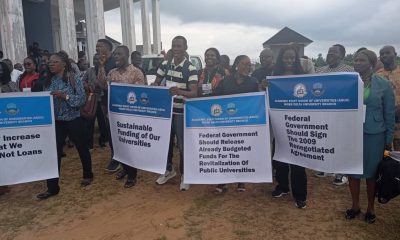
ASUU-NDU protest against FG loans, unpaid salaries,Non-Implementation of agreements …..says loans is generational slavery
-

 Business & Economy1 year ago
PC-NCG Issues Disclaimer on Purported Nigerian Coast Guard National Orientation Exercise In Anambra State
-
 Entertainment2 years ago
Jubilation galore as Parishioners of CKC Kurudu celebrate their cultural heritage ….FG should exploit our Cultural heritage to unite Nigerians-Rev Fr Dim
-

 Sports7 months ago
Bayelsa-born ex-football star’s son, Opuama donates spike shoes to Athletics Association
-

 General News2 years ago
Reps hold public hearing on FMC Ugwuaji Awkunanaw
-
 Law & Crime1 year ago
Legal practitioner raises alarm over threat to his life by CSP Muhammed Abdulkareem
-
 General News2 years ago
Celebration galore as UDA Successfully Elected New Exco ……I will digitalize processes that will raise UDA to greater height -Comr. Okejiri