
Politics
Tinubu seeks Senate approval for National Research, Development Fund

By our correspondent
President Bola Tinubu has asked the Senate to approve the establishment of a National Research and Development Fund.
Tinubu’s request was contained in a letter read by Senate President Godswill Akpabio on Tuesday as plenary resumed after nine-week recess.
The letter transmits the National Research and Development Fund (Establishment) Bill, 2026 for consideration.
According to Tinubu, the bill seeks to consolidate fragmented research funds scattered across Ministries, Departments and Agencies, MDAs, into a single central pool.
He said the Fund would serve as a central mechanism through which research agencies and academic institutions can access funding.
“The Bill is to consolidate research financing, ensure more efficient utilization of resources, and consolidate fragmented R&D Funds across MDAs,” the President stated.
Tinubu said the Fund would operate as a competitive financing vehicle to foster strategic collaboration among research agencies, academia and private sector.
He said it would catalyze groundbreaking innovations, streamline resource allocation according to national priorities and drive commercialization of home-grown technology.
The President said the move would reduce foreign technological dependency and ensure transparency in funding decisions through strict evaluation criteria.
He disclosed that the Fund would be established as an agency under the Federal Ministry of Innovation, Science and Technology, adding that it would
draw direct funding from the Nigerian Content Development Fund.
Tinubu noted that proliferation of research institutions with separate mandates and budgets has hampered efficient use of limited resources.
The bill, he said, will enable effective management of scarce funds for Science, Technology and Innovation development.
He added that the bill has been reviewed by Ministries of Education, Innovation, Science and Technology, and Justice to align with national education objectives and ensure legal clarity.
“While it is my hope that the Senate will consider the Bill and its passage into law expeditiously, please accept the assurances of my highest consideration,” Tinubu said.
Senate President Akpabio referred the bill to the Committee on Rules and Business for further legislative action.
Politics
Nigeria at 66: NLC demands immediate reduction of fuel price, implementation of wage award for workers

By Our Correspondent
As Nigeria marks it’s 66th independence anniversary, the Nigeria Labour Congress (NLC) has called on the Federal government immediately reduce fuel price with a view reduce the sufferings of Nigerians.
The congress in a statement to mark the anniversary and signed by its President, Joe Ajaero, said the journey to the dream of Nigeria envisioned by the founding fathers depends on the decision and action taking by Nigerians, insisting that only purposeful governance can take the country to the destination.
It further demanded for immediate implementation of wage award to enable workers and Nigerians cope with the present situation in the country.
The congress said sixty-six years ago, the founding fathers and mothers wrestled the nation from the grip of colonial rule, convinced that political independence would translate into economic freedom and dignity for the Nigerian people.
It saluted every worker, artisan, youth, woman, retiree, informal economy operator, and every Nigerian who wakes up each morning to struggle for survival in a country, it said has increasingly turned its back on its own people.
The NLC said: “We honour the sacrifices of those who paved the path to liberation with their sweat and blood. However, we refuse to drown in empty patriotic rituals while the masses drown in poverty.
“Sixty-six years after independence, Nigeria has become a nation whose governance decisions have been captured by neoliberalism; an ideology and a policy framework that does not serve workers, does not serve the masses, does not serve the nation, but is designed to serve Western capital.
” From policy formulation to resource allocation, from taxation to subsidy removal, from wage suppression to price escalation, the beneficiaries of this arrangement are a tiny elite (who keeps applauding) and international capital, while the costs are borne by the very people whose labour built this country.
“Yet oppression has never been a permanent destiny. The power of Nigerian workers and the people ended colonial rule and forced one government after another to retreat from anti-people policies. Hope exists, but it will not fall from the sky. Hope depends on the decisions we make and the actions we take as trade unions, workers, and as a people.
“We stand at the crossroads of a full-scale survival crisis. The real value of wages has been devoured by structural inflation. Petrol now sells at ₦1,430 per litre or higher in major cities and far more in remote areas. The surge in transportation costs drives up the prices of food, school fees, rent, and nearly every necessity of life, while nominal wages remain stagnant.
“The root of this crisis is very clear. The May 2023 petrol price hike was a systematic assault on the working class. Government claimed subsidy removal would free up resources for infrastructure and social services. Three years later, petrol prices have multiplied several times over, yet the promised infrastructure and social services remain mirages. Where exactly did the subsidy savings go? Nigerians deserve an answer, and they deserve it now”.
Continuing, the congress said: “More infuriating is that Nigeria, Africa’s largest oil producer, depends on imported refined petroleum, while domestic refining capacity has been systematically neglected, except the effort of a few private refineries. When international oil prices fluctuate, the Nigerian working class bears the consequences.
“This is not an economic law. It is a policy choice that favours importers and Western refining capital while sacrificing our own people by ensuring the four publicly owned domestic refineries remain comatose”.
The NLC therefore put forward its demands to include: “First, we demand that government seek ways to immediately reduce the price of petrol as transportation costs are the central transmission mechanism of inflation in Nigeria. Without cutting this chain, any effort to ease the suffering of the people is futile.
“Second, we demand the immediate implementation of a nationwide wage award for all workers. A wage award is not charity. It is an emergency intervention against the collapse of real income. We demand that this relief reach all workers in federal, state, and local governments.
“Third, we demand that the government deliver the tax relief agreed upon in the October 2023 dialogue with labour. The tax incentives promised in the Memorandum of Understanding signed between government and labour have not been implemented.
“Fourth, we demand that government expedite action on the new national minimum wage negotiation. The current ₦70,000 minimum wage was already destroyed by inflation before it was implemented. We demand the immediate establishment of a tripartite committee to ensure that a new wage standard for 2027 is formulated and legislated before the year runs out.
“Fifth, we demand that the government reduce the cost of governance and practise transparent governance. When workers are asked to tighten their belts, the extravagance and waste of the governing class are unacceptable. Government must lead by example.
“Beyond these immediate demands, we insist that the government invest massively and genuinely in road and social infrastructure, make our hospitals, schòols and other social services work. Public education must be affordable, high-quality, and accessible. Good roads are a basic precondition for reducing transport costs and improving economic efficiency.
“The governmentnt must create genuine opportunities so that young people can see hope instead of being preached to about hope so that desperate journeys across the Sahara and the Mediterranean do not remain the only source of hope.
“We must also remind the government that insecurity has worsened the macroeconomic situation and has become one of the greatest threats to national stability. In the first quarter of 2026, nearly 2,000 Nigerians died from violence. Farmers cannot farm. Teachers and doctors dare not go to work in some places.
“Poverty, unemployment, desperation, and inequality are the most fertile soil for violence and crime. Without addressing distributive justice, insecurity cannot be cured, and without curing insecurity, no economic recovery is possible”.
Politics
Diri: At 30, Bayelsa Has Overcome Terrain Challenges ….Oil, Gas Imprisoned Nigeria, Says Darah
By David Owei
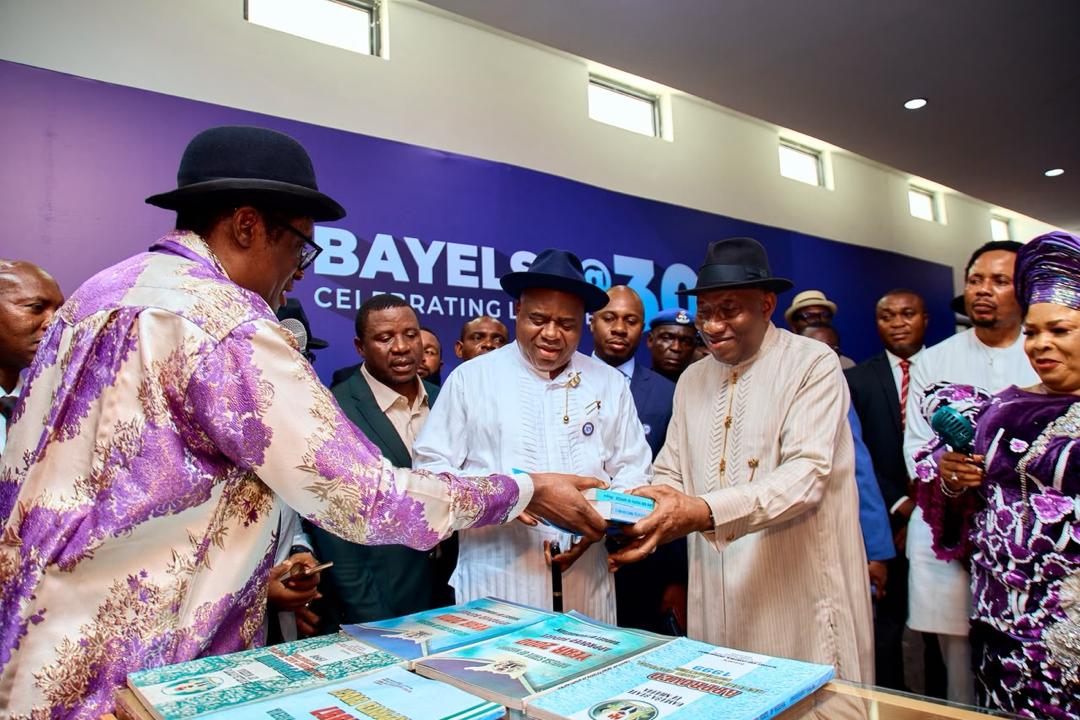
Governor of Bayelsa State, Senator Douye Diri, on Wednesday, said the state has conquered the daunting terrain challenges that confronted it at creation, recording significant transformation in infrastructure, connectivity and human development in its 30 years of existence.
Diri stated this at an exhibition and anniversary lecture marking the 30th anniversary of the state at the DSP Alamieyeseigha Memorial Banquet Hall, Government House, Yenagoa.
The governor said the state, created on October 1, 1996 by the late former Head of State, Gen. Sani Abacha, was beset by a difficult terrain, limited infrastructure, poor connectivity and a fragile economic base but that successive administrations had steadily transformed the landscape.
He said the emergence of roads and bridges where communities were previously separated by creeks, the development of an international airport and the establishment of universities and other institutions demonstrated the extent to which the state had overcome its geographical limitations.
He said: “Today, where there was once swamp, we have an international airport. Where there were once creeks, we now have five universities as well as polytechnics. Where communities were separated by water, bridges and roads now bind us together.”
According to him, Bayelsa has also expanded its federal presence with the establishment of facilities such as the Content Towers, Federal Secretariat, Nigerian Law School and various security formations.
He acknowledged the contributions of successive administrations to the development of the state, stressing that the progress recorded over the past three decades was a continuum built on the efforts and sacrifices of previous leaders and citizens.
Diri said renewed attention was being given to the state’s senatorial roads, while the Independent Power Project was being expanded from 60 to 100 megawatts.
He also cited the ongoing construction of the 30,000-capacity stadium and the nine-storey Secretariat Complex as major projects expected to strengthen public services, connectivity and economic activity.
The Bayelsa helmsman, however, stated that the 30th anniversary should go beyond celebrating past achievements, stressing the need to build stronger institutions, create opportunities for youths and women, protect the environment and ensure balanced development across the state.
He challenged Bayelsans to transform the sacrifices of the state’s founding fathers into a foundation for a more prosperous and united future.
“The legacies of yesterday must become the launchpad for the Bayelsa of tomorrow: a Bayelsa that is more connected, more prosperous, more just, more peaceful, and more promising for every citizen and resident.”
Delivering the anniversary lecture, renowned scholar and public intellectual, Prof. Godini Darah, said Nigeria’s dependence on oil and gas had constrained the country’s economic development.
Darah stated that the nation’s over-reliance on petroleum resources had prevented it from fully developing other productive sectors of the economy.
The scholar also called for fundamental reforms to Nigeria’s fiscal federalism and greater resource control for producing regions.
He described the 13 per cent derivation allocation to oil-producing states as “87 per cent deprivation,” arguing that the Niger Delta bears the environmental consequences of resource extraction while having limited control over its natural wealth.
Darah attributed the situation to historical and constitutional arrangements, including Petroleum Decree Number 51 of 1969 and Section 44(3) of the 1999 Constitution.
He challenged Niger Delta leaders to move beyond dependence on crude oil by investing in knowledge, science, technology, research and value-added industries.
The academic advocated the development of specialised universities and research institutions in areas including oceanography, marine engineering and commercial aquaculture.
He also called for the conversion of natural gas into reliable electricity and the development of petrochemical and other industries that could create jobs and wealth within the region.
Darah urged state governments and Host Community Development Committees to channel Petroleum Industry Act funds into human capital development and transformative infrastructure.
He further encouraged the use of locally available materials, including clay, in construction and industrial production, arguing that the region should maximise its abundant natural resources.
Darah urged Bayelsans to use the anniversary to renew their commitment to development of the state and the unity of Nigeria.
The anniversary programme featured a panel discussion anchored by the Vice Chancellor, University of Africa, Toru-Orua, Prof. Solomon Ebobrah, Professor of Human Rights and Public Law; Ibaba Samuel Ibaba, Professor of Political Science, Young Ayotamuno, and Prof. Ongoebi Maureen Etebu, Nigeria’s first female professor of mechanical engineering and former Commissioner for Special Duties.
There was also an exhibition showcasing Bayelsa’s history, the struggle for its creation and the developmental milestones recorded in the state over the past three decades.
The event had in attendance former President Goodluck Jonathan, his wife, Dame Patience Jonathan, wife of the governor, Dr. Gloria Diri, the deputy governor, Dr. Peter Akpe, as well as Abacha’s children, including Mohammed Abacha (eldest son), Abba Abacha, Fatima Gumsu Abacha among other family
members.
Also present were National Assembly members, state legislators, top government officials, traditional rulers as well as Bayelsans who attended in their numbers.
Politics
INEC Chair warns staff against partisanship, negligence …..As he flags-off PVC Collection on Oct.9
By
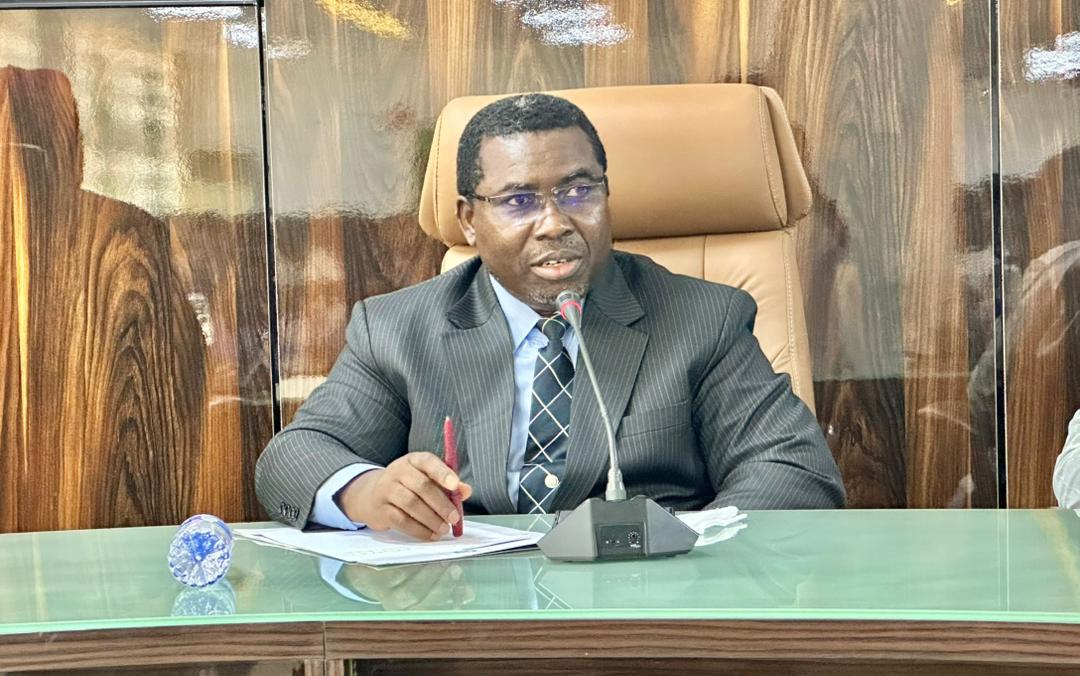
Chairman of the Independent National Electoral Commission (INEC), Prof Joash Amupitan, has warned that partisan leaning, administrative negligence and compromised ethics will not be tolerated among the Commission’s staff as preparations intensify for the 2027 General Election.
Prof. Amupitan gave the warning on Monday in Kaduna while declaring open the North-West Zonal Interactive Meeting with Staff and Readiness Assessment for the 2027 General Election.
The INEC Chairman told the gathering of Electoral Officers, Heads of Departments and senior administrative staff from the North-West zone that the Commission would strictly enforce its code of conduct.
“Partisan leaning, administrative negligence, or compromised ethics will not be tolerated,” he said. “Every officer must understand that protecting INEC’s institutional integrity is non-negotiable.”
Prof. Amupitan noted that the conduct of field staff was central to the credibility of any election, stating that false narratives only gain traction when the Commission’s administrative execution falters.
“When a polling unit opens late, when an officer displays nonchalance or perceived bias, or when technical glitches are met with silence, we inadvertently validate the cynics, deepen voter apathy, and fuel disinformation,” he said.
According to him, “the conduct, competence, and character of our staff in the field are either our strongest defense against fake news, or its biggest catalyst.”
The INEC Chairman reminded the officials of the oath of loyalty and neutrality that Section 26 of the Electoral Act 2026 requires of all electoral officials and security personnel taking part in an election. He said the oath commits every officer to administering an election without a preferred candidate or political party.
“The question must never be ‘Who will benefit from this decision?’ but always ‘What does the law require me to do?’” he stated.
He also cautioned staff against improvisation, saying informal shortcuts were dangerous in election administration. Where the law provides a procedure, whether in the Electoral Act 2026, the Regulations and Guidelines for the Conduct of Elections 2026 or the guidelines for political parties, he said officers must follow it strictly.
He directed that where operational difficulties arise, they should be escalated through formal institutional channels.
Prof. Amupitan stressed that a good legal framework and modern technology could not by themselves guarantee electoral credibility. “The credibility of an election depends on how faithfully the law is implemented by the officials entrusted with its administration,” he said.
Addressing the staff directly, he described them as the face of the Commission in their communities. “To the voter in a local ward, INEC is not the Chairman in Abuja; INEC is you,” he said.
He urged the officials to “know the law, understand your responsibility, remain neutral, document your actions,” adding that every administrative decision must withstand public scrutiny and judicial review.
The INEC Chairman said the Kaduna meeting was the continuation of a six-zone Interactive Meetings and Readiness Assessment tour of the federation ahead of the 2027 General Election.
He observed that the Commission was breaking with over two decades of practice, in which zonal preparations of this nature were coordinated through delegated structures or handled at the level of National Commissioners and headquarters directorates.
“I am here with you in person, accompanied by National Commissioners and Directors, because I firmly believe that the true success of any election is not decided solely in the meeting rooms of our headquarters in Abuja. It is decided in the field,” he said.
He recalled the Commission’s performance in recent off-cycle elections, particularly the Osun State Governorship Election, and credited the outcome to the dedication of staff. He however cautioned that “the praise of yesterday raises the expectations of tomorrow,” noting that the 2027 elections would be a simultaneous national exercise across the 36 states and the Federal Capital Territory.
The Presidential and National Assembly Elections are scheduled for Saturday, 16th January 2027, while the Governorship and State Houses of Assembly Elections will hold on Saturday, 6th February 2027.
On staff welfare, Professor Amupitan assured participants of the Commission’s commitment to their welfare and security. He said the Commission was at an advanced stage of implementing a new salary and welfare package, and that effective 1st January 2026 it established the Consolidated Election Management Body Salary Structure (CEMBSS), which moved its workforce out of the regular Civil Service structure. He added that from 1st July 2026, overheads to State Offices were increased by 150 per cent.
He further announced that the Commission had commenced the procurement and distribution of new operational pick-up vehicles, which are being dispatched to State Offices and Local Government Areas nationwide to boost the mobility, security and operational efficiency of staff.
Earlier in his welcome address, the Supervising National Commissioner for Kaduna, Mohammed Kudu Haruna, said the Kaduna meeting was the second in the six-zone tour after Lagos, and was designed to rally staff to deliver the best election in Nigeria’s history.
Commissioner Haruna disclosed that collection of new Permanent Voter Cards (PVCs) would commence early next month, this he said the INEC Chairman informed the Emir of Zazzau during his courtesy visit to the monarch that collection of newly printed Permanent Voter Cards would commence as scheduled and appealed to traditional rulers to encourage eligible citizens to collect their cards and exercise their constitutional right to vote.
He expressed confidence that the Kaduna engagement would help the leadership and management of the Commission to further strengthen election administration ahead of the 2027 national polls.
Director of Planning and Monitoring, Helen Ajayi, said the purpose of the zonal exercise was to assess the level of preparedness of states and identify operational challenges before the elections.
She added that the sessions were also aimed at ensuring that staff across the zone remained aligned with the Commission’s Code of Conduct ahead of the elections.flags off collection of


Nigeria at 66: NLC demands immediate reduction of fuel price, implementation of wage award for workers
By Our Correspondent As Nigeria marks it’s 66th independence anniversary, the Nigeria Labour Congress (NLC) has called on the Federal...


BAYELSA @ 30: With Tower Hotel Project Still Uncompleted 22 years after: …As govt engages in Lavish Celebration amidst Hunger,Poverty, unemployment-PDP
By David Owei The Peoples Democratic Party (PDP), Bayelsa State, has described the lavish celebration of the State’s 30th anniversary...

Diri: At 30, Bayelsa Has Overcome Terrain Challenges ….Oil, Gas Imprisoned Nigeria, Says Darah
By David Owei Governor of Bayelsa State, Senator Douye Diri, on Wednesday, said the state has conquered the daunting terrain...


HURIWA Demands EFCC, ICPC Probe of Alleged $2.1m Land Deal Involving Wike’s Son
By Our Correspondent The Human Rights Writers Association of Nigeria (HURIWA) has demanded an immediate and independent investigation by the...
HURIWA Demands Immediate Fuel Price Cut, Backs Workers’ N500 Petrol Demand
By George Mgbeleke The Human Rights Writers Association of Nigeria (HURIWA) has demanded an immediate downward review of the price...

Tinubu seeks Senate approval for National Research, Development Fund
By our correspondent President Bola Tinubu has asked the Senate to approve the establishment of a National Research and Development...

INEC Chair warns staff against partisanship, negligence …..As he flags-off PVC Collection on Oct.9
By Chairman of the Independent National Electoral Commission (INEC), Prof Joash Amupitan, has warned that partisan leaning, administrative negligence and...

World Rivers Day 2026: NDBDA MD Launches Waterways Sanitation Corps , Declares”No Blue Economy Without Clean Rivers”
By David Owsx̌ The Managing Director/Chief Executive Officer of the Niger Delta Basin Development Authority (NDBDA), Prince Ebitimi Amgbare, has...

Edo’s Turnaround: Bush-Combing, Special Court Restore Confidence*
By Paul Ezenwa For years, kidnapping, cult killings and organised crime cast a long shadow over Edo State, keeping families...

Senate Extends 2025 capital budget implementation to Dec. 31 …As Bill scales final passage
By George Mgbeleke The Senate on Tuesday passed a bill extending the implementation of the capital component of the 2025...
-
 Politics1 year ago
Gov Okpebholo moves to end Cultism *Threatens action against leading cult groups *Vows to demolish more cult houses in Edo State
-
 Politics1 year ago
ASUU-NDU protest against FG loans, unpaid salaries,Non-Implementation of agreements …..says loans is generational slavery
-

 Business & Economy1 year ago
PC-NCG Issues Disclaimer on Purported Nigerian Coast Guard National Orientation Exercise In Anambra State
-
 Entertainment2 years ago
Jubilation galore as Parishioners of CKC Kurudu celebrate their cultural heritage ….FG should exploit our Cultural heritage to unite Nigerians-Rev Fr Dim
-

 Sports8 months ago
Bayelsa-born ex-football star’s son, Opuama donates spike shoes to Athletics Association
-

 General News2 years ago
Reps hold public hearing on FMC Ugwuaji Awkunanaw
-
 Law & Crime1 year ago
Legal practitioner raises alarm over threat to his life by CSP Muhammed Abdulkareem
-
 General News2 years ago
Celebration galore as UDA Successfully Elected New Exco ……I will digitalize processes that will raise UDA to greater height -Comr. Okejiri