
Uncategorized
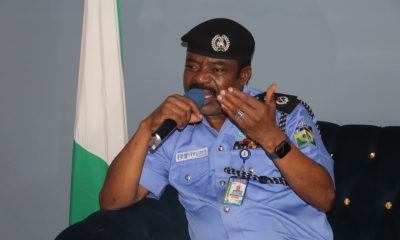
Girl -child Violation takes a fearful dimension in Niger State-CP Ellema

By Uthman Baba-Naseer,Minna
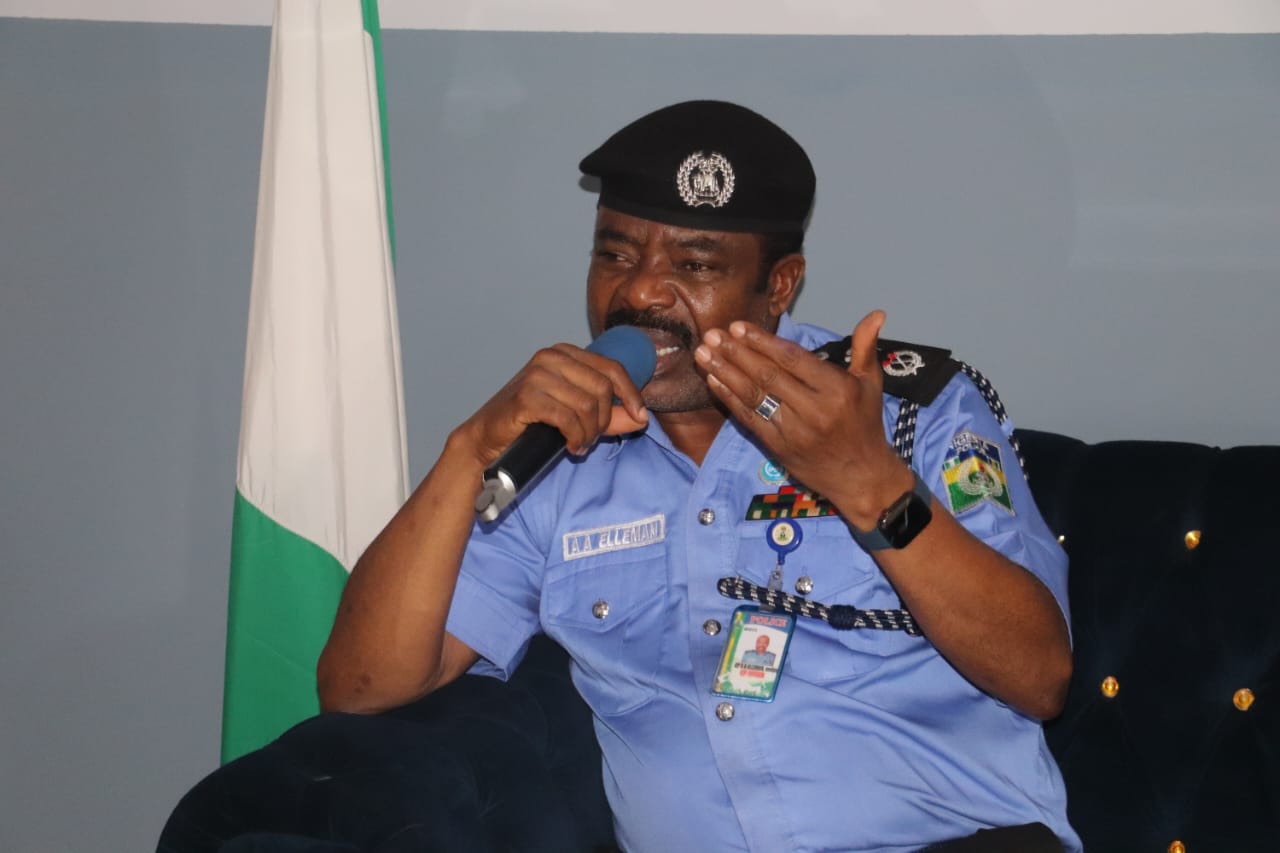
The Commissioner of Police in Niger State,CP Adamu Abdullahi Elleman,has said that the Police are the first point of contact of any gender based violence against survivors and victims of Gender Base Violence (GBV)
CP Abdullahi Elleman noted that the increasing rates of Gender Base related violence in recent,particularly child molestation and sexually related cases among girl child has taken on a fearful dimension in Niger State.
He was speaking at a one day capacity training workshop for Gender Desk Officers drawn from various Divisional Commands across the state Police Command which was held at the Police Officers’ Mess, along GRA in Minna.Wednesday.
According to the Commissioner of Police,as the first point of contact,as related to the case of Sexual and Gender-Based Violence,(SGBV) it makes it imperative for officers to possess the requisite knowledge,skills and professional attitude required to swiftly respond to Gender- Based related cases.
The CP noted that the training was designed to go beyond theoretical knowledge by exposing participants to practical realities and challenges associated with handling of SGBV cases in the course of their day-to-day
policing.
Stressing the importance of professionalism in the handling of the SGBV related cases, CP Adamu Elleman, directed the Gender desk officers to ensure that survivors and victims are treated with absolute dignity, empathy,respect and professionalism throughout the reporting,investigations and response processes.
Speaking earlier,the Officer-in-charge of Gender Section of the Niger Police Command,ASP Hadiza Adamu explained that the training was organized as a step-down programme sequel to the SGBV training course she attended in Abuja.
She stated that having acquired relevant knowledge and practical skills from the course,she deemed it professionally responsible to share the knowledge and experience to Gender desk officers across the state Command in order to strengthen their capacity to effectively handle SGBV related cases in their respective Divisional Command.
ASP Hadiza stated that Police Officers are among the first point of contact for survivors of SGBV “and must therefore be adequately equipped to respond appropriately and professionally.
She emphasized that when a survivor approached a Police station,the Officer should be able to listen attentively,demonstrate empathy,document the complaint accurately, conduct professional investigations, take appropriate action,and protect the divinity rights of the survivors throughout the process.
The programme was designed to strengthen the capacity and professional competence of Gender Desk Officers in effectively responding to cases of Sexual and Gender-Based Violence (SGBV), with particular emphasis on proper documentation, diligent investigation, appropriate response, and the protection of the dignity and rights of survivors and victims.
The training was graced by the Commissioner of Police, Niger State Command, CP Adamu Abdullahi Elleman, mnips, alongside other dignitaries and traditional leaders, including the Commissioner for Women Affairs, Haj. Hadiza Idris Kuta; the Deputy Speaker, Niger State House of Assembly, ably represented by Hon. Murtala Adamu Badaru, Member representing Suleja Constituency; Hon. Abdulazeez Gado-Nasko, Member representing Magama Constituency; Hon. Hadiza Shiru, Permanent Secretary, Ministry of Women Affairs; Mrs Bolanle O. Jibogun, Esq., Chairperson, FIDA; and Hakimi-Maikunkele, Hon. Dada Suleiman, among other distinguished guests.
The training featured insightful and practical sessions delivered by professionals with expertise in various aspects of Sexual and Gender-Based Violence. The topics presented included:
– Importance of Diligent Investigation of SGBV Towards Ensuring Successful Prosecution, delivered by CSP Jude Akaeze, O/C DRP.
– The Concept of Sexual and Gender-Based Violence (SGBV), delivered by O/C, Gender Section.
– Impact of Psychological Trauma on Survivors/Victims of SGBV, delivered by ACP Tapshak Bitrus Sekat, AC Medical.
– Understanding the Legal Framework on SGBV, delivered by Mrs Bolanle O. Jibogun, Esq., Chairperson, FIDA.
– Strengthening Inter-Agency Collaboration in Responding to SGBV, delivered by Aisha Yusuf, Esq.
– Nigeria Police Approved Procedure for Action-Based Response to SGBV Cases, delivered by Insp. Solomon Washima
The sessions provided participants with practical knowledge on identification, reporting, documentation, investigation and management of SGBV cases, as well as the importance of collaboration amongst relevant agencies and stakeholders. The programme further reinforced the Command’s commitment to ensuring that cases of sexual and gender-based violence are handled with professionalism, sensitivity, accountability and respect for the dignity of survivors and victims, while promoting effective collaboration with relevant stakeholders and agencies.
Politics
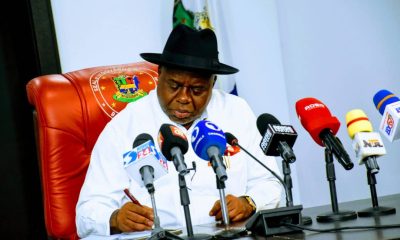
Diri Eulogises Bayelsa Founding Fathers, Says State Has Made Progress At 30 *’Roads, Power, Jobs Remain Priorities’
By David Owei,Bayelsa
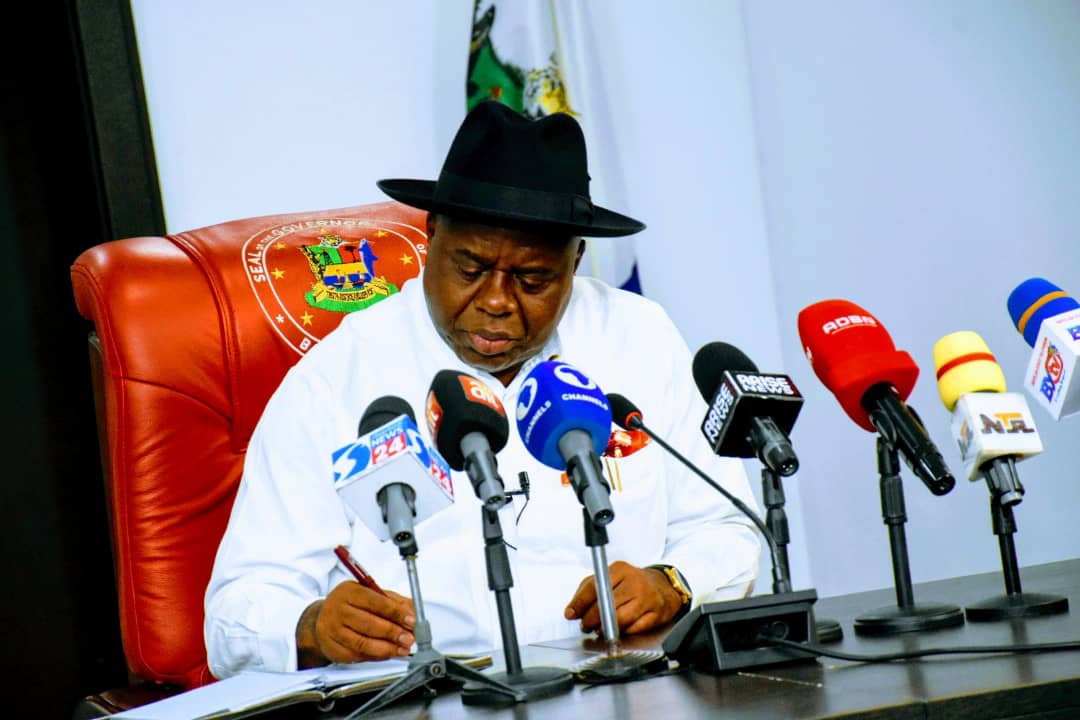
Governor of Bayelsa State, Senator Douye Diri, has paid tributes to its founding fathers, stating that the homogenous Ijaw state created by the former Head of State, late Gen. Sani Abacha, on October 1, 1996, has recorded significant progress in 30 years.
Governor Diri, however, said that much remains to be done to fully realise the aspirations of the founding fathers.
Diri stated this in a live broadcast to mark the 30th anniversary of the state and Nigeria’s 66th independence anniversary on Thursday.
He said the twin anniversary provided an opportunity to honour those who laid the foundations of the state and reflect on what the present generation would leave behind.
According to him, Bayelsa’s creation was the product of years of advocacy, petitions, protests, prayers and sacrifices by generations of Ijaw people seeking justice, recognition and a greater voice within the Nigerian federation.
Diri recalled that the creation of the old Rivers State from the former Eastern Region in 1967 was an important milestone in that struggle spearheaded largely by the Ijaws and which also eventually culminated in the creation of Bayelsa twenty-nine years later.
The Bayelsa helmsman recalled the roles played by some of the state’s heroes, including Major Isaac Boro, Chief Harold Dappa-Biriye, Chief Melford Okilo, Pa Ernest Ikoli, Chief Joshua Fumudoh, King Alfred Diete-Spiff, Dr. Lambert Eradiri, Chief N. A. Frank Opigo, Senator Amatari Zuofa, Dr. Amba Ambaiowei, T. K. Ogoriba, Chief Diepreye Alamieyeseigha, Chief Dan Etete, Vice Admiral Victor Ombu and Rear Admiral W. G. Yanga, among others.
He said their sacrifices imposed an enduring responsibility on the present generation to build a better state.
“Some gave their time. Some gave their resources. Some gave their liberty. Some paid the ultimate price. To all of them, we owe an enduring debt of gratitude.”
He noted that the state inherited enormous challenges at creation, including difficult terrain, inadequate infrastructure, poor connectivity, a fragile economic base and the need to deliberately develop Yenagoa as the state capital.
According to him, the development of an international airport, universities and polytechnics, roads and bridges, as well as increased federal presence, had transformed the state from its humble beginnings.
He acknowledged the contributions of successive administrations, stressing that development was a continuum and that the progress of Bayelsa belonged to all those that served and sacrificed for the state.
He said his administration was consolidating on the foundations laid by previous governments through investments in education, healthcare, infrastructure, power and human capital development.
On infrastructure, the governor said the three senatorial roads were receiving renewed attention, while the state’s Independent Power Project was being expanded from 60 megawatts to 100 megawatts.
He also disclosed that work was progressing on the 30,000-capacity stadium and the nine-storey secretariat complex.
Diri said his administration was also committed to completing inherited projects, noting that scarce public resources must be prioritised for projects with the greatest benefits to the people.
“Much has been achieved, and much remains unfinished. Our roads must reach every corner of the state. Our power supply must grow to match our ambitions. And our young people must find real opportunities to work, to build and to prosper.
“As we celebrate 30 years of Bayelsa State, let us not merely look back with pride. Let us look forward with purpose.”
After the state broadcast,
Senator Diri also hosted a live media chat during which he responded to questions from a panel of journalists on a wide range of issues.
He spoke on his administration’s success story and expressed joy that it had succeeded in its vision to place the state on the path of industrialisation.
Diri, who assured people of the state that electricity supply would get to more communities when the distribution network was sorted out, advised residents to be ready to pay for electricity consumed.
He described the journey to statehood “as a long journey seeking for identity, independence and space in the Nigerian project and some persons in the course of that journey paid the supreme price.”
He described road infrastructure as a major investment of his administration, stating that at creation, only the headquarters of the current Sagbama, Kolokuma/Opokuma, Ogbia and Yenagoa were accessible by land but that today, the headquarters of Southern Ijaw, Ekeremor, Nembe councils have been connected to the capital city.
Diri noted that the development had greatly reduced travel time, improved security and boosted socio-economic activities of the people.
“These local government headquarters cannot be allowed to be exploited the way they have been exploited. If everybody thought that constructing a 630-meter bridge across River Nun to Oporoma was an impossibility, we have proved and will continue to prove that it is not an impossibility.
“Today, the people of Oporoma, the people of Southern Ijaw, are happy. The economic benefits are enormous. There are security benefits, economic benefits, political benefits, and social benefits of road infrastructure.”
On the need for public-private partnership to generate employment, the governor said his administration had invested in aquaculture at the Bayelsa Aquaculture Village at Yenegwe and harnessing the potential inherent in the agricultural sector as well as the blue economy for job creation.
He urged the youths to acquire skills rather than rely on white collar jobs, and stated that underwater welding would be introduced in the curriculum of the technical colleges and other higher institutions in the state.
“Underwater welding should be introduced to our vocational and technical schools, and to our higher institutions. The blue economy is a huge one. We have already started with the Agge Sea Port.
“From when the ministry was created, we have linked up with the Federal Ministry and recently, the Minister made some far-reaching statements about deep seaports and the development of some other seaports outside Lagos. Our wealth is actually in the Atlantic Ocean, and you know all our three senatorial roads lead to the Atlantic Ocean.”
By Gorge Mgbeleke
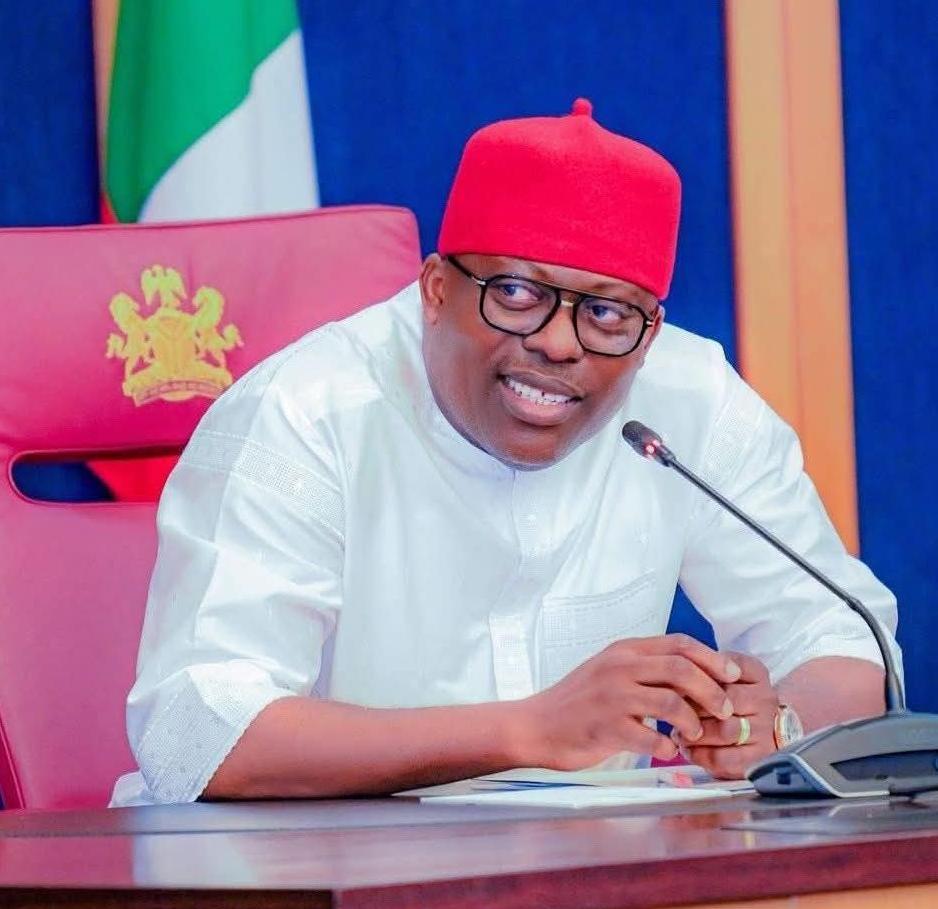
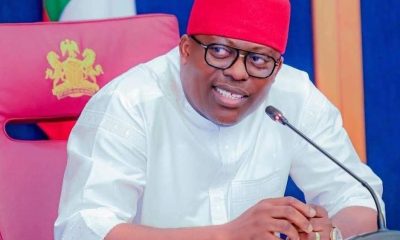
Governor of Rivers State, His Excellency Sir Siminalayi Fubara, has called on the people of the State to embrace peace and unity, describing them as indispensable pillars for the socioeconomic development of any society.
In a goodwill message to mark Nigeria’s 66th Independence Anniversary, signed his chief Press Secretary,Nzeshi Onwuka, Governor Fubara said the celebration offers an opportunity for the people to reflect on Nigeria’s journey since 1960 and to renew their commitment to peaceful coexistence.
The Governor noted that Rivers State, as the “treasure base of the nation” and a melting pot of diverse ethnic nationalities, has always thrived when its people lived in harmony. He said no meaningful development can take place in an atmosphere of rancour, division and political hostility.
According to him, while political differences are normal in a democracy, they must never be allowed to undermine the collective interest of the State. “We may disagree as politicians, but we must never disagree on the peace and progress of Rivers State,” he stated.
Governor Fubara stressed that since assumption of office, his administration has anchored its governance philosophy on peace, describing it as the most invaluable infrastructure. He said the relative peace enjoyed in the State today has made it possible for his government to attract investments and execute projects across the three senatorial districts.
He therefore appealed to youths, traditional rulers, political leaders and all stakeholders to be ambassadors of peace in their communities, wards and local government areas, stressing that no one benefits when the State is in crisis.
The Governor further urged Rivers people to continue to support the Federal Government under President Bola Ahmed Tinubu, noting that national unity and sub-national cooperation are critical to achieving the goals of the Renewed Hope Agenda.
Uncategorized
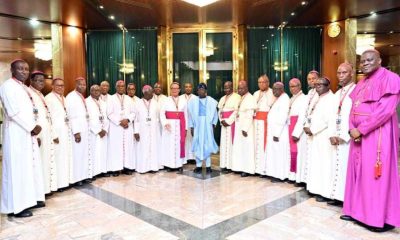
Nigeria’s Bishops Move to Curb Commercialisation of Catholic Worship* …As it rolls out New guidelines reject coercion, paid blessings and fundraising spectacles during liturgy
By our correspondent
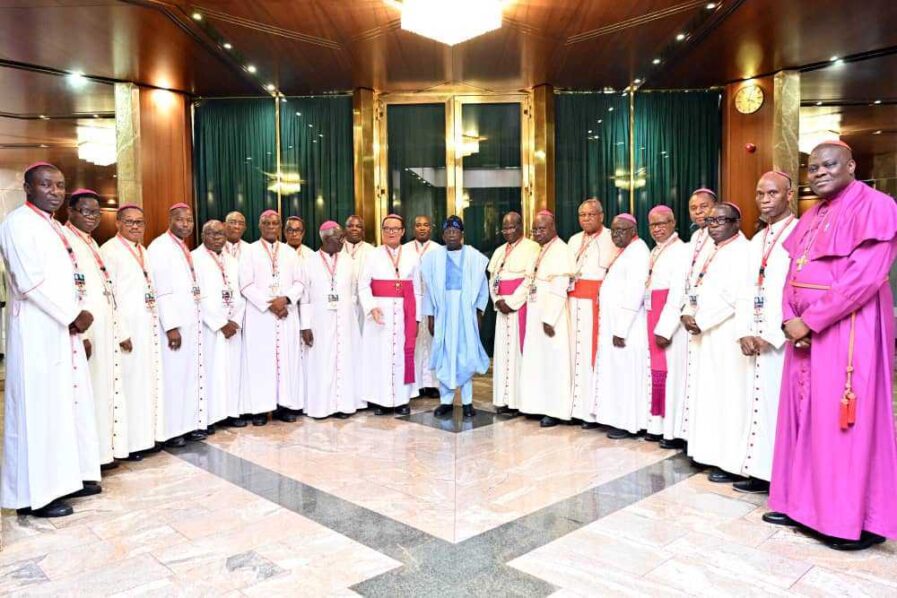
The Catholic Bishops’ Conference of Nigeria (CBCN) has issued new guidelines aimed at curbing the commercialisation of fundraising during Catholic worship, insisting that the Eucharistic celebration must remain central and that giving to the Church should be free, dignified and transparent.
The Guidelines on Fundraising in Liturgical Worship in Nigeria, published by the Catholic Secretariat of Nigeria on September 23, address a range of fundraising practices that, according to the document, risk distracting from the sacred character of the liturgy.
The guidelines caution against practices including comedians appearing at liturgical celebrations, paid ceremonial unveilings, charging for blessings and excessive frequent second collections.
“The Eucharist itself risks becoming an interruption to the harvest rather than its reason,” wrote Rev. Fr. Augustine Okochi, Deputy Secretary-General and Director of the Pastoral Agents Department of the Catholic Secretariat of Nigeria, in an article accompanying the publication.
The guidelines do not seek to discourage financial support for the Church. Rather, they call for fundraising to be conducted in a manner consistent with the dignity of Catholic worship and the freedom of the faithful.
The CBCN calls for adequate communication before fundraising appeals and insists that donors, regardless of their financial circumstances, should be treated with dignity. It also rejects humiliation, coercion and the use of guilt to secure contributions.
The document further addresses unauthorised levies, elaborate anniversary celebrations, oversized building projects and what it describes as the commercialisation of sacramentals.
To strengthen financial accountability, the guidelines propose structures including diocesan budgets, project-screening committees and greater centralisation of resources.
Fr Okochi said the guidelines were intended to help priests, religious and lay faithful develop fundraising practices that support the Church’s mission without allowing financial appeals to overshadow worship.
“The book does not discourage generosity but rather purifies it,” he wrote.
The guidelines also affirm the right of the faithful to give freely and cheerfully, while encouraging greater cooperation between clergy and laity in the management and financing of Church projects.
Grounded in Scripture, the 1983 Code of Canon Law, the documents of the Second Vatican Council and the teaching of recent Popes, the guidelines place the Eucharist at the centre of the Church’s liturgical life.
They call on pastoral agents to guard the Eucharistic celebration against practices that could compromise its sanctity and to promote a culture of responsible stewardship, transparency and voluntary giving.
Fr Okochi described the publication as a resource for parishes, chaplaincies, dioceses, seminaries, religious communities and families seeking to develop healthier approaches to Church fundraising.

Girl -child Violation takes a fearful dimension in Niger State-CP Ellema
By Uthman Baba-Naseer,Minna The Commissioner of Police in Niger State,CP Adamu Abdullahi Elleman,has said that the Police are the first...

Diri Eulogises Bayelsa Founding Fathers, Says State Has Made Progress At 30 *’Roads, Power, Jobs Remain Priorities’
By David Owei,Bayelsa Governor of Bayelsa State, Senator Douye Diri, has paid tributes to its founding fathers, stating that the...

NIGERIA@ 66: Gov Fubara Sues for Peace,Unity in Rivers State
By Gorge Mgbeleke Governor of Rivers State, His Excellency Sir Siminalayi Fubara, has called on the people of the State...

Nigeria’s Bishops Move to Curb Commercialisation of Catholic Worship* …As it rolls out New guidelines reject coercion, paid blessings and fundraising spectacles during liturgy
By our correspondent The Catholic Bishops’ Conference of Nigeria (CBCN) has issued new guidelines aimed at curbing the commercialisation of...

SOLUDO’s VENDETTA AGAINST PETER OBI MUST STOP NOW
By Chief Chekwa Okorie I have watched with disgust and utter disappointment, Prof. Chukwuma Soludo’s vicious and vile vendetta against...

FG charges new fish association executives on unity, warns against litigation
By our correspondent The Federal Government has charged the newly elected executive of the National Fish Association of Nigeria, NFAN,...


Rivers Assembly Adjourns on definit Matters of Urgent Public Importance …As it Moves to Address Flooding in the state
By Daivd Owei Touched by the sufferings of Rivers people, occasioned by the ravaging floods in the State, the Rivers...

Adeniyi Preaches Patriotism, Visits Team Nigeria Wrestling Camp Ahead of World Championships
By David Owei The President of the Nigeria Wrestling Federation (NWF), Bashir Adewale Adeniyi, MFR, has urged members of Team...


Nigeria Should Mourn Death of Democracy, Rule of Law on October 1 – HURIWA
By George Mgbeleke The Human Rights Writers Association of Nigeria (HURIWA) says Nigeria should be mourning the death of democracy,...


Edo death sentence: Media group demands immediate execution of kidnappers
By our correspondent The Muslim Media Watch Group of Nigeria, MMWG, has hailed the Edo State Judiciary for sentencing four...
-

 Politics1 year ago
Gov Okpebholo moves to end Cultism *Threatens action against leading cult groups *Vows to demolish more cult houses in Edo State
-
 Politics1 year ago
ASUU-NDU protest against FG loans, unpaid salaries,Non-Implementation of agreements …..says loans is generational slavery
-

 Business & Economy1 year ago
PC-NCG Issues Disclaimer on Purported Nigerian Coast Guard National Orientation Exercise In Anambra State
-
 Entertainment2 years ago
Jubilation galore as Parishioners of CKC Kurudu celebrate their cultural heritage ….FG should exploit our Cultural heritage to unite Nigerians-Rev Fr Dim
-

 Sports8 months ago
Bayelsa-born ex-football star’s son, Opuama donates spike shoes to Athletics Association
-

 General News2 years ago
Reps hold public hearing on FMC Ugwuaji Awkunanaw
-
 Law & Crime1 year ago
Legal practitioner raises alarm over threat to his life by CSP Muhammed Abdulkareem
-
 General News2 years ago
Celebration galore as UDA Successfully Elected New Exco ……I will digitalize processes that will raise UDA to greater height -Comr. Okejiri