
Uncategorized
Shehu Sani Installs Solar Power System at Rigasa General Hospital

By Abdullateef Bamgbose
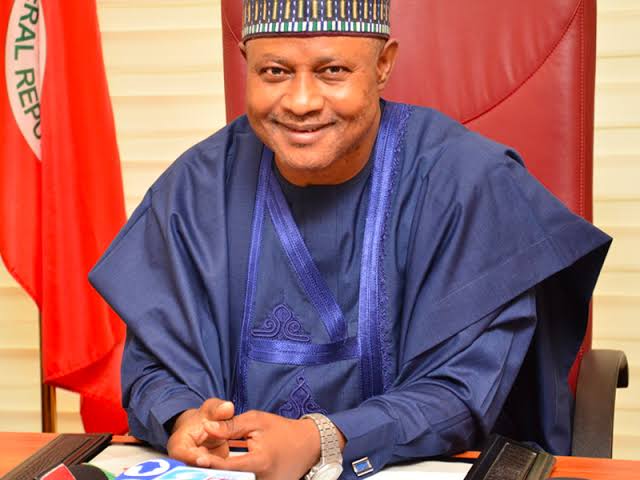
Former Senator representing Kaduna Central Senatorial District, Senator Shehu Sani, has provided and installed a solar power system at Rigasa General Hospital in Kaduna State as part of efforts to improve electricity supply and strengthen healthcare delivery at the facility.
The intervention is expected to enhance the hospital’s capacity to provide essential medical services, particularly during power outages, when uninterrupted electricity is critical for patient care, medical procedures and the operation of vital healthcare equipment.
The initiative is another demonstration of the former lawmaker’s commitment to community development and support for public healthcare institutions.
In October 2026, Shehu Sani also provided a solar power system to Sabo-Tasha General Hospital in Kaduna to support critical medical services, particularly at the special-needs babies unit and part of the maternity ward.
The former senator, a human rights activist and All Progressives Congress (APC) senatorial candidate for the 2027 general election, is said to believe that politicians should not wait until they occupy public office before responding to the needs of their communities, especially in areas where timely intervention could help save lives.
Speaking with journalists shortly after the handing-over ceremony, the Sarki Rigasa, Malam Aliyu Yahaya, expressed appreciation to Senator Shehu Sani for what he described as a laudable intervention that came at the right time.
Yahaya said the gesture demonstrated genuine concern for the welfare of residents and the importance of supporting public healthcare institutions, particularly those serving densely populated communities.
He commended the former lawmaker for responding to a critical need in the community, noting that reliable electricity remains essential for effective healthcare delivery.
The traditional ruler expressed hope that the solar installation would provide lasting benefits to the hospital, improve the working environment for healthcare personnel and enhance the quality of services available to patients.
Reliable electricity is indispensable to modern healthcare delivery, supporting essential services such as laboratory operations, lighting, the preservation of medical supplies and the functioning of critical medical equipment.
The intervention is therefore expected to provide relief to healthcare workers and residents of Rigasa and neighbouring communities who depend on the hospital for medical services.
The development also highlights the importance of collaboration between political leaders, traditional institutions and public healthcare facilities in addressing infrastructure challenges and improving access to essential services.
Uncategorized
*Amaechi’s NDDC Allegation:Public Accountability Requires Evidence , Not Campaign Declaration*
By George Mgbeleke
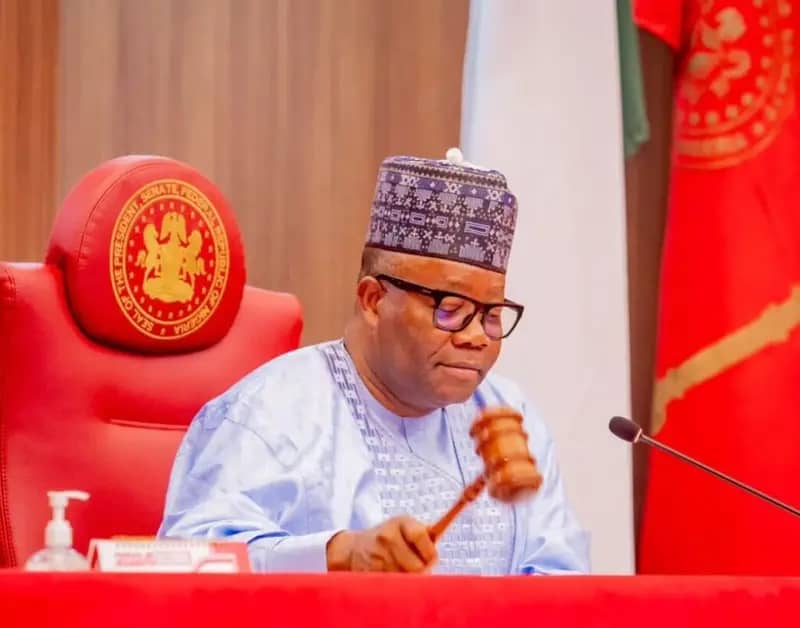
The office of the President of the Senate, Godswill Akpabio has debunked claims by the former Minister of Transport, Hon Chibuike Rotimi Amaechi that Akpabio introduced a 50 per cent deduction from payments to contractors of the Niger Delta Development Commission (NDDC)
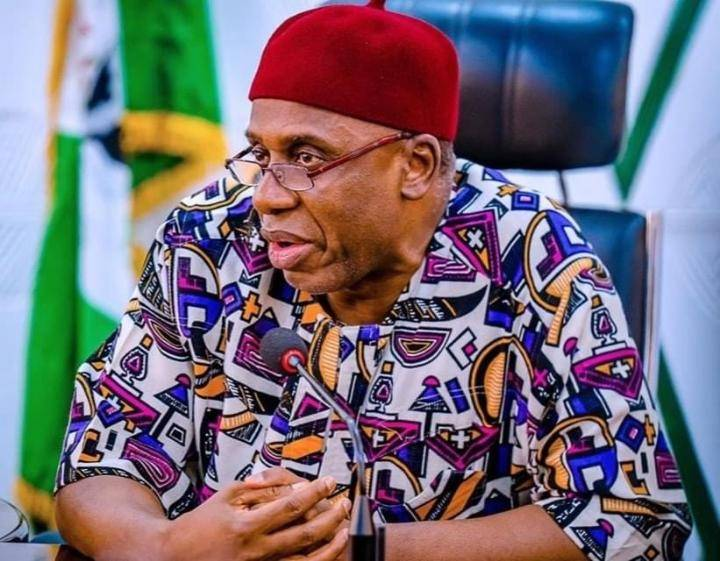
Hon Rotimi Amaechi
In a statement signed by Specisl Adviser to President of the Senate, Rt. Hon. Eseme Eyiboh, “The attention of the Office of the President of the Senate has been drawn to statements attributed to former Rivers State Governor and former Minister of Transportation, Mr Chibuike Rotimi Amaechi, at a political rally in Bauchi State on Saturday, 14 November 2026, alleging that His Excellency, Distinguished Senator Godswill Obot ,introduced a 50 per cent deduction from payments to contractors of the Niger Delta Development Commission (NDDC).
The allrdayioThe allegation is sufficiently serious to deserve scrutiny. It is also specific to require evidence.
According to published accounts of his remarks, the former Governor offered no contract documents, payment records, identifiable transactions or other verifiable particulars to substantiate his accusation. An allegation delivered before an enthusiastic political audience does not, by that circumstance alone, acquire the status of an established fact.
The distinction between political accusation and demonstrable wrongdoing is fundamental to responsible public discourse. Public figures, particularly those who have occupied high executive offices, should appreciate that distinction and accord public communication the decorum it requires.
*THE BURDEN OF PROOF CANNOT BE REPLACED BY RHETORIC*
If Mr Amaechi possesses credible evidence of unlawful deductions involving NDDC contractors, the appropriate course is to identify the relevant transactions, disclose the supporting records and submit the material to competent investigative authorities and not the act of rabble-rousing.
The questions are straightforward: Which contracts are involved? Which contractors were affected? When were the alleged deductions made? Through what payment arrangements did they occur? What evidence establishes the personal involvement attributed to the President of the Senate?
These are not unreasonable demands. They are the elementary requirements of accountability and standards of proof.
Neither the prominence of an accuser nor the intensity of his language can substitute for answers.
*THE RIVERS STATE RECORD ALSO DESERVES SCRUTINY*
Mr Amaechi served as Governor of Rivers State from 2007 to 2015, a period during which his administration initiated major infrastructure, education, healthcare and transportation projects.
That record is a legitimate subject of public examination, including the relationship between expenditure, project completion, operational sustainability and value for money.
Two particularly consequential examples are the Port Harcourt monorail project, which became the subject of sustained controversy over its reported cost, incomplete implementation and eventual inability to provide the anticipated public transportation service and, the Malaria-free Rivers State initiatives.
The history of these projects raised questions that cannot be resolved through political exchanges alone: What expenditure was incurred? What proportion of the original transportation objectives was achieved? What institutional and contractual decisions contributed to the project’s difficulties? What lessons should public authorities draw from its implementation?
These questions are appropriate because public accountability does not begin and end with one’s political opponents.
It extends to every public official entrusted with resources, authority and responsibility.
*POLITICAL COMPETITION MUST NOT DISPLACE PUBLIC RESPONSIBILITY*
The approaching 2027 general elections will inevitably produce disagreements among political actors. Such disagreements are normal in a democracy.
However, electoral competition does not diminish the obligation to speak responsibly about matters capable of affecting public confidence and trust in institutions.
The NDDC was established to address longstanding developmental challenges in the Niger Delta. Allegations concerning its contracts, finances and administration should be investigated through credible processes rather than reduced to instruments of political confrontation.
The people of the Niger Delta deserve functioning infrastructure, transparent procurement, completed projects and measurable developmental outcomes. Their interests should remain central to any serious discussion about the Commission.
*A CALL FOR EVIDENCE AND INSTITUTIONAL ACCOUNTABILITY*
Mr Amaechi is entitled to raise concerns about public administration. He is equally obliged to distinguish what he can substantiate from what he merely alleges.
The same standard applies to every public officeholder.
We therefore invite him to place any credible documentary evidence in his possession before the appropriate authorities so that the issues he has raised may be examined objectively and in accordance with the law.
Public accountability is strengthened when accusations are tested against evidence, when public expenditure is examined against outcomes, and when institutions are permitted to discharge their responsibilities without political interference. The Godswill Akpabio’s era as Governor of Akwa Ibom State speaks eloquently and directly to this logarithm.
Ultimately, the credibility of a public allegation must rest not on the volume of its delivery, the status of its author or the occasion on which it is made, but on the quality of the evidence supporting it.
Let the facts speak.

By George Mgbeleke
The Human Rights Writers Association of Nigeria (HURIWA) condemns the conduct of the President of the Nigerian Bar Association (NBA), Oyinkansola Badejo-Okusanya, SAN. Her leadership of the Association is increasingly giving the impression that the NBA has become an appendage of the ruling All Progressives Congress (APC).
In a statement signed by the group’s national coordinator,Comrade Emmanuel Nnadozie Onwubiko, it said ,” We make this statement in support of the position taken by the African Democratic Congress (ADC), which has accused the NBA of taking sides in the political battle against the opposition.
“The accusation follows the Association’s decision to petition the Legal Practitioners Disciplinary Committee over comments by a lawyer, Kalu Kalu, about a Federal High Court judge.
We urge Nigerians, civil society organisations, and well-meaning members of the legal profession to amplify this position.”
A question the NBA President must answer
Is this why the NBA President rushed to meet with President Bola Ahmed Tinubu only a few hours after her disputed election? What was the urgency? What was discussed? Why did the leader of an association that is supposed to be the conscience of the nation and the last hope of the common man find it necessary to hurry to the political leader at the head of the ruling party before the dust of her election had settled?
These are legitimate questions, and the NBA owes the legal profession and the Nigerian public clear answers. An NBA President whose first act in office is to rush to the seat of executive power invites suspicion about her independence.
Selective outrage
The facts as stated by the ADC are troubling. Kalu, a member of the ADC and a lawyer to former Vice-President Atiku Abubakar, described the judge as a “coconut judge” on Channels Television on 11 November 2026 while discussing the 5 November Federal High Court judgment on the ADC leadership crisis. When the presenter cautioned him, Kalu withdrew the remark on air. By his own act, the matter should have ended there.
Yet the NBA, the very next day, petitioned the Disciplinary Committee. The Association found its voice and moved swiftly against a lawyer who is a member of the opposition and counsel to a leading opposition figure.
In contrast, the ADC reminds Nigerians that the Court of Appeal, in a June 2026 ruling, described the same judge’s conduct as the “highest form of judicial impertinence”, citing a Supreme Court precedent that characterised such conduct as judicial rascality.
We ask: where was the NBA then? Did the Association petition anyone? Did it issue a statement of concern about conduct that an appellate court itself found troubling? Why is the NBA only now finding its voice, when it is an opposition lawyer who has said something that some people find uncomfortable?
This is selective, politically coloured outrage, and it does not befit an institution with the NBA’s noble history in the defence of democracy and the rule of law.
Where HURIWA stands
HURIWA does not encourage personal attacks on judicial officers, and we agree that lawyers must exercise restraint. But the NBA cannot demand respect for the judiciary while appearing indifferent to conduct that brings the judiciary into disrepute. Respect for the courts must never become a requirement for silence in the face of injustice.
The right to scrutinise and criticise judgments is fundamental to a democratic society. Section 39 of the 1999 Constitution (as amended) guarantees freedom of expression, and Section 36 guarantees fair hearing. A disciplinary process initiated amid perceptions of political bias risks becoming an instrument of intimidation against lawyers who hold opposition views.
A dangerous direction
The ruling party has been accused of boasting openly of hijacking our judicial institutions and the Nigerian Bar. In that atmosphere, the NBA has a heightened duty to avoid even the appearance of partisanship.
It must not be perceived as throwing its hat into the political ring on the side of the ruling party, least of all as the country heads into the 2027 elections. An NBA that behaves like a top member of the APC, or like hirelings of the APC presidential campaign council, has abandoned its role as the independent guardian of the rule of law.
Our demands
HURIWA therefore demands that:
The NBA President publicly explain the circumstances and purpose of her meeting with President Tinubu within hours of her election.
The NBA urgently reconsider and withdraw the petition against Kalu Kalu, given that he has already withdrawn the remark, or at the very least ensure that any process is transparent, impartial and free of political influence.
The NBA demonstrate its even-handedness by speaking out on the Court of Appeal’s observations on the conduct of Justice Peter Lifu.
The NBA publicly reaffirm its independence from all political parties and refrain from any conduct that suggests alignment with the ruling party.
The National Judicial Council and the Legal Practitioners Disciplinary Committee ensure that the disciplinary process is not used to silence lawyers for their political views.
The Nigerian Bar must not be turned into a political instrument. HURIWA will continue to monitor developments and to defend the rights of lawyers and citizens to speak out against injustice.
By Jacob Emose with Agency report
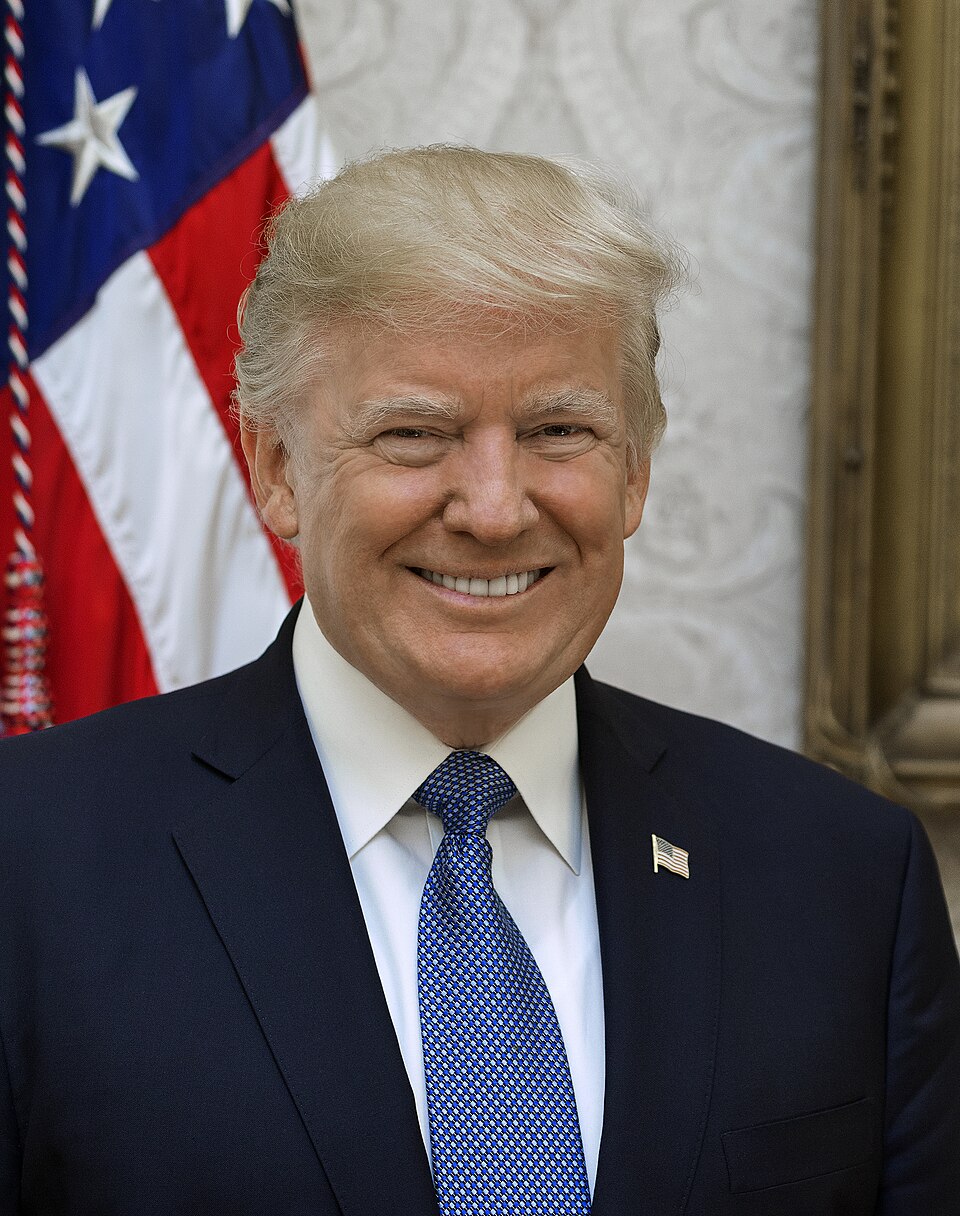
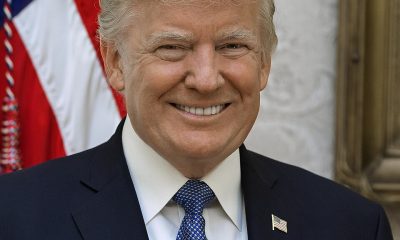
US President Donald Trump, China’s President Xi Jinping and Russia’s President Vladimir Putin will hold their first trilateral meeting on the sidelines of the Asia-Pacific Economic Cooperation, APEC, summit in China’s Shenzhen, the White House has confirmed.
On Friday, Washington also confirmed Trump’s attendance at the summit, which will take place from November 18-19.
Talks will focus on nuclear proliferation, the White House said. But they come amid significant global turbulence: Russia’s war in Ukraine, the US-Israeli war on Iran and ongoing trade tensions between Washington and Beijing.
“I think what we’ll see is some pretty impressive photo-ops with a lot of really bombastic rhetoric from Trump,” Simon Mabon, a professor of international politics at the UK’s Lancaster University, told Al Jazeera. However, he added, the three “collectively or unilaterally, are not able to bring about an end to the conflict in Iran or Ukraine”.
So what does each side want and what will be the likely outcome?
Here’s what we know:
What’s on the agenda?
Each leader has his own priorities, but there are some issues all will want to discuss.
New nuclear treaty
A top issue for Russia and the US is the New Strategic Arms Reduction Treaty, New START, which lapsed in February. The treaty was first signed in 2010 and caps US and Russian strategic nuclear arsenals.
Russia currently possesses the largest number of warheads, followed by the US and then China, which is rapidly building up its own arsenal.
Trump previously rejected Russia’s proposal to extend the treaty after it expired, demanding instead a “new, improved and modernised” deal that includes Beijing.
China is understood, however, to be reluctant to join an agreement it was not involved in forming.
A senior Trump administration official told Reuters this topic will start the conversation but that “we do not expect to get any kind of agreement”.
US-Israel war on Iran
Officials also say the world leaders will discuss the Iran war, which the US and Israel launched on February 28. While full-scale strikes have, for now, ceased, the conflict remains in a deadlock.
After more than 100 days, the critical Strait of Hormuz remains closed, and oil and gas prices are still volatile as ships in the strait continue to face Iranian strikes and seamines. One-third of China’s crude oil supply transited the strait before the war. The conflict is also hampering demand for Chinese exports.
Russia, meanwhile, has profited from rising energy prices and recent sanctions relief from Washington amid supply crunches – particularly of diesel.
China-US trade rivalry
Trade wars and the race to control microchips used to power artificial intelligence are straining relations between Beijing and Washington.
Trump hit China with a 145 percent tax hike last year, while Beijing retaliated by imposing 125 percent levies on US imports. Tensions mounted further over China’s restrictions on exports of rare earth minerals needed to manufacture advanced chips and other technology.
The two countries have since reduced tariffs and struck several deals following Trump and Xi’s meetings in South Korea and Washington However, the recent scandal at chip firm Nvidia has prompted the US to allege that China was spying on CEO Jensen Huang. Beijing denies this.
Will the Ukraine war be discussed?
It is very unlikely. A Trump administration official told reporters the US president will not bring up Russia’s war on Ukraine, although Kremlin officials previously suggested the conflict could be discussed.
China, an ally of Moscow’s, has said the Ukraine war is a European issue.
US officials also note that Washington is pursuing peace talks, with US envoys Steve Witkoff and Jared Kushner visiting both Ukraine and Russia this week. “China is not really a part of that track, so it doesn’t seem appropriate to have the Ukraine discussion there,” an official told reporters.
President Trump has accused Ukraine’s President Volodymyr Zelenskyy of “not wanting” to end the war, while Kyiv has reiterated allegations that the US has restricted its Starlink satellite connection that allows it to operate attack drones. Trump has also blamed Ukraine for soaring diesel prices because of its strikes on Russian oil facilities.
At the same time, Trump has feted Putin, agreed to allow Russian diesel into global and US markets, and lifted oil sanctions on Moscow.
What does each side want from this meeting?
Russia
For President Putin, the meeting could provide a positive photo opportunity and a platform to project power while sidelining the Ukraine conflict, analysts say.
It will give him a “first among equals” position that he can display at home to show that he can influence Europe’s security architecture following the Ukraine war, Alexander Bratersky, a Moscow-based journalist and political analyst, told Al Jazeera.
China
Beijing has already been pushing for a resolution to the US war on Iran, which has impacted its own energy supplies.
China will also want to avoid being pulled into a nuclear treaty it had no part in establishing.
Last month, China’s Foreign Ministry said it would be “neither fair, reasonable nor realistic to ask China to join the so-called trilateral nuclear disarmament negotiations at this stage”.
US
Trump’s priority is to include both China and Russia in a new nuclear proliferation treaty, according to administration officials. “The president has made it clear that, among other topics, he will discuss the reduction of nuclear weapons in the world. This proliferation, President Trump believes, is very dangerous,” Olivia Wales, a White House spokesperson, told reporters.
The president could also use the meeting to project his administration’s diplomatic influence, as Iran refuses to capitulate to US demands for ending the war and hand Washington a win.
Trump has also sought closer ties with Xi, Putin and North Korea’s Kim Jong Un, all seen as “strongmen”, and is likely to be perceived as influential in such circles, analysts say.
“I think it will be more performative – Donald Trump playing global statesman rather than peacemaker,” said Mabon.
Trump’s Republican Party’s crushing defeat in midterm elections last week could undermine his leverage, experts note, as a new Democrat-led Congress is likely to support Ukraine more staunchly.
Is this the start of a new Yalta?
Pyotr Tolstoy, chairman of the Russian parliament’s foreign affairs committee said it could lead to a “new Yalta”.
The 1945 conference in Yalta, in the then Soviet Union, saw USSR President Joseph Stalin, the US’s Franklin D Roosevelt, and the United Kingdom’s Winston Churchill divide Germany and establish the United Nations in what was seen as the template for a new world order.
Kremlin spokesman Dmitry Peskov, called the trilateral meeting now taking place between the leaders of the US, China and Russia as “extremely significant” but pointed out that any agreements reached at the meeting cannot be imposed on other nations. (Al-Jazeera)

*Amaechi’s NDDC Allegation:Public Accountability Requires Evidence , Not Campaign Declaration*
By George Mgbeleke The office of the President of the Senate, Godswill Akpabio has debunked claims by the former Minister...

NIPR Urges NASS to Elevate Public Relations as a Strategic Management Function
By George Mgbeleke The Nigerian Institute of Public Relations (NIPR) has called on the National Assembly to elevate Public Relations...

Shehu Sani Installs Solar Power System at Rigasa General Hospital
By Abdullateef Bamgbose Former Senator representing Kaduna Central Senatorial District, Senator Shehu Sani, has provided and installed a solar power...

Uba Sani Wins 2026 Sun Governor of the Year Award …Kaduna’s people-centred governance, peacebuilding, infrastructure drive earn recognition
By Our Correspondent Kaduna State Governor, Senator Uba Sani, has emerged as the winner of the 2026 Sun Governor of...


HURIWA Berates NBA President’s Perceived Alignment with APC
By George Mgbeleke The Human Rights Writers Association of Nigeria (HURIWA) condemns the conduct of the President of the Nigerian...

2027: Deny Opposition 25% Votes, Diri Charges Bayelsa APC
By David Owei,Bayelsa Governor of Bayelsa State, Senator Douye Diri, has urged members of the All Progressives Congress (APC) across...

Tinubu to Attend National Grassroots Sports Summit,…As Diri leads discussions on Grassroot Sustainable Dev.
By David Owei,Bayelsa President Bola Ahmed Tinubu is scheduled to attend the 2026 National Grassroots Sports Development Summit, holding...
Allow Us Work For Tinubu, Stop Political Blackmail – Akume’s Faction Fires Back At Alia’s Group
By Tony Nwafor, Makurdi Ahead of the 2027 general election,the Benue Strategic Alliance for Tinubu/Shettima has fired back at the...

Trump-Xi-Putin Trilateral Meeting At APEC: What To Expect
By Jacob Emose with Agency report US President Donald Trump, China’s President Xi Jinping and Russia’s President Vladimir Putin will...


2027 : Tension grips APC Supporters as Obi, Idu NDC ticket grips APC in Onitsha
By Tony Nwafor, Onitsha As the 2027 general election draws close, there are Fears of victory by the Nigeria Democratic...
-
 Politics2 years ago
Gov Okpebholo moves to end Cultism *Threatens action against leading cult groups *Vows to demolish more cult houses in Edo State
-
 Politics1 year ago
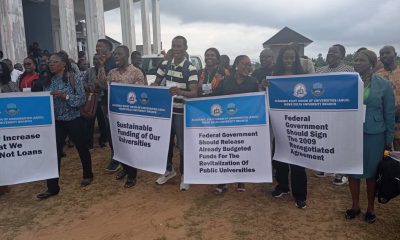
ASUU-NDU protest against FG loans, unpaid salaries,Non-Implementation of agreements …..says loans is generational slavery
-
 Business & Economy1 year ago
PC-NCG Issues Disclaimer on Purported Nigerian Coast Guard National Orientation Exercise In Anambra State
-
 Entertainment2 years ago
Jubilation galore as Parishioners of CKC Kurudu celebrate their cultural heritage ….FG should exploit our Cultural heritage to unite Nigerians-Rev Fr Dim
-
 Sports9 months ago
Bayelsa-born ex-football star’s son, Opuama donates spike shoes to Athletics Association
-

 General News2 years ago
Reps hold public hearing on FMC Ugwuaji Awkunanaw
-
 Law & Crime1 year ago
Legal practitioner raises alarm over threat to his life by CSP Muhammed Abdulkareem
-
 General News2 years ago
Celebration galore as UDA Successfully Elected New Exco ……I will digitalize processes that will raise UDA to greater height -Comr. Okejiri