
Politics
Enugu Declaration: Tinubu, APC Leaders Urge South-East To Vote For Continuity, Collaboration

By Bath Okorie,Enugu
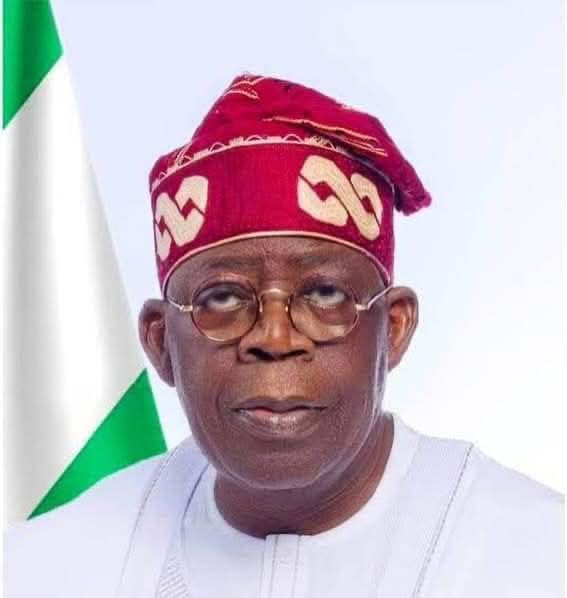
Barely 48 days to the long awaited general election, President Bola Ahmed Tinubu on Saturday led the All Progressives Congress, (APC), presidential campaign to Enugu, where party leaders unveiled what they called the Enugu Declaration — a commitment by the South-East to support the President’s re-election on January 16, 2027.
Addressing a massive crowd, President Tinubu urged youths to collect their Permanent Voter Cards, (PVCs), and vote APC from top to bottom for President, Governor Peter Mbah, Senators and members of the House of Representatives.
He praised Governor Mbah’s work in Enugu, saying children are being kept in school because education is a weapon against poverty, and later pledged continued investment in youths, farmers and infrastructure.
The President said farmers will receive interest-free loans, their communities will be connected with infrastructure, and electricity will improve, while the approved Eastern Gas Pipeline and Eastern Nigeria rail line will connect the East, South and North.
“Don’t let anybody deceive you. The other party, they don’t exist. They don’t have plans. They don’t know roads,” Tinubu said, listing party leaders present including former Senate President Anyim Pius Anyim, Senator Adams Oshiomhole, Imo Governor Hope Uzodimma, businessman Arthur Eze and others as proof of APC unity.
He wished the people safe travels for Christmas, urging them to travel peacefully.
Vice President Kashim Shettima said the South-East has no greater ally than President Tinubu, recalling how Tinubu visited Borno in March 2017 during the Boko Haram insurgency to commission resettlement houses and schools.
Shettima said the South-East cannot prosper in isolation and cannot win a presidential election alone, stressing that power is earned through negotiations, reciprocal concessions, strategic alliances and sacrifices.
He declared that he has never advocated a northern, Yoruba or Igbo presidency, but a Nigerian president of northern, South-Western and, in future, South-Eastern origin, saying citizenship is a covenant that binds the nation.
Shettima attacked former Vice President Atiku Abubakar and former Labour Party candidate Peter Obi, saying they have visited only few states, are not in the contest to win, but to make money and foment mischief after losing, and that with South-East support, APC will soundly defeat them.
Governor Peter Mbah said the reception for the President was not staged but flowing from the heart, describing Enugu as the homeland of Ndigbo where political collaboration between Igbos and other regions was historically forged.
Mbah said the Enugu Declaration is a statement to support and collaborate in Tinubu’s re-election, because Ndigbo have benefited from collaboration since the First Republic and build businesses and relationships beyond their boundaries.
He said Tinubu inherited a stagnant economy but pulled Nigeria back from the economic precipice through subsidy removal and foreign exchange reform, which increased funds to states and enabled Enugu to build 7,000 classrooms, 260 smart schools and 260 Type 2 primary healthcare centres.
Mbah listed federal interventions in the South-East, including the Enugu-Onitsha road now done in 45 minutes instead of over two hours, the Enugu-Port Harcourt road, the dualisation of the Makurdi-Ninth Mile-Obinze road, Enugu-Owerri and Umuahia roads, and the Ogbinagu flyover now crossed in five minutes instead of two hours.
He urged voters to vote massively for APC on January 16 for President and National Assembly, and again on February 6 for governors and State Houses of Assembly, saying a good sailor does not abandon his ship because of rough waters.
APC Presidential Campaign Council Director-General, Senator Abdulaziz Yari, rejected the one-term promise by a candidate, saying Igbos deserve the full number of years allowed by the Constitution, whether six, seven, eight or 10 years, and urged them to join the train to take Igboland to the promised land.
Senate President Godswill Akpabio, who described himself as an in-law of Enugu, warned against anyone promising four years, saying when it is the turn of the Igbo, Nigeria will support the Igbo for eight years.
Akpabio led the crowd in chants of “Tinubu! Eight years!” and urged Ndigbo to prove political collaboration by giving massive votes to Tinubu, who he said has stabilised the polity and given more money to states.
Deputy Speaker of the House of Representatives, Benjamin Kalu, said Tinubu is the most qualified candidate because he has tested the presidential office and understands its demands, unlike Atiku who was only Vice President and Obi who was only a governor.
Kalu said the South-East felt marginalised for eight years under the previous administration, but Tinubu has recognised the region, including assenting to the South-East Development Commission bill which Kalu sponsored, and bringing transparency to foreign exchange for Igbo importers and industrialists.
He said security has improved in the South-East, allowing large gatherings and an expected homecoming this December, and urged the region to move from sentiment to strategy by voting for Tinubu.
By Abdullateef Bamgbose
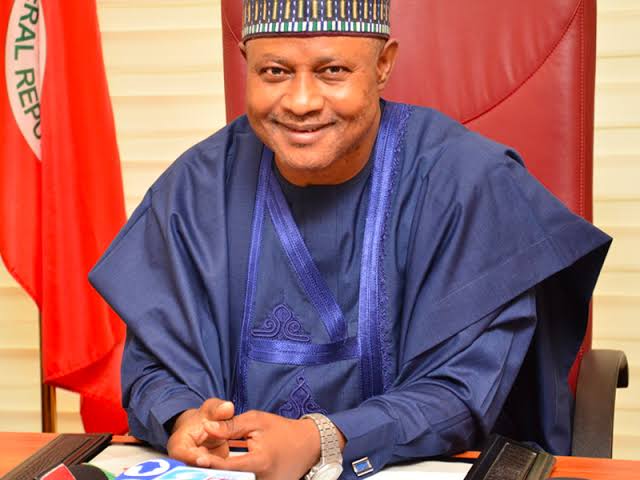
Kaduna state Governor Uba Sani has said that his administration has been doing everything within its powers to secure the lives and property of the people, in spite of efforts to politicised insecurity in the State.
The Governor who spoke at the palace of Sarkin Danbushiya in Millennium City, Alhaji Muktar Haruna on Saturday, said that he came to commiserate with the people of the area, over the recent rise in insecurity.
He promised that insecurity in Millennium City will be addressed in the next few weeks because Kaduna State Government has been collaborating with security agencies to find a lasting solution to the problem.
Governor Uba Sani went on a tour of Millennium City, where he met with community and religious leaders as well as residents, to assess the security situation of the area.
He assured residents that all the kidnapped victims would return home safely, advising the people of the area to always cooperate with security agencies by volunteering actionable intelligence reports.
The Governor who refused to unveil the security arrangements that have been put in place, argued that disclosing them will enable those who do not wish the state well, to re-strategize.
According to Governor Uba Sani, his administration has executed a lot of projects Millennium City, including roads, schools, a world-class hospital, and a first-of-its-kind terminal that will serve thousands of people.
The Governor further disclosed that the Joint Task Force (JTF) personnel in the area, consisting of about 300 officers and men, will be incorporated into KADVIS and placed on allowances.
In his remarks, the Village Head of Danbushiya, Alhaji Muktar Haruna, commended Governor Uba Sani and the security agencies for their sustained efforts to combat insecurity in the area and surrounding communities.
He said the presence of security personnel, the provision of patrol vehicles and other logistics support, and the Governor’s personal visits to the area, have given residents renewed confidence and hope that peace would soon return.
Alhaji Muktar assured the Governor and the security agencies of his people’s full support and cooperation, pledging that the community will continue to provide useful information, support security operations, and stand firm until lasting peace is achieved.
Politics
2027: After Clerics, Barau Mobilises 3,405 Traditional Rulers in Kano for Tinubu, Abba, Other APC Candidates
By Yusuf Abubakar,Kano
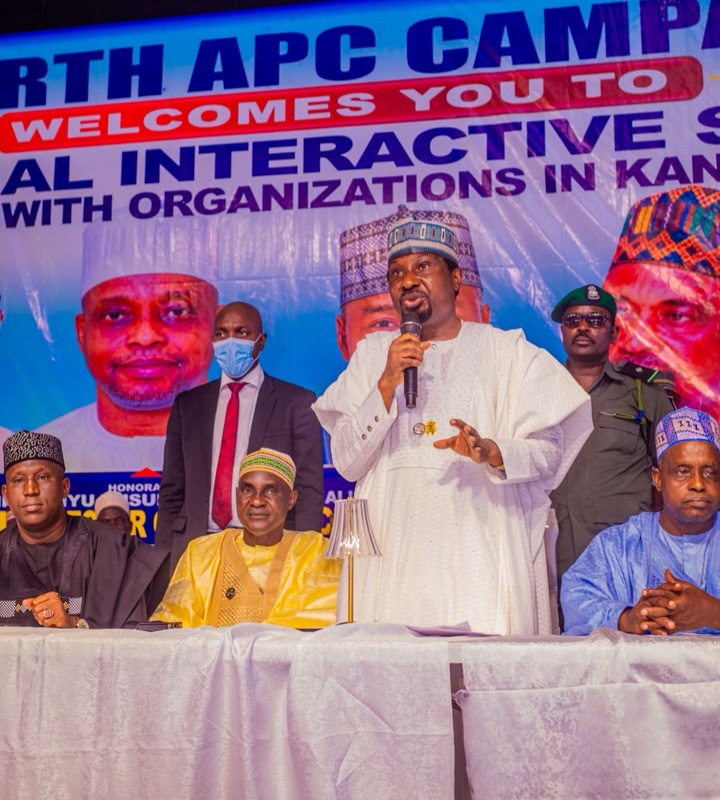
As part of his ongoing engagement with stakeholders across Kano North Senatorial District, the Deputy President of the Senate, Senator Barau I. Jibrin, on Thursday met with 3,405 traditional rulers, urging them to support and vote for President Bola Ahmed Tinubu, Governor Abba Kabir Yusuf, himself for re-election as Senator representing Kano North, and all other candidates of the All Progressives Congress (APC) in the 2027 general elections.
The meeting, held at the Ali Jita Event Centre in Kano, brought together 3,405 traditional rulers, comprising all the 3,032 ward heads, 347 village heads, and 26 representatives and secretaries of the district heads.
The engagement came barely 72 hours after Senator Barau rallied more than 2,000 Islamic clerics from the 13 local government areas of Kano North Senatorial District for President Tinubu and other APC candidates ahead of the 2027 general elections.
In the past months, the Deputy President of the Senate has intensified engagements with critical stakeholders across Kano North, reaching out to different groups with a common message and objective: support and vote for President Tinubu and all APC candidates in the 2027 general elections. APC from top to bottom.
In a statement by his Special Adviser on Media and Publicity, Ismail Mudashir, Senator Barau commended the traditional rulers for their invaluable contributions to grassroots development, describing them as indispensable partners in promoting peace, security and the wellbeing of the people.
He expressed profound appreciation for their cooperation, prayers and continued support, noting that traditional institutions remain closest to the people and understand their needs and challenges.
On security, the Deputy President of the Senate acknowledged the challenges confronting some communities in Kano North but expressed optimism over the improving situation through the collective efforts of security agencies and other stakeholders.
He said the decision of the Nigerian Army to deploy a battalion to Dambatta Local Government Area, in addition to existing security formations across the district, would strengthen security and safeguard lives and property.
Highlighting major electricity projects across the district, Senator Barau disclosed that the power projects in Bichi, Dawanau Market and Kwanar Kanye in Kabo would gulp over N130 billion.
“These projects may take time, but they will definitely turn around the economic fortunes of our senatorial district. I remember when I was in the House of Representatives between 1999 and 2003, similar power projects were attracted to Ogun State by the former President. Today, the state has become an industrial hub. We will get there in Kano North too,” he said.
He explained that the electricity projects, alongside the Federal University of Science and Technology (FUST), Kabo, Police Training School, Immigration Training School and Civil Defence Training School, would boost economic activities, create employment opportunities and accelerate development across the district.
In the health and education sectors, Senator Barau disclosed plans to transform the Bagwai and Kabo hospitals into major referral and teaching hospitals, with Kabo Hospital expected to serve as a teaching hospital for FUST, Kabo.
He also revealed plans to upgrade the Federal College of Education, Bichi, and Audu Bako College of Agriculture, Dambatta, into universities, subject to the lifting of the existing embargo on the establishment and conversion of tertiary institutions.
Ahead of the 2027 general elections, the Deputy President of the Senate urged the traditional rulers to encourage their subjects to support and vote for President Tinubu, Governor Abba, himself as Senator for Kano North Senatorial District and all APC candidates.
He noted that Governor Abba’s decision to join the APC had strengthened cooperation between the Federal and State Governments, positioning Kano to attract more Federal Government projects and development interventions in the next administration.
Speaking on behalf of the traditional rulers, the Village Head of Lakwaya in Gwarzo Local Government Area, Alhaji Idris Ado Lakwaya, said they attended the meeting with the approval of the Kano Emirate Council.
” We have the permission and approval of the Emir to attend this function. We thank the Deputy President of the Senate for his relentless efforts to address the challenges facing us, including insecurity,” he said.
** Barau Meets Kano North Fulani Association, Persons with Disabilities **
Meanwhile, the Deputy President of the Senate also met with members of the Kano North Fulani Association and associations of persons with disabilities at the Amani Event Centre in Kano as part of his ongoing consultations with stakeholders across the district.
Speaking at the meeting, former Senate Chief Whip, Senator Bello Hayatu Gwarzo, urged all to vote for President Tinubu, Governor Abba, Senator Barau and all APC candidates in the 2027 general elections.
Senator Gwarzo commended Senator Barau for his extensive engagement with stakeholders and different groups across the district.
” President Tinubu has already started well, and we are very optimistic that all his initiatives will bring the desired results that will benefit everyone. So, come out en masse and vote for him and all APC candidates from top to bottom. All these bogus promises by others (oppositions) will not take us anywhere. Let us support and vote for Mr President. He has good intentions for us,” he said.
In his remarks, Senator Barau reiterated his call for support for all APC candidates, urging the groups to mobilise their members and other residents to vote for the APC in the 2027 general elections.
Politics
INEC Chairman Declares War on Election Violence Perpetrators, sponsors -Says “No Ambition is Worth a Single Nigerian Blood” -“We Will Protect You-Before,During and After”-Ribadu
By George Mgbeleke, Abuja
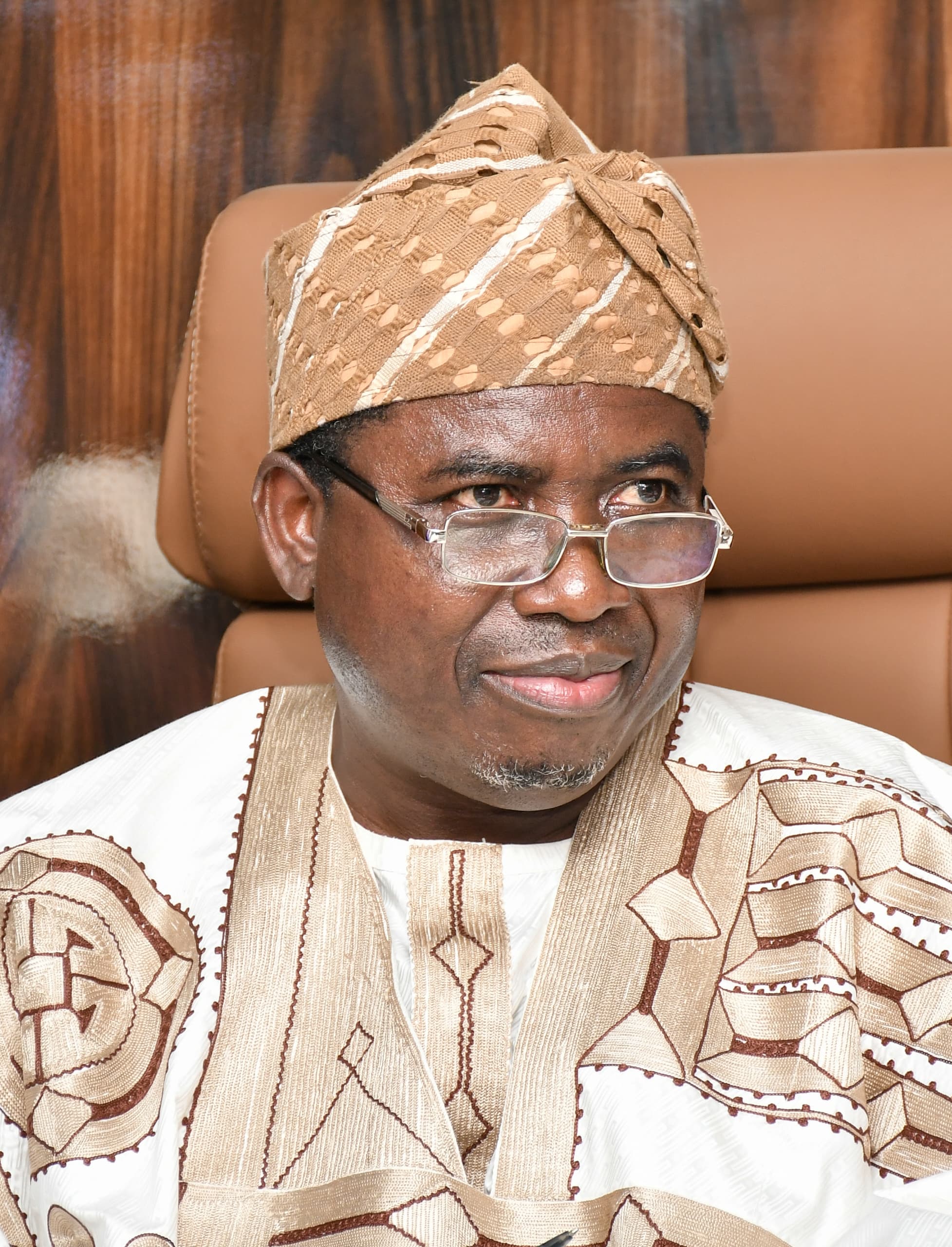
Barely 50 days to the 2027 General Election, INEC Chairman Professor Joash O. Amupitan, SAN, stood before Nigeria’s entire security high command on Thursday and delivered a blunt warning: the ballot must not be silenced by bullets.
The stage was the INEC-ONSA Strategic Election Security Conference in Abuja, a gathering that brought together the National Security Adviser, Mallam Nuhu Ribadu, the Minister of Defence, Service Chiefs, the Inspector-General of Police, DSS, NIA, NSCDC and every Resident Electoral Commissioner in the country.
Amupitan did not mince words. He called the conference not a ceremony, but an operational war-room — a final audit of threats, coordination and preparedness before Nigerians go to the polls.
The countdown is now real. On Saturday, 16th January 2027, Nigerians will vote for President and National Assembly members across 177,299 polling units. Three weeks later, on 6th February, they will return to elect governors and state lawmakers.
For a democracy of over 100 million verified voters, Amupitan said, INEC and security agencies are two pillars holding up one roof. When one falters, democracy suffers. When both stand together, the people’s will becomes unassailable.
His central message was simple: elections and security are not parallel tracks. They are two sides of the same coin. The Constitution and the Electoral Act 2026 provide the law, but only security gives that law room to breathe.
He described security as the first mile and the last mile of election logistics — from protecting ballot papers leaving the Central Bank to protecting results at a ward collation centre at 2 a.m.
At the heart of that protection is ICCES, the Inter-Agency Consultative Committee on Election Security. Born after the violence of 2011, it brings INEC, Police, Military, DSS, NSCDC and other agencies under one roof, with the Police as lead agency on the ground.
But Amupitan admitted a painful truth: synergy in Abuja does not automatically mean safety in a remote village. Too often, lapses happen at the grassroots, where communication breaks down and polling officials are left exposed.
To close that gap, he unveiled the ICCES Tentacles framework — pushing coordination down to every state, every Local Government Area and every ward, so that RECs, Commissioners of Police, DPOs, DSS commanders and INEC Electoral Officers know each other by name and share real-time communication.
Then came the fire. Since campaigns opened in August 2026, Amupitan said, Nigeria has witnessed a disturbing escalation of attacks on convoys, town halls, party offices and supporters in Lagos, Edo, Ekiti, Enugu, Ebonyi, Delta, Cross River, Oyo and Benue.
INEC, he declared, condemns that violence in the strongest, clearest and most unequivocal terms. Every citizen, party and candidate has a right to campaign peacefully in every ward in Nigeria without fear of ambush, arson or intimidation.
He reserved his harshest condemnation for attacks on INEC staff. Party zealots, he said, have besieged facilities, threatened electoral officers and subjected INEC leadership to coordinated hostility at home and abroad.
“INEC officials are non-partisan public servants discharging a sacred constitutional mandate,” he said. “When you attack our personnel, you are not assaulting individuals — you are attempting to coerce an independent referee and subvert democracy. We will neither be intimidated nor blackmailed.”
He also put party leaders on notice: signing peace accords in Abuja while financing thuggery in the states is a contradiction Nigeria can no longer afford. Leaders must own the conduct of their candidates, campaign councils and youth wings.
The stakes, he warned, go beyond politics. Violence suppresses voters, especially women, youth, the elderly, IDPs and the 232,658 Persons With Disabilities on the register. It scares away the 1.41 million ad hoc staff — mostly NYSC members — needed to run 177,299 polling units. And it poisons the post-election atmosphere, priming losers to reject credible results.
Beyond Nigeria, he said, West Africa is watching. With more than half of ECOWAS population and economic weight, a credible Nigerian election anchors regional stability. A chaotic one would send shockwaves across trade corridors, trigger displacement and embolden anti-democratic forces from the Sahel to the Gulf of Guinea.
The threat, he added, is no longer just guns and thugs. It is also deepfakes, voice cloning, AI-generated disinformation and fake result broadcasts that can spark panic within minutes. Information integrity, he said, is now frontline election security.
But Amupitan insisted deterrence is now backed by law. Under the Electoral Act 2026, campaign violence, hate speech and use of thugs attract up to ₦5 million fine or 12 months imprisonment for individuals, and up to ₦10 million for parties. INEC, under Section 148, is ready to prosecute — if police provide watertight evidence, video exhibits and witness statements.
After condemning the violence, Amupitan turned the mirror on the security agencies themselves — and it was uncomfortable. He listed the cracks inside ICCES that have haunted past elections.
First, he said, ICCES still has no proper legal backing. It was created as an ad-hoc arrangement, not by law. That leaves coordination to goodwill, not obligation — and goodwill, he warned, disappears under pressure.
Second is the old disease: lack of synergy. Intelligence is siloed. A threat known to the DSS in Abuja may never reach the DPO on the ground in time to save a polling unit. Elections, he said, are too stretched for agencies to duplicate efforts in safe zones while danger zones cry for help.
Third, and most bluntly, is the supremacy tussle. Amupitan called it the greatest enemy of synergy. “There is no room for professional ego when the stability of the Federal Republic is at stake,” he said. The Police must lead with inclusivity, and sister agencies must support with professional humility.
He then demanded clear roles, once and for all: Police as lead and civil interface, DSS as predictive intelligence, NSCDC protecting critical infrastructure and perimeters, Armed Forces as outer-layer deterrent against large-scale armed threats, and the ONSA providing general coordination.
He also attacked the “Tower of Babel” problem — different agencies on different radio frequencies, different command structures, different pictures of the same election. His solution: a Unified Command and Control Centre where all agencies share one common tactical picture in real-time.
He flagged a legal contradiction that has tied the hands of policemen at polling units. While the 2026 Regulations empower security agents to prevent violence, another provision says they can only arrest on the instruction of the Presiding Officer. “This dichotomy has hampered efficiency,” he said, calling for it to be fixed in the new Code of Conduct and legal framework for ICCES.
Despite the challenges, Amupitan said the system has worked before. ICCES has produced red, amber and green security maps, joint operational orders, codes of conduct, and harmonised deployment plans that helped deliver peaceful elections in the past. The task now is to make that success routine, not accidental.
He also reminded the hall of the logistics mountain ahead: over 1.41 million ad hoc personnel, 57,000 newly procured BVAS machines calibrated to 850 voters per machine, and sensitive materials that must move under armed escort from CBN branches to Registration Area Centres and riverine jetties — with special protection for IDPs, women and Persons With Disabilities.
And then he set the test date. In just three days — Saturday, 28th November 2026 — INEC will run a nationwide mock accreditation and result transmission exercise across all 36 states and the FCT.
That mock, he said, is not just about BVAS and IReV. IReV will now automatically block arithmetic inconsistencies and over-voting. The mock is also a full-scale rehearsal for security: test your communication lines, test your rapid-response times, find the blind spots now — while there is still time to fix them.
In his closing, Amupitan returned to the moral core of the conference. “Neither INEC nor any security agency belongs to a political party, faction or candidate,” he declared. “Our sole allegiance is to the Constitution, the Electoral Act 2026, and the sovereign right of every citizen to vote in peace and have that vote counted accurately.”
He ended with a charge that drew applause from the hall: professionalism, strict neutrality, proportionality in the use of force, and seamless collaboration must be the watchwords until the final result is declared in February 2027.
“If we hold the line together — with courage, discipline and integrity — no sponsor of violence or anti-democratic force can derail Nigeria’s march toward a peaceful, free, fair and credible election.”
Responding to INEC chairman’s warning, National Security Adviser, Mallam Nuhu Ribadu said he did not come with a long lecture. He came with friendship, assurance, and a warning.
He began by appreciating the National Commissioners of INEC, many of whom, he said, he has known for a long time. Some of them, he smiled, are his friends.
Then he went straight to the promise that defined his speech.
“I want to assure you that, as Nigerians, we are committed to having free and fair elections,” he said. “The administration of President Bola Ahmed Tinubu, a democrat, is committed to providing the security necessary for peaceful, transparent and credible elections. There is no doubt about that.”
For Ribadu, the duty of government is simple and total. “The duty of government and the security agencies is to protect voters, electoral officials and the wider population before, during and after the election.”
“We protect you. We protect the voters. We protect politicians. And even after the election, we make sure there is no violence. So far, so good.”
He said the Tinubu government has done fairly well so far, compared with what Nigerians witnessed in the past, and he urged Nigerians to be proud of the progress.
“I think we are beginning to mature in the conduct of elections in Nigeria. Those improvements are being acknowledged. Things are getting better.”
Ribadu was emphatic on two principles: independence and impartiality.
“I think constitutional independence must be protected and respected, especially now that we have a professor of law heading INEC. Security agencies will discharge their responsibilities impartially and in accordance with the law.”
He said political parties, candidates, observers, the media and citizens must be free to undertake their lawful activities without intimidation or undue interference.
He reserved special praise for the media. “To the media, we have to thank you. You are critical stakeholders. You are the ones who make this possible. You do not belong to the government, but the role you are playing is as important as that of all of us. In fact, it is even more important.”
Transparency, he said, is not optional. “Transparency and accountability are essential to public confidence in elections. All institutions with electoral responsibilities must discharge their duties professionally and openly, in accordance with the law. It must not just be done; it must also be seen to have been done properly.”
Ribadu pointed to a sign of hope: the growing number of registered voters. “It appears that what we are witnessing is an increase in the number of registered voters. There are other indications that perhaps people are beginning to believe that this process will work. It has to continue like this.”
But he did not hide the danger. He said recent incidents of election-related violence underscore the need for early preparation and preventive action — especially now, in the days of social media and artificial intelligence, things Nigeria has never known before.
“Social media is a big problem. It creates false narratives and misinformation, causing problems among people. One individual, sitting somewhere in a village, could say something that triggers trouble. Often, these are lies. This is the modern form of misinformation that people come to believe.”
His solution: rethink early-warning mechanisms, assess emerging threats, address potential flashpoints, and be proactive.
“We in the security sector will be working day and night, looking at these issues honestly and with the fear of God. We will do things properly and correctly, assessing the situation every single day. I can give you that assurance.”
Ribadu insisted on protection for all, irrespective of political affiliation. He pleaded for fairness. “Politicians will say things. Please, be fair to all. Give others a chance. There are honest people in this country. It does not mean that everybody is bad. That is not true. Please have confidence in that.”
He also warned about desperation. Politicians, he said, are fighting for power. Sometimes they become desperate. “There is almost nothing they may not do.”
As he concluded, he gave a challenge to every stakeholder: translate deliberations into practical actions. Let electoral officials uphold integrity. Let security agencies prevent violence. Let political actors conduct themselves peacefully. Let civil society, observers and the media continue to promote accountability.
“We intend to stand by him [the INEC Chairman], support him and protect him to ensure that the process succeeds,” Ribadu said.
“Our collective responsibility is to ensure that Nigerians can exercise their democratic rights freely, without fear or intimidation, and that their choices are respected. Our duty is to protect all Nigerians and their democratic interests.”

Millennium City: Uba Sani Warns Against Politicising Insecurity
By Abdullateef Bamgbose Kaduna state Governor Uba Sani has said that his administration has been doing everything within its powers...

NWDC’s Crisis Deeps As Groups Seek Probe of Barau, Hussaini Over Alleged Interference
By Abdullateef Bamgbose The lingering crisis within the North-West Development Commission (NWDC) has taken a new dimension following fresh allegations...

Enugu Declaration: Tinubu, APC Leaders Urge South-East To Vote For Continuity, Collaboration
By Bath Okorie,Enugu Barely 48 days to the long awaited general election, President Bola Ahmed Tinubu on Saturday led the...

Akpabio,Barau , Adeola,others Mourn Senator Idiat Oluranti Adebule -Senate lost a Treasured Colleague-Akpabio
By George Mgbeleke The President of the Senate, Senator Godswill Obot Akpabio, has expressed profound sorrow and a deep sense...

2027 Election: Yilwatda Gives APC flags, broom to South-East Governorship candidates, Tasks them to sweep votes
By Bath Okorie,Enugu Barely 49 days to Presidential election, National Chairman of the ruling All Progressives Congress, (APC), Professor Nentawe...
Tinubu Mourns Former Lagos Deputy Governor,Senator Idiat Adebule
By George Mgbeleke President Bola Ahmed Tinubu has expressed profound shock and sadness over the sudden passing of former Lagos...

Minna Federal High Court Nullifies Baba Shehu Àgaie’s Senatorial Primary election
BY UTHMAN BABA-NASEER,MINNA The Minna Federal High Court Division,has nullified the primary election that produced Baba Shehu Àgaie as Senatorial...


Death of 37 Artisanal miners: Justice Mohammed’s Panel Submits Report to Gov Bago
By Uthman Baba-Naseer,Minna The Justice Mohammed Mohammed Commission of Inquiry constituted to investigate the circumstances surrounding the death of 37...
Breaking:Lagos APC Senatorial Candidate, Idiat Adebule, Is Dead
Senator Idiat Oluranti Adebule representing Lagos West Senatorial District and former Deputy Governor of Lagos State, has reportedly died, barely...

Uba Sani, Makinde, Shekarau Attend Baptist Conference in Kaduna
By Joe Nwafor,Kaduna Baptist Conference in Kaduna on Saturday featured Kaduna state governor,Senator, Oyo State Governor, Seyi Makinde and former...
-
 Politics2 years ago
Gov Okpebholo moves to end Cultism *Threatens action against leading cult groups *Vows to demolish more cult houses in Edo State
-
 Politics1 year ago
ASUU-NDU protest against FG loans, unpaid salaries,Non-Implementation of agreements …..says loans is generational slavery
-
 Business & Economy1 year ago
PC-NCG Issues Disclaimer on Purported Nigerian Coast Guard National Orientation Exercise In Anambra State
-
 Entertainment2 years ago
Jubilation galore as Parishioners of CKC Kurudu celebrate their cultural heritage ….FG should exploit our Cultural heritage to unite Nigerians-Rev Fr Dim
-

 Sports10 months ago
Bayelsa-born ex-football star’s son, Opuama donates spike shoes to Athletics Association
-

 General News3 years ago
Reps hold public hearing on FMC Ugwuaji Awkunanaw
-
 General News2 years ago
Celebration galore as UDA Successfully Elected New Exco ……I will digitalize processes that will raise UDA to greater height -Comr. Okejiri
-
 Law & Crime1 year ago
Legal practitioner raises alarm over threat to his life by CSP Muhammed Abdulkareem