
Business & Economy
No Part Of Tax Reform Bills Recommends Scrapping Of TETFUND, NASENI, NITDA… *No Provision Will Impoverish The North -Presidency


Since the public debate around the transformative tax bills before the National Assembly began in the last few weeks, various political actors and commentators have tried to obfuscate the facts, deliberately misinforming and misleading the public.
In a statement by Special Adviser to the President (Information & Strategy), Bayo Onanuga said unfortunately, most reactions are not grounded in facts, reality, or sufficient knowledge of the bills.
While some commentators have attempted to incite the people against lawmakers, others have polarized one section of the country against another.
The tax reform bills will not make Lagos or Rivers more affluent and other parts of the country, as recklessly canvassed, poorer.
The bills will not destroy the economy of any section of the country. Instead, they aim to enhance the quality of life for Nigerians, especially the disadvantaged, who are trying to make a living.
Contrary to the lies being peddled, the bills do not suggest that NASENI, TETFUND, and NITDA will cease to exist in 2029 after the passage of the bills.
Government agencies, such as NASENI, TETFUND, and NITDA, are funded through budgetary provisions with company income tax and other taxes paid by the same businesses that are being overburdened with the special taxes.
One reason President Bola Tinubu embarked on the Tax and Fiscal Policy Reforms is the need to streamline tax administration in Nigeria and make the operating environment conducive for businesses.
For decades, businesses, investors, and private sector players in Nigeria have complained of being overburdened by a myriad of taxes and levies, including those earmarked to fund various government agencies and initiatives.
The multiple taxes complicate the economic environment, making Nigeria uncompetitive for investment and preventing many businesses from growing or continuing their operations. Some companies have had to make the rational decision to relocate to other countries. We can not continue on this path or wait for 20 years if this country is to deliver the prosperity we need for our people.
The proposal, as contained in section 59(3) of the Nigeria Tax Bill, only seeks to consolidate some of the earmarked taxes imposed on companies and replace them with a single tax to be shared with the key agencies as beneficiaries in a phased manner until 2030.
The time frame offers ample opportunity for the affected agencies to explore other funding sources in addition to budgetary allocations in line with the constitution and international best practices.
It is a misrepresentation of facts to conclude that changing an agency’s funding source amounts to scrapping it. None of the countries leading globally in education, science, engineering, or information technology have similar earmarked taxes.
The government imposes major taxes, be it income tax, consumption tax, or other taxes, to channel resources to its areas of priority at the time. Imposing a separate tax to fund an agency is an aberration that has yet to yield results despite the huge burden on businesses. The tax bill seeks to address this problem.
Relevant stakeholders and public analysts owe it a duty to properly educate themselves about the bills’ contents and avoid misleading the public for any reason. We may be entitled to our opinions, but such views must be informed and based on facts, not emotions targeted at inflaming passions.
In a period like this, when our people across the country look up to leaders for guidance and direction on matters of public importance, such as the Tax Reform Bills, leaders should be more measured in their public utterances to avoid heating the polity and polarising the country unduly.
President Tinubu welcomes the public interest these bills have generated. He encourages leaders across the country, including Governors, Traditional rulers, Civil Society Activists, Students, trade associations, professional associations, and the general public, to take advantage of the Public Hearings that the National Assembly will organise to present their views on how best to reform our taxes and fiscal regime.
What is never in doubt is the imperative of changing the existing tax laws and administration that have become obsolete and unhelpful in achieving the growth and development we desire for our country.










Business & Economy
Gov Otti Charges1086 Graduands of Abia State Leadership Academy To Embrace Execellence , Innovation, Hardwork

By Our Correspondent
In a bid inspire jobless youths to join hands in the creation of new Abia state project, Abia State Governor, Dr. Alex Otti, has charged youths to embrace selfless service, innovation and excellence, and to become active drivers of the New Abia project.
The Governor gave the charge on Saturday, August 29, 2026, while speaking at the graduation ceremony of the 2026 Abia State Leadership Academy Youth Leadership Boot Camp,held at International Conference Centre Umuahia organised by the Abia State Leadership Academy in collaboration with the Enterprise Development Centre of Pan-Atlantic University, Lagos.
Governor Otti, whose speech was titled “The Leadership Vocation,” congratulated the 1,086 graduates of the Abia State Leadership Academy Boot Camp.
Gov. Otti reminded them that they were not returning home as ordinary citizens, and invited them to become active participants in the New Abia. He commended the quality of training delivered, noting that the programme was designed to inspire participants to pursue meaningful impact.
“The process was as seamless as it was transparent, and today, we can see evidence that, in line with our philosophy of merit, only the best performers were chosen to be part of this class,” the Governor said.
Governor Otti commended the President of the Academy, Professor Kenneth Kalu, and his team for their dedication, as well as the Enterprise Development Centre of Pan-Atlantic University, led by its Director, Dr. Nneka Okekaru, for their commitment to the successful delivery of the four-week programme.
The State Chief Executive also appreciated the Nigerian Council of Registered Insurance Brokers, the management of Government College Umuahia, and the Nigerian Naval College of Accounts and Finance for their partnership and support. He thanked parents for entrusting their children to the government for the programme.
The Governor noted that about 10 percent of the participants were young people of Abia origin living in different parts of the country, describing this as evidence that the administration’s inclusive policy of identifying anyone who lives in Abia as an Abian is yielding results.
The Governor particularly acknowledged one of the outstanding participants, Ms. Rosely Farida Abdusalam, who lives in Aba with her parents, saying her success demonstrated that the policy of “if you live in Abia, you are from Abia” is working.
Addressing the graduating class, Governor Otti urged them to understand that their graduation marks the beginning of a greater responsibility, rather than the end of their leadership journey.
“You are not going home as regular people anymore. You now belong to a special community of young minds with a responsibility to act with distinction and carry the light of excellence into your communities, schools, and wherever the future takes you,” Gov. Otti said.
Gov. Otti charged them to establish mentoring clusters, share the knowledge acquired at the academy, and mobilise their peers to become active partners in building the New Abia.
The Governor described the New Abia project as a transgenerational journey requiring patience, resilience, teamwork and commitment, and urged the graduates not to remain passive citizens.
The Governor stated that they would, in the future, occupy positions of influence and must therefore begin now to bridge the gap between the aspirations of the State’s founding generation and present realities.
“After your stay at the academy, you can no longer be passive citizens. You are invited to remove the cloak of lethargy and embrace without hesitation the responsibility of selfless service,” The Governor charged.
Governor Otti assured the graduates that the State Government would continue to support and monitor their growth, and directed the Academy to maintain a directory of participants and track their progress.
Gov. Otti expressed particular interest in seeing the ideas developed during their capstone presentations translated into practical solutions. “We are far more interested in seeing them come to fruition,” the Governor said. He described the graduates as “bearers of solutions, drivers of innovation, and agents of transformation,” and encouraged them to approach the government whenever they require assistance to actualise their ventures.
The Governor urged the graduates to remain steadfast in the face of opposition and challenges, stressing that their choices would determine the kind of future they help to build. “It is either you are voting for a prosperous future through your daily choices or you are undermining it by refusing to stand for your conviction,”
The Governor expressed confidence in the young leaders and called on them to make a difference in their communities, adding that their achievements would be the best way to justify the confidence reposed in them by the State.
Governor Otti also thanked the graduates for being good ambassadors of Abia State and their families, and directed the Academy to sustain the leadership development programme.
Speaking, the Chairman of the Abia State Civil Service Commission, Pastor Dr. Eno Jerry Eze said the Abia State Leadership Academy graduated 1,086 young people from its 2026 Youth Leadership Boot Camp, with a charge to become transformational leaders, innovators and change makers who will contribute meaningfully to the development of the State and the nation.
She noted that the 1,086 graduates were selected from more than 7,000 applicants, describing their selection as a testament to their potential and commitment to leadership.
According to her, the theme of the 2026 boot camp, “Raising Transformational Leaders, Innovators and Change-Makers,” reflects the vision of the Abia State Government under Governor Alex Otti to invest not only in physical infrastructure but also in the State’s most important asset – its young people.
“Under the leadership of His Excellency, Dr. Alex Otti, OFR, we are investing not just in roads, schools, climate-friendly transportation, agriculture, small and medium-sized enterprises and hospitals. We are also investing in our greatest assets, our young people,” she stated.
She explained that the theme was a call to participants to lead with integrity in their schools and communities, think creatively, develop solutions to problems around them, and take responsibility rather than waiting for others to act.
She said faculty members went beyond conventional lectures by exposing participants to real-life scenarios and encouraging them to think critically, understand the peculiarities of different situations, appreciate diverse perspectives and develop practical solutions.
“Through these sessions, you gained new perspectives on problem-solving techniques, learned to think more deeply, understand the peculiarities of each situation, and listened to different views across the table,” she stated.
She expressed appreciation to Governor Alex Otti for his commitment to empowering young people and commended the Abia State Leadership Academy for delivering what she described as a world-class programme.
Earlier, the Abia State Leadership Academy President, Prof. Kenneth Kalu, commended Governor Alex C. Otti for establishing the institution as a deliberate investment in the future of Abia State.
Prof. Kalu said the Academy was established because Governor Otti dared to ask a fundamental question: what if government invested not only in what Abia has today, but also in who Abia will become tomorrow.
According to him, the Governor could have chosen to concentrate exclusively on visible infrastructure such as roads, buildings and hospitals, which generate immediate public appreciation, but instead decided to invest in something that cannot be photographed – the minds, character and civic consciousness of young Abians.
“Roads, buildings and other structures are important, and Your Excellency is already doing a lot in those sectors. But a generation shaped by values, a generation taught to live with integrity, serve with compassion and build with purpose, that generation will outlast every structure one can ever erect,” he said.
The Academy President, on behalf of the faculty, staff and students, thanked the Governor for his support and vision, describing the establishment of the Academy as an investment whose impact would extend across generations.
“Thank you for planting a forest of leadership whose shade will shelter Abia for generations. History will remember this day that you came, you saw and you changed humanity for good,” he said.
Prof. Kalu urged the graduates to return to their communities and make a difference, stressing that they should take the values acquired during the programme into their schools, families and wider communities.
“Go back to your communities and lead. Go back to your schools and solve. Go back to your families and model the values you have learned during your time at the Academy,” he charged.
He further encouraged the young leaders to remain steadfast in the face of pressure and temptation, urging them to remember the values of the Academy whenever they were confronted with situations that could compromise their integrity.
“When you are tempted to compromise, as you will be tempted, please remember this day. When the path of integrity feels lonely, please remember the Academy,” he said.
Business & Economy
IGP Condenms Abduction of 600 Worshipper at Juma’at Mosque …Charges Police to remain vigilant,proactive, professionally committed in the discharge of their duties

By Uthman Baba -Naseer,Minna
The Inspector General Of Police,IGP Rilwan Olatunji Disu, has condemned in the strongest terms the abduction of over six hundred worshipers at Juma’at Mosque in Dekera village of Borgu Local Government Area of Niger State.
The IGP described the incident as painful,unfortunate, and heartlss.
He said the abduction of the worshipers as carried out by the armed men,is the highest level of ungodly as displayed by the armed bandits..
Addressing officers and men of the Niger State Police Command during his one day official working visit to the Command at the Police headquarters in Minna at the Weekend, IGP Olatunji Disu, noted that the armed men have taken their operational activities too far.
He noted that the kidnapping of the worshipers on the 24th, of August 2026, in Dekera village, is a very serious incident that concerned every Nigerians and the country as a whole.
“ I sincerely condemned these attacks in the strongest possible terms. I equally condemned the continued damaging of innocent citizens by these criminal elements whose activities threatened the peace and economic wellbeing and social stability of our communities” he declared.
IGP Olatunji Disu noted further that the activities of the armed bandits on rural communities whose source of lively hoods is farming is being threatened as a result of unwholesome activities of these criminal elements.
“ Wherever they are,we want them to know that what they are doing is wrong. They are targeting innocent citizens,and this is affecting the economic situation of the state, even the country in general” he added.
The IGP,explained that his visit was aimed at strengthening the ongoing efforts to rescue the abducted worshipers while identifying practical measures to address the operational challenges confronting security in the state.
He disclosed that the Police had already deployed tactical and counter-terrorism teams, and the special intervention squad and Explosive Ordinance Personnel (EOD),as part of efforts to rescue the victims in the affected Communities.
He charged officers and men of the Niger State Command to remain vigilant,proactive and professionally committed in the discharge of their duties.
The Police Chief,further urged men and officers of the Command to strengthen Community engagement and intelligence gathering mechanism,stressing the need for credible information capable of preventing attacks to be transmitted promptly to the appropriate operational authorities.
Speaking on the proposed establishment of State Police IGP Rilwan Disu,assured men and officers of the Command,that the establishment of the state Police would not in any way disrupt on-going security operations “ but it could strengthen the capacity and efficiency of security personnel in the discharge of their responsibilities.
Maintaining that the Nigeria Police Force remains the primary Policing institution in the country, with a critical responsibility for the maintenance of internal security.
While acknowledging the sacrifices of Police officers,IGP Disu noted their courage,resilience and commitment to duty remain essential to the collective efforts to secure Niger State and the country.
Speaking earlier, the Commissioner of Police in Niger State,CP Abdullahi Adamu Elleman, appreciated the laudable support received from the IGP since the abduction and the attacks on the Worshipers.
He described Niger State as the largest state with land mass in the country which he said as a result of the landmass it posed a serious challenge to effectively policing the state.
He disclosed that the three Senatorial zones in the state are facing peculiar security challenges which he attributed to the state bordering some neighbouring states which include Zamfara,Kebbi,Kwara,Kogi and FCT.
CP Adamu Elleman commended the IGP for deploying the Assistant Inspector General Of Police in-Charge of Zone 7 AIG Victor Olaiya as a result of the abduction of the Worshipers,stating that his presence in the state,has boosted the morale of the personnel already on the rescue of the victims.
By Our Correspondent
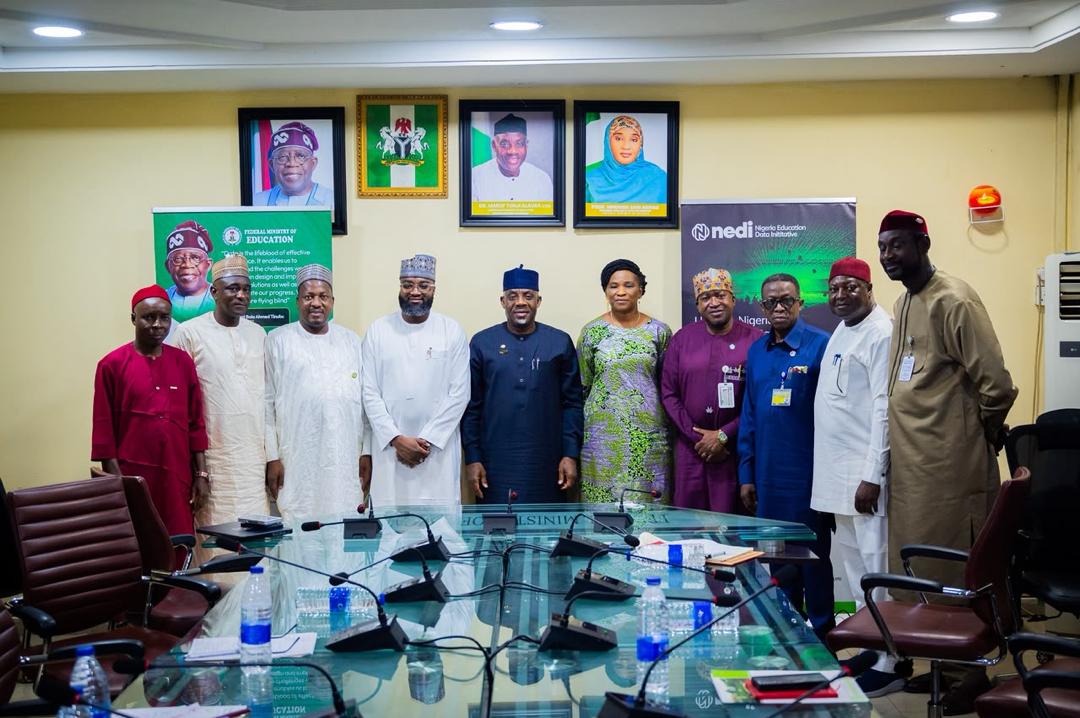
The Minister of Education, Dr. Maruf Tunji Alausa, has called on Nigerian universities and the National Agency for Science and Engineering Infrastructure, NASENI, to bridge the divide between scholarship and the market by transforming campus inventions into enterprises, employment and real-world solutions that can power Nigeria’s economic renewal.
The Minister made the declaration during a briefing for Vice-Chancellors, Directors of Academic Affairs, Directors of Postgraduate Studies and officials of the Federal Ministry of Education’s Directorate of University Education. The meeting focused on a proposed partnership model through the NASENI Campus. He said the model is designed to link researchers with state-of-the-art laboratories, prototyping hubs, industry players and funding sources, creating a clear route for ideas to travel from the lab bench to commercial use.
According to Dr Alausa, Nigeria must intentionally shift from pure research to commercial rollout if it wants to get full value from its people. He warned that research should not stop at journal articles or demonstration models. Citing the innovation cluster around Cambridge, Massachusetts as a reference, Dr. Alausa said Nigerian academics should be able to secure patents for their work, scale those inventions into sellable goods, and team up with investors to launch sustainable firms. That, he noted, is how intellectual capacity becomes tangible national progress.
To deliver this, he urged NASENI to deepen ties with universities located near its development centres. Universities, he said, hold a large reservoir of researchers, lecturers and students whose skills can strengthen the agency’s mandate. NASENI, he added, can fill the critical gap between academic work and business success by assisting with patent applications, linking innovators to venture capital, and helping to set up spin-off companies. He also tasked the agency to look into lithium refining and battery production as Nigeria ramps up renewable energy and industrial growth.
Reiterating government backing, Dr. Alausa said the Ministry will keep working with NASENI, universities and other partners to build a working pipeline from research and innovation through to investment, manufacturing and job creation.
Under President Bola Ahmed Tinubu’s Renewed Hope Agenda, he stressed, the goal is not just to generate more research papers, but to ensure Nigeria’s knowledge, skills and inventions become products, companies, jobs and lasting prosperity for citizens.
Earlier, the Executive Vice Chairman and Chief Executive of NASENI, Mr. Khalil Suleiman Halilu, outlined the agency’s push to close the gap between research and manufacturing, in line with President Bola Ahmed Tinubu’s directive to go beyond prototypes and reach full production. He said the planned NASENI Campus will sit inside a 100-hectare free trade zone and function as a fully integrated ecosystem where scholars, professors, prototyping units, industries and commercial pathways operate side by side. Several factories and industrial plants are already set up within the zone.
Giving a practical example, the Vice-Chancellor of the University of Abuja, Professor Hakeem Babatunde Fawehinmi, said the school’s current collaboration with NASENI shows what the model can achieve. The partnership has delivered an integrated agricultural incubation centre, greenhouse units, automated poultry systems and tissue culture laboratories that serve both undergraduate and postgraduate research. He added that the university is prepared to expand the work into dairy science and renewable energy.
Also highlighting market-ready research, the Vice-Chancellor of Bayero University, Kano, Professor Haruna Musa, said BUK is pursuing wider cooperation with NASENI in nanotechnology, vaccinology, toxinology and mathematical modelling. He revealed that two BUK projects have reached the final phase of NASENI’s research commercialisation grant scheme. The projects are a reusable sanitary pad and the industrial production of starch derivatives from sweet potatoes.


HURIWA Mourns Bello Mandiya, Hourns a Dependable Ally of Human Rights
By George Mgbeleke The Human Rights Writers Association of Nigeria (HURIWA) mourns the death of former Senator representing Katsina South...


HURIWA DEMANDS IMMEDIATE REMOVAL OF HANDCUFFS FROM Ufoma Joseph Immanuel
By George Mgbeleke The Human Rights Writers Association of Nigeria (HURIWA) says the Nigerian Correctional Service must immediately stop the...
Northern Senator Forum Mourns Senator Bello Mandiya
By George Mgbeleke The Northern Senators Forum has received with profound sadness the news of the passing of Distinguished Senator...

APC withdraws petition challenging Gov.Adeleke’s Victory
By Our Correspondent In dramatic twice the All Progressives Congress (APC) has filed an application seeking to withdraw the petition...


NUJ FCT Raises N5.01m Trust Fund for Late Chairman’s Children …265 members raised N5.01m to secure education, welfare of Osadebamwen’s three children
By Our Correspondent In a bid to ensure a good welfare package for its departed members and their families, the...


APC chieftain demands probe, prosecution of Atiku over $40M, SIEMENS, SPV allegations
By Our Correspondent A chieftain of the All Progressives Congress (APC), Ntufam Hilliard Eta, has called on the nation’s anti-corruption...

Nigerian Politics Becoming Less Violent, Says Gov Diri As CBM Holds Bayelsa Retreat
By David Owei Governor of Bayelsa State, Senator Douye Diri, has observed that the political arena in Nigeria was shifting...


Gov Diri Seeks Increase In Law Students Quota At NDU
By David Owei Governor of Bayelsa State, Senator Douye Diri, has appealed to the Council of Legal Education to increase...


Nembe Spill: HOMEF demands cleanup, compensation, accountability
By David Owei The Health of Mother Earth Foundation (HOMEF) on Tuesday demanded urgent cleanup, compensation and accountability over an...


NCDMB to Feature Nwabuikwu’s The Pain and The Promise In Book Reading Session
By David Owei The Nigerian Content Development and Monitoring Board (NCDMB) will host the fifth edition of its Book Reading...
-

 Politics1 year ago
Gov Okpebholo moves to end Cultism *Threatens action against leading cult groups *Vows to demolish more cult houses in Edo State
-
 Politics1 year ago
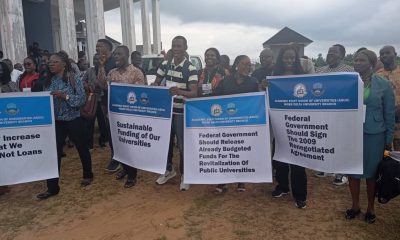
ASUU-NDU protest against FG loans, unpaid salaries,Non-Implementation of agreements …..says loans is generational slavery
-

 Business & Economy1 year ago
PC-NCG Issues Disclaimer on Purported Nigerian Coast Guard National Orientation Exercise In Anambra State
-
 Entertainment2 years ago
Jubilation galore as Parishioners of CKC Kurudu celebrate their cultural heritage ….FG should exploit our Cultural heritage to unite Nigerians-Rev Fr Dim
-

 Sports7 months ago
Bayelsa-born ex-football star’s son, Opuama donates spike shoes to Athletics Association
-

 General News2 years ago
Reps hold public hearing on FMC Ugwuaji Awkunanaw
-

 Law & Crime1 year ago
Legal practitioner raises alarm over threat to his life by CSP Muhammed Abdulkareem
-

 General News2 years ago
Celebration galore as UDA Successfully Elected New Exco ……I will digitalize processes that will raise UDA to greater height -Comr. Okejiri