Connect with us

Uncategorized

Humanitarian Crises:  Why Nigeria Needs Collective Response – UN Rep, Fall  … Identifies Obstacles, Solutions to Humanitarian Interventions 

Published

on

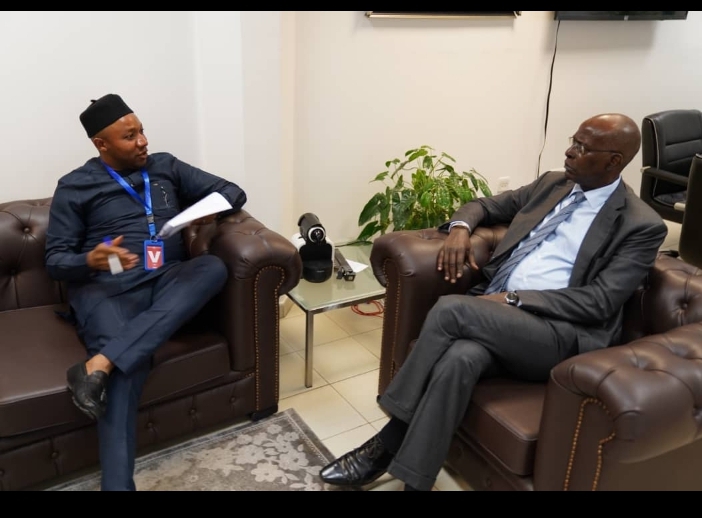
Mohamed Malick Fall is the United Nations Resident and Humanitarian Coordinator in Nigeria. In this exclusive interview, he speaks on the need for a collective response to humanitarian crises in Nigeria, obstacles to humanitarian interventions, and the work of the United Nations, among others. UN OCHA Nigeria’s Head of Public Information, Ann Weru, and Public Information Officer, Dr. Chike Walter Duru, were there.
Excerpts:
What are the types of humanitarian issues in Nigeria?
Different types of crises exist in Nigeria; some are linked to conflict and insecurity; there are those that are triggered by insurgency in the north-east, some are linked to intercommunal violence, herders/farmers clashes, abductions, kidnapping, banditry, prevalent in many parts of the country.
In addition, Nigeria has a certain level of climate vulnerability. Sometimes, drought; sometimes, floods; sometimes heat wave, that impact the wellbeing of people and sometimes trigger the movement of people, loss of property or loss of livelihood and they exacerbate the hardship that the people are facing.
How the UN is responding to the challenges
The UN has a two-fold response. One is the humanitarian response, which, to me, is guided by the principle of saving lives and reducing vulnerabilities; helping people, not only to get back on their feet, but also to have hope that they can have a better future.
The second component is the one that tackles the root causes of these crises. Most of those root causes are linked to deficits of development, lack of basic services, lack of livelihoods, lack of skills for young people and lack of access to employment. Those require much deeper action, which is building, not only on UN humanitarian intervention, but also on development-related activities, which will be looking at short, mid and long-term projects for the development of those people.
What are the obstacles to humanitarian interventions in Nigeria?
We have several of them.
The biggest one is access, and sometimes, access is hampered by insecurity. There are many parts of the country without free and safe access because of the high level of insecurity that is still prevailing. This is valid for the north-east, where, despite all the efforts to push against the insurgency, you still see attacks like the recent ones in Konduga and Gwoza, which are sad reminders that it is not yet over. You have also insecurity prevailing in many other parts of the country.
Sometimes, access to the people in need is also difficult.
Funding gaps are also an issue, because, as you know, the world is overstretched by humanitarian challenges. For instance, we have gone past half of the year, but this year’s Nigerian Humanitarian Response Plan is funded below 50 per cent. We launched in May 2024, a Lean Season Plan, which targeted to address the most urgent needs of people affected by food insecurity and malnutrition, but we are in the peak of the lean season, and we have not even reached 30 per cent of the funding we need. If you look at humanitarian funding year by year, you will see that it is declining. The level of response from the donor community is getting lower because of the competing developments across the world. The wars in Gaza, Sudan, and other regions have completely changed the funding landscape for humanitarian response.
What further challenges are militating against this conflict?
The challenge of funding
There is a cost of doing nothing. People always look at things from the point of the cost of doing something. Let me take one example. In the Lean Season Plan, we are looking at addressing severe food insecurity and malnutrition. Today, look at the number of children that are malnourished. The survival of hundreds of thousands of severely acutely malnourished children and those at risk depends on urgent interventions.
In the Lean Season Plan, there is a projection of 230,000 children at risk of severe acute malnutrition during the lean season in Borno, Adamawa and Yobe states, alone. Their survival depends on the steps taken against the challenge.
The cost of inaction is that life is on the line. Children that survive acute malnutrition, from the fragile health conditions they have, may also face growth and development challenges throughout their lives. The cost of inaction is very expensive.
Way forward
What are the solutions to these challenges ?
I see several solutions around these challenges.
For funding, more innovative funding solutions are required. We must no longer rely on western countries as traditional donors.
A country like Nigeria is not poor. It is among the three biggest economies in Africa. It is increasingly urgent for the Government to allocate its own resources to the humanitarian response.
We also need to be more creative and see how we can make our humanitarian operations more efficient and more effective. There are many directions that need to be explored.
International Laws
Wherever you see conflict and war, it means that there are parties that do not believe in dialogue and in peaceful settlement of disputes.
For instance, the insurgents believe in extreme violence and terrorist actions. This is not peculiar to Nigeria. In the world, there are many wars taking place. Ukraine, Sudan, Gaza, and these are coming on top of previous crises. You have Somalia and Syria. The notion that any difference should be settled through arms and through guns amounts to pushing back on the principles of international laws. Many of the parties to conflict do not respect nor respond to the call of international humanitarian law.
In what ways does the UN support displaced people and the most vulnerable?
Whenever you see a crisis, those that pay the highest prices are the most vulnerable – the women, children, older persons, people living with disabilities, and that is why we prioritise them in our interventions. There are provisions in our interventions that prioritize the protection of children. There are also provisions that specially protect women from grave violations of their rights and from sexual violence. The rights of people living with disabilities are also protected.
For me, the humanitarian space is one of the few spaces where humanity has its expression. It is a place where you see actors daily, risking their lives to go and save lives, reduce vulnerability, protect and help people get back on their feet. It is also a space where you see host communities that are lacking in everything sharing the little, they have with people who are suffering or displaced. It is a place where you see Government and non-state actors getting together, to reduce vulnerability and save the lives of people. The work of humanitarians saving lives etc. has just one name – humanity prevailing.
Message for stakeholders
What we need to reduce the humanitarian needs in the world is for the people to go back to the principle of humanity.
If we act on preventing conflict, stopping conflicts, we will take away a huge number of people in humanitarian need.
At the same time, humanitarian needs are not only triggered by conflict; unfortunately, the way we treat our planet; the way we treat our ecosystems, the way we respond to the climate crisis that we are facing are also important issues.
We also have increased poverty and deeper inequalities. All of these are among the factors that trigger human suffering.
How do address these issues?
We need to address conflict, increased poverty, the climate crisis, and inequalities. If world leaders continue to push to address these issues and more, we will see a better world.
Members of the public should support humanitarian action. They should understand that it is not about humanitarian organisations and workers alone. It is about the entire society. The call here is the expression of humanity. It is a call to every human being. It takes mobilization, commitment, awareness for every one of us to be part of that humanity.
Continue Reading
Click to comment

Leave a Reply

Your email address will not be published. Required fields are marked *

Law & Crime

Troops Of Operation Fansan Yamma Neutralize Terrorists, Rescue Kidnap Victim, Arrest Collaborators, Recover Rustled Cattle In Sustained Offensive Operations

Published

on

By

By Our Correspondent

Troops of the Joint Task Force North West Operation FANSAN YAMMA (JTF NW OPFY) have sustained the tempo of offensive operations against terrorist elements and bandit syndicates across the North West geopolitical zone.

According to the statement signed by the Media Information Officer, Lieutenant Colonel Aliyu Danja stated that in a series of coordinated operations conducted between 27 and 28 June 2026, troops neutralized two terrorists, rescued a kidnapped victim, arrested eight suspected collaborators and logistics facilitators, and recovered 110 rustled cattle, further disrupting criminal activities across the region.

On 27 June 2026, a combined team of Sector 1 troops and members of the Vigilante Group, while conducting fighting patrols in Giwa and Kaduna North Local Government Areas of Kaduna State, engaged terrorists transporting kidnapped victims on motorcycles.
Following a fierce exchange of fire, the terrorists abandoned two motorcycles and fled into the surrounding bush.

Troops rescued one kidnapped victim alive, while sadly recovering the body of another victim who had been killed by the terrorists.

Later the same day, troops of Sector 1 responded to reports of a terrorist attack on Dariya Village in Giwa Local Government Area of Kaduna State, where one civilian was killed and three others sustained injuries before the arrival of security forces. Pursuing the fleeing terrorists, the troops intercepted them on motorcycles and engaged them in a firefight, neutralizing two of the terrorists. During the encounter, one motorcycle, some rounds of ammunition, charms and other personal effects were recovered.

In a separate intelligence-led operation, troops of Sector 2 at Magami in Gusau Local Government Area of Zamfara State arrested two suspects believed to have provided medical support to terrorist groups operating within the area.

Elsewhere, troops of Sector 1 on fighting patrol around Polewire Village in Birnin Gwari Local Government Area arrested six individuals found under suspicious circumstances following a firefight with fleeing terrorists. The suspects are currently undergoing investigation.

On 28 June 2026, troops of Sector 1, working in conjunction with members of the Vigilante Group in Chikun Local Government Area of Kaduna State, pursued cattle rustlers and established a snap ambush along their suspected escape route at Ungwan Gora bush.

The sustained pressure mounted by the troops forced the rustlers to abandon the stolen livestock and flee, leading to the successful recovery of all 110 rustled cattle. The recovered cattle were subsequently handed over to their rightful owners.

The Joint Task Force North West Operation FANSAN YAMMA remains committed to sustaining offensive operations aimed at denying terrorist and criminal groups freedom of action while safeguarding the lives and property of law-abiding citizens across the North West.

The Force also urges members of the public to continue supporting ongoing operations by providing timely and credible information to security agencies.

Continue Reading

Uncategorized

THE IMPACTS OF INFRASTRUCTURAL DEVELOPMENT ON PROPERTY VALUES IN FCT ABUJA

Published

on

By

Infrastructure is a fundamental driver of urban growth and real estate development across the world. In the Federal Capital Territory (FCT), Abuja, the provision of transportation networks, utilities, social amenities, and communication facilities has significantly influenced property values across various districts and satellite towns.

This article examines the relationship between infrastructural development and property values in Abuja, highlighting the mechanisms through which infrastructure affects residential and commercial real estate markets. The study concludes that improved infrastructure enhances accessibility, stimulates economic activities, attracts investment, and increases demand for properties, thereby resulting in higher property values.

The establishment of Abuja as Nigeria’s capital city in 1976 marked the beginning of a comprehensive urban development programme guided by the Abuja Master Plan. Unlike many Nigerian cities that evolved organically, Abuja was designed to accommodate rapid population growth while ensuring orderly development through the strategic provision of infrastructure.

Infrastructure comprises the physical and social facilities necessary for economic and social activities, including roads, rail systems, electricity, water supply, drainage systems, telecommunications, healthcare facilities, educational institutions, and recreational centres.

Property value refers to the monetary worth of land and buildings as determined by market forces such as demand, accessibility, location, and available amenities.

In the FCT, infrastructure has emerged as one of the most important determinants of property values. Areas with superior infrastructure consistently command higher rents and sale prices than areas with inadequate facilities.

The relationship between infrastructure and property values can be explained by the Hedonic Pricing Theory, which suggests that property prices are determined by the bundle of characteristics associated with a property, including its location and access to infrastructure.

Similarly, the Bid-Rent Theory argues that individuals and businesses are willing to pay higher prices for properties located in areas with better accessibility and lower transportation costs.

These theories indicate that infrastructure contributes directly to the attractiveness and economic utility of real estate assets.

Over the years, the Federal Government and the Federal Capital Development Authority (FCDA) have invested heavily in infrastructure development within the FCT. Major projects include:

– Expansion of arterial road networks and interchanges.
– Development of the Abuja Light Rail system.
– Construction of the Abuja–Kaduna railway corridor.
– Upgrading of the Nnamdi Azikiwe International Airport.
– Provision of water supply and electricity distribution networks.
– Expansion of telecommunications infrastructure.
– Development of schools, hospitals, and recreational facilities.
– Construction of drainage systems and flood control infrastructure.

These investments have transformed the urban landscape and influenced the spatial distribution of property values across the city.

It’s a well established fact that Infrastructural Development impacts property values in Abuja in many positive ways. Transportation infrastructure, for instance, significantly enhances accessibility by reducing travel time and improving mobility.

Districts such as Maitama, Asokoro, Wuse, Guzape, Jabi, and Gwarinpa have witnessed substantial increases in property values due to their proximity to major road networks and commercial centres. Improved connectivity increases demand for properties because residents and businesses prefer locations that offer convenient access to workplaces, markets, and social amenities.

Recent studies indicate that road infrastructure investments positively influence commercial property investment returns in Abuja.

Increase in Residential Property Values

Residential properties located in areas with reliable infrastructure generally command higher rental and capital values.

The provision of good roads, electricity, water supply, drainage systems, and security infrastructure attracts homebuyers and tenants, thereby increasing demand and driving up prices.

Research on Abuja’s residential property market demonstrates that infrastructure quality significantly affects investment returns and rental performance across different submarkets.

Impact of Rail Transportation Infrastructure

The introduction of rail transport infrastructure has enhanced connectivity between Abuja and its surrounding communities.

Areas such as Kubwa, Idu, and communities located along the Abuja–Kaduna rail corridor have experienced increased real estate demand due to improved accessibility.

Studies on the Kubwa rail corridor found that proximity to rail stations positively influences residential rental values by reducing transportation costs and improving commuting efficiency.

Stimulation of Commercial Activities

Infrastructure attracts businesses and promotes economic growth.

Commercial properties located in areas with quality infrastructure enjoy higher occupancy rates and increased rental values because businesses seek locations with efficient transportation systems, reliable utilities, and effective communication networks.

The rapid growth of commercial hubs in the Central Business District, Utako, Wuse, and Jabi illustrates the strong connection between infrastructure and commercial property performance.

Attraction of Private Investment

Infrastructure reduces investment risk and encourages private sector participation in real estate development.

Developers are more inclined to invest in districts with:

– Good road networks.
– Stable electricity supply.
– Efficient drainage systems.
– Adequate water supply.
– Strong telecommunications infrastructure.
– Effective security systems.

Consequently, emerging districts such as Lokogoma, Karmo, Lugbe, and Guzape have experienced significant increases in property development activities.

Urban Expansion and Growth of Satellite Towns

Infrastructure projects facilitate urban expansion by opening previously inaccessible areas to development.

As property prices in the city centre continue to rise, improved transportation networks have encouraged population movement towards satellite towns such as Kubwa, Gwagwalada, Nyanya, Karu, and Lugbe.

This trend has led to increased demand and property appreciation in these locations.

Enhancement of Social Infrastructure

The availability of schools, hospitals, shopping centres, parks, and recreational facilities improves neighbourhood quality and enhances property values.

Properties situated near quality social amenities typically command premium prices because they offer greater convenience and improved living standards.

Challenges Affecting Infrastructure-Induced Property Value Growth

Despite the positive effects of infrastructure development, several challenges limit its impact on property values in Abuja:

– Uneven distribution of infrastructure across districts.
– Delays in implementing the Abuja Master Plan.
– Inadequate maintenance of existing infrastructure.
– Traffic congestion in rapidly developing areas.
– High infrastructure development costs.
– Informal settlements and unplanned developments.
– Land administration bottlenecks.
– Speculative land acquisition.

These challenges contribute to disparities in property values across different parts of the FCT.

Policy Recommendations

To maximise the positive impact of infrastructure on property values in Abuja, the following measures are recommended:

1. Ensure equitable distribution of infrastructure across all districts.
2. Strengthen implementation of the Abuja Master Plan.
3. Encourage public-private partnerships in infrastructure financing.
4. Improve maintenance of existing infrastructure.
5. Integrate land use planning with transportation planning.
6. Expand mass transit systems to emerging districts.
7. Improve transparency and efficiency in land administration.
8. Promote smart city initiatives and digital infrastructure.

Conclusion

Infrastructure development remains a major determinant of property values in the Federal Capital Territory, Abuja. Investments in roads, rail transport, utilities, telecommunications, and social amenities enhance accessibility, improve quality of life, stimulate economic activities, and attract private investment.

Empirical evidence indicates that well-developed infrastructure significantly increases residential and commercial property values across Abuja. Areas with superior infrastructure consistently record higher rental incomes, stronger capital appreciation, and increased investor confidence.

As Abuja continues to expand, sustainable and equitable infrastructure provision will remain essential for promoting balanced urban growth and enhancing the long-term performance of the property market.

By ESV Adah George MNIVS

Continue Reading

Uncategorized

Women Affairs Commissioner raises alarm over heightening rate of rape, Child Abuse, all forms of gender-based violence in Niger state

Published

on

By

By Uthman-Baba Naseer,Minna

The Commissioner for Women Affairs and Social Development in Niger State,Hajiya Hadiza Idris Kuta,has raised deep Concern on the alarming rates of rape,child abus and all forms of gender-based violence across the state.

She warned that the Ministry under her watch will continue to ensure the full prosecution of any culprits in court of competent jurisdiction for offenders to face justice.

The Commissioner who stated this while speaking with journalists in her office in Minna the State capital said the Niger State government will go all out to combat the menace.

Hajiya Hadiza Idris Kuta expressed her worries over the increasing number of rape and child molestation cases being reported and stressed the government’s determination to ensure justice for victims.

The Ministry,according to her, is determined to engage all stakeholders to partner with relevant agencies in the state to bring perpetrators of these heinous crimes to face the full wrath of the law to serve as a deterrent to others.

“ We as a ministry will continue to partner with all stakeholders to ensure that survivors of these crimes get justice in court of competent jurisdiction.

“ We will not allow these to continue in Niger State. The reported cases of rape and child molestation is on the increase in the state. We have so many of these cases in our courts.

“ I was almost shedding tears in court this morning because of the stigmatization the survivors of these heinous crimes are subjected to. We will no longer accept it in Niger State any more” she declared.

The Commissioner revealed that she recently attended a court hearing involving a teenage girl who was allegedly impregnated by her grandfather. According to her, the victim was rescued and received medical attention after her health deteriorated during pregnancy. She said DNA tests later confirmed with a 99.9 percent match that the suspect was the father of the baby. However, she lamented that the suspect was granted bail due to legal technicalities, while the case has been adjourned until July.

Kuta noted that several similar cases are currently before the courts, including one from Kontagora involving the alleged sexual assault of a young girl. She explained that the ministry is working closely with relevant authorities to ensure witnesses are presented and that offenders face justice. She added that the government is exploring legal measures to prevent suspects in serious rape and child abuse cases from easily obtaining bail.

Expressing deep concern over the rising cases of sexual violence, Hajiya Hadiza said Governor Umaru Mohammed Bago has pledged support for stronger action against offenders. She disclosed that plans are underway to establish a committee involving key stakeholders, including the judiciary, the Ministry of Justice, and the Ministry of Women Affairs, to strengthen prosecution processes and secure justice for victims.

The commissioner identified, social stigma, and lack of support from families as major challenges affecting the prosecution of rape cases. She called on parents, community leaders, traditional rulers, and religious leaders to support victims rather than stigmatize them. She also emphasized the need for rehabilitation and psychological support for survivors, many of whom suffer long-term trauma.

Hajiya Hadiza assured residents that the state government would continue to advocate for the protection of women and children, warning that there would be no hiding place for perpetrators of rape and child abuse in Niger State. She called on all stakeholders to work together to address the root causes of the problem and create a safer society for all.

Continue Reading

Latest

Politics3 hours ago

Kidnapped Oyo Pupils, Teachers Regain Freedom After 56 Days in Captivity,NAWOJ commends FG, Oyo Govt

By Our Oyo Corredpondent The long abducted pupils and teachers from three schools in Oriire Local Government Area of Oyo...

Politics16 hours ago

HURIWA Applauds Evacuation of Nigerians from South Africa, – Demands Compensation for Victims, -Urges Diplomatic Sanctions Over Repeated Xenophobic Attacks

By George Mgbeleke The Human Rights Writers Association of Nigeria (HURIWA) commends the Federal Government of Nigeria and Air Peace...

Politics16 hours ago

Stop voting by tribe, religion, Yoruba activist backs Atiku for 2027

By Our Correspondent South-West governance activist, Dr. Jackson Lekan Ojo, has urged Nigerians to jettison ethnic and religious sentiments and...

Politics17 hours ago

Respect S/Court Judgement-SDP Urges Ex-Nat.Chairman, Shehu Gabam

By George Mgbeleke The Social Democratic Party (SDP) has advised its expelled former National Chairman, to respect the judgement of...

Business & Economy18 hours ago

Rivers 2026 Budget Gov. Fubara presents N1.8tri. ……Reaffirms Commitment to Prudent Management of Resources

By George Mgbeleke Governor of Rivers State, His Excellency, Sir Siminalayi Fubara on Friday, presented the 2026 Budget estimates of...

Business & Economy19 hours ago

Grow Blue Economy in the Niger Delta.” ~ Bayelsa Monarch Tells FG, State Govts

By David Owei,Bayelsa The Acting Amayanabo of Okpoama Kingdom in Brass Council Area, High Chief Nathan Egba-Dienegha has called on...

Law & Crime20 hours ago

Minna Court adjourns ruling on suit by an APC Aspirant seeking amendment to his Name challenging party’s primary declaring Prof Yakubu Auna as candidate

By Uthman Baba-Naseer,Minna The Federal High Court sitting in Minna, Niger State, has adjourned ruling till 16 July for Application...

Business & Economy1 day ago

Market Demolitions, Poor Infrastructure Threaten Traders’ Survival” — Lagos Market Leader Cry out

By Our Lagos Correspondent Disturbed incessant demolition of markets in Lagos state, President of Ndigboamaka Progressive Market Association, Comrade Chinedu...

General News1 day ago

Tinubu Unveils Remodeled Abuja City Gate, Hails It As “Symbol of Unity” for FCT’s 50th Anniversary

By Our Correspondent President Bola Ahmed Tinubu has commissioned the newly remodeled Abuja City Gate, describing the landmark as a...

Law & Crime1 day ago

Gov Okpebholo Seeks Traditional Rulers’ Collaboration to Tackle Insecurity

By Our Edo Correspondent In a bid to flushout crimes in fhe state,Edo State Governor, Senator Monday Okpebholo is seeking...

Trending