Connect with us

Uncategorized

Ogun Govt Denies Interference in Murder Case, Faults Zone 2 Police

Published

on

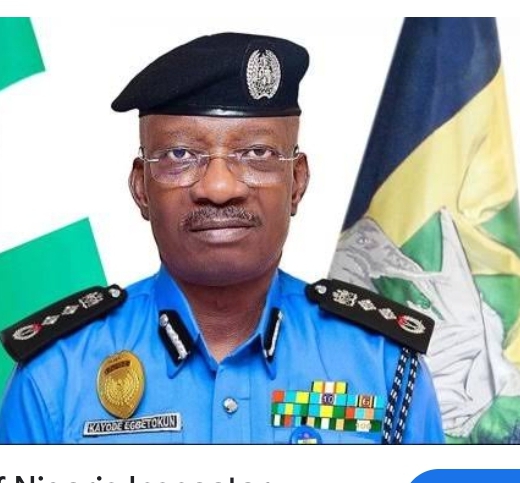
IGP Kayode Egbetokun
By Our Reporter
Following the controversy in the alledged freeing of murder suspects in Ogun state, the  State Government has dismissed a media report alleging that its Attorney-General attempted to free murder suspects, describing the claim as “false, lopsided, and malicious.”
The government clarified that the case in question stems from a land dispute between two local agents, with one side allegedly using law enforcement to intimidate the other.
It accused officers of the Nigerian Police Force, Zone 2, Lagos State, of aiding this persecution by fabricating false reports and coaching witnesses whose testimonies do not hold up under scrutiny.
According to the government, the Ministry of Justice, upon reviewing the matter, discovered inconsistencies in the case and realized that it was being used to victimize an individual unjustly.
Consequently, the Attorney-General’s office exercised its legal authority to discontinue the charges in court.
However, the opposing party allegedly responded by bringing up fresh murder allegations against the same individual.
The Ogun State Police Command reportedly investigated the matter and, with the backing of credible witnesses, found no merit in the accusation. Despite this, the complainants allegedly influenced the Assistant Inspector-General of Police, Zone 2, AIG Olatoye Fayoade, to take over the case without justification.
Dismissing claims that the suspect was transferred to Abuja, the government stated:
“There was absolutely no basis for the transfer of this case to Lagos, let alone Abuja. Contrary to false media reports, the suspect remained in the custody of Zone 2 Police.”
The statement further alleged that AIG Fayoade’s men attempted to obtain a remand order from the Lagos State Magistrate’s Court at Tinubu Square, but the application failed. The Magistrate reportedly questioned why Lagos authorities sought to detain a suspect for a crime allegedly committed in Ogun State.
Undeterred, the officers allegedly attempted the same in Abeokuta on March 19, 2025, but their request was again rejected. The court instead directed them to arraign the suspect within 24 hours—an order they disobeyed. On March 20, 2025, they reportedly made another unsuccessful attempt in Ota, Ogun State.
The government expressed concern over what it described as a blatant abuse of power, stating:
“AIG Fayoade’s men have now held the suspect for over a week in clear and brazen breach of their constitutional powers. When three different courts rejected their plea for detention, they resorted to media blackmail.”
The government also accused journalist Precious Igbonwelundu of unprofessionalism, alleging that she failed to seek the Ministry of Justice’s response before publishing the report.
“This journalist has curiously written five consecutive articles praising the Police. It is clear where her interests lie,” the government stated.
Furthermore, the government criticized the conduct of AIG Fayoade, accusing him of working against the administration of justice in Ogun State.
“One must wonder why the AIG, who has refused to arraign the suspect despite court orders, has so much time to speak to the media. Why is a supposedly underfunded Police unit suddenly well mobilized to appear in three different cities within a week just to detain one suspect without trial?”
Reaffirming its commitment to justice, the Ogun State Ministry of Justice vowed not to succumb to intimidation.
“The Administration of Criminal Justice Law 2017 empowers the Attorney-General to intervene in cases of abuse and discontinue malicious criminal proceedings. We will fearlessly exercise this power and pursue all legal remedies against those who seek to pervert justice,” the statement concluded.

Uncategorized

Ugochinyere: when enigma meets resilience

Published

on

By

Hon Ikenga Imo Ugochinyere

By Emmanuel Nnadozie Onwubiko

The tenth session of the National Assembly has a filthy image in the mindsets of millions of Nigerians. The National Assembly with Senator Godswill Akpabio who is alleged to have emerged as a Senator through a very ethically challenged modus operandi given that he never contested the party primary but was aided by the federal high Court and then an unknown political quantity from Kaduna State as speaker, is disreputable for being subservient to the whims and caprices of President Bola Ahmed Tinubu.

Ironically, within the same National Assembly are few charismatic and patriotic Nigerians with clearly people’s focused mandates and agenda which they have methodically implemented in the last three years and some months that they were inaugurated as federal law makers.

Besides, in a political climate where rhetoric often outruns results, the record emerging from Ideato North and Ideato South Federal Constituency offers a compelling counter-narrative. Ikenga Imo Ugochinyere, a member of Nigeria’s 10th House of Representatives, has quietly assembled a portfolio of constituency interventions that (if independently verified as he repeatedly challenges the public to do) reflects an uncommon blend of grassroots responsiveness and political resilience. That this record is being built from the minority benches of the Green Chamber makes it even more instructive in understanding how influence in Nigerian politics is not always a function of numerical strength, but of strategic engagement, constituency intimacy, and relentless visibility.

The conventional wisdom in Nigeria’s legislative politics is that majority party lawmakers enjoy disproportionate access to federal resources, committee leverage, and executive goodwill. Minority members, by contrast, are often consigned to the margins, their voices loud but their reach limited. Yet, Ugochinyere’s trajectory suggests that this binary is not absolute. By focusing on tangible, verifiable projects (particularly in sectors that directly affect daily life), he appears to have reframed what effective representation can look like outside the corridors of central power.

Consider the emphasis on education. Across multiple communities in Ideato North and South, school reconstruction and rehabilitation projects have reportedly been completed, ranging from primary institutions to secondary and technical schools. In a region where dilapidated classrooms and inadequate learning facilities have long undermined educational outcomes, such interventions (if sustained) could have generational impact. Education infrastructure is not merely about buildings; it is about restoring dignity to public schooling and signaling to young people that their future matters. The reported distribution of over 1,000 school desks, even as it remains ongoing, points to an understanding of the small but critical deficits that shape the learning environment.

Healthcare, another chronic weak point in many rural constituencies, also features in this evolving record. The rehabilitation of community hospitals and health centres, though still ongoing, suggests an awareness that access to primary healthcare is often the difference between life and death in underserved areas. In a country where tertiary hospitals are overwhelmed and distant, functional community health facilities can dramatically reduce preventable mortality. The challenge, as always, will be ensuring that these rehabilitated centres are not just structurally sound but also adequately staffed, equipped, and maintained.

Perhaps more telling is the scale of scholarship and human capital development initiatives attributed to Ugochinyere. Supporting hundreds of students across primary, secondary, and tertiary levels over consecutive years indicates a deliberate investment in people rather than just projects. In a constituency where economic constraints frequently truncate educational aspirations, such scholarships can alter life trajectories. Beyond the immediate beneficiaries, they create a ripple effect, fostering a culture that values education as a pathway out of poverty.

Agricultural empowerment, though modest in beneficiary numbers, aligns with the economic realities of the constituency. Ideato North and South, like much of rural Imo State, depend significantly on agriculture. Training and supporting farmers, even at a limited scale, can enhance productivity, improve livelihoods, and contribute to local food security. The real test will be whether such programmes can evolve from one-off interventions into structured, scalable initiatives that integrate access to markets, credit, and modern farming techniques.

Water access remains one of the most basic yet elusive needs in many Nigerian communities. The reported rollout of borehole projects across 24 communities, with a majority already completed, speaks to a targeted approach to addressing this gap. Clean water is foundational to public health, and its availability reduces the burden of waterborne diseases while improving overall quality of life. Electrification efforts, including the installation of solar-powered streetlights and transformers, further underscore a commitment to infrastructure that extends beyond symbolic gestures. Street lighting, often overlooked, has implications for security, commerce, and social life, particularly in semi-urban and rural settings.

Roads, drainage, and erosion control projects add another layer to this interventionist profile. In southeastern Nigeria, erosion is not merely an environmental issue; it is an existential threat to communities, swallowing homes, farmlands, and roads. Facilitating erosion control projects, alongside drainage construction, reflects an understanding of the unique ecological challenges facing the constituency. While these projects are often capital-intensive and require sustained funding, even incremental progress can mitigate long-term damage.

Market development and youth empowerment initiatives round out this emerging record. The construction of market stalls, though seemingly modest, can boost local commerce and provide structured spaces for economic activity. Similarly, the distribution of motorcycles, tricycles, and buses to youths is emblematic of a broader approach to empowerment; one that seeks to create immediate income opportunities. Direct financial support, such as cash grants to constituents, while sometimes criticized as populist, can offer short-term relief in an economy marked by inflation and unemployment.

All of this points to a lawmaker who has leaned heavily into constituency service as a political strategy. In Nigeria’s electoral calculus, visibility at home often matters more than prominence in Abuja. By embedding himself in the everyday realities of his constituents, Ugochinyere appears to have built a political brand rooted in accessibility and delivery. This may also explain the significant followership that reportedly accompanied his recent movement to a new political party. In a system where party loyalty is often fluid, what endures is the bond between a politician and his base. Charisma, in this context, is not merely about oratory; it is about the ability to translate influence into outcomes that people can see and touch.

However, an honest appraisal must also acknowledge the importance of independent verification. Nigerian politics has long been plagued by inflated claims and uncompleted projects. The repeated refrain of “Go and verify” attached to these milestones is both a challenge and an opportunity. It invites civil society, media, and constituents themselves to engage in fact-checking, site visits, and documentation. If these claims withstand scrutiny, they strengthen not just Ugochinyere’s credibility but also the broader case for performance-based politics. If gaps are found, they offer a chance for course correction and greater transparency.

As the next electoral cycle approaches, the question is how this record can be effectively leveraged in the face of anticipated political opposition, particularly from the ruling All Progressives Congress in Imo State. Campaigns in Nigeria are rarely fought on policy alone; they are battlegrounds of narratives, alliances, and perception management. For Ugochinyere, the path to a successful second-term bid will likely depend on how well he consolidates his achievements into a coherent, verifiable story that resonates with voters.

First, documentation and communication must be elevated. In an era dominated by digital media, it is not enough to execute projects; they must be effectively communicated. High-quality visual evidence, before-and-after documentation, beneficiary testimonials, and geo-tagged project data can help counter misinformation and amplify impact. A dedicated digital platform that aggregates all constituency projects, updated in real time, would not only enhance transparency but also serve as a powerful campaign tool.

Second, coalition-building within the constituency will be crucial. Politics in Imo State, as in much of Nigeria, is deeply influenced by local networks; traditional rulers, community leaders, youth groups, and religious institutions. Strengthening these relationships, ensuring inclusivity in project distribution, and maintaining open lines of communication can help inoculate against opposition attacks. A constituency that feels seen and heard is more likely to defend its representative.

Third, the campaign narrative must shift from defensive to proactive. Rather than merely responding to criticisms from opponents, Ugochinyere’s team would benefit from setting the agenda. This means articulating a clear vision for a second term; one that builds on existing achievements while addressing identified gaps. Voters are not just interested in what has been done; they want to know what comes next.

Fourth, strategic engagement with the media will be essential. In a politically charged environment, narratives can quickly be distorted. Regular press briefings, opinion pieces, and media tours of project sites can help shape public perception. Leveraging both traditional and new media platforms ensures that the message reaches diverse demographics, from rural voters to urban youths.

Fifth, legal and institutional preparedness cannot be overlooked. Nigerian elections are often contested not just at the polls but also in the courts. Ensuring compliance with electoral laws, maintaining robust documentation of campaign activities, and building a competent legal team can help navigate potential post-election disputes.

Beyond campaign mechanics, there is a deeper democratic imperative that must not be ignored. The strength of any democracy lies not in the dominance of a single party, but in the protection and accommodation of diverse political interests and voices. In Imo State, as in Nigeria at large, the temptation to marginalize opposition figures or suppress dissenting views poses a real threat to democratic consolidation. It is therefore essential that all political actors (whether aligned with the ruling party or in opposition) are afforded the space to operate freely, campaign openly, and present their ideas to the electorate without intimidation.

The presence of vibrant opposition voices, including lawmakers like Ikenga Imo Ugochinyere, is not a weakness of the system; it is its safeguard. Democracy thrives on competition, accountability, and the constant testing of ideas. When political pluralism is protected, governance improves because leaders know they can be challenged, scrutinized, and ultimately replaced through the ballot. Conversely, when political space shrinks, complacency and impunity often take root.

For Ugochinyere, this broader context presents both a challenge and an opportunity. Defending not just his seat but also the principle of inclusive political participation can elevate his campaign beyond personal ambition to a cause that resonates with a wider audience. By consistently advocating for the rights of all political actors, regardless of affiliation, he positions himself as a defender of democratic norms; a stance that can attract support even from those who may not share his party loyalty but value fairness and justice.

Finally, there is the question of party dynamics. His recent defection, accompanied by a significant following, suggests a recalibration of political alliances. Managing this transition effectively (ensuring that new party structures are functional at the grassroots level, while retaining the loyalty of existing supporters), will be critical. Party identity matters, but in constituencies like Ideato, it is often the candidate’s personal brand that ultimately determines electoral outcomes.

In the end, the story of Ikenga Imo Ugochinyere is still unfolding. What is clear, however, is that his approach offers a case study in how lawmakers can navigate structural disadvantages to deliver measurable outcomes. Whether this translates into electoral success in a second term bid will depend not just on what has been done, but on how convincingly it is presented, defended, and expanded.

For now, the challenge he throws to the public (“Go and verify”) may be the most important line in this entire narrative. In a democracy that often struggles with accountability, such an invitation, if taken seriously, could help shift the culture from blind allegiance to informed choice. And in that shift lies the true test of leadership, and the enduring promise of a system where every political voice has a place and every citizen has a stake.

*EMMANUEL NNADOZIE ONWUBIKO is from ARONDIZUOGU and a constituent of Hon. Ugochinyere. He is a former National Commissioner of the Nigerian National Human Rights Commission and the founder of HUMAN RIGHTS WRITERS ASSOCIATION OF NIGERIA (HURIWA).

Continue Reading

Uncategorized

Protesters storm Abuja court, warn Tinubu against alleged judicial interference

Published

on

By

By Our Correspondent

Protesters on Monday stormed the Federal High Court in Wuse, Abuja, as scores of demonstrators took to the streets, protesting what they described as growing interference in Nigeria’s judiciary and electoral system.

The protesters, operating under the banner of Concerned Northern Nigeria Stakeholders, converged on the court premises early in the day, chanting solidarity songs and displaying placards bearing inscriptions such as “No Opposition, No Election,” “Tinubu, Let Our Democracy Breathe,” and “AGF Must Be Neutral.”

Security operatives, including officers of the Department of State Services, swiftly cordoned off the entrance to the court complex, preventing the group from gaining access and maintaining order around the premises.

Speaking to journalists at the scene, the group’s leader, Banki Sharrif, raised concerns over what he termed increasing threats to judicial independence and democratic institutions.

He accused the Federal Government of actions capable of undermining due process and weakening opposition politics.

Sharrif called on President Tinubu to refrain from any form of interference in judicial processes, warning that compromising the courts could have far-reaching consequences for the country’s democracy.

According to him, “Courts must never be reduced to instruments of political engineering. The moment justice is manipulated, the nation itself is placed on trial.”

He further argued that attempts to weaken opposition parties signal a lack of confidence in governance, stressing that democracy thrives on competition and inclusivity.

“A government that seeks to weaken opposition betrays a lack of confidence in its own legitimacy. Elections without credible opposition are nothing more than staged exercises,” he said.

The protesters also cautioned that democracy cannot function under intimidation or manipulation, insisting that civic space and political plurality remain essential to a functioning republic.

On the role of the Attorney General of the Federation and Minister of Justice, Lateef Fagbemi, the group emphasised the need for neutrality, warning against the politicisation of the office.

They expressed concern over alleged moves to use legal and administrative mechanisms to weaken or deregister political parties, particularly those perceived to have strong support in Northern Nigeria.

Sharrif warned that if courts validate such actions without strict adherence to due process, it could be interpreted as judicial endorsement of political exclusion, with the potential to deepen divisions and trigger unrest.

The group also cautioned that public trust in the judiciary could erode if the courts are perceived as extensions of the executive arm of government.

“Where citizens lose faith in lawful remedies, the streets become the courtroom. No nation survives such a breakdown without serious consequences,” he said.

Monday’s protest comes amid heightened political tension surrounding a suit supported by the Attorney General, seeking the deregistration of several political parties.

In filings before the Federal High Court, the AGF backed a case instituted by former lawmakers, urging the court to compel the Independent National Electoral Commission (INEC) to deregister the African Democratic Congress (ADC)and four other parties.

The parties listed in the suit include the Action Peoples Party, Action Alliance, Accord Party, and the Zenith Labour Party.

The AGF argued that the continued existence of these parties violates provisions of the 1999 Constitution (as amended) and undermines electoral integrity.

He maintained that INEC would be acting in breach of its constitutional responsibilities if it retains parties that allegedly fail to meet statutory requirements.

In an affidavit filed through his legal team led by Prof. Joshua Olatoke (SAN), Fagbemi stated that, as the chief law officer of the federation, he is obligated to uphold the Constitution and ensure compliance with the Electoral Act and other laws governing political parties

Continue Reading

Uncategorized

NASC Boss Salutes NASS Workers …Describes them As Engine Room for Democratic Growth By Our Correspondent The Executive Chairman of the National Assembly Service Commission, Chief Saviour Enyiekere has extended his heartfelt greetings to the workers of the National Assembly Service Commission, describing them as the engine room of Nigeria’s democracy. ” Your mandate is the sinew and spine upon which the strength and stability of our National Legislature depends”, he enthused. In statement signed by the Commission’s Director,Public Affairs, E N Anyigor, Dr Enyiekere conveyed his appreciation of the enormous contributions of the Legislative workers in his message to mark this year’s May Day/ Workers Day Celebration in Abuja. He commended their dedication, resilience, and invaluable contributions to Nigeria’s democratic development. Enyiekere praised the commitment of legislative staff who continue to provide critical support services that ensure the effective functioning of the National Assembly, noting that the role of workers in the legislature remains indispensable, as their professionalism and hard work sustain the operations of one of the country’s most important democratic institutions. The NASC Chairman assured staff members that the Commission remains committed to improving their welfare, enhancing career development opportunities, and creating a more conducive working environment for all legislative workers. According to him, the Commission is already taking steps to implement reforms and policies that will positively impact staff wellbeing, productivity, and morale. He urged the workers to remain steadfast, diligent, and committed to excellence, assuring them that their sacrifices and contributions would continue to be recognized and rewarded. He reaffirmed the determination of the Commission to work closely with all relevant stakeholders to ensure that better days lie ahead for legislative workers across the nation . “Your dedication to duty is highly appreciated. The Commission is committed to ensuring improved welfare and a brighter future for all staff,” he said. This was Dr Enyiekere’s first Worker’s Day message to the Legislative Workers as his 6th National Assembly Service Commission was inaugurated on 5th May, 2025.

Published

on

By

Executive Chairman of the National Assembly Service Commission, Chief Saviour Enyiekere

By Our Correspondent

The Executive Chairman of the National Assembly Service Commission, Chief Saviour Enyiekere has extended his heartfelt greetings to the workers of the National Assembly Service Commission, describing them as the engine room of Nigeria’s democracy.

” Your mandate is the sinew and spine upon which the strength and stability of our National Legislature depends”, he enthused.

In statement signed by the Commission’s Director,Public Affairs, E N Anyigor, Dr Enyiekere conveyed his appreciation of the enormous contributions of the Legislative workers in his message to mark this year’s May Day/ Workers Day Celebration in Abuja.

He commended their dedication, resilience, and invaluable contributions to Nigeria’s democratic development.

Enyiekere praised the commitment of legislative staff who continue to provide critical support services that ensure the effective functioning of the National Assembly,
noting that the role of workers in the legislature remains indispensable, as their professionalism and hard work sustain the operations of one of the country’s most important democratic institutions.

The NASC Chairman assured staff members that the Commission remains committed to improving their welfare, enhancing career development opportunities, and creating a more conducive working environment for all legislative workers.

According to him, the Commission is already taking steps to implement reforms and policies that will positively impact staff wellbeing, productivity, and morale.

He urged the workers to remain steadfast, diligent, and committed to excellence, assuring them that their sacrifices and contributions would continue to be recognized and rewarded.

He reaffirmed the determination of the Commission to work closely with all relevant stakeholders to ensure that better days lie ahead for legislative workers across the nation .

“Your dedication to duty is highly appreciated. The Commission is committed to ensuring improved welfare and a brighter future for all staff,” he said.

This was Dr Enyiekere’s first Worker’s Day message to the Legislative Workers as his 6th National Assembly Service Commission was inaugurated on 5th May, 2025.

Continue Reading

Latest

Politics26 minutes ago

DSS Arrests APC Senatorial Aspirant in Jalingo

By Our Correspondent There is growing fear in Taraba State following the arrest of the President of Miyetti Allah Kautal...

Politics42 minutes ago

2027 :Tension at APC screening Centre as Rivers Governor Fubara walks out in protest …..Party remains silent on outcome

By Our Correspondent Governor of Rivers State, Similaye Fubara on Sunday left the APC screening exercise abruptly after a brief...

Politics1 hour ago

IPOB declares May 30 sit-at-home in remembrance of Biafran heroes

By Our Correspondent Indigenous People of Biafra (IPOB), has declared May 30 2026 sit-at-home as a remembrance day throughout Biafran...

Religion1 hour ago

2026 Hajj: 73-year-old Nigerian pilgrim from Adamawa dies in Saudi

By Olugbenga Salami A Nigerian pilgrim from Gombi Local Government Area of Adamawa State, Mallama Aishatu Muhammadu, has died in...

Opinion10 hours ago

EFCC, ICPC, Too Slow in Prosecuting,Naming and Shaming Politically Exposed Persons Facing Corruption Allegations but are now running for Public Offices

By George Mgbeleke The Human Rights Writers Association of Nigeria (HURIWA) restates its principled position on the urgent need for...

Law & Crime1 day ago

Counsel to Nembe Kingdom berates Aiteo for resorting to technicalities to evade environmental justice

By David Owei,Bayelsa Counsel to the Opu Nembe Kingdom, Barrister Chigozie Inwere, has berated the use of technicalities like frivolous...

Politics1 day ago

Bayelsa Central Senate Seat: Akinaka Submits PDP Nomination Form

By David Owei,Bayelsa A 43-year-old entrepreneur, Akinaka Richard, has formally declared his ambition to contest the Bayelsa Central Senatorial District...

Law & Crime1 day ago

Niger state NcoS Comptroller solicits partnership with sister security agencies to strengthen inter agency synergy to ensure speedy administration of criminal justice

By Uthman-Baba Naseer,Minna The Newly posted Controller of Nigerian Correctional Service (NcoS), Niger State Command, Mr. Ogunleye Seyi Oladipupo CC...

Law & Crime2 days ago

HURIWA condemns Fresh Massacre in Plateau State …Accuses FG of Indifference to Human Bloodshed

By George Mgbeleke The Human Rights Writers Association of Nigeria (HURIWA) strongly condemns the latest barbaric and blood-curdling massacre of...

Law & Crime3 days ago

Police nabs additional Key suspect in abduction of Bayelsa State Judge

By David Owei, Bayelsa Operatives of the newly established Inspector General Police(IGP) Violent Crime Response Unit of the Bayelsà State...

Trending