
Opinion
May Day: Regional Ministry assures workers of fair wages, safe working conditions,equal opportunities


As the Nigerian workers celebrate May Day across the country on Thursday, Minister of Regional Planning, Engr. Abubakar Momoh has assured the nation’s workers of Federal government’s resolved for fair wages, safe working conditions and equal opportunities to its workforce.
In a statement he signed and made available to the media tagged,” Salutes Nigeria’s Workforce: Builders Of Our Nation’s Future”,the Minister extended his heartfelt appreciation to every Nigerian worker across Public service, Private Industry, agriculture among others.
” Today, we celebrate you—the heartbeat of our economy and the unyielding pillars holding up our nation.
“As the Honourable Minister of Regional Development, I am fully aware of the sacrifices, resilience, and tireless contributions you make daily in the face of daunting challenges. From the bustling urban centers to the most remote communities, your efforts drive progress, sustain families, and build bridges of hope.
“We do not take your labor for granted.”
Continuing he said,”Let me assure you that under the Renewed Hope Agenda of President Bola Ahmed Tinubu’s administration, we are committed to delivering policies that not only foster economic growth but also ensure fair wages, safe working conditions, and equal opportunities across all regions.
” In the Ministry of Regional Development, our focus remains on creating sustainable infrastructure and economic hubs that will generate more decent jobs and reduce regional disparities.
“Today is not only a celebration—it is a reaffirmation of our promise to stand with workers, listen to their concerns, and act with empathy and resolve.
“To every Nigerian worker: you matter, your dignity matters, and your well-being remains central to our development goals.
“Happy Workers’ Day!”.





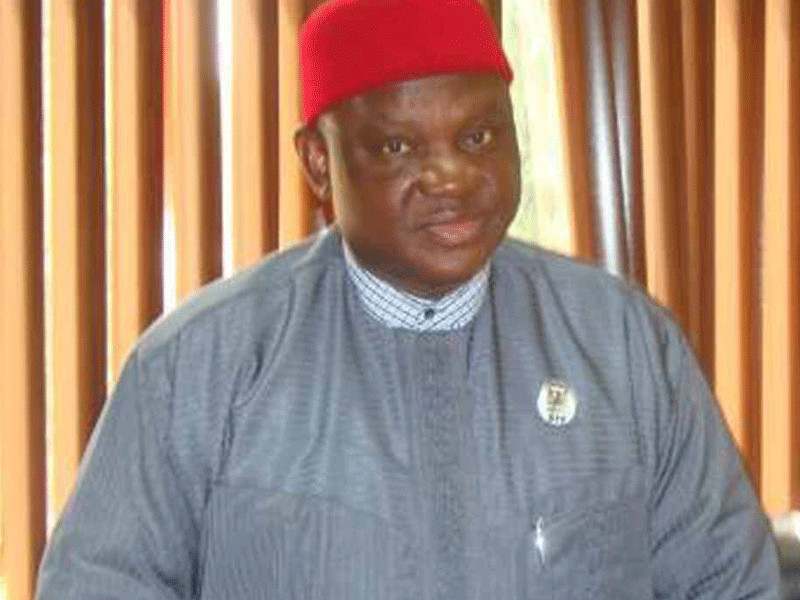
By Chief Chekwas Okorie
A dangerous trend has reared its ugly head in the Southeast geopolitical zone recently. The desperate struggle for political power through conquest instead of the ballot box according to the tenets of democracy and the laws of Nigeria in the build-up to the 2027 general elections is raging with ferocious speed in Igboland.
I wish to recall that on the 12th of March 2026, I released an open letter to President Bola Ahmed Tinubu, which l captioned, “Halt the brewing anarchy in Nigeria”. In that letter, I drew the attention of the president to events in Nigeria, especially by state and non-state actors, that could cause the breakdown of law and order. I appealed to President Tinubu to take decisive steps to halt the trend. Obviously, my patriotic intervention did not seem to make any impression on the president.
It was not long ago that an Islamic cleric called Sheik Sani Yahaya Jingir, in a most arrogant and inciting outburst in a public event in Kano, declared that all Nigerians who did not want the Muslim/Muslim presidential ticket of President Tinubu and his vice president should leave the country. He claimed that Muslims owned Nigeria. This hate speech was not only outrageous but unprovoked as the president and vice president were already in the last lap of their four-year tenure without any protest from any part of the country as a result of their faith.
Neither the federal government nor any of its security agencies publicly condemned Sheik Jingir’s obviously subversive open declaration. Based on what appeared as government acquiescence to the irresponsibility of Sheik Jingir, more and more actors in the political space have become emboldened to go haywire. The list is long. The government seems highly selective in its interventions, if any.
Now, this ugly trend is beginning to envelope the entire Southeast. It is no longer safe for members of the opposition parties to hold public gatherings or rallies anywhere in the geopolitical zone without being attacked by heavily armed thugs. These attacks last for hours, resulting in severe injuries and loss of lives. In most of these incidents, the security agencies appear helpless. No arrests are ever recorded, at least to be able to trace their sponsors.
Most Southeast governments have imposed outrageous fees for campaign billboards running into hundreds of millions of naira for a single billboard. This is the reason billboards are hardly visible across the Southeast. Members of the opposition parties have also responded by pulling down the billboards of the ruling parties wherever they appeared. This is a recipe for anarchy.
I call on Governor Hope Uzodimma, the governor of Imo State and the Chairman of the Southeast Governors Forum, to convene an emergency and extraordinary meeting of the Southeast Governors as a matter of utmost urgency to nip in the bud the rapidly deteriorating security situation in Igboland.
No matter how the Federal Government of Nigeria may downplay the situation in the North, the painful truth is that wars are raging in the Northwest and Northeast sectors. In spite of the assistance of the United States of America, the wars have not abetted.
Our present Southeast governors will be held accountable if Igboland becomes another war zone. Fifty-six years after the end of the fratricidal war in the former Eastern Region, the scars and destruction of that war are still festering and unaddressed.
The colonial army could not conquer Ndigbo. Ndigbo survived the war of annihilation waged against us.
Igbo votes for the 2027 elections can never be obtained by conquest.
Ndigbo must remain vigilant and defend their franchise as we are known to do from creation.
Igbo kwenu!!!
Chief Chekwas Okorie
Chairman, Igbo Agenda Dialogue, IAD.
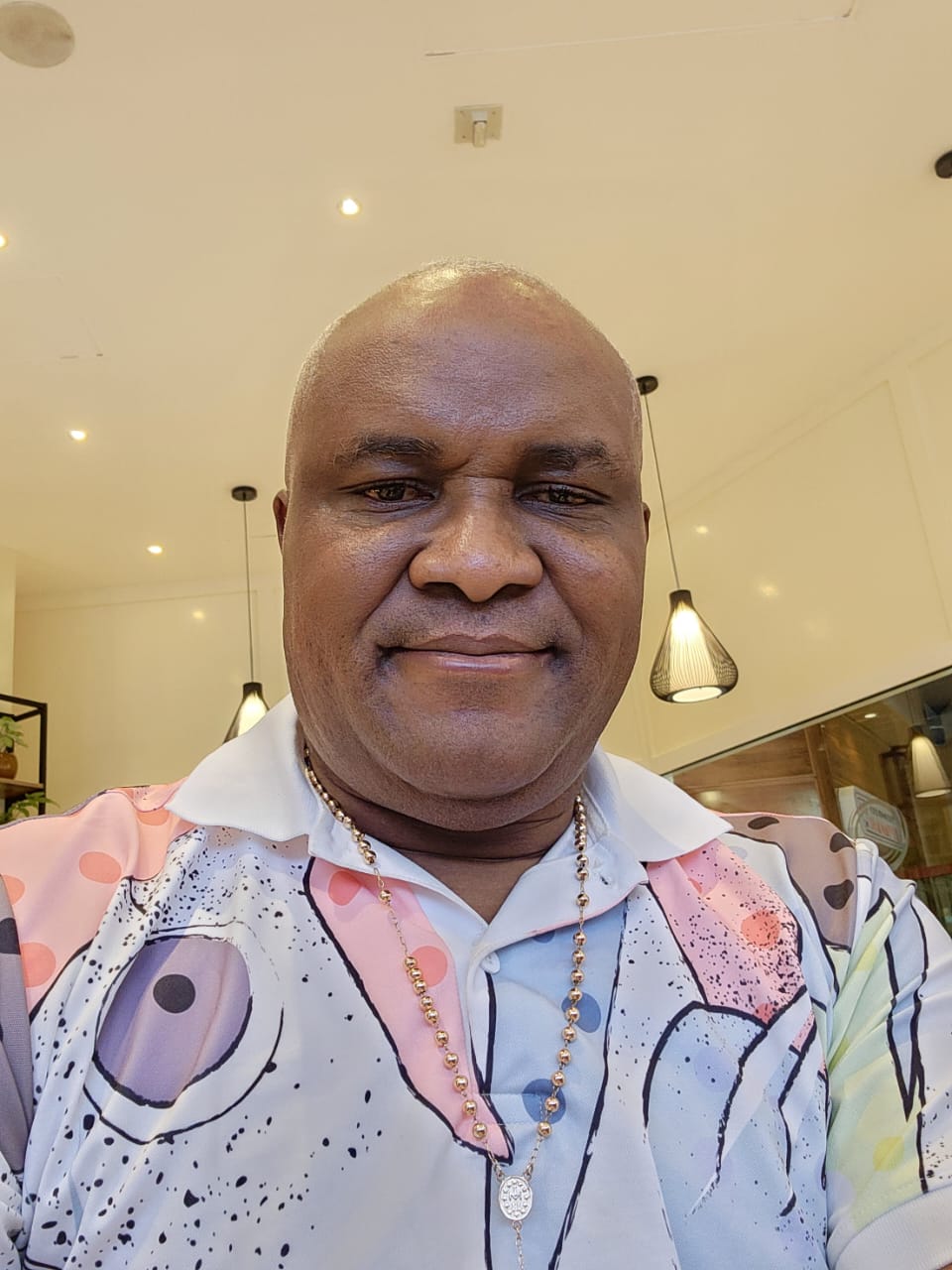
Nigerian Political Parties and Accountability
By Emmanuel Nnadozie Onwubiko
Anyone who has been following international media coverage over the past week would have noticed that political parties in the United Kingdom have been busy holding their annual conferences. Parties such as the Conservative Party, the Labour Party, Reform UK and the Green Party have held conferences that attracted extensive media coverage.
These conferences demonstrate an important dimension of democratic practice: the participation of party members in debates about policies, programmes and political priorities. They provide platforms through which political parties articulate their positions, engage their members and seek to win the confidence of the electorate.
As a Nigerian who closely monitors the activities of political parties in my country, the extensive coverage provided by media organisations such as the BBC, CNN and, most importantly, Sky News has prompted me to ask a fundamental question: why have Nigerian political parties not developed similarly structured and regular conferences at which their members, elected representatives and leaders can congregate to debate policies, present their programmes and explain their ideological positions to the Nigerian electorate?
Nigeria operates a presidential system of government influenced substantially by the American model, while its political and constitutional development has also been influenced by the British parliamentary tradition. Yet, despite the enormous political importance of parties to our democracy, Nigerian political parties have generally not developed the culture of large, regular and publicly scrutinised party conferences that is evident in the United Kingdom.
The absence of such platforms raises questions about internal party democracy, transparency, accountability and the relationship between political parties and the wider Nigerian society.
Concerned that political parties appear, in many respects, to be disconnected from the wider society and that some of their internal affairs are conducted without sufficient public scrutiny, I decided to examine the constitutional provisions governing political parties and the responsibilities of the Independent National Electoral Commission (INEC).
INEC and Political Party Accountability
The Nigerian Constitution contains provisions relating to the financial accountability of political parties and the regulatory responsibilities of INEC. Among the relevant provisions are Sections 225 and 226 of the Constitution.
Section 225(5) provides:
«“The Commission shall have power to give directions to political parties regarding the books or records of financial transactions which they shall keep and, to examine all such books and records.”»
Section 226(1) further provides:
«“The Independent National Electoral Commission shall in every year prepare and submit to the National Assembly a report on the accounts and balance sheet of every political party.”»
Section 226(2) provides:
«“It shall be the duty of the Commission, in preparing its report under this section, to carry out such investigations as will enable it to form an opinion as to whether proper books of account and proper records have been kept by any political party, and if the Commission is of the opinion that proper books of accounts have not been kept by a political party, the Commission shall so report.”»
A reading of these constitutional provisions demonstrates that political parties are not intended to operate entirely outside the scrutiny of the electoral management system. Their financial records and accountability obligations are subject to constitutional and regulatory requirements.
This raises an important question: should the responsibility for political-party accountability be understood merely in terms of financial records, or should it also encourage a broader culture of internal democracy, transparency, policy development and engagement with citizens?
In my view, Nigerian political parties should be encouraged to organise regular conferences that bring together party members, elected representatives, political office holders, civil society organisations, policy experts, journalists and members of the wider public.
Such conferences could help bridge the gap between political parties and citizens, particularly those who are active members of the parties.
What Are Party Conferences?
Party conferences are multi-day events organised by political parties to discuss important political and policy issues, engage members, attract public attention and, in some cases, raise funds.
In the United Kingdom, party conferences can provide opportunities for members to debate policies and, depending on the party’s rules, vote on important party matters.
They are often extensive events involving keynote speeches by party leaders, policy discussions, specialist sessions, exhibitions, networking events and contributions from politicians, journalists, think tanks, trade unions and civil society organisations.
They therefore serve purposes beyond political speeches. They can become important forums for political education, policy development, internal debate and public engagement.
Why Should Nigeria Have Party Conferences?
Party conferences can create opportunities for citizens to understand what political parties stand for and what their elected representatives intend to achieve.
They can also provide opportunities for networking and the exchange of ideas. Political parties can bring together politicians, academics, business leaders, civil society representatives, journalists and ordinary party members to discuss national challenges.
Conferences can also provide an opportunity for policymakers to explain their thinking on major national issues. Ministers, legislators, party leaders and policy experts can participate in discussions and respond to questions from members and stakeholders.
Another important function is advocacy. Civil society organisations, professional associations and other interest groups can use party conferences to raise issues affecting their sectors and engage directly with political leaders.
Most importantly, party conferences can improve political education. When parties publicly articulate their programmes and policy priorities, voters are better positioned to understand the differences between them and to make informed decisions during elections.
Poor Governance of Nigerian Political Parties: How INEC and the Courts Contribute to Party Crises
A respected legal scholar and political analyst, Professor Sam Amadi, recently raised concerns about the roles of Nigeria’s electoral and judicial institutions in the continuing instability within political parties.
In a media interview, Professor Amadi reportedly identified inconsistent administrative decisions, weak regulatory clarity and conflicting judicial interpretations as factors contributing to internal party crises.
He said disputes within parties, including the African Democratic Congress (ADC), have increasingly escalated because of what he described as a lack of clear authority within INEC and the courts.
According to Professor Amadi, institutional uncertainty encourages factions within political parties to take disputes beyond internal party mechanisms instead of resolving them through established internal processes.
“INEC staffers provide conflicting decisions. Some lawyers will say it is right. So, basically, the lack of authoritativeness and due process and clear-minded clarity in INEC management of the parties incentivised disputants… to externalise and accelerate and deepen those divisions,” he said.
Professor Amadi further argued that matters that should ordinarily be dealt with through internal party structures have increasingly become prolonged legal and administrative battles, with political actors moving between INEC and the courts in search of favourable interpretations.
He also criticised aspects of judicial decision-making, arguing that some rulings have lacked the clarity necessary to bring disputes to a definitive conclusion.
“I think that the courts, through their weak interpretation, through their lack of clarity—look at the Supreme Court decision—‘oh, it’s an internal affair’—it was not authoritative,” he said.
Professor Amadi maintained that the combined effect of administrative uncertainty within INEC and what he characterised as judicial ambiguity has created opportunities for factions within political parties to pursue competing interpretations of the rules.
“Everybody thinks, ‘OK, we can get a better option from INEC,’” he added, arguing that such a mindset can encourage political actors to prolong disputes.
He further observed that the situation reflects what he considers a broader pattern of institutional uncertainty within Nigeria’s political environment.
“Clearly, there’s something different from the past… this time it’s different—total incoherence everywhere. So, the court, INEC, and the politicians will be held responsible,” he said.
He warned that unless INEC and the judiciary provide greater institutional clarity and consistency, internal party disputes could continue to generate prolonged legal and administrative battles.
These observations raise important questions about the institutional framework within which Nigerian political parties operate. Both INEC and the judiciary inevitably come under scrutiny whenever questions concerning the governance, internal democracy and institutional stability of political parties arise.
What Can Be Done?
The electoral management body, which is constitutionally entrusted with important responsibilities relating to political parties, should be encouraged to strengthen its regulatory oversight and insist on compliance with applicable constitutional and electoral requirements.
INEC should also encourage political parties to develop stronger mechanisms for internal democracy, transparency and accountability.
One way of achieving this could be through the institutionalisation of regular party conferences.
Nigerian political parties can learn from the experiences of political parties in the United Kingdom without necessarily attempting to reproduce the British system in its entirety.
Regular party conferences could provide Nigerian parties with platforms to present alternative programmes for nation-building, explain their ideological positions and demonstrate how their policies differ from those of other parties.
Such conferences would also create opportunities for the media to scrutinise party programmes and communicate them to voters.
In a democracy, citizens should not be expected to vote merely on the basis of personalities, ethnic affiliations, religious considerations or campaign rhetoric. They should have access to sufficient information about the policies and programmes of competing political parties.
Party conferences could therefore become important forums for information, education and public enlightenment.
Reining in the Judiciary
There is also a need for a broader national conversation about judicial accountability and institutional independence.
The National Assembly should consider whether existing mechanisms for judicial discipline, accountability and complaints require further strengthening. Any such reform, however, must preserve judicial independence while ensuring that judicial officers remain accountable for misconduct.
The suggestion of establishing an independent judicial ombudsman or strengthening an existing independent complaints mechanism deserves serious public discussion. Such an institution could provide an additional avenue for dealing with complaints about judicial conduct while ensuring that disciplinary processes remain transparent, professional and independent.
However, allegations that corruption or bribery motivates judicial officers to interfere improperly in political-party disputes should not be treated as established facts without evidence. Where such allegations arise, they should be investigated through appropriate constitutional and legal mechanisms.
Professor Sam Amadi’s observations nevertheless highlight the importance of ensuring that judicial decisions concerning political parties are clear, consistent and grounded in law.
The challenge is particularly complicated because members of the National Assembly are themselves politicians and therefore participants in the political system that judicial and electoral reforms seek to regulate. This creates an obvious institutional tension that any reform programme must acknowledge.
For this reason, Nigerians should demand clear and measurable commitments from candidates seeking elective office, particularly candidates seeking the offices of President and membership of the National Assembly.
Those seeking public office should be challenged to explain how they intend to strengthen INEC, improve judicial accountability and promote internal democracy within political parties.
The objective should be to build political parties that are transparent, internally democratic, policy-driven and capable of functioning as genuine platforms for political participation.
Nigeria’s democracy cannot become stronger if political parties remain weak institutions. Strong democratic institutions require political parties that are themselves accountable, transparent and responsive to their members and to the citizens they seek to govern.
The time has therefore come for Nigeria to take a closer look at the internal governance of its political parties and to ask whether these institutions are adequately serving the democratic purposes for which they exist.
EMMANUEL NNADOZIE ONWUBIKO is the founder of the Human Rights Writers Association of Nigeria (HURIWA) and a former National Commissioner of the National Human Rights Commission of Nigeria.

By George Mgbeleke
The Human Rights Writers Association of Nigeria (HURIWA) says President Bola Ahmed Tinubu must urgently intervene in the Oba–Nnewi–Uga–Akokwa–Arondizuogu–Okigwe road project, as communities along the corridor continue to see little or no visible work despite the reported presidential approval.
HURIWA says residents are becoming increasingly disappointed because the road remains in deplorable condition while the promised intervention has yet to translate into visible construction activity.
HURIWA notes that the development is particularly concerning because the member representing Ideato North and South Federal Constituency in the House of Representatives, Hon. Ikenga Ugochinyere Ikeagwuanu, had publicly commended President Tinubu following the reported approval of the project.
HURIWA says communities that have endured the poor condition of the road for years now need tangible action rather than further assurances.
HURIWA recalls that President Tinubu approved the design and procurement of the 150-kilometre Oba–Nnewi–Uga–Ihube (Okigwe Junction) Road as part of major infrastructure projects intended to improve regional connectivity and stimulate economic activity in the South-East.
HURIWA says the announcement raised expectations among residents, businesses and road users who have continued to bear the consequences of the road’s neglect.
HURIWA notes that Hon. Ugochinyere had earlier drawn the attention of the House of Representatives to the deplorable condition of the Akokwa–Arondizuogu–Okigwe road.
HURIWA recalls that the lawmaker described the road as a death trap and raised concerns over reported attacks on motorists using the route.
HURIWA says the Federal Government must now demonstrate that the presidential approval will translate into actual construction.
HURIWA demands that the Federal Ministry of Works publicly explain the current status of the project, including the procurement process, contractor selection, funding arrangements and expected date of mobilisation to site.
HURIWA says Nigerians should not be expected to celebrate infrastructure approvals when the physical conditions that necessitated the intervention remain largely unchanged.
HURIWA states:
“The people along this road network are asking for action, not another announcement.
“They want to see construction equipment, workers and engineers on site. They want to see the road being rebuilt and their communities connected safely.
“When government announces a major road intervention and the people subsequently see little or no meaningful work, disappointment and frustration will naturally follow. The Federal Government must therefore move quickly to restore public confidence.”
HURIWA warns that continued neglect of the road will deepen the hardship faced by residents, increase transportation costs and expose motorists and other road users to avoidable security risks.
HURIWA says the road serves as an important economic and transportation corridor linking communities across parts of Anambra and Imo states.
HURIWA therefore urges President Tinubu to direct the Ministry of Works to move the project from approval and procurement to actual construction without further delay.
HURIWA also urges Hon. Ugochinyere and other lawmakers representing the affected communities to intensify legislative oversight and regularly inform constituents about the project’s implementation.
HURIWA says the people of the affected communities deserve transparency, accountability and a functional road network after years of neglect.

Ondo crash: Senate probes NAF aircraft maintenance after 25 died
By Our Correspondent The Senate has resolved to investigate budgetary provisions for maintenance of Nigerian Air Force, NAF, aircraft following...

Revealed: 33 Corpses were Deposited at Minna General Hospital -JCI gathered …..Quries the whereabout of the remaining Four Others against
By Uthman Baba-Naseer The Justice Mohammed Mohammed Judicial Commission of Inquiry has been told that a total of thirty three...

NCDMB, Renaissance Train 60 Nigerians in Critical Oil and Gas Technical Skills
By David Owei,Bayelsa The Nigerian Content Development and Monitoring Board (NCDMB), in collaboration with Renaissance Africa Energy Company Limited, has...

Gov Diri Pledges Sustained Support To Military *Seeks Review Of Bayelsa Command’s Location
By David Owei,Bayelsa Governor of Bayelsa State, Senator Douye Diri, has reaffirmed his administration’s commitment to support the Nigerian Army...

SOUTHEAST GOVERNORS MUST NOT ALLOW THE ZONE TURN TO A THEATER OF WAR
By Chief Chekwas Okorie A dangerous trend has reared its ugly head in the Southeast geopolitical zone recently. The desperate...

HURIWA to General Chritopher Musa: Rescue family of Ahmed Zakka, wife and three months old baby abducted in Kaduna:
By George Mgbeleke Pro-democracy and civil rights advocacy group: HUMAN RIGHTS WRITERS ASSOCIATION OF NIGERIA (HURIWA) has specifically asked the...

HURIWA Raises Questions Over Tinubu’s Coastal Highway Realignment, Demands Accountability from Umahi
By Our Correspondent The Human Rights Writers Association of Nigeria (HURIWA) has condemned the Federal Government’s decision to realign part...

2027: Opposition Coalition Rallies Behind NDC’s Ohaa After Violent Airport Attack
By Our Correspondent Tensions in Enugu as a coalition of opposition political parties gather in solidarity with candidate of Igerian...

Pipeline Surveillance : IYC, Stakeholders, Task FG on Engagement With Host Communities
By David Owei Stakeholders from oil and gas host communities in Bayelsa State including the Ijaw National Congress (IYC) Worldwide,...

Niger Delta Group Endorses Tinubu For Second Tenure.
By David Owei, Yenagoa A group, the Niger Delta Progressive Alliance (NDPA) have endorsed President Bola Ahmed Tinubu as its...
-
 Politics1 year ago
Gov Okpebholo moves to end Cultism *Threatens action against leading cult groups *Vows to demolish more cult houses in Edo State
-
 Politics1 year ago
ASUU-NDU protest against FG loans, unpaid salaries,Non-Implementation of agreements …..says loans is generational slavery
-
 Business & Economy1 year ago
PC-NCG Issues Disclaimer on Purported Nigerian Coast Guard National Orientation Exercise In Anambra State
-
 Entertainment2 years ago
Jubilation galore as Parishioners of CKC Kurudu celebrate their cultural heritage ….FG should exploit our Cultural heritage to unite Nigerians-Rev Fr Dim
-
 Sports8 months ago
Bayelsa-born ex-football star’s son, Opuama donates spike shoes to Athletics Association
-

 General News2 years ago
Reps hold public hearing on FMC Ugwuaji Awkunanaw
-
 Law & Crime1 year ago
Legal practitioner raises alarm over threat to his life by CSP Muhammed Abdulkareem
-
 General News2 years ago
Celebration galore as UDA Successfully Elected New Exco ……I will digitalize processes that will raise UDA to greater height -Comr. Okejiri