
Religion
Tinubu Meets Pope Leo XIV at Vatican, Attends Pontificate Inauguration Mass

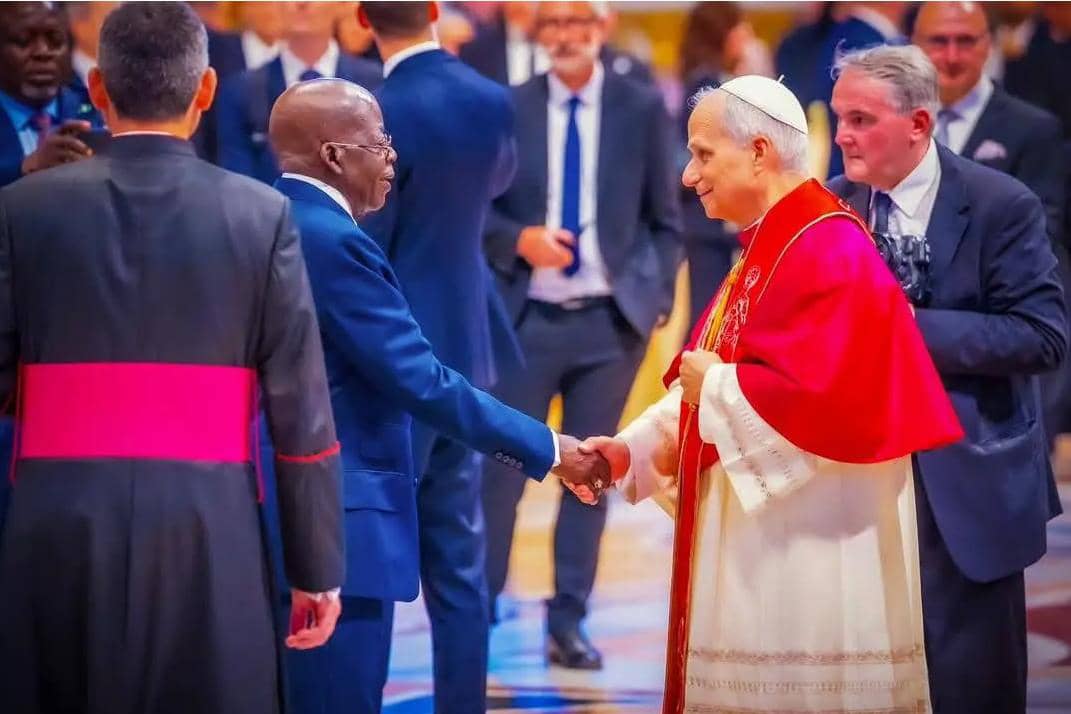
President Bola Ahmed Tinubu on Sunday met with His Holiness, Pope Leo XIV, at the Vatican, where the two leaders exchanged warm greetings ahead of the official mass marking the beginning of the Pope’s pontificate.
The meeting took place shortly before the solemn installation mass for Pope Leo XIV, the 267th Bishop of Rome and spiritual head of the Roman Catholic Church, scheduled for May 18.
President Tinubu arrived in Rome earlier in the day in response to a special invitation extended by the Vatican. The new Pope, who once served in the Apostolic Nunciature in Lagos during the 1980s, expressed deep affection for Nigeria in his letter to President Tinubu, describing the country as “a nation particularly dear to me.”
According to the President’s spokesperson, Bayo Onanuga, the invitation underscored the significance of Tinubu’s presence at a time of global challenges, marked by escalating conflicts and humanitarian concerns. “The Holy See believes President Tinubu’s attendance is important in showing unity, peace, and global cooperation at this critical moment,” Onanuga said.
President Tinubu was accompanied by a delegation that included prominent Nigerian Catholic figures such as Archbishop Lucius Ugorji, Archbishop Ignatius Kaigama, Archbishop Alfred Martins, and Bishop Matthew Hassan Kukah.
The encounter between the Nigerian leader and the Holy Father is seen as a significant gesture of diplomatic goodwill and interfaith solidarity at a time when religious tolerance and peacebuilding remain pressing global priorities.









By Uthman Baba-Naseer,Minna
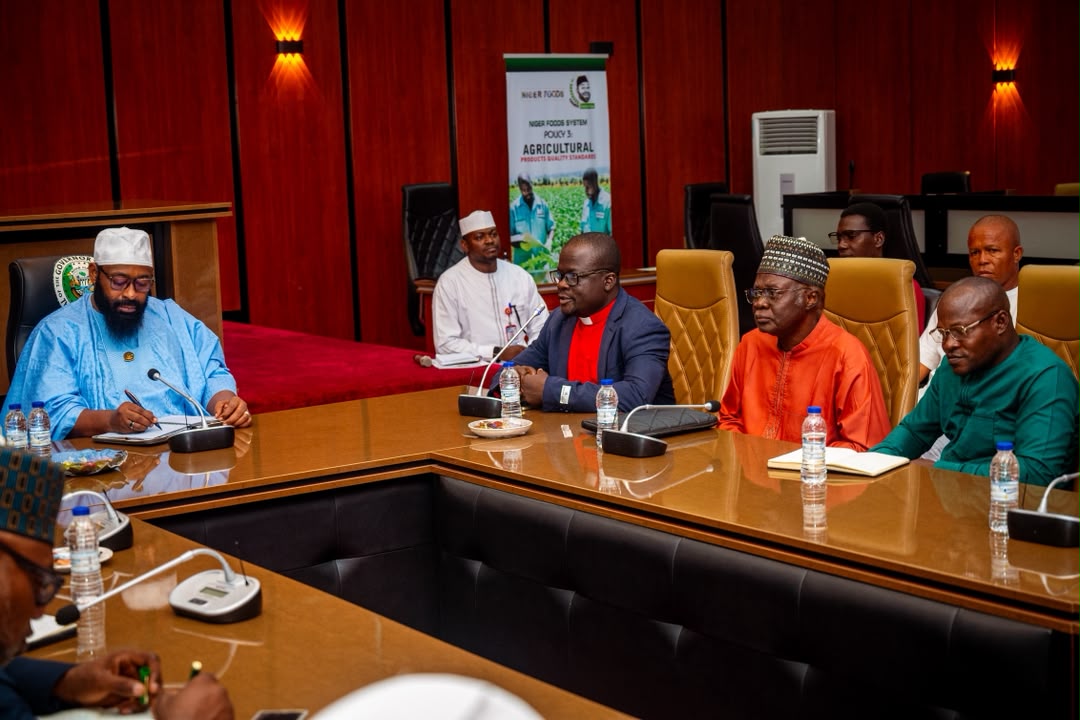
Niger state State Governor, Umaru Bago has called on religious leaders to during their sermons preach against teenage mining.
Governor Bago said on Tuesday when the leadership of Christian Association of Nigeria CAN Niger state chapter led by Most Rev. Bulus Yohanna paid a condolence visit following the death of 37 teenage artisanal miners who died in the custody of Nigeria Security and Civil Defence Corps (NSCDC) that basic and secondary education is free in the state.
According to him “we are bedevilled with the crisis that happened at the custody of NSCDC. Please, call on parents not to expose their children to this dangerous kind of business.
“Please, use the church and mosques to call on parents to discourage their children from indulging in Artisanal mining and to encourage them to enrol in schools so that they can be better citizens tomorrow.
“We all have a responsibility to ensure enrolment into school is encouraged because both basic and secondary education in Niger state are free for all our children.
“It has always been free and we will continue to re-emphasize that it is free. So, there is no reason why any parent will not allow their child to go to school.
“So, use the house of God to during your sermons and preaching to call on our children to go to school.”
Niger state urges Religious Leaders to Preach against teenage mining.
While assuring that the government will ensure it followed the inquiry to the last to uncover the truth, Governor Bago said “this tragedy was avoidable, but because of lack of professionalism on the part of the officers, we have found ourselves with 37 deaths in our hands.
“This we cannot sweep under the carpet and by the grace of God and the oath of office we are going to ensure we pursue the matter to its logical conclusion.”
Speaking earlier, Chairman of the Christian Association of Nigeria CAN Niger state Chapter, Most Rev. Bulus Yohanna while extending the deepest condolences of the entire Christendom to the Governor, and the relatives of the victims described the death of the 37 young Artisanal miners in the custody of the Nigerian Security and Civil Defence Corps (NSCDC) as wanton and tragic.
Represented by his Deputy, Rev. Joshua Marcus, the Chairman who is also the Catholic Bishop of Kontagora Diocese commended the Governor for prioritising human lives over politics, adding that “shifting the flag off of your campaign shows how humane you are and we thank you for ensuring peace is restored”.
While praying to God to grant the departed souls eternal rest and heal the hearts of relatives who lost their children, Bishop Yohanna appeal to the Governor to ensure the true cause of the death is unravelled.
Prayers were then offered by the immediate past Chairman of CAN, Rec. Mathias Echioda.

By our correspondent
A civil society organisation, CSO, the Independent Hajj Reporters, IHR, has appealed to the Saudi Arabian Ministry of Hajj and Umrah to reconsider its decision to decline Nigeria’s request for additional slots for the 2027 Hajj.
In a statement on Saturday, its National Coordinator, Ibrahim Mohammed, urged the ministry to allocate more slots as requested by the National Hajj Commission of Nigeria, NAHCON.
NAHCON had on Thursday said Saudi Arabia declined Nigeria’s request for an upward review of its 2027 Hajj allocation, leaving the country’s quota unchanged despite growing demand from intending pilgrims nationwide.
The commission said it had formally contacted the Saudi ministry to secure additional pilgrimage slots to accommodate the growing number of Nigerian Muslims interested in the sacred journey and to respond to requests for additional allocations from several state pilgrims’ welfare boards.
Until recently, Nigeria had the fifth-largest Hajj contingent, with an average allocation of around 95,000.
IHR also urged Vice President Kashim Shettima to use diplomatic channels to engage the appropriate authorities in Saudi Arabia to grant NAHCON’s request.
“Thousands of Nigerian intending Hajj pilgrims are currently in the queue in anticipation of additional slots,” the group said, adding that most of those on the waiting list may not be able to perform Hajj again if they miss this year’s exercise.
“We are aware that one of the reasons for the reduction in the allocation of Nigeria’s quota was the inability of intending pilgrims to register on time, so the country was unable to use the quota in recent times.
“However, due to the Ministry’s firm stance and the rededication of all Hajj stakeholders in the country to strictly enforce the calendar of activities established by NAHCON, the issue of early pilgrim registration and payments has greatly improved,” IHR said.
It noted that NAHCON has undergone positive structural operational reforms, resulting in timely utilization of 2027 Hajj slots.
“Furthermore, improved enlightenment among Nigerian pilgrims has succeeded in painting a true picture of what Hajj entails for the average intending pilgrim.
“As a result, our pilgrims now understand exactly what to expect while in the holy land, as well as how they should behave to maintain sanity and have little or no negative impact on current operational frameworks in Saudi Arabia,” the CSO stated.
By Dahid
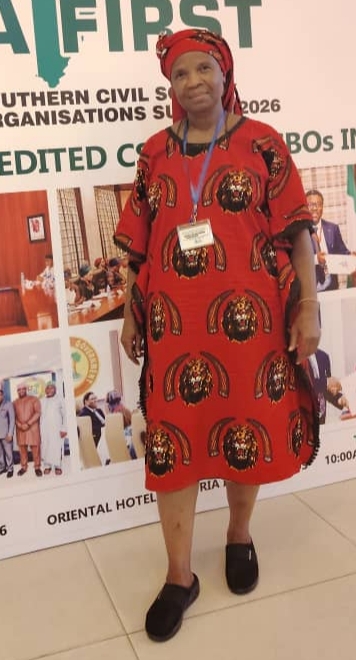
The Africa Blue Economy Roundtable (ABER) has appointed H.E. Dr. Ezeadili Appolonia Obiageri as Director of Advocacy, Policy & Governance, ABER Women’s Forum.
Dr. Ezeadili is a Certified National Accountant, Chartered Project Manager, Forensic Accountant and distinguished public servant. She is a Former National Financial Secretary, ECOWAS Women Section (ROAJELF), Former Foreign Affairs Minister, United Kingdom of Atlantic (UKA), and Former Finance Minister, United Kingdom of Atlantic (UKA).
With academic credentials including HND Accounting, Certified National Accountant (CNA), PGD Management, MBA, MSc Project Management, and PhD Administration and Management, plus vast political leadership experience as Deputy Governorship Candidate (Anambra 2025), Deputy National Women Leader YPP/LP, and Director General, Political, Contact & Mobilization, Accord Party, she brings unmatched governance expertise.
Her mandate includes driving inclusive policy and recognition for women in Africa’s Blue Economy, policy tracking at AU and national levels, advocacy for women in artisanal fisheries and maritime sectors, gender mainstreaming in all ABER strategies, and stakeholder engagement for tenure and resource rights for women in Africa’s 38 coastal and island states.
Announcing the appointment at the weekend in Port Harcourt, Rivers State, Convener of the Africa Blue Economy Roundtable, Dr. Piriye Kiyaramo, said:
“We are delighted to announce the appointment of H.E. Dr. Ezeadili Appolonia Obiageri as Director of Advocacy, Policy & Governance, ABER Women’s Forum. Dr. Ezeadili is a seasoned political leader, founder, former Deputy Governorship Candidate and champion of gender equity who brings over two decades of expertise in finance, governance and advocacy.
In this role, she will lead ABER’s policy tracking at the AU and national levels, advocacy for women in fisheries and maritime sectors, gender mainstreaming in Blue Economy strategies, and high-level stakeholder engagement across 38 coastal states. We are confident she will drive policy influence and legal advocacy for women across Africa’s Blue Economy.”
Congratulations, Dr. Ezeadili!
Welcome to the Leadership Team!

2027 : PDP Candidate re-connects Zanchita community with National grid after two years of darkness
By Uthman Baba-Naseer,Minna It was a celebration galore in Zanchita community in gbako local government area of Niger State,as former...


Insecurity ,displacement alters distribution of Christian communities in Niger state to 3,417,636
By Uthman Baba -Naseer,Minna Niger state Christian leaders have disclosed that out of the Seven million, four hundred and seventy...


Death of 37 suspected illegal Miners:11 member of Judicial commission of inquiry set for inauguration on Tuesday by govrrnor Bago
BY UTHMAN BABA-NASEER,MINNA Sequel to the constitution of the Judicial commission of inquiry by the governor Mohammed Umar Bago, to...
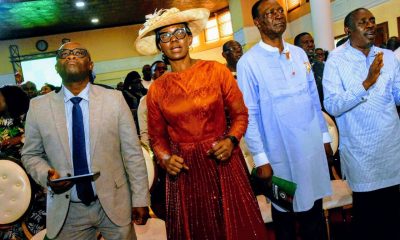

Thanksgiving Service Heralds Bayelsa 30th Anniversary Celebration
By Dabid Owei Bayelsa State Government on Sunday held an inter-denominational thanksgiving service to kick-start activities marking the 30th anniversary...


Former Speaker challenges substition of his name with Suleiman as winner of APC primary election at Minna Fed.High Court
By Uthman Baba-Naseer,Minna The Former Speaker of the Niger State House of Assembly,Rt Hon. Adamu Usman,has filed a lawsuit before...


SWAN President to Storm Bayelsa for 30th Anniversary Celebration, Igali Confirms*
By David Owei The President of the Sports Writers Association of Nigeria (SWAN), Benjamin Isaiah, has been confirmed among dignitaries...

Panic Grips Delta Residents as Deputy Director Dies After Alleged Assault
By Our Correspondent There is palpable tension among Delta residents following an alleged death of a deputy Director in Asaba,...

SPC 2026 Annual Wkshop: Journalists Deliberate on Legislative Oversight, Budget Integrity,Media Collaboration
By Our Correspondent The 2026 Capacity-Building Workshop of the Senate Press Corps will focus on strengthening legislative oversight and media...

The Day the Church ‘Blessed’ the Media
By Emmanuel Nnadozie Onwubiko For a media practitioner and a Catholic, Thursday, September 24, 2026, will remain a remarkable day....

As ‘Ọsọ Marwa’ Sweeps Across Nigeria’s Forests
By Emmanuel Nnadozie Onwubiko Today’s reflection is on a new and increasingly significant battlefront opened by the National Drug Law...
-

 Politics1 year ago
Gov Okpebholo moves to end Cultism *Threatens action against leading cult groups *Vows to demolish more cult houses in Edo State
-
 Politics1 year ago
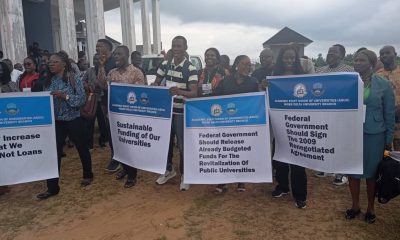
ASUU-NDU protest against FG loans, unpaid salaries,Non-Implementation of agreements …..says loans is generational slavery
-

 Business & Economy1 year ago
PC-NCG Issues Disclaimer on Purported Nigerian Coast Guard National Orientation Exercise In Anambra State
-
 Entertainment2 years ago
Jubilation galore as Parishioners of CKC Kurudu celebrate their cultural heritage ….FG should exploit our Cultural heritage to unite Nigerians-Rev Fr Dim
-

 Sports7 months ago
Bayelsa-born ex-football star’s son, Opuama donates spike shoes to Athletics Association
-

 General News2 years ago
Reps hold public hearing on FMC Ugwuaji Awkunanaw
-

 Law & Crime1 year ago
Legal practitioner raises alarm over threat to his life by CSP Muhammed Abdulkareem
-

 General News2 years ago
Celebration galore as UDA Successfully Elected New Exco ……I will digitalize processes that will raise UDA to greater height -Comr. Okejiri