
Opinion
TY Buratai Literary Initiative announces 2025 zonal winners, increases prize awards

By Abdul-Ganiyy Akanbi
A non‐profit project with the mission of promoting literacy, fostering a culture of reading, and supporting young writers, particularly in the genre of Young Adult Literature, YAL, the TY Buratai Literary Initiative, TYBLI, has released a long-list of first six successful contenders for its literary prize, selected from 106 entries that were received for the 2025 Young Adult Literature writing competition.
Similarly, TYBLI, which is also an educational outreach and community give-back service initiated and sponsored by a former Chief of Army Staff, Lt. General Tukur Yusuf Buratai, said another shortlist of three winners would be announced before the Grand Prize and Awards ceremony on November 1.
A statement by Binta Umar listed one of the key activities of the initiative as book placement program whereby mini-libraries are created in form of “book boxes”.
Beneficiaries of this initiative, she said are normally underserved schools, aimed at improving their access to age-appropriate leisure reading materials, disclosing that the TYBLI placed book boxes in three schools across Nasarawa State and the Federal Capital Territory, FCT in 2024.
The 2025 zonal winners and their stories, according to the statement are Adoo Gyuur: Daughters of Ashes -North Central; Daniel Yohanna: A Boy From Far North – North East; E. R. Umukoro: The Distortion of Hardassah –South South; Ikemefuna Chinenyike Lawrence Ezemagu: Garden of Garget — South East; Sarah Yousuph: When the Road Curves -South West; and Yusrah Bashir Gaga: My Darkest Nightmares – North West.
To encourage participants, the chairperson of the Initiative, Dr. Liz Ben-Iheanacho have announced an increase in the 2025 YALP prize awards during the roll out of TYBLI’s 2025 program of events earlier this year.
“The grand prize will be raised to N1.5million while six zonal winners will receive N500 each,” she stated.
Ben-Iheanacho also informed that the initiative has expanded its book placement reach in 2025 by donating mobile libraries containing at least 40 assorted books to Girau International School, Kaduna, as part of its school outreach.
She listed other beneficiaries as LGEA Unguwar Sarki School, Kaduna; School Of The Gifted, Gwagwalada; Air Force Girls Comprehensive School, Abuja and Nasarawa State University, Uke, Keffi.
The chairperson expressed appreciation to all 106 entrants and advised them not to give up, describing their contributions as valuable “because even if a work is not shortlisted, TYBLI encourages the young adults to continue writing.”
She, however, said the most prominent activity under the TYBLI is the Young Adult Literature Prize, YALP, a story writing competition to discover and reward emerging writers in the young adult genre.
In its maiden awards in 2024, the chairperson explained that the initiative celebrated young writers with Taofeek Olatunbosun bagging the grand prize of N1 million while other zonal winners received N250 each.
“The regional winners in 2024 were Sima Essien from South South with his winning story, Dream Walker; Micheal Ighonekwu’s Mysteries of the Haunted House won from South East; Bilqisu Abubakar’s The Last Sacrifice from North West; Olatunbosun Taofeek’s Truth and Dare from South West; Hajarah Bashar’s Portraiture of A Dreamer from North Central; and Yohanna Daniel’s The Northern Boy from North East.
“Three of those made it to the final-Olatunbosun Taofeek’s Truth and Dare; Hajarah Bashar’s Portraiture of a Dreamer; and Yohanna Daniel’s The Northern Boy. Olatunbosun Taofeek’s Truth and Dare finally emerged as the winning story,” Umar stated.
Besides the cash prizes, she said each of the contestants would also enjoy an Anthology comprising the best 10 entries from the 2024 YALP competition, adding that copies would be distributed to secondary and tertiary institutions nationwide to immortalize their literary works.








By Emmanuel Nnadozie Onwubiko
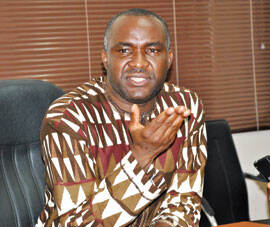
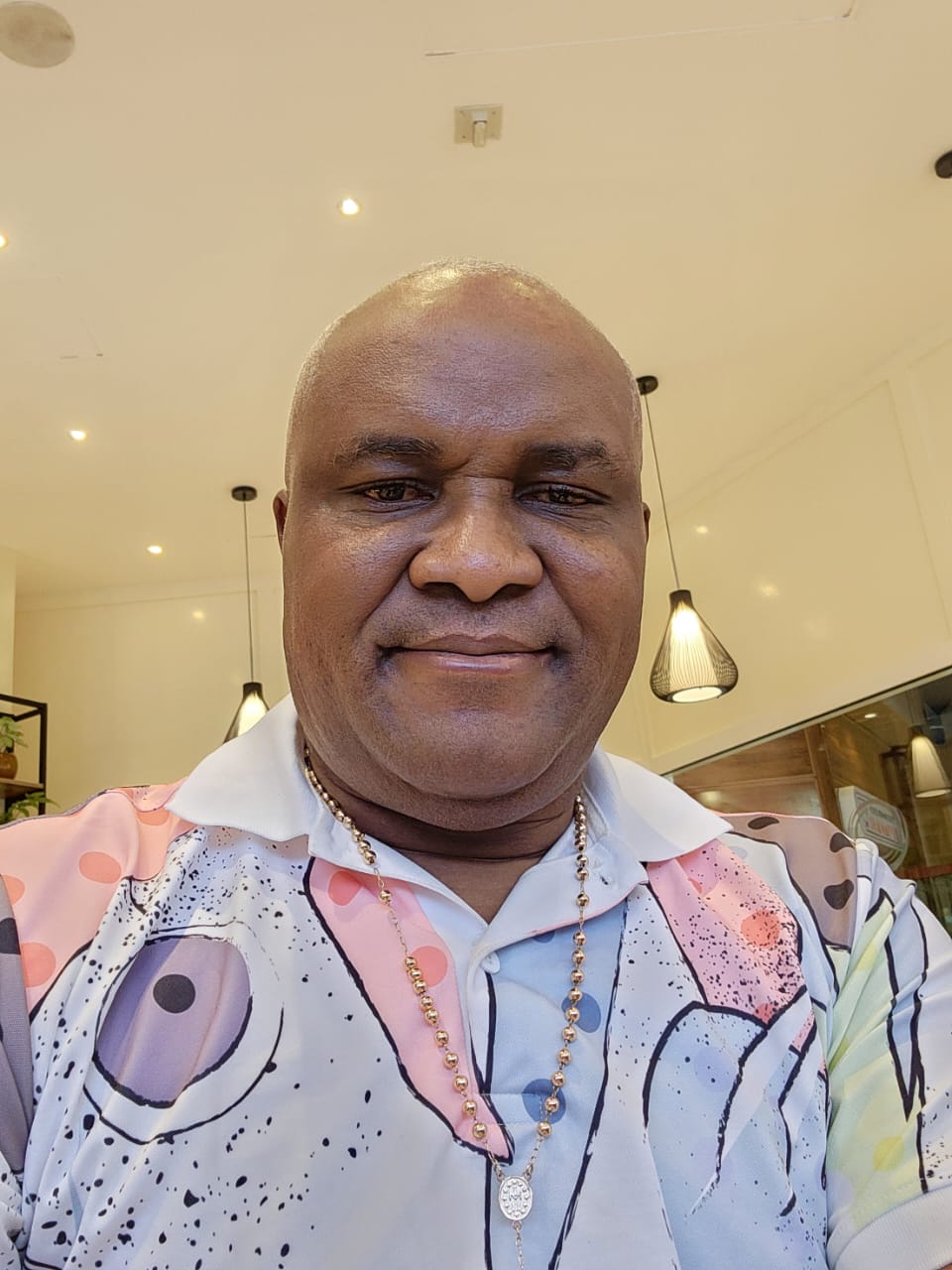
When Senator Osita Bonaventure Izunaso returned to the National Assembly in 2023, more than three years ago, he came back to a Senate very different from the one he had previously known.
Nigeria was confronting a worsening cost-of-living crisis. The naira was under pressure, and the foreign-exchange market was unsettled. Infrastructure deficits remained widespread, while the South-East was still struggling with insecurity, the sit-at-home order and the economic consequences of prolonged political tension.
For Izunaso, the challenge was particularly complicated.
He was not simply another senator in Abuja. He represented Imo West, a constituency spread across 12 local government areas and embedded in one of the country’s most politically restive regions.
Two years into the 10th National Assembly, his record has consequently developed along three parallel tracks: legislation and oversight in Abuja, constituency interventions in Imo West, and advocacy on issues that have come to define the political conversation in the South-East.
That combination provides a more revealing picture of his time in the Senate than a simple catalogue of projects.
Capital-market reform and legislative responsibility
One of the first tests of Izunaso’s second Senate career came not from his constituency but from Nigeria’s financial markets.
In August 2023, he became chairman of the Senate Committee on Capital Market and Institutions.
It was a consequential assignment.
The capital market is where government policy, private investment, pension funds, companies and individual investors meet. At a time when Nigeria was trying to attract investment while battling currency instability and declining purchasing power, the committee’s responsibilities extended beyond technical regulation.
Izunaso’s committee became involved in the legislative process that produced the Investments and Securities Bill 2024.
The bill sought to replace the 2007 legislation and update the legal framework governing Nigeria’s capital market. It addressed issues including investor protection, market regulation, market abuse and the powers of the Securities and Exchange Commission.
Izunaso was identified as the main sponsor of the legislation and played a prominent role in its consideration by the Senate.
The bill eventually passed the Senate in December 2024.
That episode says something important about the senator’s present role. His influence in the National Assembly is not confined to bills bearing his name. Committee chairmanship gives a lawmaker considerable influence over what comes before the chamber, how legislation is scrutinised and how regulatory institutions are subjected to oversight.
It is an influence that is less visible than the commissioning of a road or the distribution of empowerment equipment, but potentially broader in its consequences.
When the naira became a Senate issue
Izunaso also turned his attention to the foreign-exchange crisis.
He sponsored a motion calling for an investigation into the accumulation of foreign-exchange backlogs, activities in the forex market and the Central Bank of Nigeria’s development-finance programmes dating back to 2015.
The motion came at a time when businesses and households were feeling the effects of exchange-rate volatility.
For a senator representing a district where trading, manufacturing and small businesses are important components of local economic life, the issue had both national and constituency dimensions.
His intervention reflected an emerging feature of his Senate work: taking issues that appear to belong to Abuja and connecting them to the economic realities of people back home.
Besides, Senator Izunaso was the sole representative of Nigeria at the Money/202/20 Middle East which took place from September 14-16, 2026 at the Riyadh Exhibition and Convention centre in Malham, Saudi Arabia. The event was hosted by the Financial Sector Development Programme (FSDP), Saudi Central Bank (SANA), Capital Market Authority (IA); co-organized by Tahaluf and Fintech Saudi. Money20/20 Middle East brings together banks, Fintech companies, investors regulators, technology providers and policy makers to explore the future of payments, banking, financial infrastructure and digital finance.
But Abuja is only half the story
For most constituents, however, parliamentary committee work can seem remote.
The test of representation is often much more immediate: the road that connects one community to another, the electricity project, the student who receives a scholarship, the young person who receives equipment to start a business, or the patient who receives treatment during a medical outreach.
This is where Izunaso’s constituency programme has attracted the greatest attention from his supporters.
His office lists road rehabilitation, electricity, water, healthcare, education, agriculture and youth empowerment among the interventions undertaken in Imo West.
It also reports skills-acquisition programmes in communities including Akokwa and Urualla.
The senator’s empowerment programmes have distributed equipment such as sewing machines, grinding machines, welding tools, barbing kits and other items intended to help beneficiaries establish businesses.
Motorcycles and vehicles have also been included among the items distributed.
The political photographs from such events are easy to find. The harder question is what happens after the cameras leave.
Does the sewing machine become a viable tailoring business? Does the welding equipment create employment? Does the motorcycle become a source of sustainable income?
Those are the questions that ultimately determine whether an empowerment programme becomes a development intervention or simply another political ceremony.
Izunaso’s published record presents the programmes as part of an effort to promote self-reliance.
Education and human-capital development
Education has provided another important strand of the senator’s constituency work.
At his July 2024 town-hall meeting, Izunaso presented a first-year scorecard and highlighted scholarship programmes, youth training, healthcare and infrastructure interventions.
The senator reported that 200 students had benefited from scholarships.
His supporters have also pointed to interventions through the Kpakpando Education Foundation, including educational assistance and support for schools.
For families confronting the rising cost of education, such interventions can be significant.
But, again, the larger measure of success is not the announcement of a scholarship. It is whether the beneficiary completes school, acquires useful skills and eventually enters productive employment.
That is the difference between measuring activity and measuring impact.
Representation in a troubled region
Perhaps the most politically consequential aspect of Izunaso’s Senate career has nothing to do with roads or scholarships.
It is his position on the South-East’s political crisis.
Soon after his return to the Senate, Izunaso sought a political solution to the continued detention of Nnamdi Kanu, the leader of the Indigenous People of Biafra.
His intervention was controversial because Kanu’s case sits at the intersection of separatist agitation, national security, criminal justice and the long-running political grievances of the South-East.
Izunaso argued that a political approach could help create conditions for peace and address the economic damage associated with the sit-at-home order.
The Senate did not adopt his proposal for Kanu’s release.
But the senator continued to raise the issue.
His argument has essentially been that military and security responses alone cannot resolve a problem with deep political roots.
That position places him in a delicate political space. He is a member of the governing APC, yet he has advocated an approach to one of the South-East’s most contentious issues that has not always aligned with the harder security position of the Federal Government.
For constituents in Imo West, however, the issue is not theoretical.
The sit-at-home order has affected transport, commerce, schools and daily economic activity across the region. Any political or security intervention capable of restoring normal economic life therefore has direct consequences for the people Izunaso represents.
The Anim State question
Izunaso has also chosen to put his political weight behind the demand for another state in the South-East.
He has promoted the proposed Anim State, arguing that the creation of an additional state could improve political representation and development in the region.
The proposal has particular relevance to his political base because it involves areas around Imo West and neighbouring Anambra.
But state creation is one of the most difficult constitutional exercises in Nigeria.
It requires more than political enthusiasm. It requires the fulfilment of constitutional procedures and demonstrable support among affected communities.
Izunaso has nevertheless continued to push the proposal, making it part of his broader argument that the South-East requires greater political and developmental balance.
His support for the South-East Development Commission follows the same regional-development logic.
Together, the two issues show that his Senate agenda has increasingly moved beyond the boundaries of Imo West.
From intervention to impact
There is another way to look at Izunaso’s constituency interventions.
They represent an attempt to translate the abstract language of government policy into individual economic opportunities.
A road is infrastructure.
A scholarship is human capital.
A skills-acquisition programme is an employment intervention.
A medical outreach is social protection.
An empowerment tool is an attempt at livelihood creation.
That is the theory behind the model.
Whether the model works at scale is a separate question.
Izunaso’s official project platform reports interventions across all 12 local government areas of Imo West, while his supporters have cited hundreds of beneficiaries from empowerment programmes and thousands of persons living with disabilities who have received assistance.
Those figures are claims from his office and supporters and should be independently tested against project records, beneficiary accounts and evidence of completion.
That scrutiny is not a rejection of the interventions. It is precisely what political accountability requires.
Measuring legislative performance
There is a tendency in Nigerian politics to reduce legislative performance to numbers: how many bills were sponsored, how many motions were moved and how many projects were facilitated.
The numbers matter, but they do not tell the whole story.
A senator’s job involves legislation, representation, oversight and advocacy.
Izunaso’s first years in the 10th Assembly illustrate all four.
He has participated in financial-sector legislation as chairman of the Capital Market and Institutions Committee. He has raised questions about foreign-exchange management. He has sponsored legislative proposals dealing with infrastructure and fire prevention.
At home, his office has pursued education, healthcare, empowerment and infrastructure interventions.
And on the regional stage, he has continued to speak about Nnamdi Kanu, insecurity, state creation and the South-East Development Commission.
The record is therefore neither simply an Abuja story nor simply an Imo West story.
It is a story about a politician trying to operate in both worlds simultaneously.
The unfinished test
There is, however, a larger test ahead.
The 10th National Assembly still has time to determine the final shape of Izunaso’s legislative record.
Some bills associated with him and his committee have become law or advanced through the legislative process. Others remain proposals.
Some constituency interventions have been completed, while others require continuing assessment.
And some of the biggest issues he has championed—particularly state creation and the political resolution of the South-East crisis—remain far from settled.
That makes his first two years a chapter rather than a conclusion.
The senator has established the themes of his current representation: capital-market reform in Abuja, development interventions in Imo West and political advocacy for the South-East.
The more difficult part is converting those activities into durable outcomes.
For a lawmaker, that is ultimately where the difference between activity and impact lies.
A bill becomes meaningful when it changes the law and improves regulation.
A road becomes meaningful when it remains usable.
A scholarship becomes meaningful when it helps a student complete an education.
An empowerment programme becomes meaningful when the business survives.
And political advocacy becomes meaningful when it produces measurable change in the lives of the people affected.
That is the unfinished test of Osita Izunaso’s second journey through the National Assembly.
So far, his Senate career has been defined by an effort to occupy all three spaces available to a modern Nigerian lawmaker: the legislative floor in Abuja, the constituency at home and the wider political arena of the South-East.
What remains is for time and evidence to determine how deeply that effort has changed each of them.
EMMANUEL NNADOZIE ONWUBIKO is the founder of the Human Rights Writers Association of Nigeria and a former National Commissioner of the National Human Rights Commission of Nigeria.
By Emmanuel Nnadozie Onwubiko
Nigeria appears trapped in a seemingly endless struggle against a hydra-headed monster: the vandalism, theft and destruction of critical infrastructure owned by the government and private individuals. These criminal activities undermine economic development, disrupt essential services, endanger human lives and impose enormous financial costs on a country already grappling with significant economic challenges.
Across the country, organised criminal networks continue to target electricity distribution systems, transmission lines, transformers, railway infrastructure, bridges, drainage systems and other public assets. In the oil and gas sector, the theft of crude oil and the sabotage of pipelines have also contributed to substantial revenue losses.
These are not merely isolated incidents of petty theft. They represent a serious threat to national development, public safety and economic stability.
The organised networks behind infrastructure vandalism
One particularly damaging category of economic crime involves the sophisticated networks responsible for vandalising crude oil pipelines, diverting petroleum products and facilitating the illicit sale of stolen crude oil.
The persistence of these activities raises serious questions about the effectiveness of existing security arrangements. It also fuels concerns about possible collusion between criminal syndicates and individuals within institutions entrusted with protecting the country’s critical infrastructure.
Allegations of complicity involving military or other security personnel must, of course, be established through credible investigations and evidence. Nevertheless, the scale and persistence of oil theft demand a more rigorous examination of how these criminal networks operate, who finances them, how stolen products reach their buyers and whether powerful interests benefit from the trade.
The question is straightforward: how can criminal operations of such magnitude continue for years without significant weaknesses, failures or possible compromises within the systems established to prevent them?
Private security contracts and the protection of oil infrastructure
The federal government’s response to persistent oil theft has included the engagement of private security contractors to protect critical oil and gas infrastructure.
During the administration of former President Muhammadu Buhari, lucrative security contracts were awarded to private operators, including companies associated with individuals in the Niger Delta. The arrangement generated public debate about the effectiveness, transparency and cost of relying on private contractors to protect nationally significant assets.
Supporters of this approach have argued that conventional security arrangements had failed to sufficiently curb oil theft and pipeline vandalism. They maintained that alternative strategies were necessary to achieve better results.
There is some merit in questioning a security strategy that repeatedly fails to deliver measurable improvements. However, the answer cannot simply be to transfer responsibility from public institutions to private contractors without transparent procurement, independent oversight and demonstrable results.
The public deserves to know how much these contracts cost, how their beneficiaries were selected, what performance targets were established and whether the expenditure has significantly reduced oil theft.
Claims that the contracts cost more than the entire annual defence budget should be supported by reliable budgetary and contractual records before being presented as established fact.
Ultimately, Nigeria needs a security framework that combines effective enforcement with transparency, accountability and measurable performance.
Nigeria lost 13.5 million barrels of oil worth $3.3 billion, NEITI reported
The financial consequences of oil theft and pipeline sabotage are substantial.
At the 2025 conference of the Association of Energy Correspondents of Nigeria (NAEC), the then Executive Secretary of the Nigerian Extractive Industries Transparency Initiative (NEITI), Ogbonnaya Orji, reportedly disclosed that Nigeria lost approximately 13.5 million barrels of crude oil, valued at $3.3 billion, to theft and pipeline sabotage between 2023 and 2024.
The conference theme was Nigeria’s Energy Future: Exploring Opportunities and Addressing Risks for Sustainable Growth.
Orji reportedly observed that the lost revenue could have financed the federal health budget for an entire year or expanded energy access for millions of households.
He emphasised that the losses were not merely financial but also reflected institutional weaknesses, diminished public trust and missed opportunities for national development.
The significance of these figures cannot be overstated. Revenue lost through oil theft is revenue unavailable for hospitals, schools, electricity infrastructure, roads, social protection and other essential public services.
It is therefore imperative that the government strengthen the institutions responsible for preventing oil theft, investigating those involved and recovering proceeds derived from criminal activities.
Infrastructure vandalism is economic sabotage
The destruction of public infrastructure must be understood as more than an ordinary property offence.
When criminals remove electricity cables, dismantle railway components, destroy transformers or damage bridges, the consequences extend far beyond the immediate cost of replacing the stolen materials.
Businesses lose operating hours. Households endure prolonged power outages. Transportation networks become less reliable. Public funds that could have financed new infrastructure must instead be spent repairing damaged facilities.
In some circumstances, vandalism can also cause electrocution, railway accidents, structural damage and other potentially fatal incidents.
The same considerations apply to privately owned property. Individuals who invest their life savings in building homes or businesses should not have to live in fear that criminals will destroy those investments to steal iron rods, cables or other materials for resale.
The challenge, therefore, is not merely to apprehend individual offenders. It is to dismantle the networks that finance, facilitate and profit from infrastructure theft.
Scrap-metal dealers who knowingly purchase stolen public assets must also be held accountable where the evidence establishes their involvement. At the same time, legitimate recycling businesses should be distinguished from criminal enterprises.
Existing laws against vandalism in Nigeria
In a media interview, lawyer Mack Ogbamosa reportedly identified infrastructure vandalism as a major challenge facing Nigeria. He argued that existing laws provide mechanisms for prosecuting offenders but that stronger enforcement and more effective deterrence are necessary.
Nigeria has several federal and state laws that may apply to the destruction of public infrastructure, depending on the nature of the offence, the property involved, the location and the applicable statutory provisions.
Among the federal enactments relevant to this discussion are the Miscellaneous Offences Act, the Electricity Act 2023 and the Petroleum Production and Distribution (Anti-Sabotage) Act. The Criminal Code and Penal Code also contain provisions concerning property damage and related offences, subject to their territorial application and the specific facts of each case.
The precise charges and penalties must be determined by reference to the current legislation and the facts proved in court.
1. The Miscellaneous Offences Act
The Miscellaneous Offences Act is among the federal laws historically invoked in prosecutions involving serious forms of sabotage and damage to public assets.
The provisions potentially applicable to particular acts of vandalism must be examined carefully. It would be misleading to assume that every incident involving stolen cables, railway components or damaged public property automatically attracts the same penalty.
The prosecution must establish the elements of the relevant offence, and the court must impose a sentence authorised by the applicable law.
For this reason, any claim that a particular subsection mandates 14 years, 21 years or life imprisonment should be checked against the exact statutory text and any relevant amendments before publication.
2. The Petroleum Production and Distribution (Anti-Sabotage) Act
Nigeria’s petroleum sector is particularly vulnerable to economic losses arising from the unlawful interference with production and distribution infrastructure.
The Petroleum Production and Distribution (Anti-Sabotage) Act addresses specified forms of sabotage involving petroleum production and distribution.
Its relevance to a particular case depends on the conduct alleged and the statutory elements established by the prosecution. Pipeline vandalism, crude oil theft and the unlawful interruption of petroleum operations may also engage other applicable laws.
Given the importance of petroleum revenue to the national economy, law enforcement agencies should investigate these offences thoroughly, identify the wider criminal networks involved and pursue those who finance or profit from the illegal trade.
3. The Electricity Act 2023
The Electricity Act 2023 provides an important legislative framework for Nigeria’s electricity industry.
The protection of electricity infrastructure requires effective legal and regulatory measures against the unlawful interference with power generation, transmission and distribution systems.
The theft of cables, destruction of transformers and deliberate damage to transmission infrastructure can impose substantial costs on electricity companies and consumers. Such acts can also undermine efforts to improve electricity supply.
The precise offence and available penalty must, however, be identified by reference to the relevant provisions of the Act and any other applicable legislation. Claims that a particular act of vandalism carries life imprisonment should not be published without verifying the specific statutory basis.
4. The Criminal Code and Penal Code
The Criminal Code applies in the relevant southern jurisdictions, while the Penal Code applies in the relevant northern jurisdictions, subject to the applicable federal and state legal frameworks.
These laws contain provisions addressing forms of property damage, malicious injury and related criminal conduct.
The applicable penalty depends on the offence charged, the circumstances of the case and the statutory provision under which the defendant is convicted.
State legislation may also provide additional offences and enforcement mechanisms. Accordingly, the prosecution of an infrastructure vandal should begin with a careful assessment of the relevant law rather than an assumption that all cases fall within a single legal category.
5. State-level laws and enforcement measures
State governments have also adopted laws and enforcement initiatives intended to protect public facilities and prevent the theft of infrastructure.
Lagos State, for instance, has pursued cases involving the alleged removal of bridge components and other public assets. Reports concerning the removal of iron materials from the Festac–Alakija Bridge illustrate the importance of investigating not only those who physically remove public property but also those who knowingly receive or trade in stolen materials.
Such cases should be documented with the relevant charge sheets, court records and judgments. These records would establish whether the suspects were merely arrested, formally charged, convicted or sentenced.
That distinction is important because an arrest is not proof of guilt, and an allegation does not become an established fact merely because it has appeared in the media.
Reported cases of infrastructure vandalism
Reports of arrests, prosecutions and convictions across Nigeria illustrate the breadth of the problem. The following cases have been cited in media accounts and should be checked against official court records before publication.
Third Mainland Bridge railings case (2026)
A report states that Abubakar Jaji was sentenced to five years’ imprisonment without the option of a fine for allegedly damaging and removing iron railings from the Third Mainland Bridge in Lagos.
The report attributes the prosecution to the Economic and Financial Crimes Commission (EFCC).
If confirmed by the relevant judgment, the case would demonstrate the seriousness with which the courts may treat the deliberate destruction of essential public infrastructure.
The precise date, court, statutory provision and sentence should be verified against the judgment.
Warri–Itakpe rail corridor case (November 2025)
Media reports have identified Mudasuru Mutari and Blorie Kokori as defendants convicted in connection with the dismantling of railway components near Abraka, Delta State.
The reported sentence was two years’ imprisonment, following prosecution under the Miscellaneous Offences Act.
The case highlights the vulnerability of railway infrastructure and the economic consequences of stealing components required for safe and reliable rail operations.
The final account should confirm the court’s decision, the exact offences and the sentences imposed.
Ebu Bridge drainage case (2025)
Another report concerns Emmanuel Sunday, who was reportedly sentenced by a court in Asaba, Delta State, for damaging the drainage system associated with the Ebu Bridge.
The reported sentence involved imprisonment and community service.
The details of the judgment, including whether the sentence was custodial, concurrent or partly substituted with community service, should be checked before the case is relied upon as an example of judicial sentencing.
Kano railway components case (June 2025)
Four suspects—Mukhtar Muhammed, Abdullahi Musa, Saidu Yusheru and Salisu Shuabu—were reportedly convicted after pleading guilty to offences connected with the theft of railway components in Gabasawa Local Government Area of Kano State.
The case illustrates the need to secure railway installations, identify markets for stolen components and ensure that recovered materials are traced to their legitimate owners.
The names, charges and sentences should be verified through the relevant court records.
Jibowu Bridge vandalism case (November 2024)
A report states that a Lagos Magistrate Court sitting in Oshodi sentenced a person to four months’ imprisonment for attempting to remove structural materials from the Jibowu Bridge.
The individual was reportedly apprehended by the Lagos State Kick Against Indiscipline Brigade.
If confirmed, the case would provide a useful example of intervention by enforcement personnel to prevent the removal of materials from public infrastructure.
Oredo transformer case (2026)
A further report states that Abubakar Dauda was sentenced to two years’ imprisonment in Edo State on 18 August 2026 for the destruction or vandalism of a 200 kVA electricity transformer.
The report attributes the conviction to an Oredo Magistrates’ Court.
The court, offence, date and sentence should be confirmed from the official record before publication.
Lagos electricity infrastructure case (2025)
Another reported case concerns Inya Bethel, who was allegedly sentenced by a Lagos magistrate court on 21 July 2025 to 10 months’ imprisonment without the option of a fine for cable theft.
Such cases underline the importance of protecting electrical installations and prosecuting those who steal cables and other materials essential to electricity distribution.
The statutory provision and the court’s final order should be verified before the case is cited as an authoritative example.
Are Nigeria’s laws against vandalism sufficiently effective?
The persistence of infrastructure vandalism raises a fundamental question: are Nigeria’s existing laws adequate, and are they being enforced effectively?
My position is that the country needs a more coordinated and demonstrably effective response.
However, the issue is not necessarily that every existing penalty is too lenient. The real question is whether the combination of legal provisions, investigative capacity, prosecution, judicial sentencing and asset recovery is sufficient to deter offenders.
A severe penalty has limited deterrent value if offenders believe they are unlikely to be arrested, prosecuted or convicted. Conversely, consistent enforcement, prompt trials and the recovery of criminal proceeds can increase the risks associated with infrastructure theft.
Nigeria should therefore strengthen investigations, improve the protection of critical installations, ensure that prosecutors have adequate evidence and hold those who knowingly facilitate the trade in stolen infrastructure accountable.
Any proposed increase in penalties should be proportionate to the seriousness of the offence, consistent with constitutional protections and supported by reliable evidence concerning the effectiveness of different enforcement strategies.
The destruction of beer bottles and the question of economic sabotage
The debate over economic sabotage extends beyond conventional infrastructure vandalism.
On 17 August 2024, a report discussed a Federal High Court decision concerning the destruction of alcoholic beverages by authorities in Kano State.
According to the report, Justice Emeka Nwite delivered a ruling on 20 May 2023 in a case brought by activist Sesugh Akume against the Attorney-General of the Federation and the EFCC.
The proceedings reportedly concerned the destruction of alcoholic beverages and whether the EFCC had responsibilities in relation to alleged economic sabotage arising from such conduct.
The issue is particularly relevant to Kano, where the Hisbah authorities have conducted operations involving the seizure and destruction of alcoholic beverages. Media accounts reported that millions of bottles had been destroyed during such operations.
The economic argument is that manufactured goods embody the labour, capital, transport, distribution and commercial activity that went into producing and supplying them. Destroying goods that could otherwise be lawfully traded may therefore raise questions about economic waste, property rights and the legal authority under which the destruction occurs.
However, the legal significance of the Federal High Court’s ruling must be stated precisely. A court’s decision about the duties of a particular agency, or the legality of a particular enforcement practice, should not automatically be interpreted as establishing that every destruction of alcoholic beverages constitutes economic sabotage.
The judgment must be examined to determine the precise orders made, the legal reasoning adopted and the extent of the court’s findings.
My broader argument is that government authorities should exercise their powers within the law. Where the destruction of property is authorised, the legal basis and procedure should be clear. Where property is destroyed unlawfully, the responsible parties should be subject to appropriate legal scrutiny.
The protection of public revenue, private property and the rule of law should not depend on whether a particular product or business is politically, culturally or religiously popular.
Borno State: Scrap-metal theft and the loss of electricity infrastructure
The consequences of infrastructure vandalism were also highlighted by Borno State Governor Babagana Umara Zulum, who reportedly raised concerns about the theft of electricity distribution wires worth billions of naira.
According to the report, the state lost wires associated with a power-line project valued at more than ₦3 billion, intended to connect electricity distribution infrastructure from Damaturu to Maiduguri.
The governor reportedly attributed the losses to metal scavenging activities and explained that his administration had imposed restrictions on scrap-metal trading because of concerns about public safety and the theft of public assets.
Zulum also reportedly expressed concern that some scavengers had been killed while collecting metals in communities that were not yet safe for civilian activity. He further raised concerns about allegations that insurgents were using scrap-metal trading channels to dispose of stolen materials.
The governor’s position, as reported, was that the restrictions were intended to protect public infrastructure and security rather than deprive legitimate traders of their livelihoods.
He reportedly allowed genuine operators to remove scrap materials collected before the ban from designated locations, an approach intended to reduce the immediate economic impact of the restrictions.
The situation in Borno illustrates the difficult balance between protecting essential infrastructure and safeguarding legitimate economic activity.
A blanket prohibition may disrupt lawful businesses and affect livelihoods. Yet failing to control the purchase and resale of stolen infrastructure can create a ready market for criminal activity.
A more sustainable approach would involve licensing scrap-metal dealers, requiring records of purchases and suppliers, establishing traceability procedures and prosecuting businesses that knowingly receive stolen public assets.
Where security conditions justify temporary restrictions, the government should communicate the legal basis, scope and duration of those measures and provide clear rules for legitimate operators.
FCT: Police recover infrastructure reportedly worth more than ₦1 billion
The Federal Capital Territory has also experienced significant concerns about the theft and destruction of public infrastructure.
According to media reports, the FCT Police Command announced the arrest of 31 suspects and the recovery of stolen public infrastructure reportedly worth more than ₦1 billion during a crackdown on vandalism.
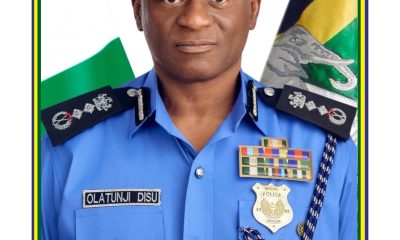
At the time of the reported operation, the Commissioner of Police was Tunji Disu, who subsequently became Inspector-General of Police.
The reports stated that FCT Minister Nyesom Wike convened a security meeting on 13 January 2025, following which authorities directed the temporary closure of scrap-metal markets, commonly known as Panteka markets, across the territory.
The police and other security agencies subsequently launched an operation known as Operation Sweep, targeting suspected locations involved in the storage and sale of stolen infrastructure.
The reported operation commenced on 16 January 2025 and involved raids on scrap-metal markets in locations including Dei-Dei, Kabusa, Zuba, Mpape, Jabi and Nyanya.
The participating agencies reportedly included the Nigeria Police Force, the Nigerian Army, the Nigeria Security and Civil Defence Corps, the Department of State Services and other relevant federal and FCT authorities.
What was reportedly recovered?
Items identified in the media reports included:
– Manhole and drainage covers.
– Armoured and insulated electrical cables.
– Industrial solar batteries and panels.
– Components from transformers and generators.
– Fibre-optic cables and copper wires.
– Underground water-board pipes and iron rods.
– Security doors, cement and other building materials.
– Motorcycles and electricity-generating sets.
– Vehicle identification materials and documents whose ownership reportedly required further investigation.
The authorities reportedly arrested 31 suspects, with 16 subsequently charged in connection with alleged offences involving conspiracy, mischief and possession of stolen public property.
The reports also stated that electricity distribution personnel had identified some recovered components as materials stolen from power installations across the FCT. Areas including Dawaki, Mpape, Nyanya and Karu were reportedly affected by prolonged power outages.
The reported operation further prompted measures requiring scrap-market operators to register and undergo profiling.
These developments demonstrate why enforcement against infrastructure theft must extend beyond the individuals caught removing cables or dismantling public facilities. Investigators must also identify the purchasers, transporters, financiers and intermediaries who make the criminal trade commercially attractive.
Nevertheless, arrests, recoveries and charges must be distinguished from convictions. The value attributed to recovered property, the identity of its lawful owners and the final outcomes of the prosecutions should be confirmed through official records.
The need for stronger enforcement and institutional accountability
Nigeria cannot afford to treat infrastructure vandalism as an ordinary nuisance.
The loss of electricity cables can deprive entire communities of power. The destruction of railway components can compromise transport services. The removal of bridge materials can threaten public safety. The theft of crude oil deprives the country of revenue that could otherwise finance development.
These consequences justify a determined response from the government, law enforcement agencies and the judiciary.
However, the response must also address the institutional weaknesses that enable the problem to persist.
First, security agencies should conduct intelligence-led investigations into organised networks rather than concentrating exclusively on low-level offenders.
Second, government procurement and security contracts should be transparent. Where public funds are spent on protecting oil pipelines or electricity infrastructure, the public should be able to assess the results.
Third, scrap-metal dealers should be required to maintain adequate transaction records, verify suppliers and cooperate with lawful investigations. Businesses that knowingly purchase stolen public property should face appropriate sanctions.
Fourth, government agencies and infrastructure operators should improve physical security, inventory controls, monitoring systems and cooperation with local communities.
Fifth, prosecutions should be conducted diligently, with appropriate penalties imposed where guilt is established. Courts should have the evidence necessary to distinguish minor offences from serious, organised acts that cause extensive economic damage or endanger lives.
Finally, law enforcement agencies must investigate allegations of official complicity impartially. No individual should be protected from accountability because of military rank, political influence, commercial connections or public office.
Conclusion: Economic sabotage demands a decisive national response
My examination of reported cases involving the theft and destruction of critical infrastructure reinforces my conviction that Nigeria needs a more effective national strategy against economic sabotage.
It is difficult to justify a system in which the theft or destruction of essential public assets can impose enormous costs on millions of citizens while the individuals responsible may face limited consequences. Yet the appropriate response is not simply to demand the harshest possible punishment in every case. It is to ensure that penalties reflect the seriousness of the offence and that the law is enforced consistently, transparently and fairly.
Where existing legislation provides inadequate penalties for serious, organised infrastructure sabotage, the National Assembly and relevant state legislatures should consider proportionate reforms. Where the law already provides substantial penalties, the priority should be effective investigation, prosecution and enforcement.
I believe that the most serious cases of economic sabotage—particularly those involving organised criminal networks, deliberate destruction of essential infrastructure, substantial financial losses or conduct that endangers human lives—deserve to be treated with the gravity they warrant. For the gravest offences, lawmakers should consider whether substantially tougher penalties, including life imprisonment where constitutionally and legally justified, are appropriate.
At the same time, Nigeria must confront the market that sustains infrastructure theft. It makes little sense to arrest a person who removes electrical cables or railway components while ignoring the commercial networks that purchase, transport and resell the stolen materials.
Communities also need protection. Across parts of the country, families who have invested their savings in building homes and businesses face the threat of having their property damaged by criminals seeking iron rods, cables and other materials for resale. Such acts destroy not only property but also the security and dignity of the people affected.
In some communities, particularly in the South-East, residents have raised concerns about the theft of building materials and the perceived failure of law enforcement to secure accountability. These complaints deserve impartial investigation, and any allegations of bribery or the improper release of suspects should be substantiated and addressed through the appropriate legal channels.
Nigeria’s critical infrastructure belongs to the public and supports the welfare of millions of citizens. Its protection must therefore be a national priority.
The government should harmonise and strengthen the legal framework where necessary, improve coordination among enforcement agencies, ensure the transparent management of security contracts and vigorously prosecute those whose guilt is established in court.
Above all, the country must end the culture of impunity that allows economic sabotage to remain profitable. Public infrastructure must be protected, legitimate businesses must be allowed to operate, and those who deliberately destroy the assets on which national development depends must be held accountable under the law.
Emmanuel Nnadozie Onwubiko is the founder of the Human Rights Writers Association of Nigeria (HURIWA) and a former National Commissioner of the National Human Rights Commission of Nigeria.
By George Mgbeleke
The Human Rights Writers Association of Nigeria (HURIWA) commends President Bola Ahmed Tinubu for transmitting the proposed National Drug Law Enforcement Agency (NDLEA) Bill 2026 to the National Assembly, describing the initiative as a major step towards strengthening Nigeria’s fight against illicit drugs and drug trafficking cartels.
HURIWA also commends the Attorney-General of the Federation and Minister of Justice, Prince Lateef Fagbemu(SAN) for advancing the proposed legal reforms and praises NDLEA Chairman, Brigadier-General Mohamed Buba Marwa (retd.), for demonstrating purposeful and charismatic leadership in the agency’s campaign against drug barons and trafficking networks.
HURIWA says the proposed legislation offers Nigeria an opportunity to strengthen the NDLEA’s institutional capacity, expand its legal powers and equip the agency to confront suspected drug traffickers more effectively.
The association states that drug barons and trafficking cartels pose a serious threat to public safety, national security and the future of Nigerian youths. It therefore urges the Federal Government to strengthen the legal and institutional framework required to dismantle their networks.
HURIWA notes that the proposed review of the existing NDLEA Act and the Indian Hemp Act could address gaps in the country’s drug-control laws and provide a more consolidated framework for enforcing drug-related offences.
The Rights group urges the Senate and the House of Representatives to treat the NDLEA Bill 2026 as a matter of urgent national importance and expedite its consideration and passage.
HURIWA states that the National Assembly must not allow unnecessary delays to weaken the momentum generated by the President’s legislative initiative.
The prominent civil society organisation calls on lawmakers across party lines to support the proposed reform and create a stronger legal foundation for the NDLEA to investigate suspected drug-related crimes, disrupt trafficking networks and bring offenders to justice in accordance with the law.
“HURIWA commends President Tinubu for taking this important legislative step, praises the Attorney-General of the Federation for supporting the legal reform process, and applauds Brigadier-General Mohamed Buba Marwa for his leadership in the fight against illicit drugs.
“We urge the National Assembly to act swiftly, pass the bill and enable the President to assent to it. Nigeria cannot afford to leave its anti-drug enforcement institutions without the strongest practical legal framework necessary to confront powerful drug barons and trafficking cartels,” the association says.
HURIWA stresses that stronger laws must go hand in hand with adequate funding, modern investigative equipment, effective inter-agency cooperation and strict respect for due process and fundamental human rights.
The Rights group also urges the Federal Government to sustain public education, drug-prevention programmes, treatment and rehabilitation services to complement enforcement efforts.
HURIWA maintains that the proposed reform should produce tangible results, including stronger action against trafficking networks, improved enforcement and better protection for young Nigerians from the dangers of illicit substances.
The association therefore charges the National Assembly to prioritise the bill and demonstrate the political will required to strengthen Nigeria’s campaign against drug trafficking.
Shouts of Joy Rock the World As Postor Chris Opens Final Healing Streams Edition for 2026
By Our Correspondent Hundreds of millions participate in the global healing crusade as Pastor Chris ministers to the sick in...

Abuja land: Jordan Nyesom-Wike never admitted receiving $2.1m from anyone -Onoja
By Our Correspondent A Senior Advocate of Nigeria (SAN), Dr James Ogwu Onoja has warned social media commentators and bloggers...

Panel on death of 37dead illegal Miners: Commissioner alleges NSCDC goes beyond its official role of engagement
By Uthman Baba -Naseer,Minna The Commissioner for Homeland Security in Niger State Mr. Maurice Bello Magaji has alleged that the...
Abuja land: Jordan Nyesom-Wike never admitted receiving $2.1m from anyone -Onoja
By Our Correspondent A Senior Advocate of Nigeria (SAN), Dr James Ogwu Onoja has warned social media commentators and bloggers...

Sea Incursion: Senate Demands Urgent Shoreline Protection As Ayetoro Community Faces Extinction
By our correspondent Senate on Thursday called for immediate and comprehensive shoreline protection to save Ayetoro community in Ilaje Local...


FG, labour meeting over fuel price, minimum wage, tax relief, others, deadlock, as NLC orders affiliates to be on alert.
By Our Correspondent The meeting between the federal government and organised labour, convened at the ministry of labour in Abuja,...

Ebola: No evidence of community spread in Nigeria — FG
By Our Correspondent In a bid to state the true situation of Ebola spread in the country,Federal Government has declared...

Benue Massacre: Death Toll Hits 113 ..As Senate demands FG’s Intervention
By George Mgbeleke The Senate has condemned the killing of 113 persons, including six mobile police officers, in a series...

Lagos-Calabar Coastal Highway: My Disagreement With Umahi – Diri *Says Duke A Jester, So-Called National Champion Without Base
By David Owei Governor of Bayelsa State, Senator Douye Diri, on Thursday, revealed his disagreement with the Minister of Works,...

HURIWA Condemns Killing of Passengers in Sokoto, Demands Intelligence-Led Security Operations
By George Mgbeleke The Human Rights Writers Association of Nigeria (HURIWA) has condemned the reported killing of passengers by armed...
-
 Politics1 year ago
Gov Okpebholo moves to end Cultism *Threatens action against leading cult groups *Vows to demolish more cult houses in Edo State
-
 Politics1 year ago
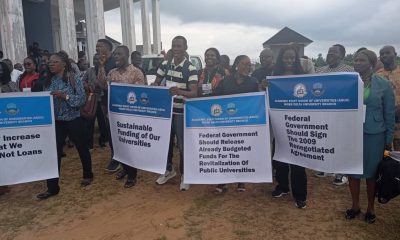
ASUU-NDU protest against FG loans, unpaid salaries,Non-Implementation of agreements …..says loans is generational slavery
-
 Business & Economy1 year ago
PC-NCG Issues Disclaimer on Purported Nigerian Coast Guard National Orientation Exercise In Anambra State
-
 Entertainment2 years ago
Jubilation galore as Parishioners of CKC Kurudu celebrate their cultural heritage ….FG should exploit our Cultural heritage to unite Nigerians-Rev Fr Dim
-

 Sports8 months ago
Bayelsa-born ex-football star’s son, Opuama donates spike shoes to Athletics Association
-

 General News2 years ago
Reps hold public hearing on FMC Ugwuaji Awkunanaw
-
 Law & Crime1 year ago
Legal practitioner raises alarm over threat to his life by CSP Muhammed Abdulkareem
-
 General News2 years ago
Celebration galore as UDA Successfully Elected New Exco ……I will digitalize processes that will raise UDA to greater height -Comr. Okejiri