
Law & Crime
Killing of Nigerians in South Africa,the Urgent Need for a ew Diplomatic Doctrine

By Ignatius Okorocha,Abuja
The Human Rights Writers Association of Nigeria (HURIWA) expresses deep concern and strong condemnation over the recurring killings, harassment, and reported abuse of Nigerian nationals in South Africa, following fresh incidents that led to the deaths of Amaramiro Emmanuel and Ekpenyong Andrew under circumstances involving South African security operatives.
These latest tragedies are not isolated events. They form part of a disturbing and persistent pattern of xenophobic violence, discriminatory treatment, and alleged extrajudicial actions targeted at Nigerians living in South Africa and other parts of Africa. This situation is unacceptable, unjustifiable, and a gross violation of the fundamental right to life and human dignity guaranteed under international humanitarian rights law; the African Charter on Human and Peoples rights and a breach of the diplomatic friendship between Nigeria and South Africa. These incessant attacks and mass murders of Nigerians in xenophobic violence are absolutely unacceptable. It is either that the Nigerian government takes steps to sanction South Africa through diplomatic disengagement immediately or the organised civil rights community would be left with no option but to embark on nationwide protests against SOUTH AFRICA and businesses with South African interests in Nigeria.
According to available reports, Amaramiro Emmanuel reportedly died on April 20 after sustaining injuries allegedly inflicted by personnel of the South African National Defence Force (SANDF), while Ekpenyong Andrew, who was arrested following an encounter with metro police officers, was later confirmed dead at a Pretoria mortuary under unclear circumstances. These incidents demand urgent, transparent, and independent investigations by South African authorities, including full accountability for all individuals found culpable.
HURIWA notes with concern that repeated assurances from South African authorities have not translated into a lasting end to violence and profiling of Nigerians. This recurring failure raises serious questions about the effectiveness of existing diplomatic engagements and the protection mechanisms available to Nigerian citizens abroad.
We therefore state as follows:
1. Nigeria Must Recalibrate Its Foreign Policy on Reciprocity
Nigeria must urgently review its diplomatic doctrine to reflect the principle of reciprocity and mutual respect. Countries that consistently fail to guarantee the safety, dignity, and rights of Nigerian citizens should not continue to enjoy unqualified diplomatic privileges.
HURIWA believes that diplomacy must not be passive in the face of repeated killings of Nigerians. A firm, strategic, and interest-driven foreign policy is now necessary to protect national dignity and citizen security.
2. Immediate Diplomatic Disengagement with South Africa
We call on the Federal Government of Nigeria to immediately summon the South African High Commissioner in Abuja to demand clear explanations, actionable commitments, and time-bound measures to stop the killings and abuses of Nigerians without which the diplomatic relationship should be frozen in the next 48 hours indefinitely.
Nigeria must also insist on full transparency in ongoing investigations and ensure that victims and their families receive justice without delay.
3. Consideration of Strong Diplomatic Measures
While HURIWA supports peaceful diplomacy, we stress that continued inaction or weak responses will embolden further attacks. Nigeria must be prepared to consider all lawful diplomatic options, including a comprehensive review of bilateral relations with South Africa, should these killings persist without accountability.
4. Reform of Nigeria’s Diaspora Protection Institutions
HURIWA expresses concern over the apparent inefficiency of institutions mandated to protect Nigerians abroad, particularly the Nigerians in Diaspora Commission (NIDCOM). There is an urgent need for structural reform, institutional strengthening, and leadership review to ensure competence, neutrality, and effectiveness.
Appointments to such sensitive agencies must be based strictly on merit, experience, and capacity—not political patronage. The protection of Nigerians abroad must never be reduced to partisan politics or public relations exercises.
5. End to the Normalisation of Xenophobic Violence
The continued stereotyping and profiling of Nigerians as criminals in parts of South Africa and elsewhere is dangerous and unacceptable. Such narratives fuel hostility and justify violence against innocent people. Governments across Africa must collectively reject xenophobia in all its forms and enforce strict accountability for perpetrators.
6. Call for African Solidarity Based on Justice
HURIWA reiterates that African unity must not be built on silence in the face of injustice. True Pan-Africanism requires mutual respect, protection of human rights, and equal treatment of all African citizens regardless of nationality.
Nigeria, as a leading African nation, must take a principled stand that protects its citizens while promoting continental stability.
CONCLUSION
HURIWA extends its condolences to the families of the deceased and calls for immediate action to prevent further loss of Nigerian lives abroad. The time for cautious and reactive diplomacy is over. Nigeria must act decisively, firmly, and strategically to protect its citizens wherever they are in the world.
We demand justice, accountability, and urgent reforms—both within South Africa and within Nigeria’s diplomatic and diaspora protection framework.







Law & Crime
Former Speaker challenges substition of his name with Suleiman as winner of APC primary election at Minna Fed.High Court

By Uthman Baba-Naseer,Minna
The Former Speaker of the Niger State House of Assembly,Rt Hon. Adamu Usman,has filed a lawsuit before the Minna Federal High Court Division challenging his substitution of his name with that of Adamu Suleiman by the All Progressive Congress (APC), as the winner of the Edati,Lavun/ Mokwa Federal Constituency 16th,May 2026,APC Primary Election.
The Pre-election lawsuit on the resumed hearing of the matter before Justice Mohammed Barau Saidu,,the Counsel to the Plaintiff,Philip Friday Ada Omachi, submitted that all the respondents in the matter were duly served with the originating summons
The Counsel further told the Court that the Counsel to the first respondent informed the Court that he was served with the motion on notice as filed by the counsel to the plaintiff stating that she is within the timeframe to respond praying the Court to adjourn to a new date for her to respond.
Joined in the lawsuit are the All Progressive Congress (APC),Adamu Suleiman and the Independent National Electoral Commission (INEC),
Adamu Usman,who was also one time Attorney General and Commissioner for Justice in Niger State,approached the Court praying the Court to seek whether by the combined interpretation of sections 84 (1), (2),85 and 86 of the electoral Act,2026, and Articles 2,7 of the Constitution of the first respondent,the All Progressive Congress,2022 is bound to by its Constitution procedure for the conduct of direct and Consensus mode of primaries.
He also prayed the Court to determine whether the APC guidelines allow the nomination of a Candidate for the 2027 General Elections,in the nomination to contest for the elections into the House of Representatives,Lavun/Mokwa/ Edati. Federal Constituency of Niger State at the 2027 general elections.
Similarly, the Plaintiff prayed the Court to whether by the combined interpretation of relevant sections of the Electoral Act, 2026: and relevant Article of the first respondent,the APC procedure for the conduct of direct consensus mode of primaries and the party guidelines for the nomination of Candidates for the 2027 general elections, the submission of the name of the second respondent Adamu Suleiman Pataugi by the first respondent the APC to the third respondent the INEC as her Candidate for the Edati, Lavun and Mokwa Federal Constituency of Niger State in the coming general elections “ he has not withdrawn his candidacy, is null,void and ineffective”
Adamu Usman,then prayed the Court to nullify the submission of the name of the second respondent Adamu Suleiman, by the first respondent the APC to the third respondent the INEC as the Candidate to the third respondent for Edati,Lavun and Mokwa Federal Constituency of Niger State in the coming general election,” when the plaintiff who emerged winner of the Primary Election by Consensus as contained in the APC result sheet is not dead and when he has not withdrawn his candidacy,is null,void and of no effect whatsoever”
He further prayed the Court to accept,recognize and publish only the name of the Plaintiff as the lawful Candidate of the first respondent the APC for election as member of House of Representatives for Edati,Lavun and Mokwa Federal Constituency of Niger State,for the purpose of contesting the 2027 general election.
“We submit therefore My Lord that,there can be nothing more arbitrary and capricious than the act of the first respondent summiting,forwarding the name of the second respondent to the third respondent as its candidate with regards to an election conducted by her which was clearly won by the plaintiff.
“Especially that the plaintiff has neither withdrawn from the election nor has been pronounced dead.
“ The honourable Court is therefore urged with all humility, that on the strength of the facts deposed to in the plaintiff’s affidavit in support of the originating summons, the arguments canvassed herein in support,the documents exhibited before the Court and the law in support thereof,to uphold the plaintiff’s claim and grant the reliefs sought” he submitted.
Justice Muhammad Barau Sa’idu, after listening to the submissions of the Plaintiff Attorney,adjourned the case to the fourteenth of October 2026 for the adoption of motion on notice and hearing of the suit.
By Our Correspondent
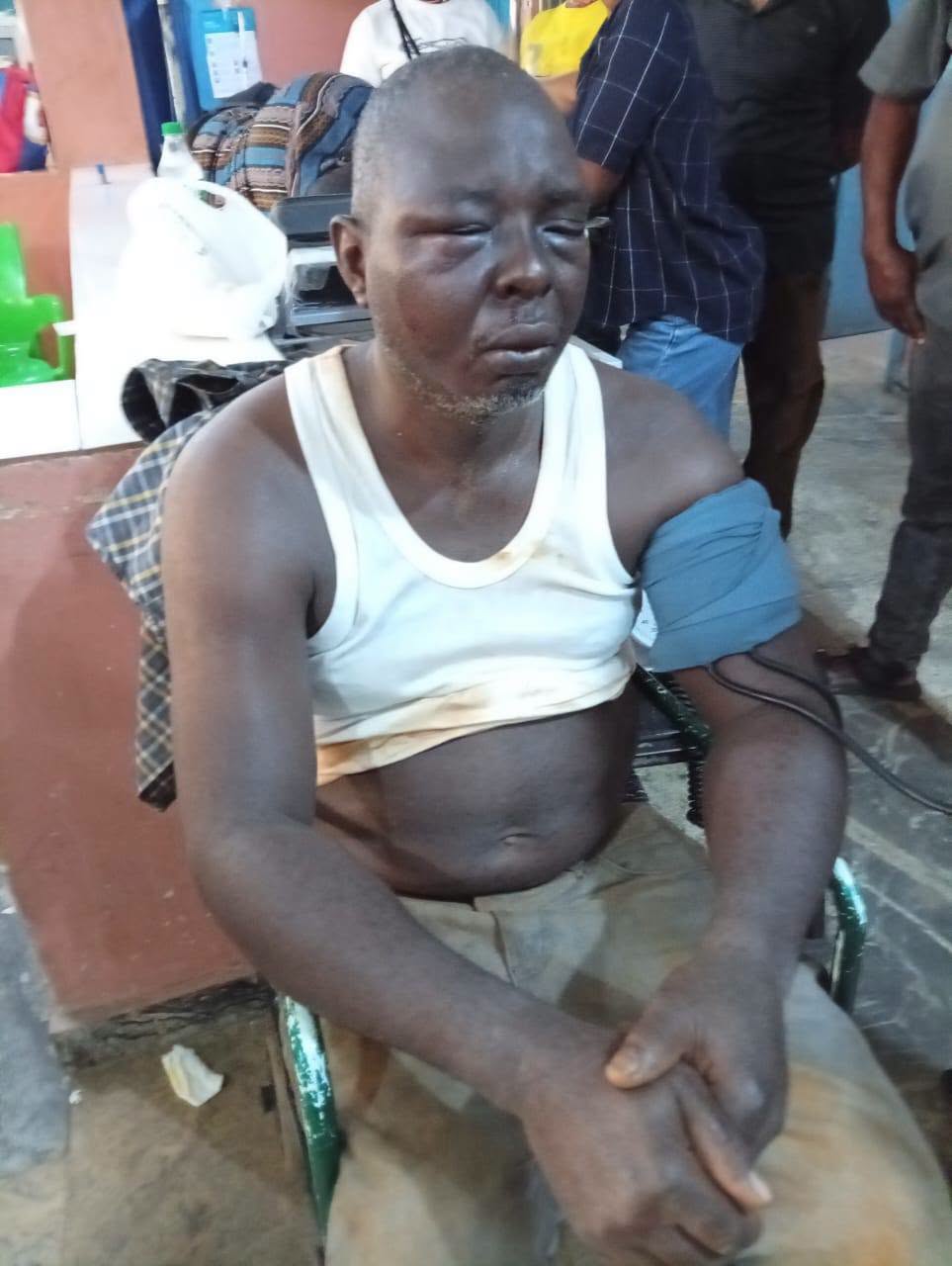
There is palpable tension among Delta residents following an alleged death of a deputy Director in Asaba, the state capital.
The tension according to an eye-witness account was as a result of the death of one Mr Unity Ekpevbughe Adeda, a Deputy Director in the state Ministry of Secondary Education, after an alleged assault at the office of the Commissioner for Secondary Education.
Delta State Police Command said it had arrested one suspect and launched a manhunt for two others allegedly linked to the incident.
The police spokesman, SP
Bright Edafe, disclosed this in a statement issued on Friday, September 25, 2026, identifying the suspects as Enos Attah, Oputa Okestine and Lucky Adoh.
According to Edafe, the command swung into action immediately after receiving complaints over the incident and arrested Adoh, while efforts were ongoing to apprehend the other two suspects.
“The command, upon receipt of the complaints, immediately swung into action and arrested one of the suspects, Lucky Adoh, while serious manhunt for the other suspects is ongoing,” the statement said.
Reports surrounding the incident indicated that Adeda was involved in a disagreement with some staff members of the ministry before the matter was taken to the office of the Commissioner for Secondary Education, Dr Kingsley Ashibogwu.
It was alleged that the disagreement escalated at the commissioner’s office, where Adeda was reportedly assaulted by individuals said to be attached to the commissioner.
Adeda was subsequently said to have been taken to hospital, where he received treatment and was discharged. His condition was, however, reportedly said to have deteriorated before his eventual death.
The police were yet to establish the cause of the death and have not confirmed that the alleged assault was responsible for it.
Following the development, the Commissioner of Police, Delta State Command, CP Samuel Erale, directed the homicide section of the State Criminal Investigation Department to commence a detailed investigation into both the alleged assault and Adeda’s subsequent death.
The police said investigators would examine all available evidence, including relevant video footage, eyewitness accounts, medical records and the actions of all persons connected with the incident.
The investigation, according to the command, is expected to establish th circumstances surrounding the confrontation and determine whether any individual has a case to answer.
The development has reportedly generated concern among civil servants in Asaba, with workers seeking clarification over the circumstances surrounding the confrontation and the death of the senior education official.
Reports suggesting that activities at the state secretariat were disrupted following the incident could not be independently verified as of the time of filing this report.
Erale assured Adeda’s family and members of the public that the police would not shield anyone found culpable, regardless of the person’s position or status.
He also pledged that the investigation would be conducted professionally and transparently, without interference, while urging members of the public to refrain from drawing conclusions before the facts of the case are fully established.
The police commissioner expressed condolences to Adeda’s family and reiterated the command’s commitment to pursuing justice without fear or favour.
The identities and roles of the other persons allegedly involved, as well as the precise circumstances that led to Adeda’s death, are expected to become clearer as the police investigation progresses.

By David Owei
The South-South Youths Initiative (SSYI) has condemned calls for the removal of the Commandant-General of the Nigeria Security and Civil Defence Corps (NSCDC), Prof. Ahmed Abubakar Audi, following the death of 37 suspected miners in Niger State.
The youths in a statement signed by their their National President, Imeabe Saviour Oscar, described the calls as “misplaced, unjust and politically motivated.”
Oscar said it was wrong to hold the NSCDC boss responsible for an alleged operational breach committed by a state commandant.
According to the group, the NSCDC operates a defined administrative structure in which state commandants report directly to zonal commanders, who are assistant commandant-generals.
He said the various state commands also have legal, intelligence, administrative and operational departments responsible for their day-to-day activities.
Oscar further argued that Audi had previously issued circulars warning personnel against detaining suspects beyond the constitutionally prescribed period.
He said: “It is on record that the Commandant General has issued several circulars warning all formations against detaining suspects beyond 24 hours, in line with the Constitution.
“Specifically, circulars to this effect were issued in 2022 and 2024 and widely circulated to all State Commands.”
Oscar described as “wrong, unjust and mischievous” attempts to demand Audi’s removal over an alleged offence committed by a state commandant.
“It is therefore wrong, unjust and mischievous for individuals or groups to call for the head of the Commandant General for an offence allegedly committed by a State Commandant”, he said.
The South-South youths also linked the calls for Audi’s removal to the corps’ operations against illegal mining, alleging that “some powerful illegal miners and their collaborators” were behind the campaign.
The group said that Audi had previously contributed to efforts that helped increase crude oil production in the Niger Delta from about 800,000 barrels per day to approximately 1.6 million barrels per day.
Oscar also said that the Federal Government generated about N40bn from mining activities in 2025, attributing the development largely to operational reforms and measures introduced under Audi.
“The Commandant-General should be allowed to repeat what he did in the Niger Delta in the mining sector,” he said.
It called on the Presidency, the Minister of Interior and Nigerians to disregard what it described as “sponsored calls” for Audi’s removal and instead support him in his efforts to tackle illegal mining.
“Prof. Audi should be supported and encouraged to do more for the nation,” the statement added.

2027 : PDP Candidate re-connects Zanchita community with National grid after two years of darkness
By Uthman Baba-Naseer,Minna It was a celebration galore in Zanchita community in gbako local government area of Niger State,as former...

Insecurity ,displacement alters distribution of Christian communities in Niger state to 3,417,636
By Uthman Baba -Naseer,Minna Niger state Christian leaders have disclosed that out of the Seven million, four hundred and seventy...


Death of 37 suspected illegal Miners:11 member of Judicial commission of inquiry set for inauguration on Tuesday by govrrnor Bago
BY UTHMAN BABA-NASEER,MINNA Sequel to the constitution of the Judicial commission of inquiry by the governor Mohammed Umar Bago, to...

Thanksgiving Service Heralds Bayelsa 30th Anniversary Celebration
By Dabid Owei Bayelsa State Government on Sunday held an inter-denominational thanksgiving service to kick-start activities marking the 30th anniversary...

Former Speaker challenges substition of his name with Suleiman as winner of APC primary election at Minna Fed.High Court
By Uthman Baba-Naseer,Minna The Former Speaker of the Niger State House of Assembly,Rt Hon. Adamu Usman,has filed a lawsuit before...


SWAN President to Storm Bayelsa for 30th Anniversary Celebration, Igali Confirms*
By David Owei The President of the Sports Writers Association of Nigeria (SWAN), Benjamin Isaiah, has been confirmed among dignitaries...

Panic Grips Delta Residents as Deputy Director Dies After Alleged Assault
By Our Correspondent There is palpable tension among Delta residents following an alleged death of a deputy Director in Asaba,...

SPC 2026 Annual Wkshop: Journalists Deliberate on Legislative Oversight, Budget Integrity,Media Collaboration
By Our Correspondent The 2026 Capacity-Building Workshop of the Senate Press Corps will focus on strengthening legislative oversight and media...

The Day the Church ‘Blessed’ the Media
By Emmanuel Nnadozie Onwubiko For a media practitioner and a Catholic, Thursday, September 24, 2026, will remain a remarkable day....

As ‘Ọsọ Marwa’ Sweeps Across Nigeria’s Forests
By Emmanuel Nnadozie Onwubiko Today’s reflection is on a new and increasingly significant battlefront opened by the National Drug Law...
-
 Politics1 year ago
Gov Okpebholo moves to end Cultism *Threatens action against leading cult groups *Vows to demolish more cult houses in Edo State
-
 Politics1 year ago
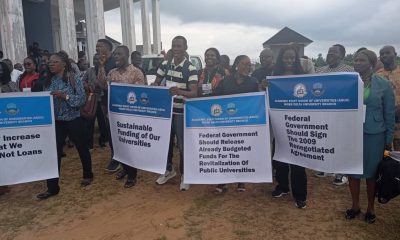
ASUU-NDU protest against FG loans, unpaid salaries,Non-Implementation of agreements …..says loans is generational slavery
-

 Business & Economy1 year ago
PC-NCG Issues Disclaimer on Purported Nigerian Coast Guard National Orientation Exercise In Anambra State
-
 Entertainment2 years ago
Jubilation galore as Parishioners of CKC Kurudu celebrate their cultural heritage ….FG should exploit our Cultural heritage to unite Nigerians-Rev Fr Dim
-

 Sports7 months ago
Bayelsa-born ex-football star’s son, Opuama donates spike shoes to Athletics Association
-

 General News2 years ago
Reps hold public hearing on FMC Ugwuaji Awkunanaw
-
 Law & Crime1 year ago
Legal practitioner raises alarm over threat to his life by CSP Muhammed Abdulkareem
-
 General News2 years ago
Celebration galore as UDA Successfully Elected New Exco ……I will digitalize processes that will raise UDA to greater height -Comr. Okejiri