
Opinion
Diri’s Leadership, Contribution To Knowledge Exceptional – Shettima, Mutfwang, UNILAG *Varsity Endows Chair, Presents Book On Bayelsa Gov *Diri: It’s Motivation For Greater Service

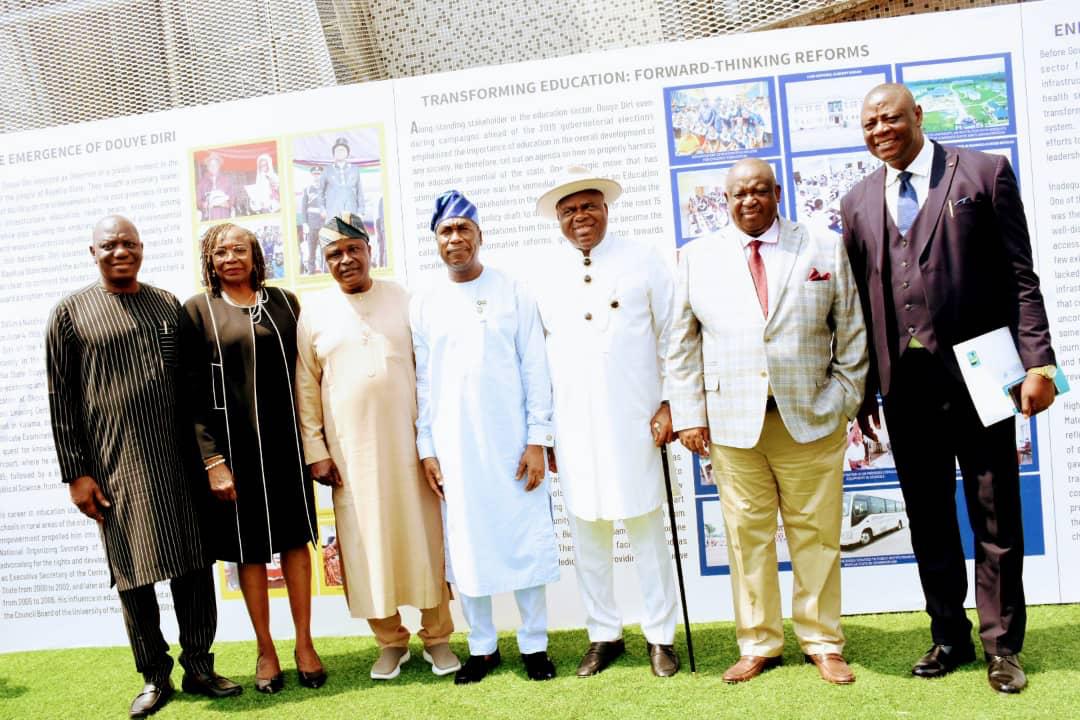
By David Owei, Yenagoa.
Vice President Kashim Shettima, Plateau State Governor, Caleb Mutfwang, and Vice Chancellor of the University of Lagos, Prof. Folasade Ogunsola, have lauded Governor Douye Diri’s remarkable strides in the education sector through transformative initiatives.
They described his administration’s reforms and investments in the sector as visionary in driving a knowledge-based economy.
They gave the commendation at the formal Book Presentation/Launch, Public Lecture and Institution of a Professorial Chair on Leadership and Good Governance in honour of Senator Diri at the University of Lagos on Wednesday.
They said his book, “Leadership Chronicles of Governor Douye Diri” which was edited by Prof. Hope Eghagha and Sola Ojewusi under the UNILAG Consult, and the endowment of a professorial chair in the Department of Political Science were not only tributes to the Bayelsa governor but also a masterclass in leadership.
Shettima, who was represented by the deputy governor of Lagos State, Dr Obafemi Hamzat, said the book captured the spirit of Diri’s leadership style, which he said was “refreshing, deliberate and deeply attuned to the oaths and aspirations of his people.”
Hamzat, who also spoke on behalf of the Lagos State Governor, Babajide Sanwo-Olu, noted that Diri’s stewardship in Bayelsa in about six years had been characterised by a rare blend of compassion and competence and demonstrated that meaningful progress could be achieved through dialogue, inclusiveness and relentless effort.
“l congratulate Governor Douye Diri on this well-earned honour. This celebration is a testament to your unwavering service, examplary character and steadfastness to the principles of good governance. Bayelsa and Nigeria stand proud of your achievements and the inspiring values you uphold.
“This book captures the spirit of his leadership, core values and courage that define his path. It reminds us that leadership is not about self- aggrandisement but about the lasting impact we forge through lifting our communities and fostering peace and creating opportunities where none existed. It is more than a tribute in leadership transformation that he brings to the lives of his people.”
Shettima expressed the hope that the book would serve as a beacon to inspire leadership across the country to lead compassionately and courageously.
The keynote speaker and Governor of Plateau State, Caleb Mutfwang, described Diri as a great Nigerian,
who has demonstrated in spirit and in letter the essence of leadership.
Mutfwang congratulated the Vice Chancellor and UNILAG Consult for documenting Diri’s achievements, which he described as a befitting and prestigious honour.
According to him, the Bayelsa governor has demonstrated quality leadership in virtually every facet of development, particularly in areas of education, healthcare delivery, security and the ongoing effort to light up the state through its independent power project.
He equally stressed the need for Bayelsans, the Ijaw nation and the South South to unite and foster peace and development in the region.
“Several people have had the opportunity to be in leadership and have been forgotten. But l know that when Governor Diri vacates the scene, the drums will still be beating.”
In her remarks, the Vice Chancellor, Prof Folasade Ogunsola, said the book provided an opportunity to examine ideas, experiences and reflections of a leader serving in one of Nigeria’s most complex and dynamic regions.
She noted that the Bayelsa governor’s public life offered valuable insights into governance, conflict management and search for peace and development in the Niger Delta.
Ogunsola said the professorial chair in honour of Diri aligned with the institution’s mission to be a global centre of excellence in education, research and innovation.
She commended the Bayelsa governor for investing in knowledge as it was one of the most enduring contributions any public servant can make to society.
Responding, Governor Diri said the honour would spur him and his team to work harder in service of the state.
He noted that the recognition was not only for him but was for the entire Bayelsa, and expressed appreciation to the VC, the institution’s management and the editorial team for acknowledging and compiling his administration’s achievements.
“Those in positions of authority must be accountable to the people and earn their trust without which confidence in governance will inevitably wane. It is in that spirit that l accept this book, which seeks to honour not only me but the entirety of Bayelsa State.
“I accept to support the professorial chair and encourage scholarship that would be beneficial not only to Bayelsa State but also to Nigeria.”
The book was reviewed by veteran journalist and anchor of the programme, Journalists Hangout, on Television Continental (TVC), Mr. Babajide Kolade-Otitoju.
More than one billion naira was pledged at the event as donations by national and state assembly members, government agencies, corporate organisations, members of the state executive council, local governments, private individuals and youth bodies among others.
Dignitaries at the well-attended event included serving and former national and state assembly members as well as Senator Sunday Katung representing Kaduna South, the immediate past deputy governor and chairman, Bayelsa Elders Council, Rear Admiral Gboribiogha John-Jonah (rtd).
Also present were the National Chairman of the Pan Niger Delta Forum, Dr. Boladei Igali, Chairman/CEO of De Wayles Group of Companies, High Chief Victor Egukawhore, who was the chief launcher, CEO of Pelfaco Limited, Chief Gesi Asamaowei, CEO of Century Energy, Mr Ken Etete as well as the Managing Director, Niger Delta River Basin Development Authority, Ebitimi Amgbare, and former Managing Director, Niger Delta Development Commission, Chief Ndutimi Alaibe.
Others were the chairman, Bayelsa State Council of Traditional Rulers, King Bubaraye Dakolo, former All Progressives Congress governorship candidate, Chief David Lyon, Managing Director, Monimichelle Construction Limited, Mr. Ebi Egbe as well as the Ijaw Ladies Association and various Niger Delta and Ijaw groups based in Lagos.
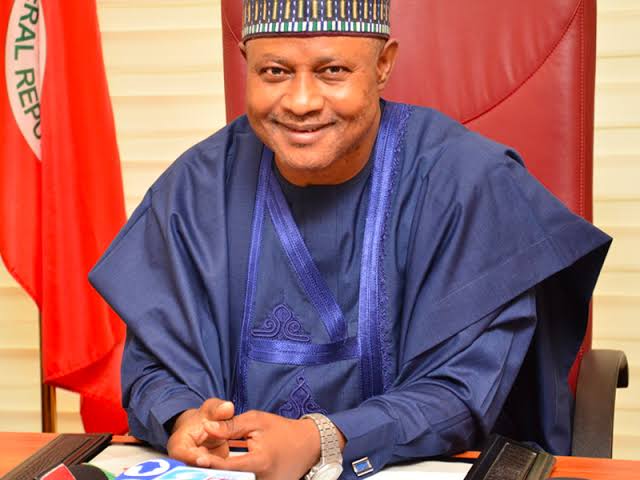
By Abdullateef Bamgbose
There are political relationships that survive the test of time, and there are others that collapse under the weight of ambition, power and competing interests. The relationship between Governor Uba Sani of Kaduna State and his predecessor, Mallam Nasir El-Rufai, offers an interesting illustration of how political alliances can evolve, particularly when former associates find themselves on opposite sides of the political divide.
Governor Uba Sani, despite having the full machinery of government at his disposal, has refused to dignify hired writers and latter-day friends of the former Kaduna State governor with unnecessary responses.
Recent attempts to portray him as a traitor and betrayer over the continued detention and legal challenges confronting his predecessor defy logic, particularly for those familiar with his political antecedents and the history of his relationship with El-Rufai.
The question is simple: What could Uba Sani have done differently under the circumstances in which he found himself?
As a law-abiding citizen and an experienced legislator, Governor Uba Sani has consistently advocated justice, the rule of law and the separation of powers. His decision not to interfere in matters involving law enforcement institutions has, however, provided ammunition for political opponents and sympathisers of the former governor to question his loyalty and demand his political downfall.
But political loyalty should not be confused with an obligation to compromise the rule of law.
A similar debate emerged in Kogi State when Governor Usman Ododo faced criticism over allegations that he was shielding his predecessor, former Governor Yahaya Bello, after the Economic and Financial Crimes Commission (EFCC) declared Bello wanted over alleged financial misconduct during his administration.
Although the circumstances surrounding the two situations differ, they raise an important question about the limits of political loyalty when constitutional responsibilities and the independence of law enforcement institutions are involved.
THE UNTOLD STORY OF UBA SANI AND EL-RUFAI
Governor Uba Sani has never denied the role El-Rufai played in his political journey. However, he has equally refrained from publicly highlighting his own contributions to El-Rufai’s political emergence, including the political battles that threatened the former governor’s position as Minister of the Federal Capital Territory (FCT).
For those familiar with the political history of that period, Uba Sani’s contributions to El-Rufai’s political survival deserve recognition.
Uba Sani, then a pro-democracy activist and Coordinator of the Campaign for Democracy in the North, was a close associate of the late Chief Gani Fawehinmi, one of Nigeria’s most prominent human rights advocates.
At a time when El-Rufai faced criticism from human rights activists over allegations of human rights abuses and demolitions of properties in the FCT, Uba Sani reportedly played a significant role in facilitating engagements between the former minister and activists in Lagos.
He was said to have arranged meetings aimed at addressing the grievances and changing the perception of El-Rufai among influential figures in the human rights community.
Another defining moment came during El-Rufai’s ministerial screening, when his allegation that some senators demanded bribes generated controversy and threatened his relationship with the National Assembly.
Uba Sani’s political connections and interventions were among the factors said to have helped navigate the crisis.
Unknown to many, Uba Sani had already developed his own political network in Kaduna State before his reported attempt to contest for the House of Representatives in 2003.
That political structure, built through years of political engagement and grassroots mobilisation, later became an important instrument in the political alliance that supported El-Rufai’s governorship ambition.
El-Rufai came into Kaduna politics without the extensive grassroots political network possessed by some established political actors in the state. Uba Sani reportedly deployed his machinery and mobilised influential stakeholders, including former commissioner and Secretary to the State Government, Lawal Ismail Yakawada, Suleiman Hunkuyi and other political figures, to support El-Rufai’s emergence.
Ironically, some of those who contributed to El-Rufai’s political success subsequently found themselves at odds with his administration.
The controversies surrounding land revocations and demolitions involving political associates, including those linked to Hunkuyi and Yakawada, became part of the disagreements that characterised the former administration.
If political betrayal is the standard by which relationships should be judged, would it be unreasonable to ask whether El-Rufai also betrayed some of the very political allies who helped build his political platform in Kaduna?
The question deserves consideration.
FROM POLITICAL ALLIANCE TO GOVERNANCE
When Uba Sani assumed office on May 29, 2023, succeeding El-Rufai, he inherited a state with enormous development opportunities, but also significant challenges involving insecurity, communal divisions, infrastructure deficits, poverty and the relationship between government and citizens.
Rather than allow the disagreements surrounding his predecessor to dominate his administration, Uba Sani began projecting reconciliation, inclusion and a broader political understanding among the state’s diverse communities.
His approach was anchored on the need to heal political wounds, restore confidence in government and strengthen relationships among ethnic and religious groups.
Kaduna, with its strategic position in Northern Nigeria, has historically been an important centre of commerce, education, agriculture and political engagement. However, years of insecurity and communal tensions had affected economic activities and relationships among communities.
The governor’s emphasis on peacebuilding and inclusive governance has therefore become one of the defining themes of his administration.
His SUSTAIN Agenda, which covers safety and security, infrastructure, institutional strengthening, trade and investment, agriculture, human capital development and citizen engagement, provides the framework for his development priorities.
INFRASTRUCTURE: CONNECTING COMMUNITIES AND OPENING ECONOMIC OPPORTUNITIES
One of the major areas of attention under the Uba Sani administration is road infrastructure, particularly the need to connect rural communities with urban markets.
According to the state government’s 2025 performance report, the administration had initiated approximately 140 road projects covering about 1,335 kilometres, with 64 completed by the end of that year.
These projects are intended to improve transportation, facilitate agricultural activities and reduce the difficulties faced by residents travelling between communities.
The administration has also continued work on some inherited projects, including the Kaduna Bridge linking Kabala Costain to Aliyu Makama Road and the Rabah Road-Rigasa Train Station expressway.
The Kaduna Light Rail project, designed to improve urban transportation, is another major component of the state’s infrastructure ambition. Its proposed corridors include Rigachikun-Sabon Tasha and Millennium City-Rigasa.
The administration has also pursued the development of bus terminals and a mass transportation system, including compressed natural gas-powered buses and subsidised transportation services.
The redevelopment of Panteka Market is another intervention aimed at improving the trading environment for artisans and small businesses.
These projects are important not merely as physical infrastructure but also as potential drivers of commercial activities, employment and economic growth.
HEALTHCARE: A NEW DIRECTION FOR MEDICAL SERVICES
Healthcare delivery is another sector in which the administration has made significant investments.
One of the most prominent projects is the 300-bed Bola Ahmed Tinubu Specialist Hospital in Kaduna, which was commissioned by President Bola Tinubu on June 19, 2025.
The completion of the hospital brought to an end a project that had remained unfinished for approximately 16 years after its commencement in 2009.
Beyond the specialist hospital, the administration embarked on upgrading the state’s 255 primary healthcare centres to Level Two facilities, with the objective of bringing improved medical services closer to rural communities.
The government also reported the rehabilitation and remodelling of general hospitals across the three senatorial districts.
Other interventions include the procurement of medical equipment, distribution of essential medicines, improvement of pharmaceutical storage facilities and strengthening of emergency healthcare services.
In its December 2025 budget presentation, the administration reported that all 255 primary healthcare centres had attained Level Two status and that 15 general hospitals had been renovated, with five completed.
These interventions are aimed at reducing the pressure on tertiary hospitals and improving access to maternal healthcare, immunisation, diagnosis and treatment of common illnesses.
EDUCATION AND HUMAN CAPITAL DEVELOPMENT
For a state with Kaduna’s population and strategic importance, education remains a critical instrument for sustainable development.
Governor Uba Sani’s administration has pursued interventions involving classroom construction, school rehabilitation, teacher training and the expansion of access to basic and secondary education.
The state government reported the construction of 736 classrooms and renovation of 1,220 others during its 2025 performance review. It also announced that more than 300,000 out-of-school children had returned to classrooms during the year.
The administration has equally invested in vocational and technical education through the establishment of the Kaduna State Institute of Vocational Training and Skills Development.
The institution is designed to equip young people with practical skills in areas such as information technology, mechatronics, renewable energy and other technical disciplines.
The government’s engagement with technology companies, including Microsoft and Google, has also been presented as part of its effort to improve digital skills and prepare young people for emerging employment opportunities.
Another significant policy was the reduction of tuition fees in state-owned tertiary institutions through an executive order issued at the beginning of the administration.
The objective was to reduce the financial burden on parents and expand access to higher education.
AGRICULTURE: RESTORING THE RURAL ECONOMY
Agriculture remains central to Kaduna State’s economic identity, providing livelihoods for thousands of households across its 23 local government areas.
The Uba Sani administration has therefore placed considerable emphasis on agricultural development, mechanisation, fertiliser distribution and the expansion of agro-industrial activities.
According to figures presented by the governor, the state’s agricultural allocation increased from approximately N1.48 billion in 2023 to N74.2 billion in 2025.
The government also reported the distribution of more than 900 trucks of fertiliser to farmers and the enrolment of over 100,000 smallholder farmers in crop insurance schemes.
One of the administration’s major agricultural initiatives is the Special Agro-Industrial Processing Zone, supported by the African Development Bank.
The project is intended to move Kaduna’s agricultural economy beyond the production of raw commodities to processing, value addition, industrialisation and export development.
The development of the agricultural quality assurance centre is another initiative designed to improve the quality of agricultural produce and enhance competitiveness in domestic and international markets.
For farmers, the real test of these initiatives will be their impact on productivity, access to markets, food prices and household incomes.
INVESTMENT, EMPLOYMENT AND SOCIAL INCLUSION
Kaduna’s economic potential extends beyond agriculture. Its strategic location, industrial history, human resources and access to major commercial routes provide opportunities for investment in manufacturing, energy, transportation and services.
The governor has said that his administration attracted 23 investments valued at more than $743 million between 2023 and 2025, with an additional investment pipeline estimated at $2.77 billion.
These figures, announced by the governor, reflect the administration’s effort to attract private-sector participation in the state’s economy.
The government has also reported deploying more than N18 billion in targeted support for households, farmers and small businesses.
Its financial inclusion programme, which reportedly facilitated the opening of more than 2.5 million bank accounts for underbanked citizens, is another effort aimed at expanding access to formal financial services.
The broader objective is to ensure that economic development reaches beyond major urban centres and benefits ordinary residents.
THE POLITICS OF INCLUSION AND THE 2027 QUESTION
Beyond infrastructure and economic development, Uba Sani’s political approach has increasingly been defined by his emphasis on reconciliation and inclusion.
His administration has sought to establish a different relationship between government and communities, particularly in areas affected by years of political and communal disagreements.
This approach is particularly significant in a state as politically sensitive and ethnically diverse as Kaduna.
The insistence by some sympathisers of El-Rufai that Uba Sani must be politically punished for refusing to interfere in his predecessor’s legal challenges raises fundamental questions about the meaning of political loyalty and the limits of executive power.
Should a governor compromise the independence of law enforcement institutions to demonstrate personal loyalty to a predecessor?
Or should he allow the relevant institutions to discharge their constitutional responsibilities without political interference?
These are questions that deserve serious consideration.
Nevertheless, the governor cannot escape public scrutiny merely because he has adopted a different political approach from his predecessor. His administration must be assessed on measurable outcomes, particularly security, employment, education, healthcare, infrastructure and the welfare of citizens.
The 2027 governorship election will provide an opportunity for the people of Kaduna State to evaluate his record and decide whether his administration deserves another mandate.
Will the electorate prefer the direction of reconciliation and inclusion being projected by the present administration, or will competing political interests offer an alternative vision for the state?
The answer belongs to the people of Kaduna State.
A CHILD OF DESTINY
For those who know the political history of Uba Sani, his story goes beyond his disagreement with a former political associate.
It is the story of a man who built political relationships, participated in democratic struggles, served in government, entered the National Assembly and eventually became governor of one of Nigeria’s most politically significant states.
It is also a reminder that political relationships are not always permanent and that those who help others ascend to positions of power may eventually find themselves on opposite sides of political history.
Uba Sani’s greatest political test, however, is not whether he can withstand criticism from supporters of his predecessor. It is whether he can translate his development promises into sustainable improvements in the lives of ordinary Kaduna residents.
The roads must remain usable, hospitals must provide quality services, schools must produce better learning outcomes, farmers must enjoy improved incomes, and communities must be able to live without fear.
These are the standards by which governance should ultimately be judged.
For now, the political debate surrounding Uba Sani and El-Rufai continues. But beyond the personalities, political alliances and accusations of betrayal, the future of Kaduna State remains the most important consideration.
That, perhaps, is the real test of a child of destiny.
Abdullateef Bamgbose
An Associate Editor
With Aljazira Newspapers
Abuja
lateefbamgbose@gmail.com
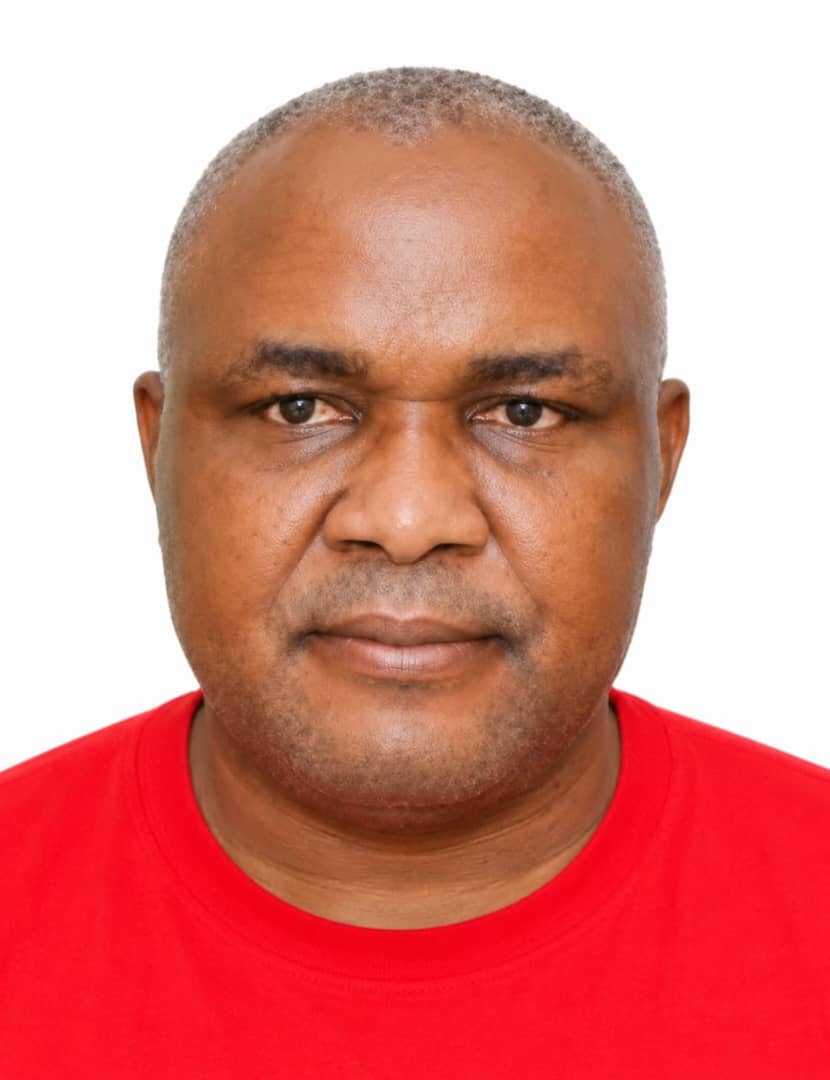
By Emmanuel Nnadozie Onwubiko
Nigeria’s war against illicit drugs has entered a more aggressive phase, with the National Drug Law Enforcement Agency (NDLEA) taking the battle to drug barons, international trafficking syndicates, clandestine laboratories and criminal financiers.
Since Brigadier-General Mohamed Buba Marwa (retd.) assumed leadership of the agency in January 2021, NDLEA has intensified intelligence-led operations, dismantled major drug networks, expanded arrests and prosecutions, and strengthened drug abuse prevention, counselling and rehabilitation programmes.
Since Brigadier-General Mohamed Buba Marwa (retd.) assumed leadership of the agency in January 2021, NDLEA has recorded significant operational milestones, strengthened intelligence-led enforcement, expanded drug abuse prevention and rehabilitation programmes, and increased its engagement with international law enforcement partners.
Yet the scale of these achievements raises an equally important question: how much more could the agency accomplish if its operational capacity, financial resources and institutional independence were strengthened to match the enormity of the drug threat confronting Nigeria?
The answer is important because drug trafficking is no longer simply a law enforcement problem. It is a national security challenge, a public health crisis, a threat to young people, a source of criminal financing and a danger to the integrity of communities, borders and institutions.
The NDLEA’s performance under Marwa has demonstrated that determined leadership, intelligence, professionalism and inter-agency cooperation can produce results. The next challenge is to ensure that the institution is not constrained by inadequate funding, infrastructural deficiencies or bureaucratic limitations as it confronts increasingly sophisticated criminal networks.
A record of arrests, convictions and seizures
One of the most significant milestones of the Marwa-led NDLEA is the scale of enforcement activity recorded within five years.
According to figures released by the agency in January 2026, NDLEA arrested 77,792 drug offenders between 2021 and 2025, including 128 identified drug barons, secured 14,225 convictions and seized 14,847,486.34 kilogrammes of assorted illicit substances.
The figures represent a considerable escalation in the agency’s offensive against drug trafficking and reflect a strategy that increasingly targets major operators rather than concentrating solely on couriers and low-level offenders.
The arrest of drug barons is particularly significant because trafficking networks are often sustained by financiers, suppliers, logistics operators, warehouse owners, distributors and international collaborators who remain insulated from the consequences of the trade.
By pursuing suspects believed to occupy influential positions within trafficking chains, NDLEA has sought to disrupt the organisational structures that sustain the illicit drug economy.
The convictions also indicate that enforcement operations are increasingly being translated into judicial outcomes, although the agency must continue to strengthen prosecution, evidence management and inter-agency collaboration to ensure that arrests produce lasting consequences.
These milestones demonstrate that Nigeria’s anti-drug campaign has moved beyond sporadic interdictions towards a sustained nationwide offensive against drug production, trafficking and distribution.
Taking the fight to international cartels
Perhaps one of the most compelling achievements of the NDLEA under Marwa has been its increasingly sophisticated engagement with international drug networks.
Nigeria’s geographical position, commercial activities, aviation connections, maritime traffic and porous land borders make the country vulnerable to trafficking operations involving multiple jurisdictions.
The agency’s operations have increasingly reflected the understanding that international drug cartels cannot be defeated by routine checkpoint searches or isolated seizures. They require intelligence gathering, surveillance, coordinated raids, forensic investigation, international cooperation and the ability to identify the individuals and organisations controlling the criminal trade.
In May 2026, NDLEA announced the dismantling of a Nigerian-Mexican methamphetamine production syndicate following coordinated operations in Ogun and Lagos states.
The operation led to the shutdown of an industrial-scale clandestine laboratory described by the agency as the largest methamphetamine laboratory discovered in Nigeria, alongside the arrest of the alleged cartel kingpin, three Mexican technical experts and six other local collaborators.
The operation demonstrated the capacity of Nigerian investigators to penetrate sophisticated production networks involving foreign expertise, local collaborators and concealed manufacturing facilities.
The significance of such operations goes beyond the quantity of drugs recovered. The destruction of a production facility, arrest of its operators and disruption of its supply chain potentially prevent the criminal organisation from continuing production, recruiting collaborators and distributing its products.
It also sends a message to international criminal organisations that Nigeria is not an uncontested operating environment for their illicit enterprises.
The agency’s achievements in dismantling such networks should therefore be viewed as strategic security successes, particularly at a time when drug trafficking increasingly intersects with money laundering, cybercrime, organised violence and other criminal activities.
From drug seizures to financial warfare
Another important shift in NDLEA’s strategy under Marwa has been the growing emphasis on dismantling the financial foundations of drug trafficking.
For years, the traditional measure of drug enforcement success was largely determined by the volume of narcotics seized and the number of suspects arrested. But criminal organisations are capable of replacing confiscated consignments and recruiting new couriers if their financial structures, assets and sources of funding remain intact.
The NDLEA has increasingly recognised that the war against drug barons cannot be won by arresting couriers while allowing the financiers and beneficiaries to retain their wealth.
This explains the agency’s growing emphasis on asset tracing, forfeiture, financial investigations and the recovery of proceeds of crime.
Marwa has repeatedly argued that drug trafficking must become a high-risk, low-profit enterprise. This approach requires investigators to follow the money, identify beneficial owners, uncover hidden assets and ensure that criminal wealth does not continue to finance trafficking operations.
The agency’s efforts to strengthen financial investigation capabilities, including training investigators in asset recovery and tracing proceeds of narcotics trafficking, represent an important evolution in Nigeria’s drug control strategy.
The objective should be to dismantle criminal enterprises from within by destroying their economic capacity, making it increasingly difficult for traffickers to finance production, recruit operatives, acquire equipment, bribe officials or establish new routes.
Drug prevention and rehabilitation
A credible drug control strategy cannot be built exclusively around arrests, raids and seizures. It must also address the demand that sustains trafficking.
NDLEA has expanded its War Against Drug Abuse campaign through sensitisation programmes in schools, workplaces, motor parks, religious institutions and communities.
The agency has also strengthened counselling, treatment and rehabilitation interventions for drug users, reflecting the understanding that substance abuse is not merely a criminal justice issue but also a public health challenge requiring professional care.
In its five-year performance report, NDLEA said 32,442 drug users received professional intervention, while 13,735 sensitisation activities were conducted nationwide.
These interventions are important because drug abuse can undermine educational attainment, family stability, productivity, mental wellbeing and the prospects of young people whose futures may be derailed by addiction.
The agency’s prevention and rehabilitation programmes should therefore be sustained and expanded, particularly in communities where substance abuse is increasingly associated with social vulnerability, unemployment, crime and insecurity.
Drug users requiring treatment must not be abandoned to the consequences of addiction. Nigeria needs a stronger network of treatment facilities, trained professionals, community-based support systems and reintegration programmes capable of helping recovering users rebuild their lives.
Institutional reforms and personnel development
The operational achievements of the NDLEA have also been accompanied by efforts to strengthen its personnel, internal structures and professional capacity.
Drug enforcement requires officers who are adequately trained, equipped, motivated and protected. Personnel operating in remote communities, border locations, airports, seaports, warehouses, clandestine laboratories and dangerous trafficking corridors face substantial risks.
Improved training, recruitment, promotion, welfare, operational equipment and accommodation are therefore not peripheral issues. They directly affect the agency’s effectiveness.
The United States International Narcotics Control Strategy Report has previously acknowledged that improved leadership, international cooperation and personnel development contributed to stronger drug interdiction capabilities in Nigeria.
The NDLEA has also pursued improvements in forensic capacity, surveillance, intelligence gathering, specialised operations and technology-driven investigations.
However, these investments require continuity. Training cannot be sustained without resources, equipment cannot be maintained without funding, and personnel cannot be expected to deliver exceptional operational results indefinitely under inadequate working conditions.
The welfare of officers is itself a strategic investment in the national drug war.
Why funding autonomy is now imperative
The NDLEA’s achievements have made a compelling case for stronger and more predictable funding.
The agency is expected to operate across Nigeria’s airports, seaports, land borders, urban centres, rural communities, forests and other difficult terrains. It must intercept drugs, investigate trafficking networks, prosecute offenders, conduct intelligence operations, collaborate with foreign agencies, destroy illicit plantations, provide prevention programmes and support treatment and rehabilitation.
These responsibilities require specialised vehicles, surveillance technology, laboratory equipment, forensic facilities, secure communications, intelligence infrastructure, operational logistics, personnel training and adequate welfare provisions.
They also require the ability to respond rapidly when credible intelligence identifies a major trafficking operation.
A drug cartel does not wait for the next budget cycle before moving its consignment, relocating its laboratory, changing its route or recruiting new operatives. The agency responsible for disrupting these activities must therefore possess sufficient operational flexibility to respond to threats in real time.
Marwa has previously acknowledged funding constraints affecting the implementation of the National Drug Control Master Plan. In January 2025, while defending the agency’s budget, he sought additional support for capital expenditure and drew attention to infrastructure challenges, including the need for barracks and improved accommodation for personnel.
The 2021–2025 National Drug Control Master Plan evaluation also identified inadequate domestic resources as a constraint on full implementation, with external technical and financial assistance helping to bridge some funding gaps.
Such dependence on supplementary support is not a sustainable foundation for an agency confronting a permanent and evolving national security threat.
The case for funding autonomy should therefore be treated as a matter of institutional capacity, not a request for unchecked spending powers.
A stronger funding framework could provide NDLEA with predictable operational resources, protected allocations for critical programmes, more reliable capital funding and greater flexibility to deploy resources against emerging threats.
It should also be accompanied by transparent reporting, independent audits, legislative oversight, performance benchmarks and strict accountability for expenditure.
Financial autonomy must never mean the absence of scrutiny. Rather, it should mean that the agency can plan and execute legitimate operations efficiently without being unnecessarily constrained by administrative delays, while remaining accountable to Nigerians.
A stronger NDLEA for a more dangerous drug economy
Nigeria’s drug problem is evolving. Traffickers are exploiting new routes, changing substances, adopting sophisticated concealment methods and increasingly operating through international networks.
Synthetic drugs, clandestine laboratories, precursor chemicals, digital communications, financial concealment and transnational criminal partnerships require a law enforcement response that is equally sophisticated.
The next phase of NDLEA’s work must involve deeper intelligence cooperation, stronger forensic laboratories, improved border surveillance, specialised financial investigators, expanded rehabilitation services and enhanced technological capacity.
The agency must also strengthen collaboration with the judiciary, prosecutors, customs authorities, immigration services, the police, financial intelligence institutions, health agencies and international partners.
These are not optional investments. They are necessary tools for a drug enforcement institution operating against criminal organisations with substantial financial resources and international connections.
The next milestone must be institutional strength
The achievements recorded under Marwa offer Nigeria an opportunity to consolidate its drug control strategy and build an institution capable of sustaining the gains beyond the tenure of any individual leadership.
The 2026–2030 National Drug Control Master Plan provides a framework for the next phase, but its success will depend heavily on political commitment, funding, implementation and coordination.
Nigeria should not celebrate the dismantling of drug cartels while leaving the institution responsible for confronting them struggling for the resources required to sustain its operations.
The NDLEA has demonstrated that when leadership is focused, personnel are motivated and intelligence is properly deployed, significant results are possible. The challenge now is to institutionalise those gains through stronger funding arrangements, modern infrastructure, professional development and operational independence backed by accountability.
The fight against illicit drugs is a long-term national security undertaking. It cannot be won through temporary enthusiasm, occasional budgetary support or episodic interventions.
If Nigeria expects the NDLEA to dismantle global drug cartels, disrupt criminal finances, protect its borders, safeguard its young people and reduce the devastating consequences of substance abuse, then the country must equip the agency to do so.
The milestones achieved under Marwa should not merely be celebrated as a record of past successes. They should become the foundation for a stronger, better-funded and more capable NDLEA—one able to confront the drug cartels of today and anticipate the threats of tomorrow.
The central message is: Marwa’s NDLEA has demonstrated what an adequately driven drug enforcement institution can achieve; Nigeria must now demonstrate that it is willing to adequately resource the institution to sustain and surpass those achievements.
EMMANUEL NNADOZIE ONWUBIKO is the founder of HUMAN RIGHTS WRITERS ASSOCIATION OF NIGERIA and was a NATIONAL COMMISSIONER OF THE NIGERIAN NATIONAL HUMAN RIGHTS COMMISSION.
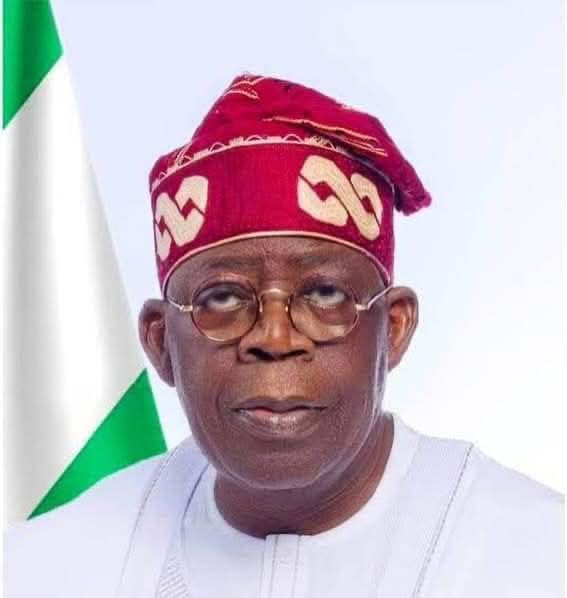
By Mallam Bolaji Abdullahi
I have tremendous respect for H.E. Babatunde Fashola. But I must respectfully disagree with him in his defence of President Tinubu’s reckless and insensitive removal of fuel subsidy during his Channels TV interview on Tuesday, 17th November.
As Governor Fashola would find, it is difficult to defend the Tinubu administration without feeling one’s credibility melting under the heat of the harsh reality that millions of Nigerians have struggled with every day for the last three years. It is like a piece of soap that diminishes itself each time it attempts to wash others clean.
Nevertheless, I would like to thank Governor Fashola for his remarkable candour. It is not every day that a man who sat in the Federal Executive Council for eight years comes forward to reveal, with such astonishing frankness, just how little of President Tinubu’s economic policy has been conceived and implemented in the interest of Nigeria and Nigerians.
In his eagerness to defend President Tinubu’s subsidy removal, H.E. Fashola may have revealed considerably more than he intended.
First, he told us that in removing fuel subsidy, President Tinubu was only acting on the directive of the World Bank! This has led millions of Nigerians to ask: Who is really running Nigeria? The President of Nigeria in Abuja or the World Bank in Washington, DC? Since when did the economic recommendations of an international financial institution become instructions that a sovereign government must obey, regardless of the suffering they could inflict on its citizens?
The World Bank has misled countries before, whether deliberately or inadvertently. Development literature is replete with such instances. Its recommendations are also ideological. This is why serious-minded countries listen to such institutions but ultimately do what they consider best for their countries and their people.
Secondly, he said President Tinubu was constrained by the Petroleum Industry Act (PIA), which prohibits government interference with the market prices of petroleum products. Pardon my biblical inference, but the natural question one must ask is this: Are laws made for Nigerians, or are Nigerians made for the laws?
As a legislative proposal, the PIA probably set a record as one of the longest-pending bills before its eventual passage into law in 2021. Perhaps it was because some of its provisions were thought to be injurious to the well-being of Nigerians that it was kept in abeyance for so long. Laws are made to promote the well-being of the people. Therefore, any law that detracts from this objective and, instead of improving their well-being, actually compounds their misery, must be considered repugnant to society and must be reviewed.
But I have read the PIA. And I think Fashola and others who have tried to defend the Tinubu government on the fuel subsidy removal are only using the law as a pretext for the reckless action or, as we now know, thanks to Fashola, their willingness to abdicate their patriotic duty in order to carry out the directives of their masters in Washington, whose agenda may actually be at variance with the overall national interest of Nigeria.
What they conveniently ignore is that the same PIA makes provision for the Domestic Crude Supply Obligation (DCSO), which provides a window for implementing the very idea of production subsidy that the ADC and our presidential candidate, Alhaji Atiku Abubakar, are proposing.
The question then is: Why has this administration failed to enforce that aspect of the law and use it as a lever to support local refineries so they can deliver cheaper fuel to Nigerians?
Governor Fashola also spoke about the economic crisis in which the Buhari administration had found itself, reminding us that the administration was spending nearly 90% of its revenue servicing debt. This, he said, made fuel subsidy removal inevitable if the economy was to survive. Fair enough. But the inescapable question is: What has changed in that regard since Tinubu removed the subsidy?
According to the Federal Government’s own budget implementation figures, Nigeria spent N4.63 trillion servicing debt in the first quarter of 2026, against revenue of N5.08 trillion. That is approximately 91% of government revenue. Meanwhile, our total public debt has risen from N87.38 trillion in June 2023 to N166.79 trillion in June 2026. Budget implementation remains chaotic, with capital releases hovering around 20% to 24%.
We must therefore ask: After more than three years of painful sacrifice, what exactly have Nigerians gained from this fuel subsidy removal?
I heard Governor Fashola mention prompt payment of salaries and NELFUND. So much for so little, I must say. How can we possibly justify the economic misery of 66% of the population (144 million people) with salary payments to just 1.5% of the entire population? Especially given that even the new minimum wage of N70,000 can no longer guarantee the minimum basic necessities of fuel, food and transportation, no thanks to Tinubu’s twin whammy of subsidy removal and currency devaluation. Granted, NELFUND has benefited some people, even though I still see it as more of a political gambit than a well-thought-out higher education policy. But does it justify this debilitating suffering that has made life a living hell for the majority of citizens?
And then there is Fashola’s big question: Where will the money come from? But this is the wrong question to ask in light of the mindless profligacy that we have seen advertised in the last three years.
The right question is: Why does this government always seem able to find money for its own comfort and luxuries, buying new yachts and jets for the presidential fleet, but cannot find the money to make life a little better for the people?
How does this government find money to expand the convoys of public officials, and for the First Lady and the First Son to throw money around and buy luxury vehicles for political supporters, but never enough to make life more affordable for ordinary Nigerians?
How come it is only when we talk about making life better for Nigerians that government officials ask where the money will come from? There is money for expensive official vehicles, presidential facilities and an ever-expanding cost of governance. But when Nigerians demand affordable petrol, transportation and food, suddenly, we are asked: Where will the money come from?
We reject the idea that economic management must always begin with taking more from those who have the least. As a party, the ADC and our presidential candidate believe that government must always begin by cutting waste, reducing its own excesses and putting the welfare of Nigerians first.
The difference is simple: This government is asking Nigerians to sacrifice for the comfort of government. The ADC believes that government should sacrifice for the comfort of Nigerians.
And to Fashola’s argument about the World Bank, let us say this: International institutions are entitled to offer recommendations. They are not elected to govern Nigeria. The President is.
President Tinubu was elected to serve Nigerians, not the World Bank. If his policies have failed Nigerians, he must answer for those failures. He cannot claim the authority to govern and then outsource responsibility for the consequences.
– Mallam Bolaji Abdullahi is the National Publicity Secretary of the African Democratic Congress (ADC). He writes from Abuja.
https://x.com/bolajiadc/status/2123680780102648058?a=VmWCr8Tz4b2z5yp1rU4&s=46

Akwa Poly SSANIP Demands Promotion Of Administrative Staff To Level 15
By Obasi Akpan , Uyo The Senior Staff Association of Nigeria Polytechnics (SSANIP), Akwa Ibom State Polytechnic Chapter, has expressed...

Okpebholo Denies Involvement In Alleged Violent Attack On NDC Members
By Joseph Iyamu, Benin Edo State Governor, Senator Monday Okpebholo has said that nobody in the state government, the state...

THE UBA SANI I KNOW: A CHILD OF DESTINY, POLITICAL LOYALTY AND THE KADUNA DEVELOPMENT STORY
By Abdullateef Bamgbose There are political relationships that survive the test of time, and there are others that collapse under...

ADC-PCC Condemns Deadly Attacks On NDC in Edo,Delta, …Calls For Arrest, Prosecution of Perpetrators
By George Mgbeleke The African Democratic Congress Presidential Campaign Council (ADC-PCC) has strongly condemned the unprovoked and deadly attacks on...


HURIWA Gives EFCC 7 Working Days to Clarify Status of Okowa’s Investigation, Demands Public Update on Yahaya Bello’s Case
By George Mgbeleke The Human Rights Writers Association of Nigeria (HURIWA) has formally submitted a Freedom of Information (FOI) request...

Bayelsa West APC Rally: Deputy Gov Akpe, Lokpobiri, Others Drum Support for Tinubu 2027
By David Owei The Deputy Governor of Bayelsa State, Dr Peter Akpe, Minister of State for Petroleum Resources (Oil), Senator...

Bayelsa West APC Rally: Deputy Gov Akpe, Lokpobiri, Others Drum Support for Tinubu 2027 The Deputy Governor of Bayelsa State, Dr Peter Akpe, Minister of State for Petroleum Resources (Oil), Senator Heineken Lokpobiri, and other political leaders have called on residents of Bayelsa West Senatorial District to support President Bola Tinubu’s re-election bid in the 2027 general elections. They made the call on Tuesday during the flag-off of the All Progressives Congress (APC) Bayelsa West sensitisation rally held at Aghoro community and Ekeremor town in Ekeremor Local Government Area of the state. Speaking at the rallies, Dr Akpe who spoke in Ijaw, said voting for Tinubu and other APC candidates would open new frontiers of development for Bayelsa State. He commended Governor Douye Diri for his foresight and thoughtfulness for defecting from the Peoples Democratic Party (PDP) to the APC, describing the move as timely. The deputy governor urged the people of Ekeremor to vote for APC candidates at all levels, saying the partnership between the federal and state governments had contributed to peace and development in the state. He described the party’s National and State Assembly candidates as qualified, adding that Bayelsa’s greatest economic potential lay in its Atlantic coastline and continental shelf. Akpe said the Diri administration was committed to extending the Bayelsa West Senatorial Road project to Agge, while the Tinubu administration was executing projects to open up coastal communities and boost economic activities. According to him, “Our biggest wealth, which God has blessed us with, actually lies in the ocean, and what we need to do to harness this wealth has not been done. But the President Tinubu administration is committed and is already doing projects in top gear that will open up our areas. “Today, Bayelsa is one of the most peaceful states in this country because both Federal Government and the Bayelsa State Government are being controlled by the APC and are closely working together. So our primary agenda is to re-elect President Bola Tinubu in 2027. “I want to specially salute Governor Douye Diri for his wisdom in moving this state from an already sinking PDP to the APC at the right time. If he had not done that, we wouldn’t have been here in this joyous and celebrative mood. “Today our senatorial road is heading to Agge, and we are very sure it would go very far before the present administration would leave office in 2028. “So we are calling on our people to vote only the APC candidates from the President down to the House of Assembly candidates.” Also speaking, Lokpobiri urged residents of Bayelsa West to support Tinubu’s re-election, citing his appointment as Minister of State for Petroleum Resources (Oil) and other federal appointments given to Bayelsa indigenes. The minister recalled the zoning arrangement between Ekeremor and Sagbama for the rotation of the senatorial and House of Representatives seats, insisting that it was Ekeremor’s turn to produce the next senator. Highlighting some achievements of the present federal government, he said Nigeria’s crude oil production had increased from less than one million barrels per day before the Tinubu administration to over 1.7 million barrels per day. He said “Our President is coming back. I am your son. Today, President Tinubu has made your son a minister, and I am the only Ijaw man who is a minister in the Federal Executive Council under the Tinubu Administration. “Our Governor and all our key political leaders in Bayelsa West are in the APC. Therefore, let us all vote for the APC. Before the Tinubu Administration came on board, our oil production output was less than a million bpd, but today it is over 1.7 million bpd.” On his part, Deputy Speaker of the Bayelsa State House of Assembly, Hon. Michael Ogbere, said the people of Ekeremor have every reason to be in the same political boat with Governor Diri, for the Bayelsa West Senatorial road project being taken from Ekeremor to Ndoro and Aghoro in the next phase. He maintained that the Ekeremor people would stand by their political leaders who are all in the APC and have all spoken unequivocally in support of the party’s standard bearers. Others who gave goodwill messages include former Deputy Governor and Director General of the APC Bayelsa West Campaign Council, Hon. Peremobowei Ebebi; State APC Secretary, Mr Japan Udoji; former Speaker of the House, Rt. Hon. Boyelayefa Debekeme, and Chairman of Ekeremor LGA, Mr Onniye Isaac. Others are Deputy Chief of Staff, to the Deputy Governor, Comrade Gowon Toruyouyei, Elder Dimaro Deinyebofa, Hon. Benard Kenebai, Hon. Dein Benadoumene, Mr Orubebe Ogeibiri, Mrs Deme Pamosoo, Dr Silbriks Obiriki, amongst others.
By David Owei,Bayelsa The Deputy Governor of Bayelsa State, Dr Peter Akpe, Minister of State for Petroleum Resources (Oil), Senator...

PAP Distributes Additional 1,282 Laptops To Scholarship BeneficiariesBy David
By David Owei,Bayelsa The Presidential Amnesty Programme has distributed an additional 1,282 laptops to beneficiaries of its scholarship scheme in...
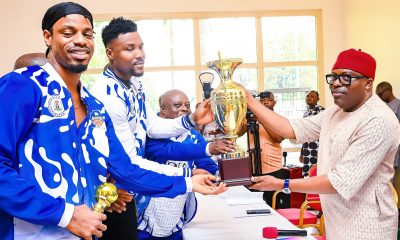

Fubara Rewards Rivers HOOPERS with N100m,Bus,Hilux, or Seventh Consecutive League Titl
By George Mgbeleke Governor of Rivers State , Sir Siminalayi Fubara, has rewarded the Rivers Hoopers Basketball Team with the...

Newgate Varsity sets to graduate 397 students at its second convocation
BY Uthman Baba Naseer,Minna Newgate University, Minna, Niger State, says it is set to graduate 397 students at its second...
-
 Politics2 years ago
Gov Okpebholo moves to end Cultism *Threatens action against leading cult groups *Vows to demolish more cult houses in Edo State
-
 Politics1 year ago
ASUU-NDU protest against FG loans, unpaid salaries,Non-Implementation of agreements …..says loans is generational slavery
-
 Business & Economy1 year ago
PC-NCG Issues Disclaimer on Purported Nigerian Coast Guard National Orientation Exercise In Anambra State
-
 Entertainment2 years ago
Jubilation galore as Parishioners of CKC Kurudu celebrate their cultural heritage ….FG should exploit our Cultural heritage to unite Nigerians-Rev Fr Dim
-

 Sports9 months ago
Bayelsa-born ex-football star’s son, Opuama donates spike shoes to Athletics Association
-

 General News2 years ago
Reps hold public hearing on FMC Ugwuaji Awkunanaw
-
 General News2 years ago
Celebration galore as UDA Successfully Elected New Exco ……I will digitalize processes that will raise UDA to greater height -Comr. Okejiri
-
 Law & Crime1 year ago
Legal practitioner raises alarm over threat to his life by CSP Muhammed Abdulkareem