
Opinion
*Gov Diri’s Six Years Of Silent, Impactful Revolution In Bayelsa*

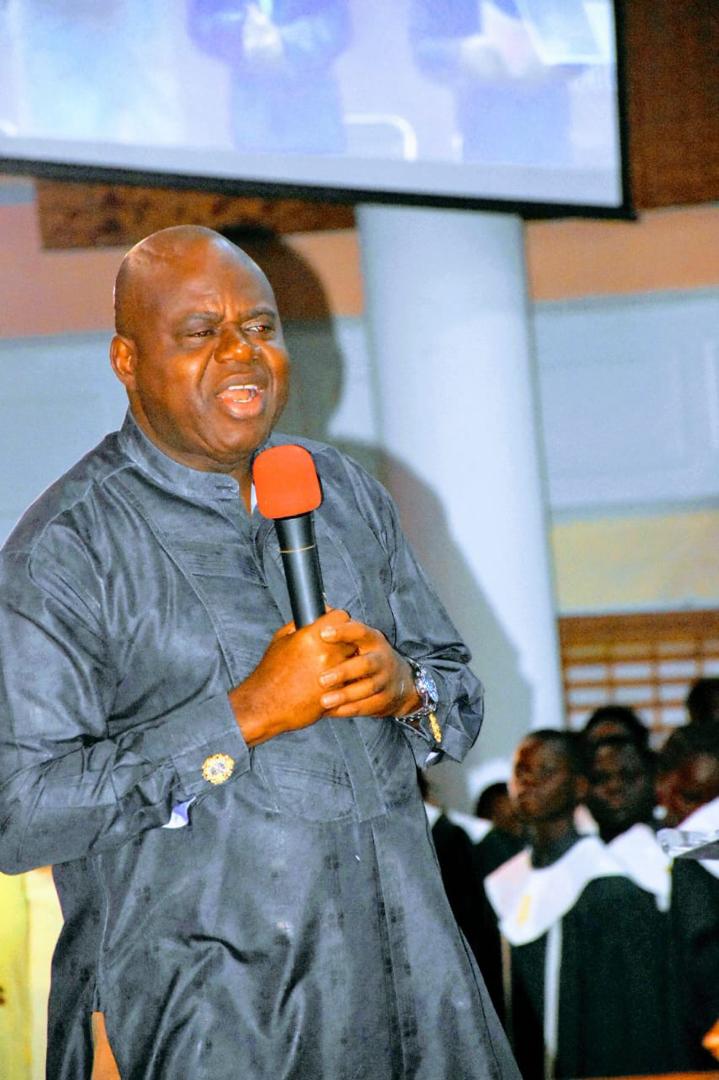
By Daniel Alabrah
On February 13, 2020, less than 24 hours before the scheduled inauguration of a new governor in Bayelsa State, a five-man panel of the Supreme Court of Nigeria delivered a verdict that altered the state’s trajectory. In a pronouncement many still call a “divine miracle,” Senator Douye Diri was declared the rightful winner of the governorship election conducted by the Independent National Electoral Commission on November 16, 2019. What followed was not the thunderclap of fanfare but something quieter, deeper, and more enduring: six years of a silent revolution.
Under Governor Diri’s stewardship, Bayelsa has been reshaped not by slogans or spectacle, but by deliberate, compassionate governance that blends visionary planning with an almost paternal care for the people who call the “Glory of all Lands” their home.
From the moment he was inaugurated, Diri hit the ground running. He has equally demonstrated the rare quality of a leader who finishes what others begun and dared to dream bigger. He did not discard inherited projects in a rush for new glory; instead, he completed them with quiet efficiency while initiating a cascade of new ones that now stitch the state together like threads of a single, vibrant fabric.
As President Bola Ahmed Tinubu visits Bayelsa on Friday, April 10, 2026, the timing feels providential — a moment to witness firsthand how one man’s steady hand has turned potential into progress across infrastructure, security, sports, civil service welfare, youth empowerment, power and energy, agriculture, and, most profoundly, the unity of a people long tested by division and circumstance.
Nowhere is this revolution more visible than in the transformation of Bayelsa’s physical landscape. Roads that once existed only in dreams now stretch like lifelines across riverine communities. The 22.2-kilometre Yenagoa-Oporoma-Ukubie Road, the majestic Angiama-Oporoma Bridge across the River Nun, and the Angiama-Otuan and Angiama-Eniwari-Fonibiri corridors have opened the heart of the state to its hinterlands.
Further west, the 42-kilometre Sagbama-Ekeremor Road, complete with five new bridges, and the Ekeremor-Agge Road (first phase reaching Toru-Ndoro and Peretorugbene) have ended decades of isolation.
In the east, the 21-kilometre Nembe-Brass Road (first phase) and the reconstructed Nembe Unity Bridge stand as symbols of reconnection.
Within Yenagoa itself, the Glory Drive Phases II and III, the dualised New Yenagoa City Roads 1 through 6, the Igbogene-AIT/Elebele Outer Ring Road, and the Isaac Boro Expressway’s completion among other eye-popping projects have turned the capital into a city that breathes modernity while honouring its roots.
These are not mere ribbons of asphalt. Each kilometre carries farmers to markets, students to schools, and traders to opportunity. Bridges like that in Imiringi, Elebele, and the Onuebum-Otuoke road have replaced peril with passage. About 200 new concrete roads now criss-cross Yenagoa and rural communities across all eight local government areas, while the Ox-Bow Lake-Agbura and Polaku-Sabagreia projects link riverine hearts to the mainland. These interventions speak of a leader who understands that development must touch every ward, every creek.
The governor’s administration has also beautified the Etegwe-Edepie Roundabou and working assiduously to deliver the Akaba-Ogu-Okodi and Toru-Orua-Bolou-Orua-Akeddei-Toru-Ebeni roads — each one a quiet declaration that no community shall be left behind.
Yet infrastructure for Diri has always been about more than concrete and steel; it is the foundation for human flourishing. The iconic nine-storey Secretariat Complex rises as a beacon of efficient governance, while the Ernest Ikoli Media Complex, Finance House, Labour House, and BHIS Administrative Complex provide the institutional backbone for a state on the move. Judges’ Quarters have been remodelled, a new High Court Complex named after Justice Ungbunku stands completed at Onopa, and civil servants now enjoy a dedicated canteen at the Secretariat.
Community pavilions — from Peretorugbene to Kaiama, Ofoni to Odi, Sampou to Ekeremor — have become gathering places where the people’s voice finds resonance.
This same compassion flows through the governor’s approach to the civil service — the lifeblood of public service. Salaries are paid promptly, pensions disbursed without delay, and between N200 million and N400 million released monthly to clear outstanding gratuities and death benefits. Promotions are conducted as due, with incremental benefits implemented faithfully.
Teachers who waited years for their long-overdue advancements finally received justice. Over a thousand civil servants have been allocated plots for housing schemes, while a transport scheme eases their daily commute.
Training and retraining programmes, including mandatory intensive driving courses for lower-grade officers, have uplifted morale and capacity.
In Diri’s Bayelsa, the civil servant is not a faceless bureaucrat but a partner in the collective dream.
Nowhere does the governor’s vision meet compassion more tenderly than in agriculture and food security. Bayelsa, blessed with fertile soil and abundant water, had long yearned for self-reliance. Diri answered with action: support for cassava, rice, and plantain cultivation; the establishment of rice farms at Otuasega, Amassoma, and Imiringi Road; and the installation of rice mills at Niger Delta University and Federal University, Otuoke to process “Made-in-Bayelsa” rice. In partnership with the Central Bank of Nigeria, land and seedlings reached 3,500 farmers across all eight local governments. The cassava starch processing factory at Ebedebiri was completed, farm inputs distributed, and over 400 Bayelsans trained at the CSS Integrated Farms in Nasarawa State and in soilless farming in Ogun State. These efforts are not statistics; they are meals on tables, incomes in pockets, and dignity restored to the farmer who once watched potential rot in the fields.
Energy and power have received their own quiet revolution through Operation Light-up Bayelsa. Solar streetlights now illuminate roads and communities that once vanished into darkness at dusk, extending safety, commerce, and study hours deep into the night. The message is clear: progress must be sustainable, and light — literal and metaphorical — must reach every corner. All these are reinforced by the state’s independent power plant project with an installed 60-megawatt gas turbines to be inaugurated by President Tinubu during his visit.
Empowerment programmes have turned skills into livelihoods. Over 10,000 young Bayelsans have been trained in various skills and vocations. Another 366 received starter packs through the state’s SDG office. Most remarkably, 420 small business owners— four from each of the 105 wards — were empowered monthly with N400,000 each, a direct injection of hope that ripples through families and markets. These are not handouts but hand-ups, evidence of a governor who sees potential in every son and daughter.
Security, once a lingering shadow, has been tackled with strategic compassion. Flashpoints were identified and neutralised through infrastructure — shanties around the Etegwe-Edepie Roundabout gave way to beauty and order. The state government equipped security agencies with over 80 patrol vehicles, motorbikes, and communication gadgets.
As a priority, the governor has adopted technology to secure lives and property through the installation of closed circuit television (CCTV) cameras across the state capital just as it has established the Bayelsa Community Safety Corps by law, harmonising its activities with Operation Doo-Akpo, the Vigilante, and Volunteers into a single, effective force.
The result? Bayelsa today ranks as perhaps Nigeria’s safest state — a testament to proactive leadership that protects without oppression.
Sports, too, has become a unifying force. The construction of a 30,000-seat international stadium signals ambition, but the real victories lie in the achievements of Bayelsa’s athletes. Bayelsa United and Bayelsa Queens made history by winning the 2021 AITEO Cup — the first time any state claimed both titles. Blessing Oborududu’s Olympic silver in Tokyo, Bayelsa Queens’ triumphs in the Nigerian league, WAFU Zone B, and African Champions League, Timma Godbless’s junior record and African gold, and the global successes of Bishop Dimeari Grammar School and St. Jude’s Girls College in basketball have filled the state with pride. The grassroots-based Prosperity Cup and the maiden Bayelsa State Sports Festival have ignited passion from the creeks to the capital. In sports, Diri has shown that glory is collective.
Health and education, woven into the fabric of empowerment, have received equal attention. Referral hospitals at Kaiama, Oporoma, and Ekeremor stand completed, and upgrades to primary health centres.
In education, all 71 programmes at the Niger Delta University received accreditation; new science and technical colleges at Ayamasa, Sampou, Swali, and Ofoni offer free tuition, feeding, and uniforms. Six new schools within Yenagoa, ICT centres, Microsoft partnerships training 12,000 teachers, and the teaching of the Ijaw language in schools preserve culture while preparing minds.
Above all, Governor Diri has fostered a sense of oneness and peaceful coexistence. His administration’s deliberate spread of projects across senatorial districts and local governments has healed old fault lines.
In a region once prone to tension, Bayelsa under Diri breathes a spirit of shared destiny. The governor’s quiet demeanour masks a fierce love for his people; his vision is never abstract but always rooted in their daily realities.
As President Tinubu arrives, he will see more than projects. He will witness a state reborn through silent, impactful revolution — a testament to what visionary administration fused with compassion can achieve.
Senator Douye Diri has not merely governed Bayelsa; he has nurtured it, united it, and set it on a path where every road leads home, every light shines brighter, and every citizen feels seen.
Six years and counting, the miracle of 2020 continues to unfold — not with noise, but with results that speak for themselves. The “Glory of all Lands” is rising, and its governor walking beside it, steady, compassionate, and unyielding in purpose.
*Alabrah is Chief Press Secretary to the Governor of Bayelsa State






By George Mgbeleke
The Human Rights Writers Association of Nigeria (HURIWA) has condemned in the strongest terms the reported death of 37 suspected illegal miners in the custody of the Nigeria Security and Civil Defence Corps (NSCDC) in Niger State, describing the incident as a grave state-sponsored human rights violation that must not be swept under the carpet.
In a statement by national coordinator of HURIWA ,Comrade Emmanuel Nnadozie Onwubiko, the group said Nigeria cannot continue to operate a system in which citizens are arrested alive by security agencies, taken into lawful custody and subsequently die in detention without an immediate, transparent and independent account of what happened to them.
The rights group says the reported deaths of the suspects in Minna raise disturbing questions about what occurred between the time they were arrested around the M.I. Wushishi/Lukoto axis on September 15 and 16, 2026, and the time their bodies were deposited at the General Hospital, Minna.
HURIWA asks bluntly: How did 37 people arrested alive end up dead in the custody of a government security agency?
The organisation says the sheer number of deaths makes the incident too serious to be treated as an ordinary internal disciplinary matter.
HURIWA notes that the NSCDC has announced an investigative panel and said the cause of death has not been medically or laboratory confirmed. The organisation welcomes the decision to investigate but insists that the NSCDC cannot investigate itself and expect Nigerians to accept the outcome as independent.
According to HURIWA, an institution whose personnel had custody of the deceased cannot simultaneously be the investigator, potential accused party and final authority determining whether its own officers bear responsibility.
“You cannot arrest citizens alive, lock them up under your custody and then investigate yourselves when they emerge dead. That is not independent justice,” HURIWA says.
The organisation therefore demands that President Bola Ahmed Tinubu and the Federal Government immediately constitute an independent judicial or multi-agency panel of inquiry into the deaths.
HURIWA wants the panel to include independent forensic pathologists, medical experts, the National Human Rights Commission, civil society representatives and other credible institutions with no connection to the detention operation.
The group demands full autopsies and independent laboratory and toxicological examinations to determine the precise cause of every death.
It also demands that investigators establish the condition of each suspect at the point of arrest, the number of detainees held, the cells and facilities used, the duration of detention, food and water provided, medical treatment administered, personnel on duty and every movement or transfer involving the suspects.
HURIWA further demands that all available CCTV footage, detention registers, medical records, arrest records, duty rosters and communication logs relating to the detainees be preserved and subjected to independent scrutiny.
The organisation says any officer found, after due process, to have unlawfully caused, facilitated or negligently contributed to the deaths must face criminal prosecution, including murder or other appropriate charges where the evidence supports such charges.
HURIWA also calls for the immediate suspension of officers directly implicated by preliminary evidence, pending the outcome of the independent investigation.
The rights group says officers of the state must understand that lawful custody does not confer a licence to abuse, torture, neglect or unlawfully expose detainees to conditions capable of causing death.
“A suspect is not a corpse. An arrest warrant is not a death warrant. Custody is not a licence to kill,” HURIWA says.
The organisation demands that the families of all the deceased be formally notified, allowed access to independent medical information and involved in the process of establishing the circumstances surrounding the deaths.
Where state responsibility is established, HURIWA demands ₦100 million compensation for each deceased victim, in addition to prosecution of responsible officials and any other remedies available under Nigerian law.
HURIWA says the Federal Government must also immediately account for every person currently detained in connection with the Niger State mining enforcement operation and ensure that their health, safety and fundamental rights are protected.
The organisation warns against any attempt to attribute the deaths to an alleged disease before credible medical and laboratory evidence establishes such a conclusion.
HURIWA says the deaths must not disappear into the familiar cycle of arrest, death, internal investigation and silence.
The group insists that Nigeria’s security agencies must understand that the constitutional rights of citizens do not disappear at the entrance of a detention facility.
HURIWA therefore calls on the Federal Government to treat the Niger deaths as a national human rights emergency and immediately establish an independent inquiry capable of determining responsibility, securing justice for the dead and preventing a repetition.
By Chief(Dr) Chekwas Okorie
I wish to state unequivocally that all our people who are pushed by our painful and unbearable situation in Nigeria to embark on and demand for our self-determination in Nigeria or outright exit for a separate state of Biafra are within their inalienable rights to do so. It is on record that the president of Nigeria Asiwaju Bola Ahmed Tinubu stated boldly and publicly that he did not believe in one Nigeria. He made this statement, which was widely published in Nigerian newspapers when he lost faith in the unity and oneness of Nigeria. Some years later, he became the president of the Federal Republic of Nigeria without being restrained as a result of disowning Nigeria in the past.
Our leader, the General of the Peoples Army, Dim Chukwuemeka Odumegwu-Ojukwu, who led the Biafran Armed Forces to successfully resist the war of annihilation mounted on the people of Biafra (1967-1970) was granted presidential pardon in 1982 by President Shehu Shagari. He returned to Nigeria from self exile and lived out the rest of his life with his people until 2011 when he joined our ancestors.
The resumed struggle for a separate state of Biafra has been prosecuted in several different ways by multiple groups since 1999 when MASSOB first emerged to 2012 when IPOB took the center stage under the leadership of Onyendu Mazi Nnamdi Kanu. There are many other groups that sprang up along the line with similar objectives for approximately 27 years. I do not want to belabor the fact of the collateral damage and economic costs of this adventure. I only wish to point out that the time to review the strategy, tactics, and methodology in seeking our quest for self-determination, freedom, and place of pride in Nigeria has come. As recently as Monday, 14th September 2026, the leaders of Scotland, Northern Ireland, and Welsh met to formulate a joint initiative to exit from the United Kingdom. In the same token, some geopolitical or regional zones in Nigeria may take similar concerted initiatives to redraw the political map of Nigeria at the fullness of time without violence.
There are over 100 active groups struggling for separation from the country they belong to in the world today, and only a few have the chances of referendum.
On June 19, 2021, Mazi Nnamdi Kanu, the leader of IPOB, was abducted at the Jomo Kenyatta International Airport in Nairobi and flown to Nigerian on June 27, 2021.
The extraordinary rendition of Mazi Nnamdi Kanu from Kenya and his unending efforts to obtain justice from the Nigerian courts have been infuriating and provocative to a cross section of the Igbo people in Nigeria and abroad. Prominent Igbo leaders and my humble self as well as well-meaning Nigerian statesmen have appealed to the Nigerian authorities to apply political solutions and release Mazi Nnamdi Kanu and other Igbo political prisoners to foster national reconciliation. These appeals have been treated with contempt and ignominy. Mazi Nnamdi Kanu remains the symbol of Igbo dilemma in Nigeria. The President General of Ohanaeze Ndigbo, Senator John Azuta-Mbata, on two separate occasions, spoke the minds of the entire Igbo Nation when he stated that it is the Igbo people that are in prison for as long as Mazi Nnamdi Kanu remains in prison. All efforts made by the late Chief Emmanuel Iwuanyanwu, as the President General of Ohanaeze Ndigbo to pay a courtesy visit to President Bola Ahmed Tinubu with a delegation of Ohanaeze Ndigbo to seek a political resolution of this matter was rebuffed without the minimum respect of replying to Chief Iwuanyanwu’s letters. The Senator Azuta-Mbata led Ohanaeze Ndigbo has also not been received by the President on this matter that is of great concern to Ndigbo.
APPEAL.
In about four months, Nigerians will be going to the polls to elect a new set of leaders and representatives at all levels in a general election. This democratic exercise happens once in four years in Nigeria.
God has given us a large population and an outstanding geographical spread in Nigeria. There is no state in Nigeria that the Igbo people can not muster at least twenty-five percent of the voting population. Similarly, Igbo people constitute the second largest population by ethnicity in thirty-one states, and the FCT and ninety-nine percent of the population in the Southeast geopolitical zone.
In the Nigerian democracy population and spread are the most potent force for political power and relevance. When effectively deployed, we will regain our respect in Nigeria and secure what is due to us in the Federation without firing a shot.
I appeal to our people in the name of God to deploy the advantage the Almighty God has so graciously granted us and make a resounding political statement and secure the unconditional release of our son Mazi Nnamdi Kanu and his colleagues without having to kow-tow to anybody that will ridicule and insult us in the process.
There is nobody or groups who genuinely wish to see Mazi Nnamdi Kanu free in the nearest future that will be a party to any plot to dissuade our people from actively and massively participating in the 2027 general election. Similarly, l earnestly appeal to Igbo people in the diaspora to make a point of using their telephones and all available social media platforms to reach out to their friends, relations, and beneficiaries in Nigeria to file out on election days to exercise their franchise in the interest of all of us.
God bless Ndigbo.
Chief Dr. Chekwas Okorie
(Ojeozi Ndigbo)
National Chairman
Igbo Agenda Dialogue

By George Mgbeleke
The Human Rights Writers Association of Nigeria (HURIWA) says the removal of petrol subsidy remains illegitimate, unconstitutional and fundamentally anti-poor, despite the Federal Government’s insistence that there will be no return to the subsidy regime.
HURIWA in a statement signed by its national coordinator,Comrade Emmanuel Nnadozie Onwubiko says there was no national debate, broad-based consultation or acceptable referendum through which Nigerians agreed that petrol subsidy should be removed.
The association says President Bola Tinubu announced the removal of the subsidy on May 29, 2023, the same day he was sworn into office, without any prior national consensus on the policy.
HURIWA therefore rejects the argument by the Presidency that the subsidy debate is permanently settled.
The association says the government cannot continue to impose incessant increases in the prices of petrol, diesel and cooking gas while millions of Nigerians struggle with inflation, unemployment, declining purchasing power and worsening poverty.
HURIWA warns that the continued escalation of energy costs is aggravating the cost-of-living crisis and pushing millions of Nigerians deeper into economic hardship.
The association says the Presidency’s declaration that there is “no going back” on subsidy removal should not be used to shut down legitimate public debate over the consequences of the policy.
HURIWA says if the Federal Government insists on allowing further increases in the prices of petrol and other essential energy products, Nigerians have the constitutional right to organise peaceful public protests and demand policies that protect their economic and social rights.
The association calls on Nigerians to peacefully mobilise against the incessant hikes in petrol prices and demand the restoration of an appropriate and transparent form of fuel subsidy or other effective mechanism capable of protecting citizens from unbearable energy costs.
HURIWA says the argument that subsidy removal has generated trillions of naira for the federation does not, by itself, justify the policy if ordinary Nigerians are unable to feel its benefits in their daily lives.
The association notes the claim by the Minister of Finance and Coordinating Minister of the Economy, Taiwo Oyedele, that subsidy removal generated N15.8 trillion in resources for the federation between June 2023 and December 2025, with N5.4 trillion accruing to the Federal Government and N10.4 trillion shared among states and local governments.
HURIWA asks what measurable improvements in the living conditions of ordinary Nigerians can be directly linked to these enormous savings.
The association also notes the Presidency’s argument, as conveyed by the Special Adviser to the President on Information and Strategy, Bayo Onanuga, that restoring subsidy would create legal and fiscal complications and discourage investment in domestic refining.
HURIWA says these concerns should not be allowed to override the fundamental question of citizens’ welfare.
The association further notes that former Vice-President Atiku Abubakar has proposed a controlled intervention in the oil and gas sector rather than a return to what he described as the opaque subsidy regime of the past.
HURIWA says the proposal deserves serious public scrutiny rather than outright dismissal, particularly because millions of Nigerians are currently bearing the consequences of high energy prices.
The association says the debate must focus on how Nigeria can guarantee affordable energy, protect vulnerable citizens, strengthen domestic refining and prevent corruption and abuse in the management of public resources.
HURIWA also agrees that Nigeria must avoid the corruption, smuggling, rent-seeking and fiscal leakages associated with the former subsidy regime.
However, the association says removing subsidy without establishing an effective alternative social protection mechanism amounts to transferring the burden of adjustment almost entirely to ordinary Nigerians.
HURIWA therefore demands full transparency on the utilisation of funds saved from subsidy removal and insists that the Federal Government must publish verifiable evidence showing how the savings have been deployed to improve transportation, healthcare, education, infrastructure, wages, social protection and other essential services.
The association says Nigerians should not be asked to accept permanent economic hardship merely because government describes subsidy removal as a reform.
HURIWA warns that the continued increase in petrol, diesel and gas prices will deepen inflation, weaken local businesses, increase transportation and food costs and further erode the purchasing power of workers, pensioners and low-income households.
The association calls on the Federal Government to urgently review its energy pricing policy and introduce measures that will bring down the cost of energy without creating another avenue for corruption.
HURIWA says the welfare of Nigerians must remain the primary consideration in every economic reform.
The association also urges the government to respect the constitutional rights of Nigerians to peaceful assembly, expression and protest whenever citizens choose to publicly oppose policies they consider harmful to their welfare.
HURIWA maintains that economic reforms cannot be sustainable when the people are excluded from meaningful consultation and are left to bear the heaviest burden of those reforms.

Turnah: Bayelsa APC Cannot Deliver Tinubu Without Rainbow Coalition …PDP chairman challenges Ogoriba’s claim, cites 2023 voting figures
By Our Correspondent As 2027 election draws close,the chairman of the peoples democratic party (PDP) in Bayelsa state, high chief...

Gombe, Kano, Bauchi, Delta Bye-Elections Offer Vital Lessons for General Election — INEC Chairman
By Our Correspondent As preparations gather momentum ahead of the 2027 General Election, the Independent National Electoral Commission (INEC) has...
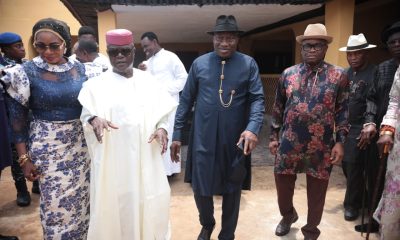

Jonathan, Diri, Others Eulogise Former Bayelsa Military Administrator Edor Obi at Father’s Funeral
By David Owei Former President of Nigeria, Dr. Goodluck Jonathan, and Bayelsa State Governor, Senator Douye Diri, have praised the...
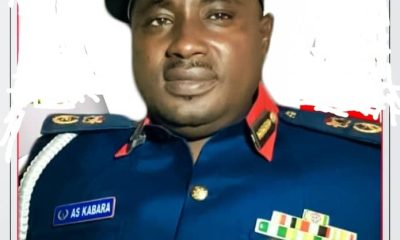

Death of 37 Miners:NSCDC deployes Commandant Abdul Hamid Salisu Kabara to head Minna Commandant
By Uthman Baba Naseer,Minna Following the Thursday,death of 37 suspected illegal miners at the detention facility of the Niger State...

Hajj 2027: CSO begs Saudi Arabia over additional slots for Nigeria
By our correspondent A civil society organisation, CSO, the Independent Hajj Reporters, IHR, has appealed to the Saudi Arabian Ministry...
Ethics and the Indiscretion of AI
By Emmanuel Nnadozie Onwubiko What Is Ethics? To begin this reflection, the best way to proceed is to first understand...
Review Monetization Policy , NASS pleads with FG ….assures over 14, 000 Staff of World Class Medical Centre
By our Correspondent The National Assembly Thursday through its Clerk , Kamoru Ogunlana Esq, appealed to the Federal Government to...
Accept defeat, stop campaign of calumny, Ekiti APC Reps candidate tells Ojuawo
By our Correspondent The All Progressives Congress, APC, House of Representatives candidate for Ekiti South Federal Constituency, Engr. Toyin Okoro,...
37 Dead in Custody: Nigerian Lives Are Not Disposable-ADC Tells Tinubu,FG -Demands Full, Transparent Investigation
By George Mgbeleke The African Democratic Congress (ADC) has called for an immediate, independent and transparent investigation into the deaths...
Jonathan Urges Civil Service Reform, Calls for Unified Federal-State Salary Structure
By David Owei,Bayelsa Former President, Doctor Goodluck Jonathan, has called for the harmonization of structures and salaries across the Federal...
-
 Politics1 year ago
Gov Okpebholo moves to end Cultism *Threatens action against leading cult groups *Vows to demolish more cult houses in Edo State
-
 Politics1 year ago
ASUU-NDU protest against FG loans, unpaid salaries,Non-Implementation of agreements …..says loans is generational slavery
-
 Business & Economy1 year ago
PC-NCG Issues Disclaimer on Purported Nigerian Coast Guard National Orientation Exercise In Anambra State
-
 Entertainment2 years ago
Jubilation galore as Parishioners of CKC Kurudu celebrate their cultural heritage ….FG should exploit our Cultural heritage to unite Nigerians-Rev Fr Dim
-
 Sports7 months ago
Bayelsa-born ex-football star’s son, Opuama donates spike shoes to Athletics Association
-

 General News2 years ago
Reps hold public hearing on FMC Ugwuaji Awkunanaw
-
 Law & Crime1 year ago
Legal practitioner raises alarm over threat to his life by CSP Muhammed Abdulkareem
-
 General News2 years ago
Celebration galore as UDA Successfully Elected New Exco ……I will digitalize processes that will raise UDA to greater height -Comr. Okejiri