
Opinion
Oshiomhole: Akpabio Continues to Project Leadership Rooted in Partnership, Not Division

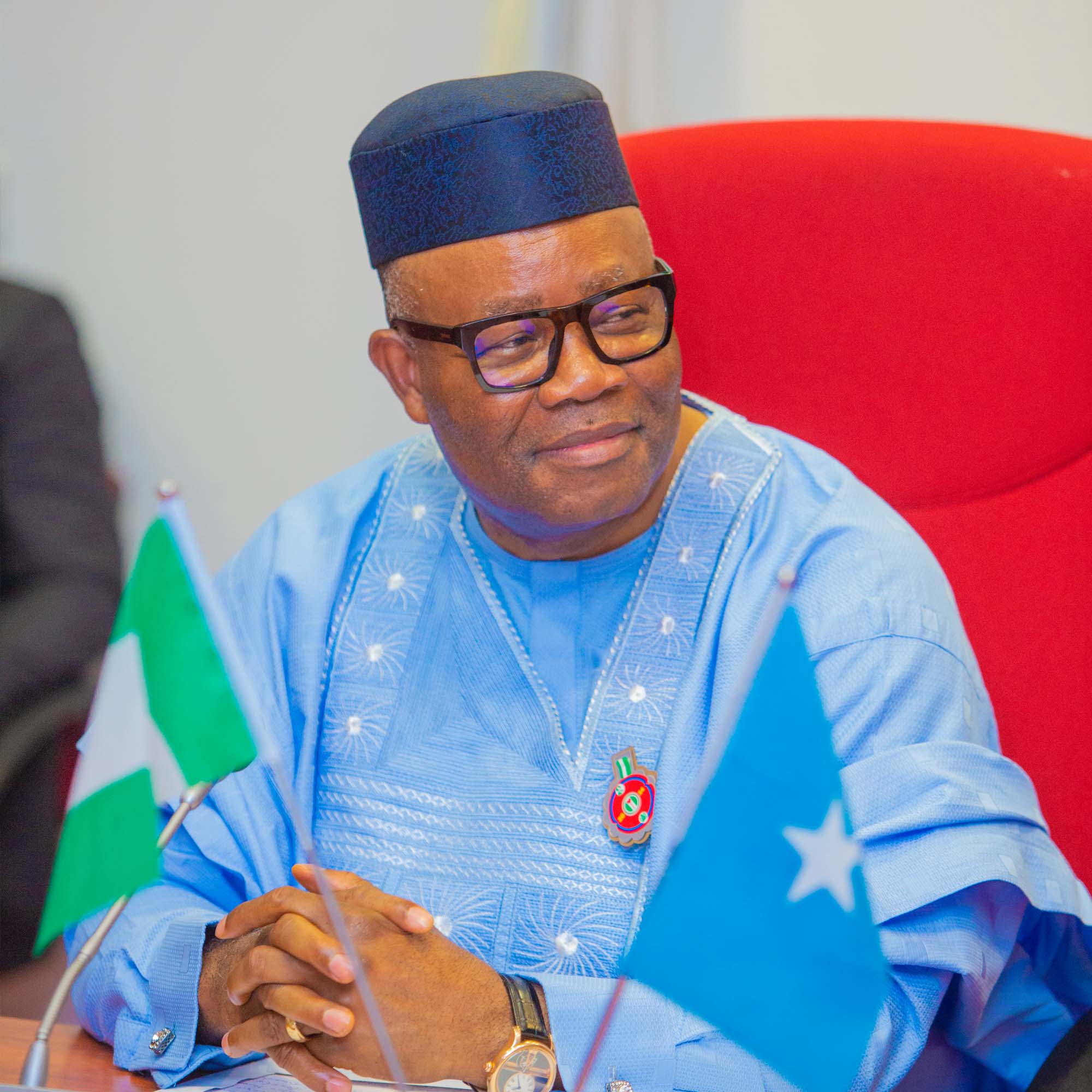
A recent video of Senator Adams Oshiomhole praising Senate President Godswill Obot Akpabio has once again drawn national attention to the leadership style of the 10th National Assembly.
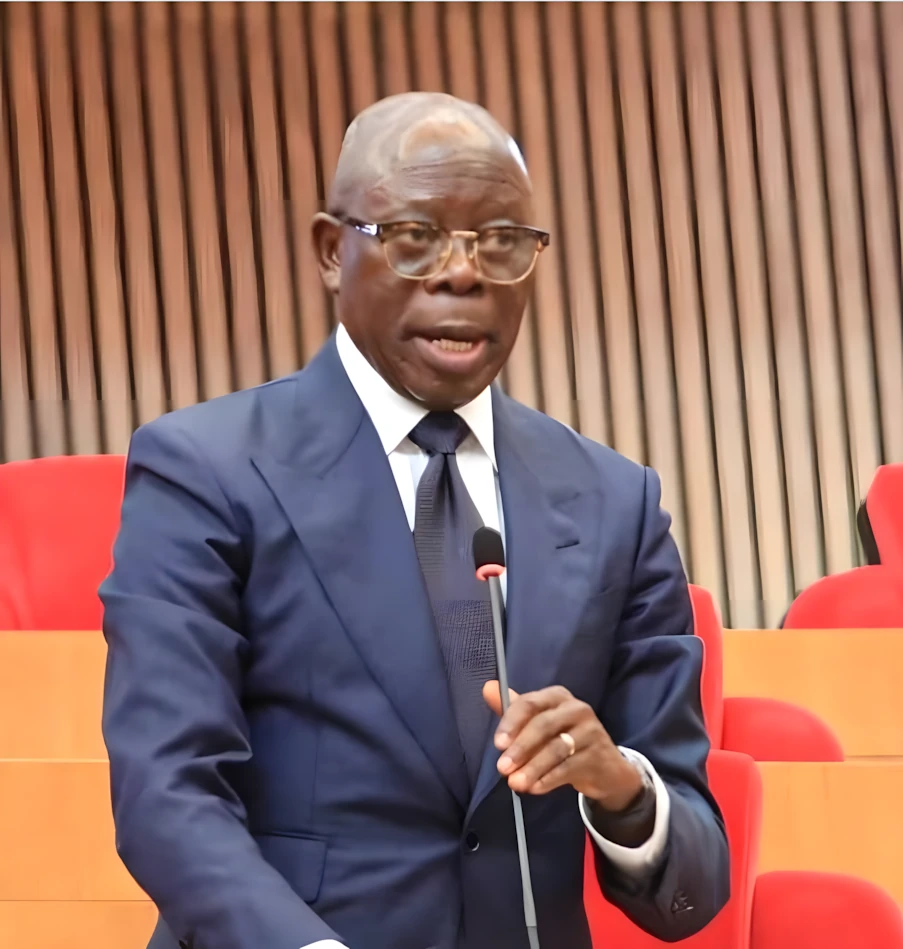
In the widely circulated clip, Oshiomhole described Akpabio’s leadership as exceptional, noting that the Senate President has succeeded in attracting politicians from opposition parties into the APC without intimidation, coercion, or public hostility.
According to Oshiomhole, several political actors who were once fierce opponents of the ruling party are now joining the APC voluntarily because of the atmosphere of accommodation and engagement fostered by Akpabio. In his characteristic humorous style, Oshiomhole even suggested that Akpabio deserved a Guinness World Record for engineering such political realignments with remarkable ease.
The comments have naturally generated debate. Supporters of the Senate President see them as validation of Akpabio’s bridge-building capacity, his ability to reduce political tension, and his commitment to consensus-driven leadership. Critics, predictably, dismiss the remarks as routine political praise often associated with power dynamics. Yet Senator Adams Oshiomhole has long cultivated a reputation for speaking his mind regardless of political convenience, personal relationships, or prevailing sentiments. That is precisely why his remarks have attracted unusual attention within political circles.
However, beyond the noise, one fact remains undeniable: the leadership of the 10th Senate has emerged as one of the most discussed and consequential institutions since the inauguration of the current administration.
Since assuming office in June 2023, Akpabio has consistently projected himself as a leader committed to stability, inclusion, and institutional cooperation. In his inaugural address as Senate President, he described his emergence not as a personal triumph but as a collective victory for democracy and national unity. He pledged to lead with fairness, integrity, and teamwork while placing national interest above partisan considerations.
Recognizing that disagreement is natural in any democracy, he nevertheless argued that the Senate must rise above division and focus on its constitutional responsibilities of lawmaking, oversight, security, and economic reform.
That message resonated deeply at a time when Nigerians were already anxious about governance challenges, economic uncertainty, and widening political polarization.
Akpabio promised a Senate that would work constructively with the Executive without abandoning its constitutional duty as a check on power. He described the institution as “a Senate for all Nigerians,” while repeatedly emphasizing the ideals of “servant leadership” and “uncommon leadership” — phrases that have since become closely associated with his political identity.
This leadership approach has brought a measure of calm and stability to the Senate. Unlike previous assemblies that were often characterized by internal turmoil and prolonged confrontations with the Executive, the 10th Senate has maintained a functional and productive relationship with the administration of President Bola Ahmed Tinubu.
For many political observers, such cooperation has become increasingly necessary in a period marked by inflationary pressures, insecurity, unemployment, and mounting debt obligations.
Several public figures have openly endorsed Akpabio’s leadership style. Governor Monday Okpebholo has praised his transformational and development-oriented approach, while Deputy Speaker Benjamin Kalu described him as visionary, patriotic, and instrumental in strengthening the National Assembly as an institution.
Akpabio has also received multiple recognitions for legislative integrity, institutional leadership, and democratic governance, further reinforcing his leadership credentials.
At the international level, Senator Allwell Heacho Onyesoh credited the Senate President with helping Nigeria regain visibility and relevance within the Inter-Parliamentary Union, describing it as a significant diplomatic achievement. To many observers, this reflects a leadership that is increasingly conscious of Nigeria’s image beyond domestic politics.
Akpabio has repeatedly emphasized inclusiveness as a governing philosophy. Across several public engagements, he has advocated greater opportunities for women, expanded support for persons living with disabilities, youth empowerment, innovation, and technology-driven growth.
He has consistently argued that Nigeria’s future depends largely on preparing young people for a knowledge-based economy while creating legislative frameworks that encourage entrepreneurship, technological advancement, and alternative revenue streams beyond oil dependency.
This philosophy is perhaps most visibly reflected in his home state of Akwa Ibom State, where the working relationship between Akpabio and Governor Umo Eno has significantly altered the state’s political atmosphere.
Both leaders have consistently promoted inclusive politics, helping to reduce tensions and foster a stronger sense of participation among political stakeholders and ordinary citizens alike. The result has been increased cooperation across party lines and broader support for developmental initiatives within the state.
Rather than encouraging rivalry or political fragmentation, Akpabio has openly supported Governor Eno’s developmental agenda, helping to de-escalate political tensions and strengthen public confidence in governance. For many residents, governance in Akwa Ibom now appears less like a contest for personal supremacy and more like a coordinated effort toward collective progress.
Akpabio’s support has also enhanced Akwa Ibom’s visibility at the federal level. As Senate President, his influence has helped attract greater national attention to the state, encouraging stronger collaboration between Akwa Ibom and the Federal Government on infrastructure, human capital development, and economic initiatives.
The political stability arising from this cooperation has equally reassured investors and development partners, who traditionally prefer predictable political environments before committing resources.
Governor Eno’s administration has benefited considerably from this atmosphere of stability. Policies relating to rural development, agriculture, job creation, and social welfare have enjoyed wider acceptance because political leaders within the state are no longer pulling in opposing directions.
Many political observers now regard this partnership as one of the most stable and constructive political relationships witnessed in Akwa Ibom State since its creation.
These developments align closely with President Tinubu’s Renewed Hope Agenda, which seeks to reposition the Nigerian economy through fiscal reforms, infrastructure development, investment attraction, and institutional restructuring.
The administration’s difficult but strategic decisions — including fuel subsidy removal, exchange rate reforms, and fiscal adjustments — have been defended by government officials as necessary foundations for long-term national recovery and growth, despite the temporary hardship they have imposed on citizens.
This reality makes the role of the National Assembly even more critical. The legislature must not only pass reform-oriented laws but also ensure rigorous oversight to guarantee that government policies ultimately translate into measurable benefits for ordinary Nigerians.
Akpabio has repeatedly assured Nigerians that the Senate will continue to protect national interest while supporting policies capable of driving economic recovery and sustainable development.
Even amid the growing commendations directed at him, Akpabio often redirects much of the credit to President Tinubu, presenting himself as part of a broader national team rather than as a solitary political force.
He has consistently praised the President’s efforts to restore investor confidence, rebuild public trust, and reposition Nigeria through the Renewed Hope Agenda.
He frequently references major national infrastructure projects such as the Lagos-Calabar Coastal Highway and the Lagos–Maiduguri corridor as evidence of long-term strategic planning aimed at reconnecting neglected regions and modernizing transportation infrastructure across the country.
Akpabio has equally highlighted the establishment of regional development commissions across Nigeria’s geopolitical zones as evidence of a deliberate effort to ensure inclusiveness and balanced national development. In a nation often challenged by ethnic and regional tensions, such messaging continues to resonate strongly.
On matters of security, the Senate President has remained publicly supportive of ongoing military operations against terrorism, insurgency, banditry, kidnapping, and other violent crimes. At a time when security remains one of the nation’s gravest concerns, his support reinforces the image of institutional cooperation between the legislature and the Executive.
One particularly notable aspect of his recent political messaging has been his reference to growing endorsements for President Tinubu ahead of the 2027 elections. According to Akpabio, such endorsements are not arbitrary political gestures but are rooted in what supporters perceive as visible governance outcomes.
Oshiomhole’s remarks also reveal an enduring reality in Nigerian politics: party strength is no longer measured solely by electoral victories but increasingly by the ability to attract influential figures from rival political platforms. Political defections often symbolize shifting national power dynamics, and Oshiomhole’s comments portray Akpabio as a leader capable of expanding political influence through persuasion rather than confrontation.
Still, Akpabio continues to present himself as a leader who prefers partnership over division. His speeches consistently emphasize dialogue, teamwork, inclusiveness, and national cohesion. He regularly reminds lawmakers that although they may have emerged through different political parties, they ultimately represent one nation and one people.
Whether one agrees with his politics or not, Akpabio has undeniably become one of the most visible, influential, and closely watched political figures in contemporary Nigeria. His ability to maintain cohesion within the Senate, sustain alignment with the presidency, and attract endorsements from major political actors has significantly consolidated his standing within the national political landscape.
For supporters, this continued momentum further reinforces the sobriquet that has followed him for years: the “Uncommon Transformer.”
Rt. Hon. Eseme Eyiboh, MNIPR
Special Adviser, Media and Publicity, and Official Spokesperson to the President of the Senate
By Our Correspondent
The Human Rights Writers Association of Nigeria (HURIWA) has demanded the immediate cessation of what it describes as the unconstitutional harassment and intimidation of JKD Radio/Television journalist, Zainab Salihu Yabagi, by the Kaduna State Police Command.
HURIWA is particularly alarmed by reports that the police declared the female journalist wanted over a video explainer concerning Ibrahim Masari, a Special Adviser to President Bola Ahmed Tinubu, after heavily armed police personnel reportedly invaded the Millennium City, Kaduna studios of JKD Radio/Television on September 11, 2026.
According to reports available to HURIWA, the police initially claimed they were searching for Yabagi in connection with a “stolen phone.” However, during the operation, the organisation’s General Manager, Charles Abah, and a security personnel were reportedly arrested and detained for more than seven hours.
It was subsequently stated that Yabagi was being sought over allegations including criminal conspiracy, defamation, cyberstalking and bullying allegedly connected to Masari.
HURIWA therefore calls on the Inspector-General of Police, Tunde Disu, to immediately direct the Kaduna State Police Command to stop forthwith any harassment, intimidation or arbitrary pursuit of the journalist and other employees of JKD Radio/Television over the disputed broadcast.
If the Special Adviser believes that the broadcast defamed him, the appropriate response is to approach a competent court and seek redress, not to deploy the coercive machinery of the state against a journalist.
HURIWA strongly cautions against the abuse of the Cybercrime Prohibition Act as a convenient instrument for suppressing legitimate journalism and criticism. A cybercrime law must not become a backdoor mechanism for turning civil disputes over alleged defamation into criminal investigations, arrests and intimidation.
The Constitution is clear on the important role of the media. Section 22 of the 1999 Constitution places a constitutional responsibility on the press, radio, television and other mass media to hold government accountable and ensure that government remains responsible to the people.
Journalists cannot effectively discharge that constitutional responsibility if they are made to operate under the constant threat of police arrest simply because a public official is displeased with a report, commentary or video explainer.
HURIWA is not saying that journalists are above the law. Where there is credible evidence of a criminal offence, due process should be followed. But due process cannot mean sending armed police officers to raid a media organisation, arrest its personnel and declare a journalist wanted over a matter that can be subjected to judicial scrutiny.
The alleged use of police power in this manner is particularly troubling because of the reported involvement of a person serving as a Special Adviser to the President. No political appointment, proximity to the Presidency or access to government machinery should confer immunity from criticism or create a private police force for settling personal grievances.
HURIWA therefore urges the IGP to immediately review the circumstances surrounding the Kaduna operation and ensure that the police do not become instruments of self-help in what may essentially be a dispute over alleged defamation.
The Federal Government must also ensure that journalists, broadcasters and media organisations are allowed to operate freely, safely and without fear of arbitrary arrest, intimidation or reprisals.
The growing resort to criminal complaints, police invitations, arrests and searches against journalists over their professional activities risks further shrinking Nigeria’s civic space and weakening one of the constitutional pillars of democratic accountability.
HURIWA demands that the police stop forthwith the harassment of Zainab Salihu Yabagi and JKD Radio/Television and that any person alleging defamation should pursue the remedy available under the law rather than resort to state coercion.
By George Mgbeleke
The Human Rights Writers Association of Nigeria (HURIWA) has condemned in the strongest terms the reported death of 37 suspected illegal miners in the custody of the Nigeria Security and Civil Defence Corps (NSCDC) in Niger State, describing the incident as a grave state-sponsored human rights violation that must not be swept under the carpet.
In a statement by national coordinator of HURIWA ,Comrade Emmanuel Nnadozie Onwubiko, the group said Nigeria cannot continue to operate a system in which citizens are arrested alive by security agencies, taken into lawful custody and subsequently die in detention without an immediate, transparent and independent account of what happened to them.
The rights group says the reported deaths of the suspects in Minna raise disturbing questions about what occurred between the time they were arrested around the M.I. Wushishi/Lukoto axis on September 15 and 16, 2026, and the time their bodies were deposited at the General Hospital, Minna.
HURIWA asks bluntly: How did 37 people arrested alive end up dead in the custody of a government security agency?
The organisation says the sheer number of deaths makes the incident too serious to be treated as an ordinary internal disciplinary matter.
HURIWA notes that the NSCDC has announced an investigative panel and said the cause of death has not been medically or laboratory confirmed. The organisation welcomes the decision to investigate but insists that the NSCDC cannot investigate itself and expect Nigerians to accept the outcome as independent.
According to HURIWA, an institution whose personnel had custody of the deceased cannot simultaneously be the investigator, potential accused party and final authority determining whether its own officers bear responsibility.
“You cannot arrest citizens alive, lock them up under your custody and then investigate yourselves when they emerge dead. That is not independent justice,” HURIWA says.
The organisation therefore demands that President Bola Ahmed Tinubu and the Federal Government immediately constitute an independent judicial or multi-agency panel of inquiry into the deaths.
HURIWA wants the panel to include independent forensic pathologists, medical experts, the National Human Rights Commission, civil society representatives and other credible institutions with no connection to the detention operation.
The group demands full autopsies and independent laboratory and toxicological examinations to determine the precise cause of every death.
It also demands that investigators establish the condition of each suspect at the point of arrest, the number of detainees held, the cells and facilities used, the duration of detention, food and water provided, medical treatment administered, personnel on duty and every movement or transfer involving the suspects.
HURIWA further demands that all available CCTV footage, detention registers, medical records, arrest records, duty rosters and communication logs relating to the detainees be preserved and subjected to independent scrutiny.
The organisation says any officer found, after due process, to have unlawfully caused, facilitated or negligently contributed to the deaths must face criminal prosecution, including murder or other appropriate charges where the evidence supports such charges.
HURIWA also calls for the immediate suspension of officers directly implicated by preliminary evidence, pending the outcome of the independent investigation.
The rights group says officers of the state must understand that lawful custody does not confer a licence to abuse, torture, neglect or unlawfully expose detainees to conditions capable of causing death.
“A suspect is not a corpse. An arrest warrant is not a death warrant. Custody is not a licence to kill,” HURIWA says.
The organisation demands that the families of all the deceased be formally notified, allowed access to independent medical information and involved in the process of establishing the circumstances surrounding the deaths.
Where state responsibility is established, HURIWA demands ₦100 million compensation for each deceased victim, in addition to prosecution of responsible officials and any other remedies available under Nigerian law.
HURIWA says the Federal Government must also immediately account for every person currently detained in connection with the Niger State mining enforcement operation and ensure that their health, safety and fundamental rights are protected.
The organisation warns against any attempt to attribute the deaths to an alleged disease before credible medical and laboratory evidence establishes such a conclusion.
HURIWA says the deaths must not disappear into the familiar cycle of arrest, death, internal investigation and silence.
The group insists that Nigeria’s security agencies must understand that the constitutional rights of citizens do not disappear at the entrance of a detention facility.
HURIWA therefore calls on the Federal Government to treat the Niger deaths as a national human rights emergency and immediately establish an independent inquiry capable of determining responsibility, securing justice for the dead and preventing a repetition.
By Chief(Dr) Chekwas Okorie
I wish to state unequivocally that all our people who are pushed by our painful and unbearable situation in Nigeria to embark on and demand for our self-determination in Nigeria or outright exit for a separate state of Biafra are within their inalienable rights to do so. It is on record that the president of Nigeria Asiwaju Bola Ahmed Tinubu stated boldly and publicly that he did not believe in one Nigeria. He made this statement, which was widely published in Nigerian newspapers when he lost faith in the unity and oneness of Nigeria. Some years later, he became the president of the Federal Republic of Nigeria without being restrained as a result of disowning Nigeria in the past.
Our leader, the General of the Peoples Army, Dim Chukwuemeka Odumegwu-Ojukwu, who led the Biafran Armed Forces to successfully resist the war of annihilation mounted on the people of Biafra (1967-1970) was granted presidential pardon in 1982 by President Shehu Shagari. He returned to Nigeria from self exile and lived out the rest of his life with his people until 2011 when he joined our ancestors.
The resumed struggle for a separate state of Biafra has been prosecuted in several different ways by multiple groups since 1999 when MASSOB first emerged to 2012 when IPOB took the center stage under the leadership of Onyendu Mazi Nnamdi Kanu. There are many other groups that sprang up along the line with similar objectives for approximately 27 years. I do not want to belabor the fact of the collateral damage and economic costs of this adventure. I only wish to point out that the time to review the strategy, tactics, and methodology in seeking our quest for self-determination, freedom, and place of pride in Nigeria has come. As recently as Monday, 14th September 2026, the leaders of Scotland, Northern Ireland, and Welsh met to formulate a joint initiative to exit from the United Kingdom. In the same token, some geopolitical or regional zones in Nigeria may take similar concerted initiatives to redraw the political map of Nigeria at the fullness of time without violence.
There are over 100 active groups struggling for separation from the country they belong to in the world today, and only a few have the chances of referendum.
On June 19, 2021, Mazi Nnamdi Kanu, the leader of IPOB, was abducted at the Jomo Kenyatta International Airport in Nairobi and flown to Nigerian on June 27, 2021.
The extraordinary rendition of Mazi Nnamdi Kanu from Kenya and his unending efforts to obtain justice from the Nigerian courts have been infuriating and provocative to a cross section of the Igbo people in Nigeria and abroad. Prominent Igbo leaders and my humble self as well as well-meaning Nigerian statesmen have appealed to the Nigerian authorities to apply political solutions and release Mazi Nnamdi Kanu and other Igbo political prisoners to foster national reconciliation. These appeals have been treated with contempt and ignominy. Mazi Nnamdi Kanu remains the symbol of Igbo dilemma in Nigeria. The President General of Ohanaeze Ndigbo, Senator John Azuta-Mbata, on two separate occasions, spoke the minds of the entire Igbo Nation when he stated that it is the Igbo people that are in prison for as long as Mazi Nnamdi Kanu remains in prison. All efforts made by the late Chief Emmanuel Iwuanyanwu, as the President General of Ohanaeze Ndigbo to pay a courtesy visit to President Bola Ahmed Tinubu with a delegation of Ohanaeze Ndigbo to seek a political resolution of this matter was rebuffed without the minimum respect of replying to Chief Iwuanyanwu’s letters. The Senator Azuta-Mbata led Ohanaeze Ndigbo has also not been received by the President on this matter that is of great concern to Ndigbo.
APPEAL.
In about four months, Nigerians will be going to the polls to elect a new set of leaders and representatives at all levels in a general election. This democratic exercise happens once in four years in Nigeria.
God has given us a large population and an outstanding geographical spread in Nigeria. There is no state in Nigeria that the Igbo people can not muster at least twenty-five percent of the voting population. Similarly, Igbo people constitute the second largest population by ethnicity in thirty-one states, and the FCT and ninety-nine percent of the population in the Southeast geopolitical zone.
In the Nigerian democracy population and spread are the most potent force for political power and relevance. When effectively deployed, we will regain our respect in Nigeria and secure what is due to us in the Federation without firing a shot.
I appeal to our people in the name of God to deploy the advantage the Almighty God has so graciously granted us and make a resounding political statement and secure the unconditional release of our son Mazi Nnamdi Kanu and his colleagues without having to kow-tow to anybody that will ridicule and insult us in the process.
There is nobody or groups who genuinely wish to see Mazi Nnamdi Kanu free in the nearest future that will be a party to any plot to dissuade our people from actively and massively participating in the 2027 general election. Similarly, l earnestly appeal to Igbo people in the diaspora to make a point of using their telephones and all available social media platforms to reach out to their friends, relations, and beneficiaries in Nigeria to file out on election days to exercise their franchise in the interest of all of us.
God bless Ndigbo.
Chief Dr. Chekwas Okorie
(Ojeozi Ndigbo)
National Chairman
Igbo Agenda Dialogue

FCTA denies Teachers’ harassment allegations, defends redeployment policy
By Our Correspondent The Federal Capital Territory Administration (FCTA) has rejected allegations of harassment against teachers, insisting that its ongoing...

Governor Diri Charges Permanent Secretaries on Stronger Bureaucracy, Better Governance in Bayelsa
By David Owei Bayelsa State Governor, Senator Douye Diri, has stressed the importance of a strong and professional civil service...

HURIWA Tells IGP: Stop Police Harassment of JKD Journalist, Let Masari Go to Court
By Our Correspondent The Human Rights Writers Association of Nigeria (HURIWA) has demanded the immediate cessation of what it describes...

ADC Alleges State-Backed Political Violence, Warns 2027 Election Integrity Already Under Threat*
By George Mgbeleke The African Democratic Congress, ADC, has accused the ruling All Progressives Congress, APC, and security agencies of...

HURIWA Advocates Conversion of N22bn VP Residence to General Hospital
By George Mgbeleke The Human Rights Writers Association of Nigeria (HURIWA) says the continued non-utilisation of the official residence built...

Tinubu’s Third Straight UNGA Absence: Nigeria Must Not Pay For His America Baggage-Atiku
By David Owei *A seat was reportedly secured for Bola near United States President Donald Trump at the world’s most...

TInubu orders full investigation into Minna detainees death, …Warns culpable officials will face protection …As Niger State NSCDC Commandant, 20 other officers suspended
By Our Correspondent A couple of days after the death of 37 alleged illegal Miners,President Bola Ahmed Tinubu has ordered...
Police Arrest 22-year-Old Lady Over Alleged Self-Kinap After N3m Ransom Payment …..Victim traced to Asaba room 20 days after reported abduction — Police
By Our Correspondent Luck ran against a 22 year old lady, Nwachukwu Chidubem Blessing, over an alleged case of conspiracy,...
HURIWA To Tinubu: CNG Buses Can not Replace Urgent Fuel Price Reduction
By George Mgbeleke The Human Rights Writers Association of Nigeria (HURIWA) has rejected the Federal Government’s latest push for state...

Turnah: Bayelsa APC Cannot Deliver Tinubu Without Rainbow Coalition …PDP chairman challenges Ogoriba’s claim, cites 2023 voting figures
By Our Correspondent As 2027 election draws close,the chairman of the peoples democratic party (PDP) in Bayelsa state, high chief...
-
 Politics1 year ago
Gov Okpebholo moves to end Cultism *Threatens action against leading cult groups *Vows to demolish more cult houses in Edo State
-
 Politics1 year ago
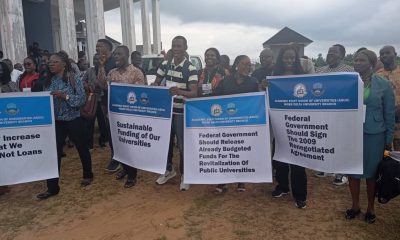
ASUU-NDU protest against FG loans, unpaid salaries,Non-Implementation of agreements …..says loans is generational slavery
-
 Business & Economy1 year ago
PC-NCG Issues Disclaimer on Purported Nigerian Coast Guard National Orientation Exercise In Anambra State
-
 Entertainment2 years ago
Jubilation galore as Parishioners of CKC Kurudu celebrate their cultural heritage ….FG should exploit our Cultural heritage to unite Nigerians-Rev Fr Dim
-

 Sports7 months ago
Bayelsa-born ex-football star’s son, Opuama donates spike shoes to Athletics Association
-

 General News2 years ago
Reps hold public hearing on FMC Ugwuaji Awkunanaw
-
 Law & Crime1 year ago
Legal practitioner raises alarm over threat to his life by CSP Muhammed Abdulkareem
-
 General News2 years ago
Celebration galore as UDA Successfully Elected New Exco ……I will digitalize processes that will raise UDA to greater height -Comr. Okejiri