
Opinion
Benue,Plateau Bleedíng: Stop the Excuses, Hunt Down the Terrorists -Governors must take responsibility for failing to protect their people


By George Mgbeleke
The Human Rights Writers Association of Nigeria (HURIWA) is outraged by the latest bloodbath unleashed on innocent Nigerians in Otukpo-Nobi and Akpachi communities of Otukpo Local Government Area of Benue State, where no fewer than 16 defenceless citizens, including women and children, were massacred in coordinated pre-dawn attacks by terrorists.
This latest carnage is another painful reminder that human life has become frighteningly cheap in parts of Nigeria because governments have continued to react after every massacre instead of preventing them. The repeated slaughter of innocent citizens can no longer be dismissed as unfortunate incidents; they represent a monumental failure of governance and security.
HURIWA extends its deepest condolences to the grieving families and the people of Benue State. We mourn with every community that has buried loved ones whose only crime was living peacefully in their ancestral homes.
Enough is enough.
The Federal Government must immediately deploy overwhelming intelligence and security assets to identify, arrest and prosecute every terrorist, financier, collaborator and sponsor behind these coordinated killings. Nigerians are tired of empty assurances, routine condemnations and endless promises that never translate into justice. The killers must be hunted down and made to face the full weight of the law.
HURIWA is particularly alarmed that despite more than three years of recurring massacres in Benue and Plateau States, the governors of the two states have not done enough to safeguard the lives and property of their people. Governors Hyacinth Alia and Caleb Mutfwang cannot continue to issue condolences after every attack while communities remain exposed to repeated invasions by armed terrorists.
Although policing is constitutionally under the control of the Federal Government, governors are the chief security officers of their states and are expected to provide proactive leadership by strengthening intelligence gathering, supporting lawful community-based security initiatives, coordinating closely with security agencies and ensuring that vulnerable communities receive adequate protection before attacks occur—not after innocent citizens have been buried.
The persistent pattern of attacks demonstrates that preventive measures have been grossly inadequate. These recurring massacres expose dangerous gaps in intelligence, surveillance and rapid response that terrorists have continued to exploit with devastating consequences.
HURIWA calls on President Bola Ahmed Tinubu to treat the worsening killings in Benue and Plateau as a national security emergency requiring sustained military and intelligence operations until every terrorist network operating in the affected areas is dismantled.
We equally demand an independent and transparent investigation into these repeated attacks to expose those responsible, identify any operational failures and ensure that justice is delivered without delay. The culture of impunity must end.
Nigeria cannot continue to normalise mass killings. A government that cannot guarantee the safety of its citizens risks eroding public confidence in the very foundations of constitutional democracy.
The blood of innocent Nigerians cries out for justice. History will not be kind to public officials who watch communities bleed while offering little more than words of sympathy. The time for rhetoric has passed. The time for decisive action is now.
By George Mgbeleke
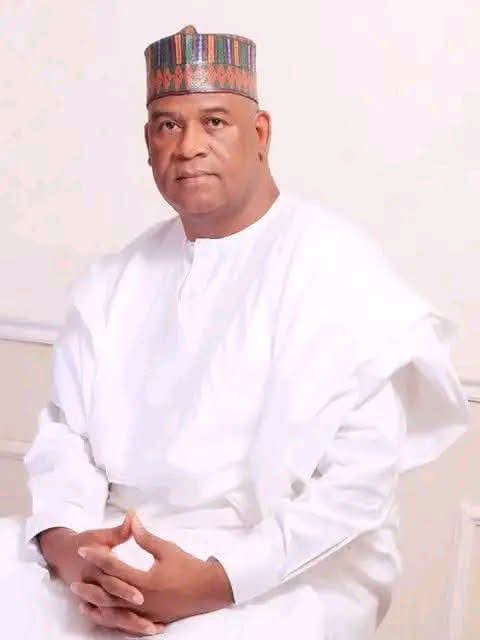
The Human Rights Writers Association of Nigeria (HURIWA) mourns the death of former Senator representing Katsina South Senatorial District, Senator Bello Mandiya, who died at the age of 62.
In a statement signed by the group’s ntional coordinator,Comrade Emmanuel Nnadozie Onwubiko, HURIWA extends its deepest condolences to his family, the people of Katsina State, his political associates, former colleagues and all Nigerians who mourn the passing of a remarkable public servant, politician, journalist and advocate of national development.
For HURIWA, Senator Mandiya was more than a politician and lawmaker. He was a dependable ally of the human rights community and a man who consistently demonstrated a genuine intellectual commitment to the advancement of human rights and democratic values in Nigeria.
During his lifetime, Senator Mandiya made it a point to attend several of HURIWA’s national human rights lectures, where he participated actively in discussions on critical human rights challenges confronting the country. He did not merely attend these engagements; he offered thoughtful contributions, proffered solutions and suggested practical ways of strengthening the work and impact of human rights defenders in Nigeria.
His commitment to these issues remained evident even when he occupied public office. Whether as Chief of Staff to the Katsina State Governor or subsequently as a Senator of the Federal Republic of Nigeria, Mandiya brought his intellect, experience and sense of responsibility to issues affecting the people and the nation.
HURIWA particularly remembers him as a public official who understood that governance was not merely about political power but also about protecting citizens’ rights, strengthening democratic institutions and promoting justice and human dignity.
Before his election to the Senate in 2019 on the platform of the All Progressives Congress (APC), Mandiya also had a background in journalism and media management. He published a specialised magazine aimed at encouraging political dialogue and promoting national unity.
He was, in every sense, a media manager of the purest kind — intellectually grounded, politically engaged and committed to using communication as an instrument for dialogue rather than division.
His public service career also included his tenure as Chief of Staff to former Katsina State Governor, Aminu Masari, before his election to the Senate, where he served from 2019 to 2023.
News of his death has triggered tributes from across the political and public-service spectrum. Katsina State Governor, Dikko Radda, described his death as a great loss to Katsina State and Nigeria, while former Senate President, Ahmad Lawan, remembered him as a “thoroughbred lawmaker” who brought diligence, intellect and a deep sense of responsibility to his duties, particularly during his tenure as Chairman of the Senate Committee on Water Resources.
Also mourning Mandiya, founder of Agora Policy and former Executive Secretary of the Nigeria Extractive Industries Transparency Initiative (NEITI), Waziri Adio, recalled that their friendship dated back to 1988.
HURIWA joins Nigerians in mourning this painful loss.
We believe that the best tribute to Senator Bello Mandiya is to preserve the values he represented: intellectual engagement, political dialogue, national unity, public service and the relentless defence of human dignity.
His contributions may have come to an end with his passing, but his intellectual footprints and the memories of his engagement with the human rights community will remain.
May Allah forgive his shortcomings, grant him eternal rest and give his family, friends, colleagues and associates the strength to bear this irreparable loss.
Opinion
The mob that stopped Peter Obi, failed to stop terrorists killing innocent Benue people: HURIWA mocks Benue State Government *
HUMAN RIGHTS WRITERS ASSOCIATION OF NIGERIA (HURIWA) has expressed deep concern and profound displeasure over the babariic behaviour of Benue youths on the presidential candidate of the National Democratic Congress(NDC),Mr Peter Obi.
In a statement by the national coordinator of Rights Activist, Comrade Emmanuel Nnadozie Onwubiko,”We in the HUMAN RIGHTS WRITERS ASSOCIATION OF NIGERIA (HURIWA) has received with deep concern and profound displeasure that the presidential candidate of the National Democratic Congress (NDC) and erstwhile governor of Anambra State Mr. Peter Obi was stopped on his way to enter Benue State to commiserate with victims of terrorism in the state.
“We view this lawless, reckless and misdirected angst of these sponsored unruly youngsters suspected to have been procured by the agents of the Benue State administration, as vexatious, irrational, irresponsible and provocative actions just as we think there was actually a plot to physically harm the presidential candidate of the NDC and one of the most illustrious Nigerian statesmen running for the high profile office of the president of the Federal Republic of Nigeria. We blame the Benue State Governor Mr. Hyacinth Alia for allowing this lawless act of violence to happen in the first place given that in a previous occasion in which Peter Obi wanted to visit the state to see victims of the unrelenting terrorists attacks, the government said the opposition couldn’t be allowed even when thd president Bola Ahmed Tinubu had visited Benue State after one of the most brutal attacks by Fulani terrorists 8n which over 200 civilians including women, children and old people were massacred in an unprovoked genocide.
“We condemn the Benue State Government for permitting this lawlessness and we also blame the Federal government for not deploying sufficient armed security forces to facilitate the passage of Peter Obi into Benue State even when president Tinubu who shortly before jetting out to unknown places in Europe for a three weeks vacation, had reportedly directed that the security agencies beef up security for the presidential candidate.”
Continuing the statement added,”We view this act of depravity as an attempt to spark off violence and by that way try to physically harm Peter obi to create a national state of anomie and anarchy. This sort of provocation must never be allowed. There is no known law allowing any government in the subnational or national level to prevent a Nigerian citizen from enjoying the constitutionally guaranteed rights to freedoms of movement, association and information. Does the Benue State Governor thinks that he is a military dictator so much so that he thinks he has the powers to dictate who enters Benue and who does not? This tendency is unconstitutional and unconscionable.
“There is therefore no valid reason for blocking Peter Obi from accessing Benue State and we blame the Benue State Governor for this indiscretion. Is it not a shame that the Benue State Governor couldn’t mobilise youths and equip them with the requisite weapons to stop the incessant killings of Benue civilians by terrorists but here are the youths been used for the political assignment of blocking the road so as not to allow Peter Obi to visit victims of terrorism in Benue State? These thugs should cover their faces in shame for letting themselves to be used by politicians to create confusion on the Federal Highway into Benue State.
“HURIWA recalled that a tense situation was reported in Benue State on Monday after a group of suspected thugs reportedly blocked the convoy of the presidential candidate of the Nigeria Democratic Congress (NDC), Peter Obi.
The incident occurred along GBoko Road as Obi and members of his entourage were reportedly attempting to gain access into the state.
Eyewitness accounts said the group, some of whom were allegedly armed with sticks, formed a blockade along the road, preventing the convoy from proceeding.
“The media reports that details surrounding the incident, including the reason for the action and whether anyone was injured, remain unclear as of the time of filing this report.
Security operatives were reportedly on the scene as efforts continued to manage the situation.
“We call on the National security Adviser to the President, the Chief of Defence staff, the service chiefs and the Inspector-General of Police to behave as public office holders whose responsibility and loyalty should be to the Constitution of the Federal Republic of Nigeria and not to any political party. The security agencies must be up and doing and stop this sort of idiocy from repeating itself so as to avoid causing political uprising in the country especially as the nation prepares for the January election. In times like this, when the relevant laws allows for political campaigns and under the extant electoral law, the violent behaviours of the procured political thugs in Benue State is a violation of the relevant provisions of the law, we expect the police to arrest and prosecute these armed thugs said to have wielded sticks and stones.”
By Emmanuel Nnadozie Onwubiko
There is a public spat between the social media influencer and self-styled activist known as VeryDarkMan (VDM) and the Nigeria Police Force. This highly publicised spat began when the former appeared as a speaker at the recently held general conference of the Nigerian Bar Association (NBA) in Port Harcourt, Rivers State, where he used the opportunity offered to him by the lawyers’ group to accuse the Nigeria Police Force of doing nothing about the alleged extensive conspiratorial collaboration between some armed police operatives and kidnappers.
VDM alleged that police operatives mounting roadblocks sometimes give kidnappers a heads-up about road users, which allegedly forms the basis for the kidnappers to strike and abduct travellers for ransom payments.
The police sprang to their own defence by debunking the allegation of collaboration between police operatives and kidnappers, just as the police demanded empirical evidence because, according to the Force, the allegation is untrue.
The police, however, failed to respond professionally by investigating the allegation and instead sounded defensive, as if to suggest that the Nigeria Police Force has not been regarded as one of the most corrupt public institutions in the country for many years.
Also, corruption within the rank and file of the police has become even more organised and massively coordinated from top to bottom, especially in police state commands across Nigeria.
The police in the Federal Capital Territory recently paraded about five high-ranking police officers for allegedly harassing and extorting money from the Chairman of the Independent Corrupt Practices and Other Related Offences Commission (ICPC), who was reportedly forced by the police officers to make a transfer from a Point-of-Sale (POS) terminal in Wuse 2, Abuja.
There have been more than six dozen recorded cases of armed police officers allegedly robbing Nigerians at gunpoint and extorting millions of naira. These cases have even been documented by the Nigeria Police Force across the federation.
We will list some of the cases, including those that amounted to alleged kidnappings by armed police officers. But first, the statement issued by the police will be reproduced here.
The NPF wrote:
«The attention of the Nigeria Police Force has been drawn to comments made by Mr Martins Vincent Otse, popularly known as “VeryDarkMan (VDM),” at the recent Nigerian Bar Association (NBA) Conference in Port Harcourt, in which he alleged that police officers manning checkpoints along major highways relay information to kidnappers and bandits regarding the identity and movement of travellers, thereby facilitating abductions for ransom.
The Nigeria Police Force takes all allegations concerning the conduct of its personnel seriously. We wish to state clearly:
1. On the Nature of the Allegation
The Nigeria Police Force firmly rejects these allegations as unsubstantiated and unfairly damaging to an institution entrusted with the protection of millions of Nigerians.
2. Our Officers Deserve Better Than Blanket Accusations
The Nigeria Police Force is made up of hundreds of thousands of officers who report for duty daily under difficult, underfunded, and often dangerous conditions, many of them at checkpoints exposed to the very criminal elements they are trying to keep off our roads. Sweeping public accusations that paint the entire Force as complicit in the crimes it exists to prevent are deeply demoralising to these officers and unfair to the majority who serve with integrity. Where individual officers are found to have compromised their duty, they will face the full weight of internal discipline and the law. But an entire institution should not be condemned on the strength of a public statement made without evidence.
3. Invitation to Substantiate
Accordingly, the Nigeria Police Force hereby invites Mr Martins Vincent Otse to produce, without delay, the evidence upon which he based these serious allegations, including any evidence that police personnel at checkpoints identify wealthy individuals and subsequently transmit information about them to kidnappers for the purpose of facilitating their abduction. Any such information will be treated with urgency and investigated thoroughly. We encourage any member of the public with credible evidence of officer misconduct to come forward through these channels rather than through public allegations alone, so that appropriate action can be taken.»
There was an instant response from VDM to the press statement issued by the Force spokesperson on August 27, 2026. VDM asked the police to go to court.
I have to say, too, that the police are wrong to caution Nigerians against making allegations about the police as an institution. The allegation of collusion between the police and kidnappers, as made by VDM, is not unprovable, just as it is evidently clear that the hierarchy of the police and the Police Service Commission have dismissed more than six dozen operatives and officers in the last three years over their alleged involvement in kidnapping-related extortion rackets.
On May 15, 2026, it was reported that police authorities said dismissed officers were linked to armed robbery, kidnapping, extortion and abuse of office in Rivers State.
The Nigeria Police Force dismissed and commenced the prosecution of five inspectors over allegations of armed robbery, kidnapping, extortion, stealing and other forms of professional misconduct in Rivers State.
Police authorities also disclosed that three inspectors and one corporal attached to Zone 16 Headquarters in Yenagoa, Bayelsa State, who were implicated in similar crimes, were on the run.
The action, according to the police, was part of the Inspector-General of Police, Olatunji Disu’s, zero-tolerance stance on professional misconduct and criminality within the Force.
The Inspector-General, upon assuming office, pledged to sanitise the institution and ensure that officers found guilty of violating professional ethics and the policing code of conduct faced disciplinary action.
Announcing the development in a statement on Friday, the Force Public Relations Officer, DCP Anthony Placid, said the Nigeria Police Force remained committed to discipline, accountability and institutional reform.
“The Force notes that the actions of the affected officers represent a gross betrayal of the ethics, standards and professional values of the Nigeria Police Force,” Placid said.
According to him, investigations uncovered a criminal syndicate involving serving police officers attached to Zone 16 Headquarters, Yenagoa, including Inspector Ayanniyi Jelili, Inspector Durojaye Francis and Inspector Olayemi Titus.
The officers were accused of engaging in armed robbery, kidnapping and extortion while allegedly operating illegal patrols within Port Harcourt and surrounding areas.
Police said the officers reportedly abducted victims during unlawful stop-and-search operations, forcefully accessed victims’ banking and cryptocurrency applications, and extorted millions of naira from them.
Placid disclosed that investigations led to the arrest of the three officers, while three other accomplices identified as Inspector Awele Ogbogu, Inspector Prosper Aghotor and Corporal Favour Onwuchekwa remained at large.
He added that exhibits recovered from the suspects included three Toyota Sienna buses allegedly used for the illegal operations, as well as N7.3 million traced to the criminal activities.
“Findings further revealed that the suspects operated with firearms and had allegedly carried out similar operations against unsuspecting members of the public within Rivers State,” the statement added.
The police spokesperson further disclosed that another investigation uncovered a separate criminal syndicate involving officers formerly attached to the Department of Operations, Rivers State Command.
The officers — Inspector John Okoi, Inspector Eyibo Asuquo, Inspector Udo Ndipmong, Inspector Bright Nwachukwu and Inspector Anele Ikechukwu — were accused of organised acts of kidnapping, extortion, stealing and official corruption.
According to the police, the dismissed officers routinely abducted citizens, extorted money through unlawful transfers from victims’ bank and cryptocurrency accounts, and dispossessed them of valuables while operating under the guise of official patrol duties.
“Consequently, the five implicated officers were subjected to orderly room proceedings and dismissed from the Nigeria Police Force, while the case file has been forwarded for prosecution on charges bordering on conspiracy, armed robbery, kidnapping, extortion, official corruption and related offences,” the statement said.
The police authorities urged members of the public to continue reporting cases of police misconduct, abuse of office, extortion and human rights violations through established complaint channels for prompt investigation and action.
The Force reiterated its commitment to a professional, transparent, accountable and service-driven policing system rooted in the rule of law and the protection of citizens’ rights.
Earlier, on February 14, 2026, it was reported that the police in Imo State, South-east Nigeria, had dismissed three officers over alleged kidnapping, extortion of N1.7 million and car snatching in the state.
The dismissed officers were Gift Ekwueme and Ikechukwu Eto, who were sergeants. The third dismissed officer, Divine Okwuaru, was a corporal.
The police spokesperson in Imo State, Henry Okoye, told The Punch newspaper that the officers were dismissed after being found guilty of the offences at an orderly room trial.
“After we received the complaint, the police swung into investigation.
“They were arrested, detained, faced an orderly room trial, and after they were found guilty, they were dismissed and the Imo Commissioner of Police ratified it,” he said.
“They are now ex-policemen. They will be arraigned in court for prosecution.”
How the Officers Allegedly Engaged in Kidnapping and Armed Robbery
Mr Okoye, a Deputy Superintendent of Police, said the officers were accused of kidnapping and extorting N1.7 million from a resident, Obinna Egbu, in Owerri on February 8.
The spokesperson said the officers were alleged to have carried out the extortion at gunpoint while posing as members of the police Anti-Kidnapping Unit.
He said the now-dismissed officers allegedly carried out the offences alongside a driver, Alex Chukwu, a civilian.
Mr Okoye said the new Commissioner of Police in Imo State, Garba Bosso, had warned that he would not tolerate any form of corruption, high-handedness or professional misconduct among officers in the state.
He said Mr Bosso warned that officers who engaged in misconduct would be appropriately sanctioned.
Not the First Time
Cases of police brutality, extortion, extrajudicial killings and other unprofessional activities in Nigeria have continued despite sanctions by police authorities, including dismissal from service.
The latest incident occurred about one month after police operatives shot dead a private motorcyclist in Ebonyi State, another state in the South-east.
In November 2024, police operatives from the Crack Squad in Abakaliki, Ebonyi State, shot dead a labourer and critically injured three others in the state.
A similar incident happened in Abakaliki in 2018, when a police officer shot and killed a commercial motorcyclist for allegedly refusing to give him a N50 bribe.
In August 2024, police operatives in Bayelsa State allegedly extorted N3 million from a Nigerian man at gunpoint. The officers were subsequently arrested after the victim petitioned police authorities.
The police operatives later returned the N3 million to the victim, about three weeks later.
In the same year, a Nigerian man accused police operatives in Bayelsa State of extorting N3 million from him at gunpoint.
The victim, Kelechi Isaac, disclosed this on Friday while speaking to reporters in Owerri, Imo State.
A video clip showing him narrating the incident was also uploaded on Facebook.
Mr Isaac hails from Nguru Nworie, a community in Aboh Mbaise Local Government Area of Imo State, Nigeria’s South-east.
The victim is based in Ghana, a West African country. According to him, he returned to Nigeria to attend a friend’s traditional marriage ceremony in Bayelsa State when the incident happened.
In the video clip, he told reporters that the incident happened on a Monday at the Odi axis in the South-south state.
How It Happened
Mr Isaac said he was driving back from the marriage ceremony with two of his friends when five police operatives flagged down their vehicle.
He said the operatives identified themselves as the “IGP’s Special Squad” and that their white pickup truck was unbranded.
The operatives’ uniforms did not have name tags, he said.
The victim said the operatives searched their vehicle and subsequently forced him to unlock his phone.
He said the armed operatives, upon seeing a N10 million bank alert on his phone, allegedly began to beat him and threatened to shoot him unless he transferred N6 million to them.
“They handcuffed me and drove us away and continued beating me. Before we knew it, they started shooting guns and threatened to kill the three of us. I asked them to take me to a police station, but they refused.
“They said that if I didn’t give them N6 million from the N10 million, they would kill all of us. When the beating became too much, I started negotiating with them, and at the end of the day, I transferred N3 million to two bank accounts they provided. They drove with us and stopped us at Ahoada in Rivers State before driving off,” he narrated in the clip.
‘I Want My Money Returned’
Mr Isaac said the operatives gave him two different bank accounts into which he transferred N2 million and N1 million separately.
He said the N2 million was transferred to a Moniepoint Microfinance Bank account belonging to Yusuf Mustafa, while the N1 million was transferred to another Moniepoint Microfinance Bank account belonging to Jerry Ventures.
He appealed to the Inspector-General of Police, Kayode Egbetokun (IGP), to intervene and compel the operatives to return the money.
“All I need is my money to be returned to me and for the IGP to fish out the policemen giving the Nigeria Police Force a bad image. I believe with these account details, they can be fished out.
“I want justice. I want my money returned because it is for my brother’s project. Let the policemen who did this to me be identified so that other Nigerians won’t become their victims,” Mr Isaac stated.
“I don’t do any illicit business. I am a law-abiding citizen of this country.”
The victim said his lawyer wrote to the police in Bayelsa State to notify them of the incident.
Police Speak
When contacted by Premium Times on Friday, the police spokesperson, Musa Mohammed, said he was unaware of the incident.
Mr Mohammed, a Superintendent of Police, said there was no squad known as the “IGP Special Squad” in Bayelsa State.
He said the victim phoned him on Friday evening and informed him that his lawyer would submit an official complaint on September 2.
“But for now, no formal complaint on the issue is on my table or before the State Commissioner of Police,” the spokesperson said.
He said those who allegedly extorted the victim might not have been personnel of the Police Command in Bayelsa.
“They might be from elsewhere,” Mr Mohammed said.
Not the First Time
Cases of police extortion in Nigeria have continued despite punishment by police authorities, including dismissal from service.
The latest extortion allegation occurred two months after police operatives in Anambra State allegedly extorted N810,000 from a resident of the state.
The incident happened in late June.
Following pressure from various quarters, the operatives returned the money to the victim some hours later.
Earlier in June, an operative was dismissed in Abia State for allegedly shooting dead an entrepreneur over his refusal to bribe him.
In March, another operative was dismissed while two others were suspended for allegedly extorting $3,000 from two Nigerians in Port Harcourt, Rivers State.
A Divisional Crimes Officer of Abraka Division in Delta State was also removed from office for allegedly extorting more than N2 million.
This newspaper reported the detention of some operatives at the police headquarters in Abuja for allegedly extorting N30.3 million.
In 2019, a public survey released by the Socio-Economic Rights and Accountability Project (SERAP) reported high levels of corruption in public institutions in Nigeria over the preceding five years. Of the five major public institutions surveyed, the police emerged as the most corrupt, with the power sector identified as the second most corrupt in the country.
Other public institutions identified as corrupt by 70 per cent of Nigerians surveyed were the judiciary, education and health ministries. The survey revealed that the level of corruption had not changed over the previous five years.
The latest report by SERAP, entitled Nigeria: Corruption Perception Survey, was launched at the Sheraton Hotels, Lagos.
According to the survey, “a bribe is paid in 54% of interactions with the police. In fact, there is a 63% probability that an average Nigerian would be asked to pay a bribe each time he or she interacted with the police. That is almost two out of three.”
The chair of the report launch, Professor Akin Oyebode, said in part:
“Corruption remains a significant impediment to law enforcement, access to justice and basic public services such as affordable healthcare, education, and electricity supply. Several Nigerians have to pay a bribe to access police, judiciary, power, education and health services. Corruption is still a key concern in the country with 70% of Nigerians describing the level of corruption as high and in the same measure, stating that corruption levels either increased or remained the same in the last five years.”
“The national survey carried out between September and December 2018 covered the police, judiciary, power, education and health sectors to assess the state of corruption in law enforcement and public service provision.”
“The police were the most adversely ranked on this indicator. For every 100 police interactions reported by the respondents, there was a bribe paid in 54 interactions. The prevalence levels stood at 37% in the power sector, 18% in education, 17.7% in the judiciary and 14% in the health sector.”
Around the same period in 2019, officers and men of the Nigeria Police Force retained their position as the leading corrupt public officials in Nigeria, according to a report released by the National Bureau of Statistics.
The report, titled The 2nd Corruption Survey Report in Nigeria, was released in Abuja.
The NBS conducted the survey with the support of the United Nations Office on Drugs and Crime and other international partners.
The highlights of the report were presented at the State House Conference Centre, Abuja, by the then Statistician-General of the NBS, Dr Yemi Kale, and the Country Representative of UNODC in Nigeria, Mr Oliver Stolpe. Kale was represented by Mr Yemi Adeleran.
The first corruption survey report on Nigeria was presented in 2016, when the police were identified as the most corrupt public agency.
In the latest 2019 report, after a three-year gap, police officers still topped the charts with 33 per cent, although this represented a drop from the 46 per cent recorded previously.
Police Arrest Four Cops for Extorting ICPC Chairman of N53,000 in Abuja on July 20, 2026
Four police officers were detained by the Federal Capital Territory Police Command for allegedly extorting N53,000 from the Chairman of the Independent Corrupt Practices and Other Related Offences Commission, Dr Musa Aliyu (SAN), during an illegal stop-and-search operation in Abuja.
The FCT Commissioner of Police, Ahmed Sanusi, disclosed this on Monday while briefing journalists in Abuja, describing the officers as “thieves” who had no business wearing the police uniform.
According to him, the officers mounted an unauthorised checkpoint around the Banex area of Wuse after leaving their respective duty posts and extorted the ICPC chairman without knowing his identity.
He said the ICPC boss was forced to withdraw N53,000 through a Point-of-Sale operator and even paid the transaction charges before the officers shared the money among themselves.
“I must say here too that we have about four policemen in custody as we speak who successfully extorted somebody of high importance, unknown to them that this person is a highly placed person in society. In clear terms, they extorted the Chairman of the ICPC.
“They extorted him of N53,000. They took him to a POS, he withdrew the money, paid the charges and they shared the money among themselves,” he said.
The police commissioner said investigations revealed that the officers had abandoned their designated duty posts and formed a gang that mounted an illegal checkpoint to extort motorists.
“They are a gang of criminals who left various divisions, clustered together, moved to Wuse Banex and created a checkpoint where they perpetrated this act before fleeing,” he said.
“We got all of them. We are going to make sure they are severely punished. Those that are going to be dismissed will definitely be dismissed,” he added.
The question begging for an answer is why the police force headquarters is doubting the allegation by VDM and many other Nigerians, including the Human Rights Writers Association of Nigeria (HURIWA), about the presence of thousands of police operatives who are allegedly involved in kidnapping, robbery and extortion of citizens at gunpoint?
Emmanuel Nnadozie Onwubiko is the founder of the Human Rights Writers Association of Nigeria and was a National Commissioner of the National Human Rights Commission of Nigeria.


HURIWA Mourns Bello Mandiya, Hourns a Dependable Ally of Human Rights
By George Mgbeleke The Human Rights Writers Association of Nigeria (HURIWA) mourns the death of former Senator representing Katsina South...


HURIWA DEMANDS IMMEDIATE REMOVAL OF HANDCUFFS FROM Ufoma Joseph Immanuel
By George Mgbeleke The Human Rights Writers Association of Nigeria (HURIWA) says the Nigerian Correctional Service must immediately stop the...
Northern Senator Forum Mourns Senator Bello Mandiya
By George Mgbeleke The Northern Senators Forum has received with profound sadness the news of the passing of Distinguished Senator...

APC withdraws petition challenging Gov.Adeleke’s Victory
By Our Correspondent In dramatic twice the All Progressives Congress (APC) has filed an application seeking to withdraw the petition...

NUJ FCT Raises N5.01m Trust Fund for Late Chairman’s Children …265 members raised N5.01m to secure education, welfare of Osadebamwen’s three children
By Our Correspondent In a bid to ensure a good welfare package for its departed members and their families, the...


APC chieftain demands probe, prosecution of Atiku over $40M, SIEMENS, SPV allegations
By Our Correspondent A chieftain of the All Progressives Congress (APC), Ntufam Hilliard Eta, has called on the nation’s anti-corruption...

Nigerian Politics Becoming Less Violent, Says Gov Diri As CBM Holds Bayelsa Retreat
By David Owei Governor of Bayelsa State, Senator Douye Diri, has observed that the political arena in Nigeria was shifting...

Gov Diri Seeks Increase In Law Students Quota At NDU
By David Owei Governor of Bayelsa State, Senator Douye Diri, has appealed to the Council of Legal Education to increase...


Nembe Spill: HOMEF demands cleanup, compensation, accountability
By David Owei The Health of Mother Earth Foundation (HOMEF) on Tuesday demanded urgent cleanup, compensation and accountability over an...


NCDMB to Feature Nwabuikwu’s The Pain and The Promise In Book Reading Session
By David Owei The Nigerian Content Development and Monitoring Board (NCDMB) will host the fifth edition of its Book Reading...
-
 Politics1 year ago
Gov Okpebholo moves to end Cultism *Threatens action against leading cult groups *Vows to demolish more cult houses in Edo State
-
 Politics1 year ago
ASUU-NDU protest against FG loans, unpaid salaries,Non-Implementation of agreements …..says loans is generational slavery
-
 Business & Economy1 year ago
PC-NCG Issues Disclaimer on Purported Nigerian Coast Guard National Orientation Exercise In Anambra State
-
 Entertainment2 years ago
Jubilation galore as Parishioners of CKC Kurudu celebrate their cultural heritage ….FG should exploit our Cultural heritage to unite Nigerians-Rev Fr Dim
-

 Sports7 months ago
Bayelsa-born ex-football star’s son, Opuama donates spike shoes to Athletics Association
-

 General News2 years ago
Reps hold public hearing on FMC Ugwuaji Awkunanaw
-
 Law & Crime1 year ago
Legal practitioner raises alarm over threat to his life by CSP Muhammed Abdulkareem
-
 General News2 years ago
Celebration galore as UDA Successfully Elected New Exco ……I will digitalize processes that will raise UDA to greater height -Comr. Okejiri