
Opinion
Specil Appleal To All Freedom Fighters and Biafran Agitators

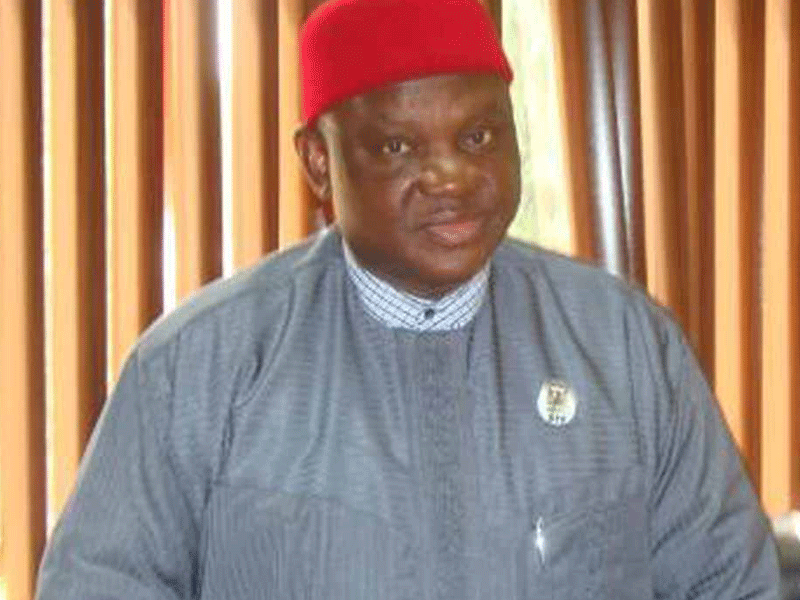
By Chief(Dr) Chekwas Okorie
I wish to state unequivocally that all our people who are pushed by our painful and unbearable situation in Nigeria to embark on and demand for our self-determination in Nigeria or outright exit for a separate state of Biafra are within their inalienable rights to do so. It is on record that the president of Nigeria Asiwaju Bola Ahmed Tinubu stated boldly and publicly that he did not believe in one Nigeria. He made this statement, which was widely published in Nigerian newspapers when he lost faith in the unity and oneness of Nigeria. Some years later, he became the president of the Federal Republic of Nigeria without being restrained as a result of disowning Nigeria in the past.
Our leader, the General of the Peoples Army, Dim Chukwuemeka Odumegwu-Ojukwu, who led the Biafran Armed Forces to successfully resist the war of annihilation mounted on the people of Biafra (1967-1970) was granted presidential pardon in 1982 by President Shehu Shagari. He returned to Nigeria from self exile and lived out the rest of his life with his people until 2011 when he joined our ancestors.
The resumed struggle for a separate state of Biafra has been prosecuted in several different ways by multiple groups since 1999 when MASSOB first emerged to 2012 when IPOB took the center stage under the leadership of Onyendu Mazi Nnamdi Kanu. There are many other groups that sprang up along the line with similar objectives for approximately 27 years. I do not want to belabor the fact of the collateral damage and economic costs of this adventure. I only wish to point out that the time to review the strategy, tactics, and methodology in seeking our quest for self-determination, freedom, and place of pride in Nigeria has come. As recently as Monday, 14th September 2026, the leaders of Scotland, Northern Ireland, and Welsh met to formulate a joint initiative to exit from the United Kingdom. In the same token, some geopolitical or regional zones in Nigeria may take similar concerted initiatives to redraw the political map of Nigeria at the fullness of time without violence.
There are over 100 active groups struggling for separation from the country they belong to in the world today, and only a few have the chances of referendum.
On June 19, 2021, Mazi Nnamdi Kanu, the leader of IPOB, was abducted at the Jomo Kenyatta International Airport in Nairobi and flown to Nigerian on June 27, 2021.
The extraordinary rendition of Mazi Nnamdi Kanu from Kenya and his unending efforts to obtain justice from the Nigerian courts have been infuriating and provocative to a cross section of the Igbo people in Nigeria and abroad. Prominent Igbo leaders and my humble self as well as well-meaning Nigerian statesmen have appealed to the Nigerian authorities to apply political solutions and release Mazi Nnamdi Kanu and other Igbo political prisoners to foster national reconciliation. These appeals have been treated with contempt and ignominy. Mazi Nnamdi Kanu remains the symbol of Igbo dilemma in Nigeria. The President General of Ohanaeze Ndigbo, Senator John Azuta-Mbata, on two separate occasions, spoke the minds of the entire Igbo Nation when he stated that it is the Igbo people that are in prison for as long as Mazi Nnamdi Kanu remains in prison. All efforts made by the late Chief Emmanuel Iwuanyanwu, as the President General of Ohanaeze Ndigbo to pay a courtesy visit to President Bola Ahmed Tinubu with a delegation of Ohanaeze Ndigbo to seek a political resolution of this matter was rebuffed without the minimum respect of replying to Chief Iwuanyanwu’s letters. The Senator Azuta-Mbata led Ohanaeze Ndigbo has also not been received by the President on this matter that is of great concern to Ndigbo.
APPEAL.
In about four months, Nigerians will be going to the polls to elect a new set of leaders and representatives at all levels in a general election. This democratic exercise happens once in four years in Nigeria.
God has given us a large population and an outstanding geographical spread in Nigeria. There is no state in Nigeria that the Igbo people can not muster at least twenty-five percent of the voting population. Similarly, Igbo people constitute the second largest population by ethnicity in thirty-one states, and the FCT and ninety-nine percent of the population in the Southeast geopolitical zone.
In the Nigerian democracy population and spread are the most potent force for political power and relevance. When effectively deployed, we will regain our respect in Nigeria and secure what is due to us in the Federation without firing a shot.
I appeal to our people in the name of God to deploy the advantage the Almighty God has so graciously granted us and make a resounding political statement and secure the unconditional release of our son Mazi Nnamdi Kanu and his colleagues without having to kow-tow to anybody that will ridicule and insult us in the process.
There is nobody or groups who genuinely wish to see Mazi Nnamdi Kanu free in the nearest future that will be a party to any plot to dissuade our people from actively and massively participating in the 2027 general election. Similarly, l earnestly appeal to Igbo people in the diaspora to make a point of using their telephones and all available social media platforms to reach out to their friends, relations, and beneficiaries in Nigeria to file out on election days to exercise their franchise in the interest of all of us.
God bless Ndigbo.
Chief Dr. Chekwas Okorie
(Ojeozi Ndigbo)
National Chairman
Igbo Agenda Dialogue

By George Mgbeleke
The Human Rights Writers Association of Nigeria (HURIWA) says the removal of petrol subsidy remains illegitimate, unconstitutional and fundamentally anti-poor, despite the Federal Government’s insistence that there will be no return to the subsidy regime.
HURIWA in a statement signed by its national coordinator,Comrade Emmanuel Nnadozie Onwubiko says there was no national debate, broad-based consultation or acceptable referendum through which Nigerians agreed that petrol subsidy should be removed.
The association says President Bola Tinubu announced the removal of the subsidy on May 29, 2023, the same day he was sworn into office, without any prior national consensus on the policy.
HURIWA therefore rejects the argument by the Presidency that the subsidy debate is permanently settled.
The association says the government cannot continue to impose incessant increases in the prices of petrol, diesel and cooking gas while millions of Nigerians struggle with inflation, unemployment, declining purchasing power and worsening poverty.
HURIWA warns that the continued escalation of energy costs is aggravating the cost-of-living crisis and pushing millions of Nigerians deeper into economic hardship.
The association says the Presidency’s declaration that there is “no going back” on subsidy removal should not be used to shut down legitimate public debate over the consequences of the policy.
HURIWA says if the Federal Government insists on allowing further increases in the prices of petrol and other essential energy products, Nigerians have the constitutional right to organise peaceful public protests and demand policies that protect their economic and social rights.
The association calls on Nigerians to peacefully mobilise against the incessant hikes in petrol prices and demand the restoration of an appropriate and transparent form of fuel subsidy or other effective mechanism capable of protecting citizens from unbearable energy costs.
HURIWA says the argument that subsidy removal has generated trillions of naira for the federation does not, by itself, justify the policy if ordinary Nigerians are unable to feel its benefits in their daily lives.
The association notes the claim by the Minister of Finance and Coordinating Minister of the Economy, Taiwo Oyedele, that subsidy removal generated N15.8 trillion in resources for the federation between June 2023 and December 2025, with N5.4 trillion accruing to the Federal Government and N10.4 trillion shared among states and local governments.
HURIWA asks what measurable improvements in the living conditions of ordinary Nigerians can be directly linked to these enormous savings.
The association also notes the Presidency’s argument, as conveyed by the Special Adviser to the President on Information and Strategy, Bayo Onanuga, that restoring subsidy would create legal and fiscal complications and discourage investment in domestic refining.
HURIWA says these concerns should not be allowed to override the fundamental question of citizens’ welfare.
The association further notes that former Vice-President Atiku Abubakar has proposed a controlled intervention in the oil and gas sector rather than a return to what he described as the opaque subsidy regime of the past.
HURIWA says the proposal deserves serious public scrutiny rather than outright dismissal, particularly because millions of Nigerians are currently bearing the consequences of high energy prices.
The association says the debate must focus on how Nigeria can guarantee affordable energy, protect vulnerable citizens, strengthen domestic refining and prevent corruption and abuse in the management of public resources.
HURIWA also agrees that Nigeria must avoid the corruption, smuggling, rent-seeking and fiscal leakages associated with the former subsidy regime.
However, the association says removing subsidy without establishing an effective alternative social protection mechanism amounts to transferring the burden of adjustment almost entirely to ordinary Nigerians.
HURIWA therefore demands full transparency on the utilisation of funds saved from subsidy removal and insists that the Federal Government must publish verifiable evidence showing how the savings have been deployed to improve transportation, healthcare, education, infrastructure, wages, social protection and other essential services.
The association says Nigerians should not be asked to accept permanent economic hardship merely because government describes subsidy removal as a reform.
HURIWA warns that the continued increase in petrol, diesel and gas prices will deepen inflation, weaken local businesses, increase transportation and food costs and further erode the purchasing power of workers, pensioners and low-income households.
The association calls on the Federal Government to urgently review its energy pricing policy and introduce measures that will bring down the cost of energy without creating another avenue for corruption.
HURIWA says the welfare of Nigerians must remain the primary consideration in every economic reform.
The association also urges the government to respect the constitutional rights of Nigerians to peaceful assembly, expression and protest whenever citizens choose to publicly oppose policies they consider harmful to their welfare.
HURIWA maintains that economic reforms cannot be sustainable when the people are excluded from meaningful consultation and are left to bear the heaviest burden of those reforms.
By George Mgbeleke
The Human Rights Writers Association of Nigeria (HURIWA) has rejected as shallow, politically convenient and lacking sufficient grassroots context the reported assessment of Imo State by United Nations Deputy Secretary-General, Amina Mohammed.
HURIWA says the description of Imo State as “inspiring” cannot reasonably represent the reality of millions of residents unless the assessment was based on a much broader engagement with communities across the state.
According to reports of the UN delegation’s visit to Governor Hope Uzodimma at the Government House in Owerri, Mohammed said:
“What I saw in Imo is inspiring,” the UN Deputy Secretary-General stated, expressing optimism over the rapid progress recorded in youth development and technological empowerment.
She was also reported as saying that “Imo State’s strategic investments in education, digital skills, power infrastructure, and administrative reforms are creating competitive enterprises, productive jobs, and resilient communities.” The delegation further highlighted the need to strengthen energy systems, expand access to climate finance and build supply chains linking local producers to broader markets.
HURIWA says these observations make it even more important to establish the geographical and social scope of the delegation’s assessment.
The rights group therefore asks a fundamental question: Did the UN delegation engage directly with ordinary residents in Okigwe, Orlu and Owerri zones before arriving at such a sweeping conclusion about the state?
HURIWA says a visit centred largely on Government House presentations, meetings with government officials and selected beneficiaries cannot, by itself, provide a comprehensive picture of the living conditions of the people.
The association challenges the UN delegation to explain whether it visited rural communities in Okigwe Senatorial District where residents have continued to raise concerns over inadequate infrastructure, access to healthcare, electricity, potable water, rural roads and security.
HURIWA says the development narrative presented to the delegation must be tested against the experiences of people living in communities where basic public services remain inadequate.
Did the delegation visit the rural communities where people struggle daily to access primary healthcare? Did it speak to families who lack reliable electricity and potable water? Did it inspect rural roads and assess the security situation outside the government-controlled urban centres?
The association says these are critical questions that should precede any broad conclusion about the state’s development trajectory.
HURIWA is particularly concerned about the security situation in parts of Imo State and allegations that some communities, especially in parts of Okigwe zone, continue to experience the disruptive presence of armed non-state actors and inadequate governmental and security presence.
The association says development cannot be measured only by digital training programmes, economic initiatives or government buildings when citizens in some communities allegedly remain exposed to insecurity and lack basic social infrastructure.
HURIWA also draws attention to reports and findings by human-rights organisations, including Amnesty International, concerning alleged abuses and violations linked to security operations engagement.
Where exactly did the delegation go in Imo State? Which rural communities did it visit? How many ordinary residents were interviewed independently of government officials? How many victims of insecurity, unemployment, poor healthcare and infrastructure deficits were given an opportunity to tell their stories?
The association says these questions are important because development assessment should not become a ceremony in which government officials present their achievements to international visitors without an equally rigorous examination of conditions at the grassroots.
HURIWA acknowledges that digital skills, youth empowerment, energy projects, healthcare reforms and economic diversification are legitimate areas of development. However, it insists that such initiatives must ultimately be measured by their impact on ordinary citizens.
The association also cautions against allowing carefully packaged government presentations to substitute for independent assessment.
If thousands of young people have indeed been trained, HURIWA says the relevant question is how many have obtained sustainable employment or established viable businesses. If hundreds of enterprises have been created, the question is whether they remain operational and profitable. If healthcare investments have been made, the question is whether rural residents can actually access functional primary healthcare facilities.
Similarly, HURIWA says claims about energy expansion must be tested against the reality of communities still struggling with electricity and basic infrastructure.
The association therefore urges the United Nations and other international development partners to conduct independent, community-level assessments before endorsing sweeping narratives about governance and development in any Nigerian state.
HURIWA warns that international institutions risk losing credibility when their assessments appear to rely disproportionately on official presentations rather than independent engagement with citizens.
“The people of Imo State deserve development, security, healthcare, infrastructure and decent livelihoods. They also deserve to have their realities heard directly, not filtered through official briefings.”
HURIWA calls on the UN to deepen its engagement with communities across Imo State and publish evidence-based assessments that capture both government achievements and the concerns of citizens.
The association maintains that genuine development is not merely what government officials say has been achieved. It is what citizens can see, access, afford and experience in their daily lives.
By George Mgbeleke
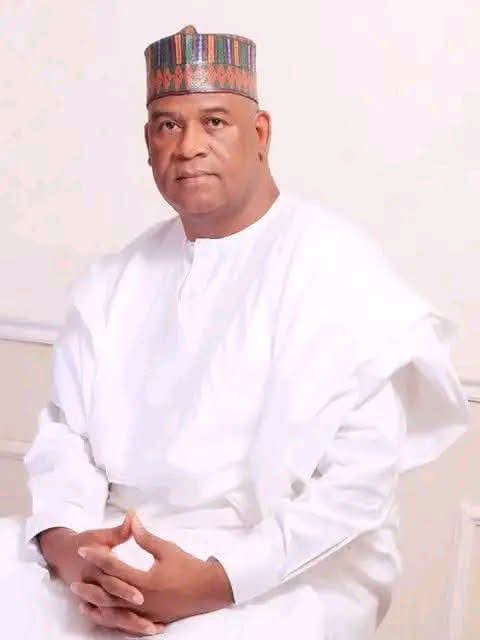
The Human Rights Writers Association of Nigeria (HURIWA) mourns the death of former Senator representing Katsina South Senatorial District, Senator Bello Mandiya, who died at the age of 62.
In a statement signed by the group’s ntional coordinator,Comrade Emmanuel Nnadozie Onwubiko, HURIWA extends its deepest condolences to his family, the people of Katsina State, his political associates, former colleagues and all Nigerians who mourn the passing of a remarkable public servant, politician, journalist and advocate of national development.
For HURIWA, Senator Mandiya was more than a politician and lawmaker. He was a dependable ally of the human rights community and a man who consistently demonstrated a genuine intellectual commitment to the advancement of human rights and democratic values in Nigeria.
During his lifetime, Senator Mandiya made it a point to attend several of HURIWA’s national human rights lectures, where he participated actively in discussions on critical human rights challenges confronting the country. He did not merely attend these engagements; he offered thoughtful contributions, proffered solutions and suggested practical ways of strengthening the work and impact of human rights defenders in Nigeria.
His commitment to these issues remained evident even when he occupied public office. Whether as Chief of Staff to the Katsina State Governor or subsequently as a Senator of the Federal Republic of Nigeria, Mandiya brought his intellect, experience and sense of responsibility to issues affecting the people and the nation.
HURIWA particularly remembers him as a public official who understood that governance was not merely about political power but also about protecting citizens’ rights, strengthening democratic institutions and promoting justice and human dignity.
Before his election to the Senate in 2019 on the platform of the All Progressives Congress (APC), Mandiya also had a background in journalism and media management. He published a specialised magazine aimed at encouraging political dialogue and promoting national unity.
He was, in every sense, a media manager of the purest kind — intellectually grounded, politically engaged and committed to using communication as an instrument for dialogue rather than division.
His public service career also included his tenure as Chief of Staff to former Katsina State Governor, Aminu Masari, before his election to the Senate, where he served from 2019 to 2023.
News of his death has triggered tributes from across the political and public-service spectrum. Katsina State Governor, Dikko Radda, described his death as a great loss to Katsina State and Nigeria, while former Senate President, Ahmad Lawan, remembered him as a “thoroughbred lawmaker” who brought diligence, intellect and a deep sense of responsibility to his duties, particularly during his tenure as Chairman of the Senate Committee on Water Resources.
Also mourning Mandiya, founder of Agora Policy and former Executive Secretary of the Nigeria Extractive Industries Transparency Initiative (NEITI), Waziri Adio, recalled that their friendship dated back to 1988.
HURIWA joins Nigerians in mourning this painful loss.
We believe that the best tribute to Senator Bello Mandiya is to preserve the values he represented: intellectual engagement, political dialogue, national unity, public service and the relentless defence of human dignity.
His contributions may have come to an end with his passing, but his intellectual footprints and the memories of his engagement with the human rights community will remain.
May Allah forgive his shortcomings, grant him eternal rest and give his family, friends, colleagues and associates the strength to bear this irreparable loss.

Specil Appleal To All Freedom Fighters and Biafran Agitators
By Chief(Dr) Chekwas Okorie I wish to state unequivocally that all our people who are pushed by our painful and...
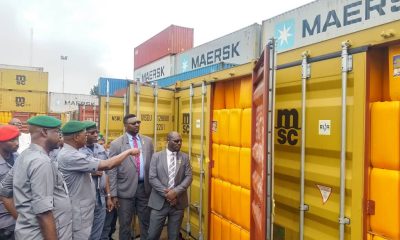

Customs Intercepts 56 Containers With Goods Worth Over N5.53bn, Inaugurates Healthcare Centre In Rivers
By Our Correspondent In its effort to stamp out smuggling and improve the revenue target of the country, the Nigeria...

2027 Election: Every Action of INEC will Reflect Will of Nigerians-Prof Gumus
By George Mgbeleke The Independent National Electoral Commission (INEC) has reaffirmed its commitment to conducting a transparent, credible, inclusive and...

Barau Inaugurates Kano North Campaign Council, Tasks Members to Deliver APC Candidates from Top to Bottom * Says: “APC SAK”
By George Mgbeleke The Deputy President of the Senate, Senator Barau I. Jibrin, on Tuesday inaugurated the Kano North Senatorial...

Minna Court Orders BSS Ministry to pay N6m as damages,cost of litigation to incorporated Trustee of NIPTAN
By Uthman Baba-Naseer,Minna The Minna High Court number two,has ordered the Ministry of Basic and Secondary Schools in Niger State,...

CRD Layout encroachment: Residents extol Wike, appeal to him to call developer to order
By Our Correspondent The residents of CRD Layout in Lugbe, Abuja have commended the Minister of the Federal Capital Territory,...

Renowned VOA Journalist Madina Nadabo Joins ABER as Director of Communications and Public Affairs
By David Owei Port Harcourt, Nigeria – The Board of Trustees of the BRACED Tourism Promotion & Development Initiative (BTPDI),...
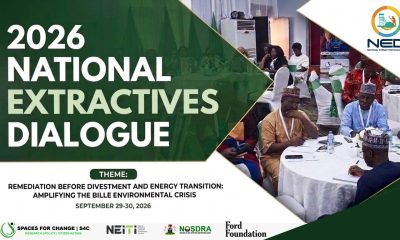

As Oil companies , Niger Delta Community Ask: Who Will Clean Up their exploited Environment
By David Owei For families in Bille Kingdom, the water around them is more than a stretch of creek. It...
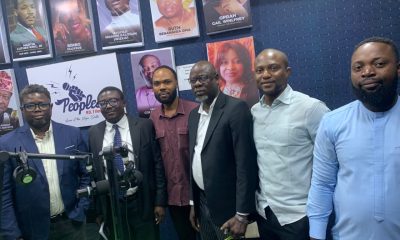

NAS marks International Day of Democracy with radio advocacy on democracy, Civic responsibility
By David Owei The National Association of Seadogs (NAS) Oxbow Marino Deck has marked the International Day of Democracy with...


Edo Healthcare Transformation: Okpebholo provides 61 PHCs in less than two years in office
Hy Our Correspondent Edo State Governor, Senator Monday Okpebholo, has built and renovated 61 Primary Healthcare Centres across the state’s...
-
 Politics1 year ago
Gov Okpebholo moves to end Cultism *Threatens action against leading cult groups *Vows to demolish more cult houses in Edo State
-
 Politics1 year ago
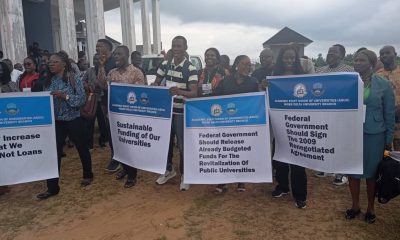
ASUU-NDU protest against FG loans, unpaid salaries,Non-Implementation of agreements …..says loans is generational slavery
-
 Business & Economy1 year ago
PC-NCG Issues Disclaimer on Purported Nigerian Coast Guard National Orientation Exercise In Anambra State
-
 Entertainment2 years ago
Jubilation galore as Parishioners of CKC Kurudu celebrate their cultural heritage ….FG should exploit our Cultural heritage to unite Nigerians-Rev Fr Dim
-

 Sports7 months ago
Bayelsa-born ex-football star’s son, Opuama donates spike shoes to Athletics Association
-

 General News2 years ago
Reps hold public hearing on FMC Ugwuaji Awkunanaw
-
 Law & Crime1 year ago
Legal practitioner raises alarm over threat to his life by CSP Muhammed Abdulkareem
-
 General News2 years ago
Celebration galore as UDA Successfully Elected New Exco ……I will digitalize processes that will raise UDA to greater height -Comr. Okejiri