
Politics
Rivers Assembly Adjourns on definit Matters of Urgent Public Importance …As it Moves to Address Flooding in the state

By Daivd Owei
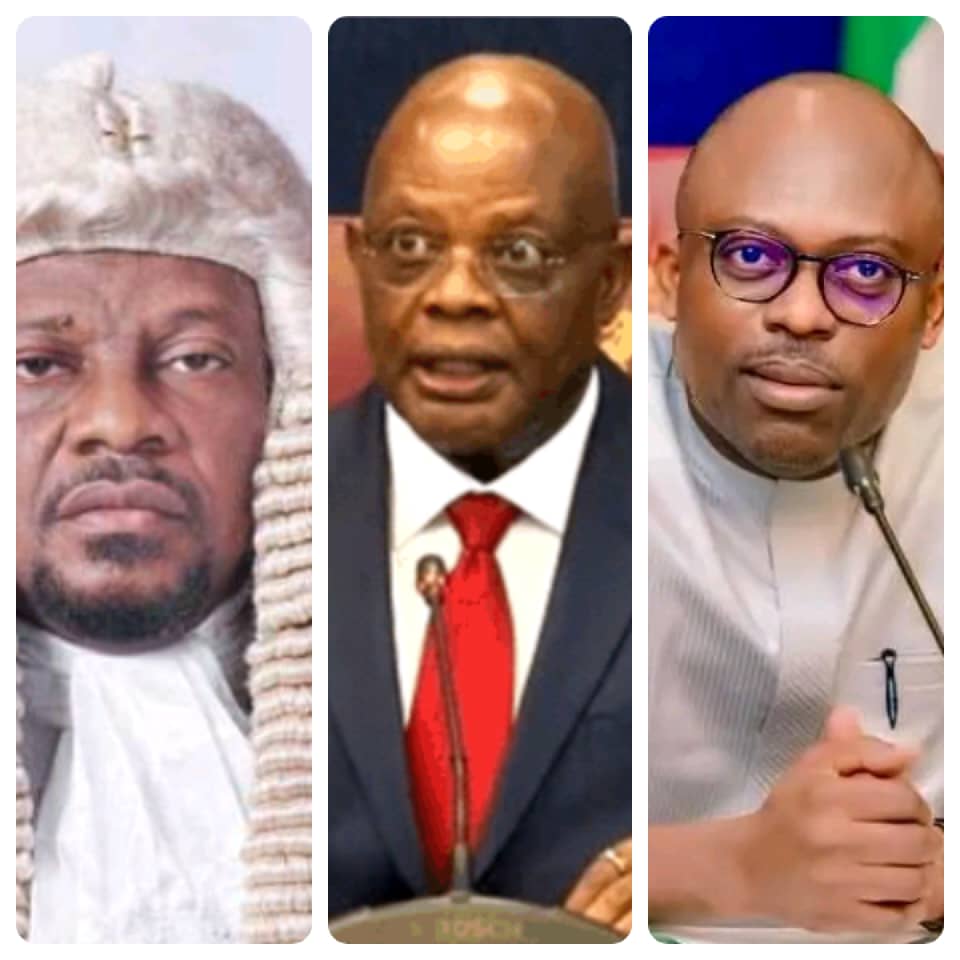
Touched by the sufferings of Rivers people, occasioned by the ravaging floods in the State, the Rivers State House of Assembly, on Tuesday, at its 55th Legislative Sitting of the Fourth Session, suspended every other matter and resolved on a Motion moved by the Deputy Majority Leader, Hon. Linda Somiari-Stewart.
Rising under Order 26 of the Standing Orders of the House, Hon. Stewart called on the House to take urgent steps in tackling the worsening flood situation in the State. The Deputy Majority Leader painted a grave picture of the situation, where residents’ property and means of livelihood have been destroyed, and more worrisome is the report that very poisonous reptiles now occupy submerged homes; adding that as a responsible Assembly, Members cannot watch without doing anything while their constituents go through such live threatening flood.
Hon. Stewart prayed the House to grant her prayer by moving to the flood impacted areas and see the severity of the impact.
Before ruling on the Motion, the Speaker, Rt. Hon. Martin Chike Amaewhule, expressed his profound sympathy to residents who are wallowing in the flood induced agony, and urged Members to go to their various constituencies, access the situation and ensure that they provide mitigative anodyne for the people in any way they could. And when the Speaker put the question, Members in unison voted in the affirmative to visit some flood-ravaged areas in Port Harcourt and Obio/Akpor Local Government Areas of the State to access the level of damage.
Flowing from the resolution, Members moved through several flooded areas, assessed the level of destruction and listened to the harrowing experiences of residents who have been battling the disaster in recent days.
Addressing journalists after the visit, Rt. Hon. Amaewhule said the decision to embark on the inspection was prompted by a Motion adopted by the House and the numerous distress calls received from constituents across Rivers State. He said, “As an Assembly, we deemed it necessary to move around the streets of Obio/Akpor and Port Harcourt to see things for ourselves. What we have seen clearly shows that flooding requires urgent attention.”
The Speaker lamented that many families have been displaced, while several roads have become inaccessible, describing the situation as a major concern that demands immediate government intervention.
Rt. Hon. Amaewhule explained that the Assembly observed that some of the flooded locations were caused by blocked canals and neglected drainage channels, while others were the result of natural water flow. He insisted that agencies responsible for desilting drains must be alive to their responsibilities to prevent avoidable flooding.
The Speaker expressed optimism that the Rivers State Government would rise to the occasion and take the necessary steps to tackle the flooding challenge and protect lives and property across the State.
Politics
Diri Eulogises Bayelsa Founding Fathers, Says State Has Made Progress At 30 *’Roads, Power, Jobs Remain Priorities’
By David Owei,Bayelsa
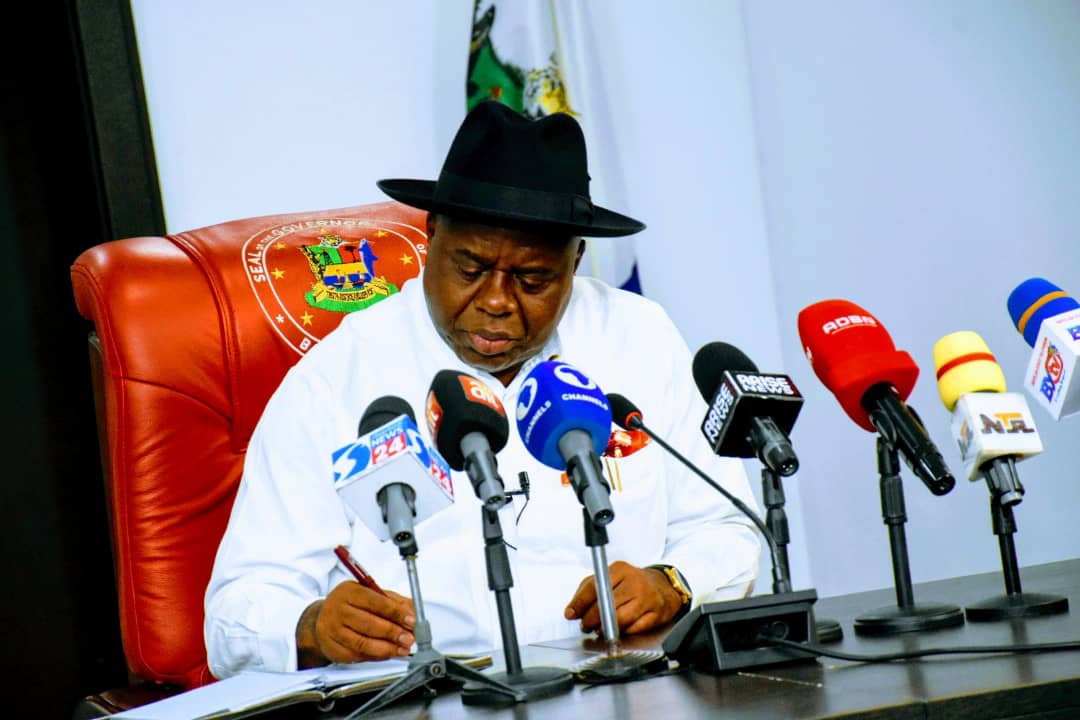
Governor of Bayelsa State, Senator Douye Diri, has paid tributes to its founding fathers, stating that the homogenous Ijaw state created by the former Head of State, late Gen. Sani Abacha, on October 1, 1996, has recorded significant progress in 30 years.
Governor Diri, however, said that much remains to be done to fully realise the aspirations of the founding fathers.
Diri stated this in a live broadcast to mark the 30th anniversary of the state and Nigeria’s 66th independence anniversary on Thursday.
He said the twin anniversary provided an opportunity to honour those who laid the foundations of the state and reflect on what the present generation would leave behind.
According to him, Bayelsa’s creation was the product of years of advocacy, petitions, protests, prayers and sacrifices by generations of Ijaw people seeking justice, recognition and a greater voice within the Nigerian federation.
Diri recalled that the creation of the old Rivers State from the former Eastern Region in 1967 was an important milestone in that struggle spearheaded largely by the Ijaws and which also eventually culminated in the creation of Bayelsa twenty-nine years later.
The Bayelsa helmsman recalled the roles played by some of the state’s heroes, including Major Isaac Boro, Chief Harold Dappa-Biriye, Chief Melford Okilo, Pa Ernest Ikoli, Chief Joshua Fumudoh, King Alfred Diete-Spiff, Dr. Lambert Eradiri, Chief N. A. Frank Opigo, Senator Amatari Zuofa, Dr. Amba Ambaiowei, T. K. Ogoriba, Chief Diepreye Alamieyeseigha, Chief Dan Etete, Vice Admiral Victor Ombu and Rear Admiral W. G. Yanga, among others.
He said their sacrifices imposed an enduring responsibility on the present generation to build a better state.
“Some gave their time. Some gave their resources. Some gave their liberty. Some paid the ultimate price. To all of them, we owe an enduring debt of gratitude.”
He noted that the state inherited enormous challenges at creation, including difficult terrain, inadequate infrastructure, poor connectivity, a fragile economic base and the need to deliberately develop Yenagoa as the state capital.
According to him, the development of an international airport, universities and polytechnics, roads and bridges, as well as increased federal presence, had transformed the state from its humble beginnings.
He acknowledged the contributions of successive administrations, stressing that development was a continuum and that the progress of Bayelsa belonged to all those that served and sacrificed for the state.
He said his administration was consolidating on the foundations laid by previous governments through investments in education, healthcare, infrastructure, power and human capital development.
On infrastructure, the governor said the three senatorial roads were receiving renewed attention, while the state’s Independent Power Project was being expanded from 60 megawatts to 100 megawatts.
He also disclosed that work was progressing on the 30,000-capacity stadium and the nine-storey secretariat complex.
Diri said his administration was also committed to completing inherited projects, noting that scarce public resources must be prioritised for projects with the greatest benefits to the people.
“Much has been achieved, and much remains unfinished. Our roads must reach every corner of the state. Our power supply must grow to match our ambitions. And our young people must find real opportunities to work, to build and to prosper.
“As we celebrate 30 years of Bayelsa State, let us not merely look back with pride. Let us look forward with purpose.”
After the state broadcast,
Senator Diri also hosted a live media chat during which he responded to questions from a panel of journalists on a wide range of issues.
He spoke on his administration’s success story and expressed joy that it had succeeded in its vision to place the state on the path of industrialisation.
Diri, who assured people of the state that electricity supply would get to more communities when the distribution network was sorted out, advised residents to be ready to pay for electricity consumed.
He described the journey to statehood “as a long journey seeking for identity, independence and space in the Nigerian project and some persons in the course of that journey paid the supreme price.”
He described road infrastructure as a major investment of his administration, stating that at creation, only the headquarters of the current Sagbama, Kolokuma/Opokuma, Ogbia and Yenagoa were accessible by land but that today, the headquarters of Southern Ijaw, Ekeremor, Nembe councils have been connected to the capital city.
Diri noted that the development had greatly reduced travel time, improved security and boosted socio-economic activities of the people.
“These local government headquarters cannot be allowed to be exploited the way they have been exploited. If everybody thought that constructing a 630-meter bridge across River Nun to Oporoma was an impossibility, we have proved and will continue to prove that it is not an impossibility.
“Today, the people of Oporoma, the people of Southern Ijaw, are happy. The economic benefits are enormous. There are security benefits, economic benefits, political benefits, and social benefits of road infrastructure.”
On the need for public-private partnership to generate employment, the governor said his administration had invested in aquaculture at the Bayelsa Aquaculture Village at Yenegwe and harnessing the potential inherent in the agricultural sector as well as the blue economy for job creation.
He urged the youths to acquire skills rather than rely on white collar jobs, and stated that underwater welding would be introduced in the curriculum of the technical colleges and other higher institutions in the state.
“Underwater welding should be introduced to our vocational and technical schools, and to our higher institutions. The blue economy is a huge one. We have already started with the Agge Sea Port.
“From when the ministry was created, we have linked up with the Federal Ministry and recently, the Minister made some far-reaching statements about deep seaports and the development of some other seaports outside Lagos. Our wealth is actually in the Atlantic Ocean, and you know all our three senatorial roads lead to the Atlantic Ocean.”
By Gorge Mgbeleke
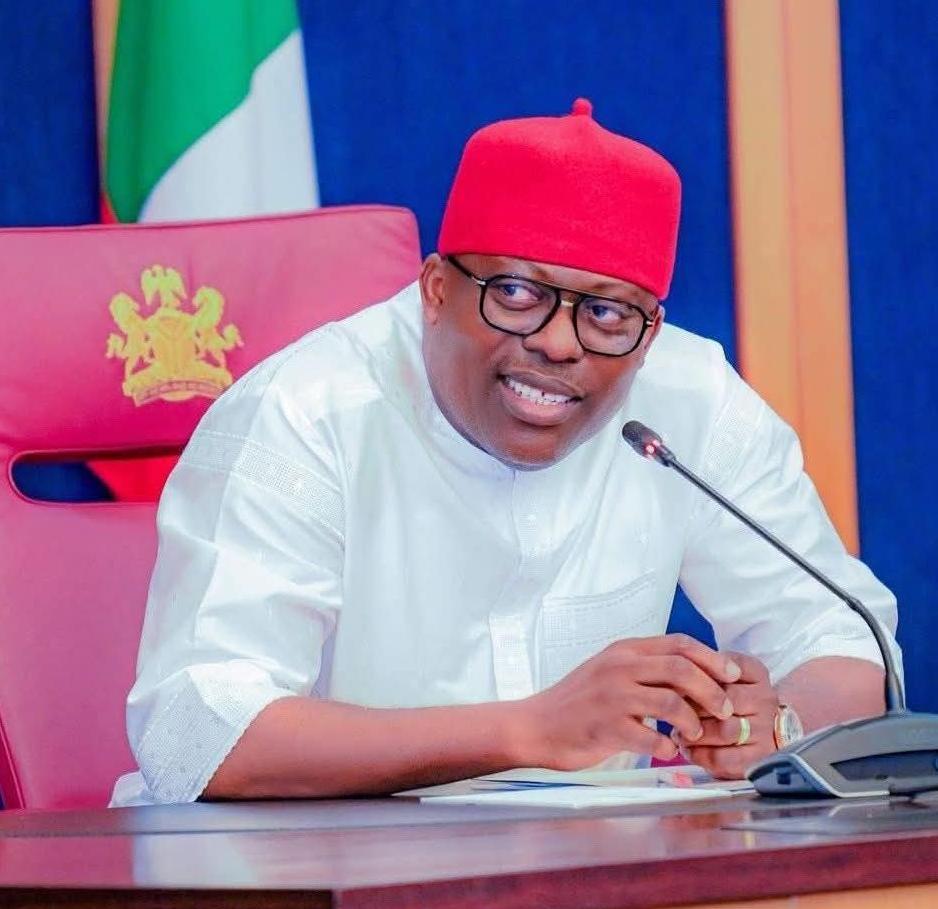
Governor of Rivers State, His Excellency Sir Siminalayi Fubara, has called on the people of the State to embrace peace and unity, describing them as indispensable pillars for the socioeconomic development of any society.
In a goodwill message to mark Nigeria’s 66th Independence Anniversary, signed his chief Press Secretary,Nzeshi Onwuka, Governor Fubara said the celebration offers an opportunity for the people to reflect on Nigeria’s journey since 1960 and to renew their commitment to peaceful coexistence.
The Governor noted that Rivers State, as the “treasure base of the nation” and a melting pot of diverse ethnic nationalities, has always thrived when its people lived in harmony. He said no meaningful development can take place in an atmosphere of rancour, division and political hostility.
According to him, while political differences are normal in a democracy, they must never be allowed to undermine the collective interest of the State. “We may disagree as politicians, but we must never disagree on the peace and progress of Rivers State,” he stated.
Governor Fubara stressed that since assumption of office, his administration has anchored its governance philosophy on peace, describing it as the most invaluable infrastructure. He said the relative peace enjoyed in the State today has made it possible for his government to attract investments and execute projects across the three senatorial districts.
He therefore appealed to youths, traditional rulers, political leaders and all stakeholders to be ambassadors of peace in their communities, wards and local government areas, stressing that no one benefits when the State is in crisis.
The Governor further urged Rivers people to continue to support the Federal Government under President Bola Ahmed Tinubu, noting that national unity and sub-national cooperation are critical to achieving the goals of the Renewed Hope Agenda.
Politics
NIGERIA @ 66: We have had 26 years of Unbroken Democracy,but 66 years of Retrogressive governance-Chief Okorie
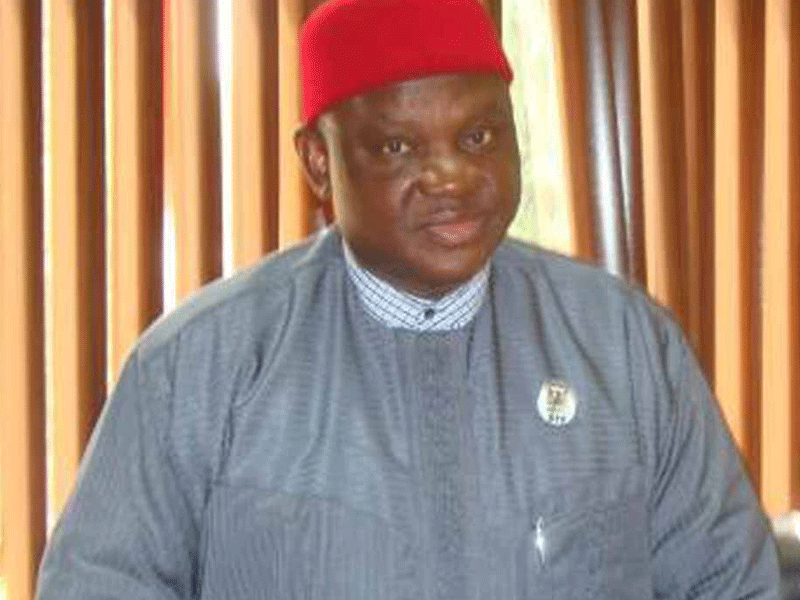
Chief Chekwas Okorie, Pioneer Chairman of All Progressive Grand Alliance (APGA)and National Chairman, Igbo Agenda Dialogu has said that Nigerua has had 26 years of unbroken democracy but 66 years of retrogressive governance.
In this interview with Ignatius Okorocha on his assessment of Nigeria as it marks 66 years of independence,Chief Chekwas Okorie said,his assessment of Nigeria at 66 is a very chequered one noting that Within that period, “we had a civil war. We have had military interruptions a couple of times. We started with a parliamentary system and now we are in a presidential system of democracy.
The good part is that we can now record 26 years of unbroken democratic practice, and that is on the political side.
But in terms of development, welfare of the people and security – given that the two major purposes of any government, especially with regard to the Nigerian Constitution, is that the primary purpose of government is to ensure the welfare and security of the people – government has failed woefully to live up to this sacred mandate.
Our story has been that of degenerating retrogressiveness instead of progress. We are not making progress; rather, we are retrogressing. Every year we find that the year before was better, and that has been the sad story of Nigeria.
Countries that we were better than at Independence are far ahead of us today, whether you are looking at Africa or Asia. So many countries that we were well ahead of are now well ahead of us, and this is as a result of poor leadership.
The military set the pace, because in handing over to a civilian administration, they had made up their mind as to who they were handing over to, not who the people of Nigeria should elect. From that moment, our leadership recruitment has been that of people who have money and those who have power selecting their cronies. You don’t disenfranchise the people from their inalienable right to choose who they want and then expect development and progress.
That is what has happened, and every subsequent government seems to be worse than the one before it. Whereas naturally government is a continuum – a new government ought to build on the foundation and blocks laid by the outgoing government to do better – that is not our experience. Our experience is that every subsequent government gets worse than the one before it.
That, in a nutshell, is how I will assess our experience so far.
Other than having a continuous democracy for 26 years, there is nothing much to show for 66 years, yet Nigeria is a country blessed with so much material and human resources. No country as endowed as Nigeria would not have done ten times better than we are now. So this is where we are.
As of October 1st, 2026, we will be celebrating our 66th Independence anniversary. We will be looking at 26 years of unbroken democracy and also 66 years of retrogressive governance.
What is your advice to the government of the day?*
Chief Okorie said,”What I can say is that the government of the day, as far as I am concerned, is not in the mood to change the situation. I have not seen the political will to make Nigeria a better place.
The worst that has happened to the country is disunity. If you don’t have unity of purpose, there is nothing that any government can put together as a policy for development that will ever see the light of the day. This country is badly divided.
This government has mismanaged our diversity. In fact, the one before it, which was also an APC government, laid the foundation for mismanaging our diversity, and this particular government has taken it to a higher level. So it is difficult for many people to associate themselves proudly as Nigerians. There are many people who are not proud to identify as citizens of Nigeria, while those who accept to be Nigerians are often those benefitting from our common patrimony. That is not how you grow a country.
We thought that Bola Ahmed Tinubu’s presidency, being one of those who fought for a restructured Nigeria and true federalism, would make that a priority, so that all federating units, be they states or geopolitical zones, would be able to develop at their own pace and Nigeria would experience phenomenal growth. But no, he is running the government as a military leader. In all material assessments, he is a dictator. Many people feel alienated.
People like me, since last year August when we formed the Igbo Agenda Dialogue, a pro-democracy, socio-political, non-partisan association, have been educating our people, sensitizing them to renew their confidence in Nigeria as citizens. Everybody knows that a majority of Igbo young men and women no longer believe they are still part of this country.
The government of the day is not saying anything new. The president we have today – it was published when he was in NADECO that he had no faith in Nigeria. He said so, the man who is now President of Nigeria. If you see our young men who feel so alienated that they are saying they want a separate country, it is not as if they are saying anything new. In fact, President Tinubu raised this idea in NADECO long before he became President.
And so, the 2027 election becomes a referendum – one that will decide whether Nigerians are happy the way they are today or they want a change. It doesn’t matter what plot anybody may put in place to corner the election as in the past. I think Nigerians are determined to make a difference, to make a statement without actually resorting to violence. At least Osun State has given us a leeway.”

Girl -child Violation takes a fearful dimension in Niger State-CP Ellema
By Uthman Baba-Naseer,Minna The Commissioner of Police in Niger State,CP Adamu Abdullahi Elleman,has said that the Police are the first...

Diri Eulogises Bayelsa Founding Fathers, Says State Has Made Progress At 30 *’Roads, Power, Jobs Remain Priorities’
By David Owei,Bayelsa Governor of Bayelsa State, Senator Douye Diri, has paid tributes to its founding fathers, stating that the...

NIGERIA@ 66: Gov Fubara Sues for Peace,Unity in Rivers State
By Gorge Mgbeleke Governor of Rivers State, His Excellency Sir Siminalayi Fubara, has called on the people of the State...

Nigeria’s Bishops Move to Curb Commercialisation of Catholic Worship* …As it rolls out New guidelines reject coercion, paid blessings and fundraising spectacles during liturgy
By our correspondent The Catholic Bishops’ Conference of Nigeria (CBCN) has issued new guidelines aimed at curbing the commercialisation of...

SOLUDO’s VENDETTA AGAINST PETER OBI MUST STOP NOW
By Chief Chekwa Okorie I have watched with disgust and utter disappointment, Prof. Chukwuma Soludo’s vicious and vile vendetta against...

FG charges new fish association executives on unity, warns against litigation
By our correspondent The Federal Government has charged the newly elected executive of the National Fish Association of Nigeria, NFAN,...

Rivers Assembly Adjourns on definit Matters of Urgent Public Importance …As it Moves to Address Flooding in the state
By Daivd Owei Touched by the sufferings of Rivers people, occasioned by the ravaging floods in the State, the Rivers...

Adeniyi Preaches Patriotism, Visits Team Nigeria Wrestling Camp Ahead of World Championships
By David Owei The President of the Nigeria Wrestling Federation (NWF), Bashir Adewale Adeniyi, MFR, has urged members of Team...


Nigeria Should Mourn Death of Democracy, Rule of Law on October 1 – HURIWA
By George Mgbeleke The Human Rights Writers Association of Nigeria (HURIWA) says Nigeria should be mourning the death of democracy,...

Edo death sentence: Media group demands immediate execution of kidnappers
By our correspondent The Muslim Media Watch Group of Nigeria, MMWG, has hailed the Edo State Judiciary for sentencing four...
-
 Politics1 year ago
Gov Okpebholo moves to end Cultism *Threatens action against leading cult groups *Vows to demolish more cult houses in Edo State
-
 Politics1 year ago
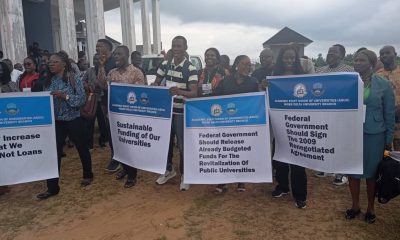
ASUU-NDU protest against FG loans, unpaid salaries,Non-Implementation of agreements …..says loans is generational slavery
-
 Business & Economy1 year ago
PC-NCG Issues Disclaimer on Purported Nigerian Coast Guard National Orientation Exercise In Anambra State
-
 Entertainment2 years ago
Jubilation galore as Parishioners of CKC Kurudu celebrate their cultural heritage ….FG should exploit our Cultural heritage to unite Nigerians-Rev Fr Dim
-

 Sports8 months ago
Bayelsa-born ex-football star’s son, Opuama donates spike shoes to Athletics Association
-

 General News2 years ago
Reps hold public hearing on FMC Ugwuaji Awkunanaw
-
 Law & Crime1 year ago
Legal practitioner raises alarm over threat to his life by CSP Muhammed Abdulkareem
-
 General News2 years ago
Celebration galore as UDA Successfully Elected New Exco ……I will digitalize processes that will raise UDA to greater height -Comr. Okejiri