
Opinion
NIGERIA-A NATION FAILING ITS CITIZENS

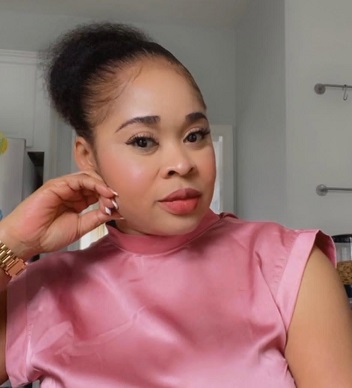
WRITTEN BY STACEY UKAOBASI .
For a long time, Nigeria has been trapped in a cycle of insecurity, fear, and corruption. Terrorists negotiate freely with politicians; they storm classrooms, abduct schoolgirls, and take them into the forest to do unimaginable things to them. Some of these girls escape — often with children born from their captors — while the rest never make it out alive. Their voices are silenced forever, their dreams buried in shallow graves deep in the forests.
The world once cried out for the Chibok girls, but that cry faded. Many of them are still missing. Some returned as mothers of the very men who destroyed their innocence. Others were never found, becoming nameless victims of a system that moves on too quickly. These girls symbolize the forgotten pain of thousands of Nigerian children abducted, abused, and abandoned while their government negotiates with their oppressors and calls it “peace”
Bandits roam freely across the country, protected by silence and political complicity. Christians in the north are slaughtered in their homes, children and pregnant women butchered like animals, churches, and schools burned down. Nowhere feels safe anymore not classrooms, not highways, not even churches and it this is not new.The Fulani herdsmen have taken over the roads, kidnapping travelers, demanding ransom, and still killing their victims even after payments are made. Mothers are murdered on their farms, and their children left to fend for themselves. To make matters worse, the gang of kidnappers have a way to add human organ harvesting as part of their assignments. The question to be asked is who are the patrons of these human organ harvesters and armed kidnappers? How did these semi-illiterates able to carry out surgical operations on their victims who couldn’t meet up with their ransome demands, or do they work closely with some surgeons?
Yet the politicians do not care. Their children are safely studying abroad, funded by looted national wealth hidden in foreign accounts. They live far removed from the pain, fear, and hunger of ordinary Nigerians. When the president of the united states recently spoke about bandits, their reaction was that he wanted to come for their “resources”— the very resources that have never benefited the citizens.
While these bandits are protected, activists are locked up.
One of the most prominent examples is Nnamdi Kanu, the leader of the Indigenous People of Biafra (IPOB). He spoke out fearlessly about injustice, marginalization, and the growing insecurity in the southeastern region and across Nigeria. He questioned the government’s silence on killings, kidnappings, and the systemic neglect of his people. His voice became a rallying cry for millions who felt forgotten — the poor, the oppressed, and the silence.
But instead of listening to his message, they chose to make him a prisoner. He has been detained for years without access to a fair trial or his lawyers, despite court rulings ordering his release. His case is no longer just about Biafra — it is about freedom of speech, about the right to question authority without being branded a criminal.In Nigeria today, telling the truth has become a crime. Those who destroy lives walk free, while those who demand justice are thrown behind bars.
Even religious leaders have become afraid to speak. Many of them tread carefully, fearful that one wrong word could make them the next target. The killings, the kidnappings, the destruction — much of it never makes it to the media. Countless massacres are buried in silence because showing the truth would expose the magnitude of the nation’s rot. The media is either censored, threatened, or paid to look away.
Meanwhile, the poor masses continue to suffer. Families can not afford three square meals. How can a child focus in class when hunger and fear are constant companions? Countless children are displaced, their parents killed, their futures stolen, and yet, our leaders boldly claim that Nigeria is not a country of concern.
Unemployment has driven the youth into despair. Young men do whatever it takes to survive. Young girls are pushed into prostitution, not out of desire, but out of hunger and hopelessness.
Even worse, the same men in power those meant to protect the people are often the predators. They encourage and practice child marriage, using money and influence to silence families. I once had a neighbour in Abuja who would let a powerful man come pick up her 16-year-old daughter. He gave them money-alot of it. Years later, this same man married a 16-year-old actress. It makes you wonder what it is about underage girls that attracts men like this?
When these girls try to escape the marriage, they are threatened, their families intimidated, and some of their families are even arrested until the girls return to the marriage. This cycle happens every day in Nigeria “pedophiles in power preying on innocent children while hiding under the cover of tradition and wealth.
In Nigeria, there is no real law protecting the child. How can there be when those in charge of enforcing the law are the very ones violating it? The practice of child marriage continues openly because the same people in government are the beneficiaries.
Now, hopelessness has reached its peak. Many Nigerians dream only of leaving the country,a desperate escape they call “japa”For those lucky enough to get a visa, it’s not about luxury or comfort; it’s survival. They leave because they see no solid future in a nation that has failed to protect its own. But countless others are denied visas and forced to stay behind, trapped in a system that crushes ambition, talent, and hope.
THE NIGERIAN GOVERNMENT SHOULD RESTORE HOPE BY PROTECTING THE NIGERIAN PEOPLE.
It doesn’t have to stay this way. Nigeria can still be rebuilt but not by words by action.
1. Justice and Accountability-
Those responsible for killings, abductions, and abuse of power must face justice, no matter their title or position. Selective silence must end. Activists and truth-tellers like Nnamdi Kanu deserve fair treatment, not indefinite detention. Freedom of speech must never be treated as rebellion.
2. Child Protection Laws:
Nigeria must enforce a national ban on child marriage and pedophilia, with clear penalties for offenders — no matter how influential. The Child Rights Act must be fully implemented across all states, with dedicated agencies to monitor and prosecute violators.
3. Security and Truth:
The military and police must be depoliticized. Security agencies should protect citizens, not intimidate them. Religious and community leaders must regain their courage to speak, and the media must tell the truth, no matter the cost.
4. Education and Rehabilitation:
Every rescued child especially abducted girls – deserves trauma care, education, and reintegration. Schools must once again be safe spaces, not hunting grounds, for terrorists.
5. Empowering the Youth:
Job creation, skill development, and youth empowerment programs are the only way to restore hope. No young person should have to only JAPA to find safety or dignity.
6. Global Attention:
The international community must not look away. Global organizations and human rights bodies should pressure Nigeria’s leaders to uphold justice, protect citizens, and end the persecution of children, activists, and journalists.
Until Nigeria learns to protect its children, it can not protect its future.
Until the government stops silencing truth tellers and starts confronting the real enemies of the people, the country will remain enslaved by fear and corruption.
A nation that can not keep its daughters safe, feed its children, or listen to its youth has already lost its soul. But it is not too late if we rise together to defend what still remains.
OUR HUMANITY,OUR CHILDREN AND OUR FUTURE.
Stacey Ukaobasi is a Nigerian based in the USA. She is the founder of the FORUM FOR CHILD RIGHTS PROMOTION, NIGERIA.




Nigerian Political Parties and Accountability
By Emmanuel Nnadozie Onwubiko
Anyone who has been following international media coverage over the past week would have noticed that political parties in the United Kingdom have been busy holding their annual conferences. Parties such as the Conservative Party, the Labour Party, Reform UK and the Green Party have held conferences that attracted extensive media coverage.
These conferences demonstrate an important dimension of democratic practice: the participation of party members in debates about policies, programmes and political priorities. They provide platforms through which political parties articulate their positions, engage their members and seek to win the confidence of the electorate.
As a Nigerian who closely monitors the activities of political parties in my country, the extensive coverage provided by media organisations such as the BBC, CNN and, most importantly, Sky News has prompted me to ask a fundamental question: why have Nigerian political parties not developed similarly structured and regular conferences at which their members, elected representatives and leaders can congregate to debate policies, present their programmes and explain their ideological positions to the Nigerian electorate?
Nigeria operates a presidential system of government influenced substantially by the American model, while its political and constitutional development has also been influenced by the British parliamentary tradition. Yet, despite the enormous political importance of parties to our democracy, Nigerian political parties have generally not developed the culture of large, regular and publicly scrutinised party conferences that is evident in the United Kingdom.
The absence of such platforms raises questions about internal party democracy, transparency, accountability and the relationship between political parties and the wider Nigerian society.
Concerned that political parties appear, in many respects, to be disconnected from the wider society and that some of their internal affairs are conducted without sufficient public scrutiny, I decided to examine the constitutional provisions governing political parties and the responsibilities of the Independent National Electoral Commission (INEC).
INEC and Political Party Accountability
The Nigerian Constitution contains provisions relating to the financial accountability of political parties and the regulatory responsibilities of INEC. Among the relevant provisions are Sections 225 and 226 of the Constitution.
Section 225(5) provides:
«“The Commission shall have power to give directions to political parties regarding the books or records of financial transactions which they shall keep and, to examine all such books and records.”»
Section 226(1) further provides:
«“The Independent National Electoral Commission shall in every year prepare and submit to the National Assembly a report on the accounts and balance sheet of every political party.”»
Section 226(2) provides:
«“It shall be the duty of the Commission, in preparing its report under this section, to carry out such investigations as will enable it to form an opinion as to whether proper books of account and proper records have been kept by any political party, and if the Commission is of the opinion that proper books of accounts have not been kept by a political party, the Commission shall so report.”»
A reading of these constitutional provisions demonstrates that political parties are not intended to operate entirely outside the scrutiny of the electoral management system. Their financial records and accountability obligations are subject to constitutional and regulatory requirements.
This raises an important question: should the responsibility for political-party accountability be understood merely in terms of financial records, or should it also encourage a broader culture of internal democracy, transparency, policy development and engagement with citizens?
In my view, Nigerian political parties should be encouraged to organise regular conferences that bring together party members, elected representatives, political office holders, civil society organisations, policy experts, journalists and members of the wider public.
Such conferences could help bridge the gap between political parties and citizens, particularly those who are active members of the parties.
What Are Party Conferences?
Party conferences are multi-day events organised by political parties to discuss important political and policy issues, engage members, attract public attention and, in some cases, raise funds.
In the United Kingdom, party conferences can provide opportunities for members to debate policies and, depending on the party’s rules, vote on important party matters.
They are often extensive events involving keynote speeches by party leaders, policy discussions, specialist sessions, exhibitions, networking events and contributions from politicians, journalists, think tanks, trade unions and civil society organisations.
They therefore serve purposes beyond political speeches. They can become important forums for political education, policy development, internal debate and public engagement.
Why Should Nigeria Have Party Conferences?
Party conferences can create opportunities for citizens to understand what political parties stand for and what their elected representatives intend to achieve.
They can also provide opportunities for networking and the exchange of ideas. Political parties can bring together politicians, academics, business leaders, civil society representatives, journalists and ordinary party members to discuss national challenges.
Conferences can also provide an opportunity for policymakers to explain their thinking on major national issues. Ministers, legislators, party leaders and policy experts can participate in discussions and respond to questions from members and stakeholders.
Another important function is advocacy. Civil society organisations, professional associations and other interest groups can use party conferences to raise issues affecting their sectors and engage directly with political leaders.
Most importantly, party conferences can improve political education. When parties publicly articulate their programmes and policy priorities, voters are better positioned to understand the differences between them and to make informed decisions during elections.
Poor Governance of Nigerian Political Parties: How INEC and the Courts Contribute to Party Crises
A respected legal scholar and political analyst, Professor Sam Amadi, recently raised concerns about the roles of Nigeria’s electoral and judicial institutions in the continuing instability within political parties.
In a media interview, Professor Amadi reportedly identified inconsistent administrative decisions, weak regulatory clarity and conflicting judicial interpretations as factors contributing to internal party crises.
He said disputes within parties, including the African Democratic Congress (ADC), have increasingly escalated because of what he described as a lack of clear authority within INEC and the courts.
According to Professor Amadi, institutional uncertainty encourages factions within political parties to take disputes beyond internal party mechanisms instead of resolving them through established internal processes.
“INEC staffers provide conflicting decisions. Some lawyers will say it is right. So, basically, the lack of authoritativeness and due process and clear-minded clarity in INEC management of the parties incentivised disputants… to externalise and accelerate and deepen those divisions,” he said.
Professor Amadi further argued that matters that should ordinarily be dealt with through internal party structures have increasingly become prolonged legal and administrative battles, with political actors moving between INEC and the courts in search of favourable interpretations.
He also criticised aspects of judicial decision-making, arguing that some rulings have lacked the clarity necessary to bring disputes to a definitive conclusion.
“I think that the courts, through their weak interpretation, through their lack of clarity—look at the Supreme Court decision—‘oh, it’s an internal affair’—it was not authoritative,” he said.
Professor Amadi maintained that the combined effect of administrative uncertainty within INEC and what he characterised as judicial ambiguity has created opportunities for factions within political parties to pursue competing interpretations of the rules.
“Everybody thinks, ‘OK, we can get a better option from INEC,’” he added, arguing that such a mindset can encourage political actors to prolong disputes.
He further observed that the situation reflects what he considers a broader pattern of institutional uncertainty within Nigeria’s political environment.
“Clearly, there’s something different from the past… this time it’s different—total incoherence everywhere. So, the court, INEC, and the politicians will be held responsible,” he said.
He warned that unless INEC and the judiciary provide greater institutional clarity and consistency, internal party disputes could continue to generate prolonged legal and administrative battles.
These observations raise important questions about the institutional framework within which Nigerian political parties operate. Both INEC and the judiciary inevitably come under scrutiny whenever questions concerning the governance, internal democracy and institutional stability of political parties arise.
What Can Be Done?
The electoral management body, which is constitutionally entrusted with important responsibilities relating to political parties, should be encouraged to strengthen its regulatory oversight and insist on compliance with applicable constitutional and electoral requirements.
INEC should also encourage political parties to develop stronger mechanisms for internal democracy, transparency and accountability.
One way of achieving this could be through the institutionalisation of regular party conferences.
Nigerian political parties can learn from the experiences of political parties in the United Kingdom without necessarily attempting to reproduce the British system in its entirety.
Regular party conferences could provide Nigerian parties with platforms to present alternative programmes for nation-building, explain their ideological positions and demonstrate how their policies differ from those of other parties.
Such conferences would also create opportunities for the media to scrutinise party programmes and communicate them to voters.
In a democracy, citizens should not be expected to vote merely on the basis of personalities, ethnic affiliations, religious considerations or campaign rhetoric. They should have access to sufficient information about the policies and programmes of competing political parties.
Party conferences could therefore become important forums for information, education and public enlightenment.
Reining in the Judiciary
There is also a need for a broader national conversation about judicial accountability and institutional independence.
The National Assembly should consider whether existing mechanisms for judicial discipline, accountability and complaints require further strengthening. Any such reform, however, must preserve judicial independence while ensuring that judicial officers remain accountable for misconduct.
The suggestion of establishing an independent judicial ombudsman or strengthening an existing independent complaints mechanism deserves serious public discussion. Such an institution could provide an additional avenue for dealing with complaints about judicial conduct while ensuring that disciplinary processes remain transparent, professional and independent.
However, allegations that corruption or bribery motivates judicial officers to interfere improperly in political-party disputes should not be treated as established facts without evidence. Where such allegations arise, they should be investigated through appropriate constitutional and legal mechanisms.
Professor Sam Amadi’s observations nevertheless highlight the importance of ensuring that judicial decisions concerning political parties are clear, consistent and grounded in law.
The challenge is particularly complicated because members of the National Assembly are themselves politicians and therefore participants in the political system that judicial and electoral reforms seek to regulate. This creates an obvious institutional tension that any reform programme must acknowledge.
For this reason, Nigerians should demand clear and measurable commitments from candidates seeking elective office, particularly candidates seeking the offices of President and membership of the National Assembly.
Those seeking public office should be challenged to explain how they intend to strengthen INEC, improve judicial accountability and promote internal democracy within political parties.
The objective should be to build political parties that are transparent, internally democratic, policy-driven and capable of functioning as genuine platforms for political participation.
Nigeria’s democracy cannot become stronger if political parties remain weak institutions. Strong democratic institutions require political parties that are themselves accountable, transparent and responsive to their members and to the citizens they seek to govern.
The time has therefore come for Nigeria to take a closer look at the internal governance of its political parties and to ask whether these institutions are adequately serving the democratic purposes for which they exist.
EMMANUEL NNADOZIE ONWUBIKO is the founder of the Human Rights Writers Association of Nigeria (HURIWA) and a former National Commissioner of the National Human Rights Commission of Nigeria.

By George Mgbeleke
The Human Rights Writers Association of Nigeria (HURIWA) says President Bola Ahmed Tinubu must urgently intervene in the Oba–Nnewi–Uga–Akokwa–Arondizuogu–Okigwe road project, as communities along the corridor continue to see little or no visible work despite the reported presidential approval.
HURIWA says residents are becoming increasingly disappointed because the road remains in deplorable condition while the promised intervention has yet to translate into visible construction activity.
HURIWA notes that the development is particularly concerning because the member representing Ideato North and South Federal Constituency in the House of Representatives, Hon. Ikenga Ugochinyere Ikeagwuanu, had publicly commended President Tinubu following the reported approval of the project.
HURIWA says communities that have endured the poor condition of the road for years now need tangible action rather than further assurances.
HURIWA recalls that President Tinubu approved the design and procurement of the 150-kilometre Oba–Nnewi–Uga–Ihube (Okigwe Junction) Road as part of major infrastructure projects intended to improve regional connectivity and stimulate economic activity in the South-East.
HURIWA says the announcement raised expectations among residents, businesses and road users who have continued to bear the consequences of the road’s neglect.
HURIWA notes that Hon. Ugochinyere had earlier drawn the attention of the House of Representatives to the deplorable condition of the Akokwa–Arondizuogu–Okigwe road.
HURIWA recalls that the lawmaker described the road as a death trap and raised concerns over reported attacks on motorists using the route.
HURIWA says the Federal Government must now demonstrate that the presidential approval will translate into actual construction.
HURIWA demands that the Federal Ministry of Works publicly explain the current status of the project, including the procurement process, contractor selection, funding arrangements and expected date of mobilisation to site.
HURIWA says Nigerians should not be expected to celebrate infrastructure approvals when the physical conditions that necessitated the intervention remain largely unchanged.
HURIWA states:
“The people along this road network are asking for action, not another announcement.
“They want to see construction equipment, workers and engineers on site. They want to see the road being rebuilt and their communities connected safely.
“When government announces a major road intervention and the people subsequently see little or no meaningful work, disappointment and frustration will naturally follow. The Federal Government must therefore move quickly to restore public confidence.”
HURIWA warns that continued neglect of the road will deepen the hardship faced by residents, increase transportation costs and expose motorists and other road users to avoidable security risks.
HURIWA says the road serves as an important economic and transportation corridor linking communities across parts of Anambra and Imo states.
HURIWA therefore urges President Tinubu to direct the Ministry of Works to move the project from approval and procurement to actual construction without further delay.
HURIWA also urges Hon. Ugochinyere and other lawmakers representing the affected communities to intensify legislative oversight and regularly inform constituents about the project’s implementation.
HURIWA says the people of the affected communities deserve transparency, accountability and a functional road network after years of neglect.
Opinion
MILITARY AIR ACCIDENTS: HURIWA to President Tinubu: Nigerians have heard this same orders without results for years*
By George Mgbeleke
Prominent pro-democracy and civil rights advocacy group Human Rights Writers Association of Nigeria (HURIWA) has expressed cynicism that the probe into the military helicopter crash that happened in Ilaje, Ondo State in which 35 Nigerians perished including school children ordered by President Tinubu would be transparent and accountable given previous records of lack of disclosures of findings from similar investigations.
President Bola Tinubu had ordered an investigation into the Nigerian Air Force aircraft crash in Ondo State, just as he declared three days of national mourning.
“The Chief of Air Staff has briefed me, and I have directed the Nigerian Air Force to immediately commence a thorough investigation into the cause of the crash to prevent future occurrences,” Tinubu said in a statement by his Special Adviser on Information and Strategy, Bayo Onanuga.
The President also expressed condolences to the families of the 25 passengers and seven crew members aboard the aircraft and prayed for the repose of the souls of the officers.
“This is a painful moment for our Armed Forces and for the entire nation. Our Air Force personnel put their lives on the line every day to secure Nigeria. Their sacrifice will never be forgotten,” he said.
Tinubu prayed “for the repose of the souls of the gallant officers and for Almighty God to grant their families and the Nigerian Air Force the fortitude to bear the unfortunate loss.”
The President confirmed fatalities in the Nigerian Air Force (NAF) ATR-42 aircraft crash in Igbokoda, Ondo State, although the Air Force is yet to disclose the number of people killed.
He said the aircraft was on a routine mission from Benin to Lagos when the accident occurred, while commending the NAF for activating an immediate search and rescue operation.
HURIWA however dismissed the presidential order as mere media gimmicks to put up an impression of a government that is concerned about the tragic incident just as the civil society organisation stated that repeated failures of past investigations to be unveiled to the public and the failures of the hierachy of the Nigerian armed forces to implement measures to prevent continuous crashes of military air crafts, demonstrate that Nigerian government is just playing on the gullibility of most Nigerians in giving that empty-handed directive which would not see the light of the day like so many others in the past.
In a media statement, HURIWA raises the question of why nothing concrete was done to check these frequent military aircrafts accidents even as the Rights group averred that between 2015 and 2023, Nigeria under the then President, Major General, Muhammadu Buhari (retd), suffered a total of 14 military air crashes, resulting in the loss of 15 aircraft.
The crashes during the period under review killed no fewer than 33 military personnel, while the whereabouts of two personnel are still unknown.
The cause of the incidents have not been made public, despite assurances by Nigerian Air Force and the Federal government.
In February 2023, the Air Force was fortunate not to have recorded a crash after one of their jets lost its tyre mid-air and made an emergency landing at Lagos Airport on its belly.
Between February 22, 2021 and April 19, 2022, no fewer than 20 military personnel lost their lives in the ill-fated crashes.
On February 22, 2021, seven NAF personnel on their way from Abuja to Minna, Niger State to rescue the abducted students and workers of Government Science College, Kagara, died when their plane crashed shortly after takeoff from the Nnamdi Azikwe International Airport.
HURIWA recalled too that on March 31, 2021, former NAF spokesperson, Air Commodore Edward Gabkwet, confirmed an aircraft crash and the whereabouts of the two pilots.
The most prominent of the crashes happened on May 21, 2021. A military Beachcraft 350 aircraft crashed at the Kaduna International Airport, killing the 11 people onboard, including the late Chief of Army Staff, Lt. Gen. Ibrahim Attahiru.
On July 18, 2021, another Alpha Jet Aircraft crashed in Zamfara after it was shot down by bandits. The pilot, Flight Lieutenant Abayomi Dairo, escaped from the crashed aircraft.
In April 2022, a trainer aircraft crashed in Kaduna, killing two pilots on board.
Other crashes are the August 29, 2015, Air Force plane crash in Kaduna which killed seven persons out of which four were military personnel.
The Rights group asserted that in another incident on October 10, 2015, an F-7Nl jet crashed and claimed one life. Also, an Augusta Westland 101 helicopter crashed in Makurdi, Benue State on November 15, 2016
On July 6, 2017, a NAF Agusta 109 Light Utility Helicopter crashed in Borno River. There were no casualties.
Two F-7Ni aircraft crashed around Katampe Hills in Abuja, on September 28, 2018. The airplanes collided with each other during a rehearsal for Nigeria’s 58th independence anniversary celebration. One person died in the crash.
On January 2, 2019, five crew members were killed on NAF Mi-35 were killed when the aircraft crashed near Damasak, Borno State.
Also, a NAF helicopter crashed while landing in Katsina State, on June 12, 2019. No life was lost in the crash.
Similarly, on August 17, 2019, a NAF aircraft RV-6A Air Beetle crashed near Kaduna, killing the pilot, an experienced instructor.
The crash at the NAF base in Enugu involved a training helicopter. The incident happened on November 14, 2019. No life was lost to the incident.
HURIWA in a statement by the National Coordinator Comrade Emmanuel Nnadozie Onwubiko lamented that the Federal Government has failed to put an end to these cocktails of Air accidents which are substantially avoidable or can be minimised if procurement and maintenance corruption are eradicated.
HURIWA is therefore tasking President Bola Ahmed Tinubu to focus more on finding out why all other previous military air accidents were never comprehensively and transparently investigated and the reports published for Nigerians to read and know exactly the remote and immediate causes of such accidents that have killed a lot of our citizens.
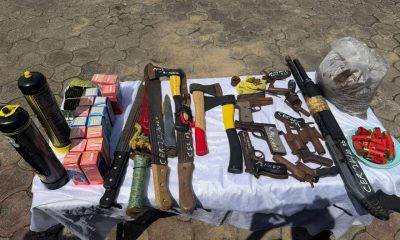

Police parades 23 persons over alleged involvement in cult clashes in Bayelsà ….recovers Eight firearms, cutlasses, bottles of codine,two battle axes,20 cartridges
By David Owei The Bayelsà State Police Command led by Commissioner of Police, Mr. Ajao Saka Adewale has paraded twenty...
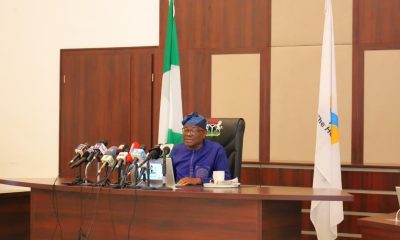

Wike orders ‘no work, no pay’ as FCT strike deepens, accuses NLC of politics … says teachers’ demands already resolved, directs area councils to enforce policy against striking
By Our Correspondent In an affort to force FCT workers on strike end the ongoing strike ,Minister of the Federal...

Milton Dick Elected President of the IPU Assembly
By Our Correspondent Mr Milton Dick, Speaker of Australia’s House of Representatives, has been elected as the President of the...
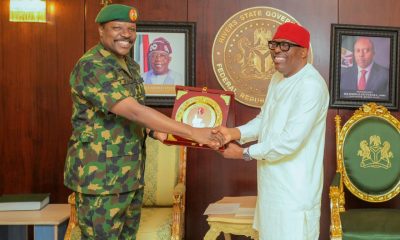

Fubara Reaffirms Partnership with Army -Lauds Establishment of New Brigade in Ahoada
By George Mgbeleke Governor of Rivers State, His Excellency, Sir Siminalayi Fubara, has assured the Nigerian Army of his administration’s...

NSPWB Executive Sec.stresses Board’s readiness to support Christains, Muslim Pilgrims in Niger state
BY UTHMAN BABA-NASEER,MINNA The Executive Secretary of the Niger State Pilgrims’Welfare Board,(NSPWB) Muhammed Awwal Aliyu,has reiterated the Board’s preparedness to...

Niger CJ Seeks mutual understanding between the Bar and Bench to enhance speedy dispensation of criminal, Civil Justice
By Uthman Baba-Naseer,Minna The Chief Judge of Niger State,Justice Halima Ibrahim Abdulmalik, has stressed the need for continued cordial and...

$1trn economy: NBTI showcases 298 Nigerian innovators to global investors
By Our Correspondent The National Board for Technology Incubation (NBTI) has showcased 298 Nigerian innovators from the 36 states and...

HURIWA Demands Answers Over Corps Members’ Release, Says Authorities Must Clarify Ransom Claims
By George Mbgeleke The Human Rights Writers Association of Nigeria (HURIWA) demands an urgent explanation from the Federal Government, the...

Tinubu’s Petrol Discount is a Loan To Nigerians-ADC
By George Mgbeleke The African Democratic Congress (ADC) has described the Tinubu administration’s proposed petrol price intervention as a loan...
HURIWA Demands EFCC Prosecution of Okowa, Bello …. Condemns Parties’ Choice of Politicians Facing Corruption Allegations*
By George Mgbeleke The Human Rights Writers Association of Nigeria (HURIWA) has called on the Economic and Financial Crimes Commission...
-
 Politics1 year ago
Gov Okpebholo moves to end Cultism *Threatens action against leading cult groups *Vows to demolish more cult houses in Edo State
-
 Politics1 year ago
ASUU-NDU protest against FG loans, unpaid salaries,Non-Implementation of agreements …..says loans is generational slavery
-
 Business & Economy1 year ago
PC-NCG Issues Disclaimer on Purported Nigerian Coast Guard National Orientation Exercise In Anambra State
-
 Entertainment2 years ago
Jubilation galore as Parishioners of CKC Kurudu celebrate their cultural heritage ….FG should exploit our Cultural heritage to unite Nigerians-Rev Fr Dim
-
 Sports8 months ago
Bayelsa-born ex-football star’s son, Opuama donates spike shoes to Athletics Association
-

 General News2 years ago
Reps hold public hearing on FMC Ugwuaji Awkunanaw
-
 Law & Crime1 year ago
Legal practitioner raises alarm over threat to his life by CSP Muhammed Abdulkareem
-
 General News2 years ago
Celebration galore as UDA Successfully Elected New Exco ……I will digitalize processes that will raise UDA to greater height -Comr. Okejiri